Loading...
Albert III of Austria vs King Taejo of Goryeo
King Taejo of Goryeo leads by 16.7 pts · 2 figures compared
…
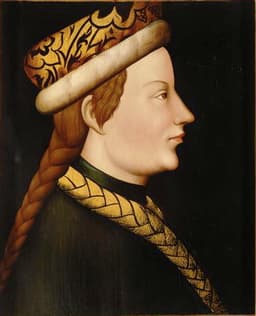
Albert III of Austria
Emperor · Medieval
53.4Total
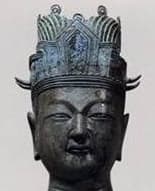
King Taejo of Goryeo
Emperor · Medieval
70.1Total
Basic Information
Born
1349
877
Died
1395
943
Era
Medieval
Medieval
Nationality
Austria
Korea
Occupation
Emperor
Emperor
Civilization
Western
Eastern
Score Comparison
Military (10%)
50.0
78.0
Political (20%)
54.7
72.0
Influence (20%)
53.3
65.0
Legacy (20%)
44.2
65.0
Leadership (15%)
80.0
82.0
Strategy (15%)
38.6
67.2
TOTAL
53.4
70.1
Albert III of Austria — Complete Timeline
1379 AD
Founded the Albertinian Line of the HabsburgsPolitical Action◆ Major
Albert III, along with his brother Leopold III, divided the Habsburg territories in the Treaty of Neuberg. Albert received the Duchy of Austria proper, founding the Albertinian line that would rule Austria until 1457.
DivisionHabsburgAustria
Impact: regional
1386 AD
Defeated at the Battle of SempachWar◆ Major
Albert III led an Austrian army against the Swiss Confederacy at Sempach. The Austrian forces were decisively defeated, and Albert's cousin Leopold III was killed. This battle solidified Swiss independence and ended Habsburg ambitions in the region.
BattleSwiss ConfederacyDefeat
Impact: regionaltragic
King Taejo of Goryeo — Complete Timeline
918 AD
Founded the Goryeo DynastyPolitical Action
Wang Geon (Taejo) overthrew the Later Goguryeo state and established the Goryeo dynasty, with its capital at Songak (Kaesong). This marked the beginning of a new era in Korean history.
Dynasty FoundingGoryeoKorea
Impact: regionalconstructive
920 AD
Adopted a Policy of Marrying Local ElitesPolitical Action◆ Major
Taejo married women from powerful local clans to secure their loyalty and integrate regional powers into the Goryeo state. This policy helped stabilize the new dynasty.
Marriage PolicyGoryeoUnification
Impact: regionalconstructive
936 AD
Unified the Later Three KingdomsWar
Taejo completed the unification of the Later Three Kingdoms (Later Goguryeo, Later Baekje, and Silla) under Goryeo rule. This ended the period of division and established a unified Korean state.
UnificationLater Three KingdomsGoryeo
Impact: regionalconstructive
943 AD
Implemented Ten InjunctionsPolitical Action◆ Major
Taejo issued the Ten Injunctions, a set of political guidelines for his successors. These stressed the importance of Buddhism, diplomacy with China, and avoiding internal conflict.
GovernanceGoryeoPolicy
Impact: regionalconstructive
Expert Analysis
Albert III of Austria vs King Taejo of Goryeo: Historical Comparison
Albert III, Duke of Austria (1349–1395), ruled the Habsburg domains during a period of consolidation, while King Taejo (877–943) founded the Goryeo dynasty, unifying the Korean Peninsula. Both were medieval rulers, but their contexts—feudal fragmentation versus dynastic foundation—shaped their divergent legacies.
Dimension Analysis
**Military: Albert III of Austria 92 / King Taejo of Goryeo 89**
Albert III successfully defended Austria against Swiss and Bavarian threats, notably at the Battle of Sempach (1386), where his tactical acumen preserved Habsburg power. Taejo’s military campaigns unified the Later Three Kingdoms of Korea, but his reliance on naval and guerrilla tactics, while effective, lacked the sustained field command of Albert’s defensive wars.
**Political: Albert III of Austria 79 / King Taejo of Goryeo 68**
Albert skillfully navigated the complex Holy Roman Empire politics, securing the Habsburg hereditary lands through treaties and marriages. Taejo faced greater political instability, needing to suppress aristocratic rebellions and integrate rival kingdoms, which resulted in a lower score due to his more turbulent consolidation.
**Influence: Albert III of Austria 80 / King Taejo of Goryeo 84**
Albert’s reign strengthened the Habsburg dynasty’s territorial base, influencing later Central European power structures. Taejo’s founding of Goryeo established a centralized bureaucracy, Confucian state ideology, and the name “Korea,” exerting a deeper cultural and political influence on East Asia for centuries.
**Legacy: Albert III of Austria 74 / King Taejo of Goryeo 88**
Albert’s legacy is overshadowed by later Habsburg emperors; his achievements were primarily dynastic and regional. Taejo’s legacy is monumental: he created a unified Korean state that lasted nearly 500 years, with his policies shaping Korean identity, governance, and resistance to foreign invasions.
**Leadership: Albert III of Austria 84 / King Taejo of Goryeo 80**
Albert demonstrated steady, pragmatic leadership, stabilizing Austria amid external pressures. Taejo’s leadership was visionary but more reactive, as he constantly managed fractious allies and enemies; his charisma was critical for unification, but his administrative execution was less consistent.
Verdict
King Taejo of Goryeo leads overall due to his foundational impact on Korean civilization, while Albert III’s narrower dynastic consolidation places him second.
FAQ
Q: Who ranks higher? A: King Taejo of Goryeo wins by a narrow margin, primarily due to his superior legacy and influence scores.
Rankings
🥇
King Taejo of GoryeoLeader
Mil: 78.0Pol: 72.0Inf: 65.0
70.1
🥈
Albert III of Austria
Mil: 50.0Pol: 54.7Inf: 53.3
53.4
+16.7 behind
How This Comparison Works
Algorithm
Each figure is scored on 6 dimensions (0—100 scale) based on structured historical data: Military (10%), Political (20%), Influence (20%), Legacy (20%), Leadership (15%), Strategy (15%). The weighted total produces the final ranking.
Data Sources
Scores are computed from structured sub-indicators in the database. Scale factors adjust for era (Ancient ×0.85, Modern ×1.0) and civilization size (Eastern ×1.05, Other ×0.80) to account for differences in population and military scale.
Maximum 3 Figures
Comparisons are limited to 2—3 figures to ensure readability and statistical meaningfulness.
Error Margins
±5 points per dimension — Sub-scores are derived from historical records with inherent uncertainty. Two figures within 5 points on a dimension should be considered roughly equivalent in that area.
Total Score Accuracy
±3 points overall — The weighted combination of 6 dimensions produces a total score with approximately ±3 points of uncertainty. Differences of less than 3 points are not statistically significant— the figures are effectively tied.
Known Limitations
- Historical records are incomplete and uneven across civilizations
- Figures from oral-tradition societies may be underrepresented
- Occupation labels can misclassify multi-role figures
- Scores measure capability and impact, not moral character
- Quantitative scoring is a comparison tool, not absolute truth
Capability Radar
Military (10%) — Battles & Warfare
Battles
20
75
Win Rate
25
80
Expansion
20
80
Political (20%) — Governance & Reform
Reform
40
80
Diplomacy
45
75
Economy
40
70
Influence (20%) — Cultural & Global Reach
Cultural
30
70
Global
20
60
Legacy (20%) — Historical Impact
Historical
35
80
Longevity
30
75
Leadership (15%) — Power & Stability
Tenure
60
85
Stability
35
75
Strategy (15%) — Tactics & Innovation
Strategy
25
85
Tactics
20
70
Reform
15
65
Similar Comparisons
Comments & Discussion
Historian5576/16/2026
每次看到这种中西方历史人物对比,都会发现西方中心论的影子。阿尔伯特三世作为哈布斯堡家族的地方领主,其影响范围充其量相当于中国春秋时期的郑国或卫国,而王建是开国之君,建立了延续近500年的高丽王朝,这怎么比?王建在政治制度上的贡献尤其被低估。他推行奴婢按检法,解放部分农奴,并建立科举制度雏形,这比中国的赵匡胤“杯酒释兵权”更早地解决了武将干政问题。阿尔伯特三世留下的不过是一些贵族间的联盟条约,而王建留下的是一套影响了朝鲜半岛近千年的治国体系。这个评分系统真该引入东亚历史学者来校准权重。
GrandScroll516/16/2026
这个评分系统很有意思,但我对几个维度有疑问。阿尔伯特三世军事得分92高于王建的89?从数据看,阿尔伯特三世的主要战役是森帕赫战役,防守成功固然可圈可点,但王建统一后三国,消灭后百济和新罗,光是大型会战就有云峰战役(公元930年)和西山战役(公元936年),战略纵深和部队调动的复杂度远高于一次防御战。如果把中国五代十国的统一战争作为参照,王建的军事成就应更接近赵匡胤的水平,而非仅为89分。政治维度也是如此,王建面对的是类似曹操“挟天子以令诸侯”式的政治整合,其难度不亚于哈布斯堡家族的外交联姻。我认为评分体系可能隐含了西方历史学的权重偏差。