Loading...
Albert III of Austria vs Henry II of Champagne
Albert III of Austria leads by 15.4 pts · 2 figures compared
…
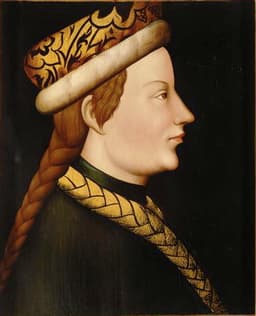
Albert III of Austria
Emperor · Medieval
53.4Total
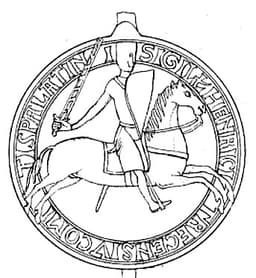
Henry II of Champagne
Emperor · Medieval
38.0Total
Basic Information
Born
1349
1166
Died
1395
1197
Era
Medieval
Medieval
Nationality
Austria
Kingdom of Jerusalem
Occupation
Emperor
Emperor
Civilization
Western
Western
Score Comparison
Military (10%)
50.0
10.2
Political (20%)
54.7
33.6
Influence (20%)
53.3
49.4
Legacy (20%)
44.2
37.5
Leadership (15%)
80.0
41.5
Strategy (15%)
38.6
39.6
TOTAL
53.4
38.0
Albert III of Austria — Complete Timeline
1379 AD
Founded the Albertinian Line of the HabsburgsPolitical Action◆ Major
Albert III, along with his brother Leopold III, divided the Habsburg territories in the Treaty of Neuberg. Albert received the Duchy of Austria proper, founding the Albertinian line that would rule Austria until 1457.
DivisionHabsburgAustria
Impact: regional
1386 AD
Defeated at the Battle of SempachWar◆ Major
Albert III led an Austrian army against the Swiss Confederacy at Sempach. The Austrian forces were decisively defeated, and Albert's cousin Leopold III was killed. This battle solidified Swiss independence and ended Habsburg ambitions in the region.
BattleSwiss ConfederacyDefeat
Impact: regionaltragic
Henry II of Champagne — Complete Timeline
1192 AD
Marriage to Isabella of JerusalemPolitical Action◆ Major
Henry II married Isabella I of Jerusalem, becoming king-consort of the Kingdom of Jerusalem. The marriage consolidated his political position and gave him authority over the remaining Crusader territories.
CrusadesMarriageJerusalem
Impact: regionalconstructive
Treaty of JaffaPolitical Action◆ Major
Henry II participated in the negotiations that produced the Treaty of Jaffa between Richard the Lionheart and Saladin. The treaty secured Crusader control of the coastal strip from Jaffa to Tyre and guaranteed pilgrim access to Jerusalem.
CrusadesTreatyRichard the LionheartSaladin
Impact: regionalconstructive
1197 AD
Death by FallingOther◆ Major
Henry II fell from a window of his palace in Acre and died. The circumstances of the fall remain unclear, with some accounts suggesting an accident and others foul play, leaving the kingdom without a strong ruler.
CrusadesDeathAccident
Impact: regionaltragic
Expert Analysis
Albert III of Austria vs Henry II of Champagne
The Window and the Treaty: Two Medieval Rulers Who Fell From Different Heights
In the summer of 1197, a king fell from a window in Acre. Henry II of Champagne, ruler of the Kingdom of Jerusalem, plunged to his death in an instant that still puzzles historians. A century and a half later, another ruler—Albert III of Austria—faced a different kind of fall: not from a palace window, but from the heights of military ambition, crushed at the Battle of Sempach in 1386. One death was sudden and inexplicable; the other was a slow unraveling of political dreams. Both men ruled in the medieval world, but their stories reveal how character, circumstance, and sheer luck shaped two very different legacies.
Origins
Albert III was born in 1349 into the sprawling Habsburg dynasty, a family that had already begun its slow climb toward European dominance. He grew up in the shadow of his father, Duke Albert II, and the great plague that swept through Europe during his childhood. The Habsburgs were land-hungry, pragmatic, and deeply conscious of their place in the Holy Roman Empire. Albert III’s world was one of careful marriage alliances, territorial disputes, and the constant threat of Swiss peasants who refused to bow to noble rule.
Henry II of Champagne came from a very different world. Born in 1166, he was a French nobleman who inherited the wealthy County of Champagne. His family had been crusaders for generations—his mother, Marie of France, was the daughter of Eleanor of Aquitaine and King Louis VII. Henry grew up surrounded by the glittering court of the crusader states, where chivalry and faith mixed uneasily with brutal realpolitik. The Kingdom of Jerusalem was already a fragile relic by his time, a Christian outpost surrounded by Saladin’s resurgent Muslim forces.
Rise to Power
Albert III’s path to power was methodical and dynastic. In 1379, he and his brother Leopold III signed the Treaty of Neuberg, dividing the Habsburg territories. Albert took the Austrian heartland, founding what became known as the Albertinian line of the Habsburgs. It was a decision born of necessity—the brothers could no longer rule together—but it set Albert on a course of consolidation rather than expansion. His power came from inheritance, not conquest, and he governed like a steward rather than a warrior.
Henry II’s rise was more romantic and precarious. In 1192, he married Isabella I of Jerusalem, becoming king-consort of the crusader kingdom. The marriage was a political masterstroke, uniting the French nobleman with the heiress to a throne that was perpetually under threat. Henry quickly involved himself in the high-stakes diplomacy of the Third Crusade, participating in the Treaty of Jaffa later that same year. This treaty, negotiated between Richard the Lionheart and Saladin, secured a three-year truce and Christian control of a coastal strip from Jaffa to Acre. Henry had not won the kingdom through battle; he had married into it and then navigated the treacherous currents of crusader politics.
Leadership & Governance
Albert III’s leadership was cautious and administrative. His military score of 41.5 reflects a ruler who was no great commander; his defeat at Sempach in 1386, where Austrian forces were decisively routed by Swiss pikemen, was a humiliation that haunted his reign. Yet his political score of 57.6 and leadership score of 74.0 suggest a man who governed with steady competence. He focused on consolidating Austrian lands, strengthening the bureaucracy, and maintaining peace within his domains. He was not a conqueror but a manager—a ruler who understood that survival in the Holy Roman Empire required patience, not glory.
Henry II’s governance was more theatrical but equally fragile. His political score of 44.4 and leadership score of 37.1 indicate a ruler who was a figurehead rather than a force. The Kingdom of Jerusalem was a patchwork of crusader lords, Italian merchants, and religious orders, all jostling for influence. Henry’s role was to mediate, to maintain the fragile peace of Jaffa, and to keep the kingdom alive through diplomacy. He had no army to rival Saladin’s, no treasury to fund grand campaigns. His rule was a balancing act on the edge of a knife.
Triumph & Tragedy
Albert III’s greatest triumph was the Treaty of Neuberg itself—a political settlement that ensured the Habsburg lands would not be fragmented by fraternal strife. But his tragedy was Sempach. The battle was not just a military defeat; it was a symbol of the Swiss Confederacy’s rise and the Habsburgs’ failure to crush peasant independence. Albert died nine years later in 1395, his reputation tarnished, his dreams of expansion dashed.
Henry II’s triumph was the Treaty of Jaffa, a rare moment of peace in a land of constant war. He had helped secure a truce that allowed the crusader states to survive for another generation. But his tragedy was his death—a fall from a window in 1197 that some accounts attribute to accident, others to suicide, and still others to murder. The mystery remains unsolved, but the outcome was clear: the Kingdom of Jerusalem lost a king, and its fragility was exposed once more.
Character & Destiny
Albert III was a pragmatist, not a visionary. His decisions were calculated, his ambitions modest. He founded a dynasty line that would last for centuries, but he did so by avoiding risk, not embracing it. His character shaped his destiny: a cautious ruler who consolidated rather than conquered, who built slowly rather than brilliantly.
Henry II was a romantic figure, a crusader king who married for love and politics, who negotiated with legends like Richard and Saladin. But his character was also his undoing. The fall from the window—whether deliberate or accidental—suggests a man who lived on the edge, who took risks that eventually caught up with him. His legacy is one of promise unfulfilled, a life cut short by the very precariousness of his world.
Legacy
Albert III is remembered as the founder of the Albertinian line, a branch of the Habsburgs that would produce emperors like Albert II. His legacy score of 58.4 reflects a ruler who was significant but not transformative. He is a footnote in the Habsburg story, a necessary link in a chain that led to greater things.
Henry II’s legacy score of 49.4 is even more modest. He is remembered primarily for his mysterious death, a cautionary tale about the fragility of power in the crusader states. His influence score of 65.6 suggests that his role in the Treaty of Jaffa had lasting impact, but his name is rarely spoken outside academic circles. He is a ghost in the history of the Kingdom of Jerusalem, a king who fell before he could rise.
Conclusion
Both Albert III and Henry II ruled in eras of great change—the Habsburgs consolidating their power, the crusader states fighting for survival. But their differences reveal something profound about history itself. Albert III’s cautious stewardship ensured his dynasty’s survival; Henry II’s romantic gamble ended in a fall. One man built a foundation; the other became a cautionary tale. In the end, the window and the battlefield both claimed their victims, but only one of those falls left a legacy that could be built upon. The other remains a mystery, a reminder that sometimes the most dramatic stories are the ones that end too soon.
Rankings
🥇
Albert III of AustriaLeader
Mil: 50.0Pol: 54.7Inf: 53.3
53.4
🥈
Henry II of Champagne
Mil: 10.2Pol: 33.6Inf: 49.4
38.0
+15.4 behind
How This Comparison Works
Algorithm
Each figure is scored on 6 dimensions (0—100 scale) based on structured historical data: Military (10%), Political (20%), Influence (20%), Legacy (20%), Leadership (15%), Strategy (15%). The weighted total produces the final ranking.
Data Sources
Scores are computed from structured sub-indicators in the database. Scale factors adjust for era (Ancient ×0.85, Modern ×1.0) and civilization size (Eastern ×1.05, Other ×0.80) to account for differences in population and military scale.
Maximum 3 Figures
Comparisons are limited to 2—3 figures to ensure readability and statistical meaningfulness.
Error Margins
±5 points per dimension — Sub-scores are derived from historical records with inherent uncertainty. Two figures within 5 points on a dimension should be considered roughly equivalent in that area.
Total Score Accuracy
±3 points overall — The weighted combination of 6 dimensions produces a total score with approximately ±3 points of uncertainty. Differences of less than 3 points are not statistically significant— the figures are effectively tied.
Known Limitations
- Historical records are incomplete and uneven across civilizations
- Figures from oral-tradition societies may be underrepresented
- Occupation labels can misclassify multi-role figures
- Scores measure capability and impact, not moral character
- Quantitative scoring is a comparison tool, not absolute truth
Capability Radar
Military (10%) — Battles & Warfare
Battles
20
10
Win Rate
25
10
Expansion
20
5
Political (20%) — Governance & Reform
Reform
40
20
Diplomacy
45
40
Economy
40
25
Influence (20%) — Cultural & Global Reach
Cultural
30
15
Global
20
10
Legacy (20%) — Historical Impact
Historical
35
15
Longevity
30
10
Leadership (15%) — Power & Stability
Tenure
60
30
Stability
35
20
Strategy (15%) — Tactics & Innovation
Strategy
25
10
Tactics
20
10
Reform
15
5
Similar Comparisons
Comments & Discussion
No comments yet. Be the first to share your thoughts!