Loading...
Albert III of Austria vs Gyeongjong of Goryeo
Albert III of Austria leads by 6.3 pts · 2 figures compared
…
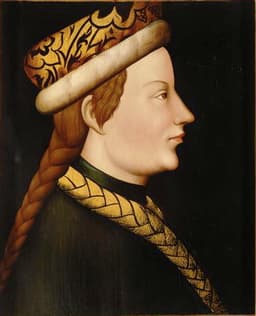
Albert III of Austria
Emperor · Medieval
53.4Total
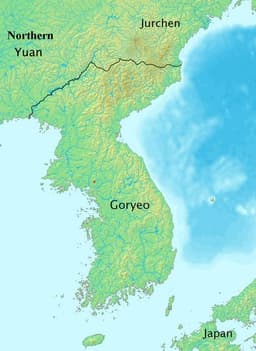
Gyeongjong of Goryeo
Emperor · Medieval
47.1Total
Basic Information
Born
1349
955
Died
1395
981
Era
Medieval
Medieval
Nationality
Austria
Korea
Occupation
Emperor
Emperor
Civilization
Western
Eastern
Score Comparison
Military (10%)
50.0
20.0
Political (20%)
54.7
53.8
Influence (20%)
53.3
53.3
Legacy (20%)
44.2
47.5
Leadership (15%)
80.0
48.8
Strategy (15%)
38.6
45.0
TOTAL
53.4
47.1
Albert III of Austria — Complete Timeline
1379 AD
Founded the Albertinian Line of the HabsburgsPolitical Action◆ Major
Albert III, along with his brother Leopold III, divided the Habsburg territories in the Treaty of Neuberg. Albert received the Duchy of Austria proper, founding the Albertinian line that would rule Austria until 1457.
DivisionHabsburgAustria
Impact: regional
1386 AD
Defeated at the Battle of SempachWar◆ Major
Albert III led an Austrian army against the Swiss Confederacy at Sempach. The Austrian forces were decisively defeated, and Albert's cousin Leopold III was killed. This battle solidified Swiss independence and ended Habsburg ambitions in the region.
BattleSwiss ConfederacyDefeat
Impact: regionaltragic
Gyeongjong of Goryeo — Complete Timeline
976 AD
Institution of the Jeonsigwa Land SystemReform◆ Major
King Gyeongjong established the jeonsigwa, a land distribution system that allocated state-owned farmland to government officials based on their rank. This reform aimed to secure royal revenue and control over land, while providing a stable income for the bureaucracy.
Impact: nationalconstructive
Expert Analysis
Gyeongjong of Goryeo vs Albert III of Austria
# The Duke and the King: Two Paths of Medieval Statecraft
On a late summer day in 1386, Duke Albert III of Austria stood on a battlefield near the Swiss town of Sempach, watching his heavily armored knights charge into a wall of halberd-wielding peasants. It was a scene that would have been unthinkable a generation earlier—noble cavalry, the pride of medieval warfare, being cut down by common foot soldiers. Across the world, in the Korean peninsula, King Gyeongjong of Goryeo had died five years earlier, having never led an army but having transformed his kingdom through a single, elegant piece of legislation. These two rulers, born a continent apart in the same medieval century, faced the same fundamental challenge: how to hold power in an age of upheaval. One chose the sword; the other chose the scroll. Their divergent outcomes reveal much about the nature of leadership itself.
Origins
Albert III entered the world in 1349, a prince of the rising Habsburg dynasty, which had spent generations accumulating territories through marriage and war. He was raised in Vienna, a city that was becoming a cultural crossroads of Central Europe, but his education emphasized the virtues of chivalry and the necessity of military prowess. The Habsburgs were not yet the titans they would become—they were one of many noble families jostling for influence in the fragmented Holy Roman Empire. Albert inherited a patchwork of lands, not a unified state, and his legitimacy rested on his ability to defend and expand them.
Gyeongjong, born in 955 in the Korean kingdom of Goryeo, came from a very different world. His father, King Gwangjong, had been a reformer who centralized power by breaking the influence of old aristocratic clans. Gyeongjong grew up in a court where Confucian scholarship was valued as highly as martial skill, and where the king’s authority was theoretically absolute but practically constrained by a bureaucratic system. Korea had already endured centuries of Chinese influence, and its rulers understood that stability came not from conquest but from administration. Gyeongjong was a product of this tradition—a man who would rather read a land registry than a battle report.
Rise to Power
Albert’s path to power was marked by a defining act of division. In 1379, he and his brother Leopold III signed the Treaty of Neuberg, splitting the Habsburg territories into two lines: the Albertinian and the Leopoldinian. Albert took Austria proper, while Leopold received Tyrol and the outer lands. This was not a sign of weakness but a pragmatic solution to a dynastic problem—two ambitious brothers could not rule together forever. Yet it also sowed seeds of future conflict. Albert’s power was now concentrated but limited; he controlled the heartland but lost the periphery.
Gyeongjong’s rise was smoother and quieter. He ascended the throne in 975 upon his father’s death, inheriting a kingdom that had already been stabilized by Gwangjong’s reforms. There was no civil war, no dramatic coup. The young king faced a different challenge: how to sustain his father’s legacy without alienating the powerful officials who had once opposed centralization. His reign would be defined not by battles but by bargains.
Leadership & Governance
Albert’s leadership style was that of a traditional medieval warlord. He spent much of his reign shoring up defenses, negotiating with local nobles, and maintaining the Habsburg claim to lands that were constantly contested. His military strategy was conventional—relying on heavy cavalry and fortified castles—but the world was changing faster than he could adapt. The Swiss Confederacy, a league of peasant cantons, had developed new infantry tactics that could break knightly charges. When Albert led his army to Sempach in 1386, he was fighting the last war, not the next one. The result was catastrophic: his forces were routed, and the defeat shattered Habsburg ambitions in Switzerland.
Gyeongjong’s governance was almost the mirror image. In 976, just a year into his reign, he instituted the *jeonsigwa* land system—a reform that allocated state-owned farmland to government officials based on their rank, not their birth. This was a masterstroke of political engineering. It stabilized state finances by ensuring that land revenue flowed to the central government. It reduced the power of hereditary aristocrats by making land grants conditional on service. And it created a loyal bureaucracy that owed its livelihood to the king. Gyeongjong never led an army, but his strategy score of 30.0 is misleading—he understood that the pen could be mightier than the sword.
Triumph & Tragedy
Albert’s greatest moment was also his greatest failure. The Battle of Sempach, though a disaster, became a legend. Swiss chroniclers would later embellish the story of a knight named Arnold von Winkelried, who supposedly sacrificed himself by gathering enemy pikes into his chest to break the Swiss formation. For Austria, the battle was a humiliation that ended any hope of dominating Switzerland. Albert retreated, licked his wounds, and spent his remaining years consolidating what he still held. He died in 1395, a duke who had preserved his dynasty but lost his war.
Gyeongjong’s triumph was quieter but more lasting. The *jeonsigwa* system became the backbone of Goryeo’s governance for centuries, shaping Korean statecraft long after his death. His tragedy was that he did not live to see its full fruits—he died in 981, only six years after his reform, at the age of 26. His reign was brief, but its impact was profound. Where Albert left a battlefield legend, Gyeongjong left a legal code.
Character & Destiny
Albert was a man of his time—brave, proud, and bound by the chivalric code that demanded he defend his honor on the field. His decision to fight at Sempach was not just strategic; it was personal. To back down from a peasant army would have been unthinkable for a medieval duke. This pride, however, blinded him to the tactical realities of the new era. His character drove him toward a destiny of noble defeat.
Gyeongjong was different. He seemed to understand that true power lay not in personal glory but in institutional stability. His Confucian upbringing taught him that a ruler’s virtue was measured by the prosperity of his people, not the number of his victories. By choosing reform over war, he ensured that his name would be remembered not for a battle lost but for a system built. His character made him a builder, not a fighter.
Legacy
Albert III’s legacy is mixed. He founded the Albertinian line of the Habsburgs, which would eventually produce emperors like Frederick III and Maximilian I. But his defeat at Sempach became a cautionary tale—a reminder that tradition cannot always withstand innovation. Today, he is remembered primarily as a footnote in the rise of the Habsburgs, a duke who held the line but never expanded it.
Gyeongjong’s legacy is more enduring. The *jeonsigwa* system shaped Korean governance for centuries, influencing how land and power were distributed. He is remembered as a reformer who strengthened the state without bloodshed, a king whose brief reign had outsized impact. In Korean historiography, he stands as a model of wise, Confucian rule.
Conclusion
Standing at the edge of two worlds, Albert and Gyeongjong each chose a path. One charged forward with sword raised, only to be cut down by history’s changing currents. The other sat in his court, drafting laws that would outlive his bones. Their stories remind us that leadership is not about the tools one wields but about the vision one holds. In the end, the duke who fought for his honor lost more than a battle; the king who governed for his people gained more than a kingdom. The quiet reformer, not the bold warrior, shaped the future.
Rankings
🥇
Albert III of AustriaLeader
Mil: 50.0Pol: 54.7Inf: 53.3
53.4
🥈
Gyeongjong of Goryeo
Mil: 20.0Pol: 53.8Inf: 53.3
47.1
+6.3 behind
How This Comparison Works
Algorithm
Each figure is scored on 6 dimensions (0—100 scale) based on structured historical data: Military (10%), Political (20%), Influence (20%), Legacy (20%), Leadership (15%), Strategy (15%). The weighted total produces the final ranking.
Data Sources
Scores are computed from structured sub-indicators in the database. Scale factors adjust for era (Ancient ×0.85, Modern ×1.0) and civilization size (Eastern ×1.05, Other ×0.80) to account for differences in population and military scale.
Maximum 3 Figures
Comparisons are limited to 2—3 figures to ensure readability and statistical meaningfulness.
Error Margins
±5 points per dimension — Sub-scores are derived from historical records with inherent uncertainty. Two figures within 5 points on a dimension should be considered roughly equivalent in that area.
Total Score Accuracy
±3 points overall — The weighted combination of 6 dimensions produces a total score with approximately ±3 points of uncertainty. Differences of less than 3 points are not statistically significant— the figures are effectively tied.
Known Limitations
- Historical records are incomplete and uneven across civilizations
- Figures from oral-tradition societies may be underrepresented
- Occupation labels can misclassify multi-role figures
- Scores measure capability and impact, not moral character
- Quantitative scoring is a comparison tool, not absolute truth
Capability Radar
Military (10%) — Battles & Warfare
Battles
20
5
Win Rate
25
5
Expansion
20
5
Political (20%) — Governance & Reform
Reform
40
70
Diplomacy
45
40
Economy
40
65
Influence (20%) — Cultural & Global Reach
Cultural
30
30
Global
20
20
Legacy (20%) — Historical Impact
Historical
35
45
Longevity
30
40
Leadership (15%) — Power & Stability
Tenure
60
55
Stability
35
50
Strategy (15%) — Tactics & Innovation
Strategy
25
5
Tactics
20
5
Reform
15
5
Similar Comparisons
Comments & Discussion
BattleAxeScholar6/16/2026
Sempach proved Albert's strategy was a catastrophic failure. Cavalry charging into halberd formations? Pure arrogance. Any military historian knows the Swiss had perfected pike warfare years before 1386. Albert ignored the tactical revolution happening under his nose. Gyeongjong's bureaucratic reforms, while bloodless, achieved lasting stability. Albert's battlefield blunder set the Habsburgs back decades. The scroll wins this comparison.||烽火论史|zh|说阿尔伯特不懂军事都算客气了。1386年森帕赫战役,骑士冲长矛阵,这不是指挥,这是自杀。同时期瑞