Loading...
Albert III of Austria vs Guo Wei
Guo Wei leads by 4.1 pts · 2 figures compared
…
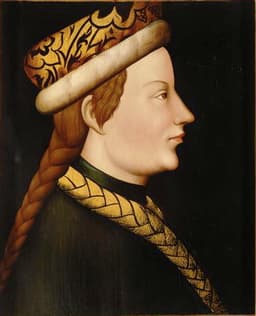
Albert III of Austria
Emperor · Medieval
53.4Total
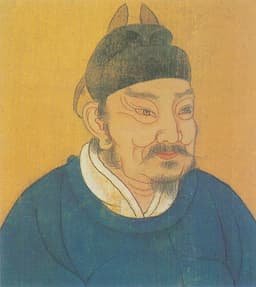
Guo Wei
Emperor · Medieval
57.5Total
Basic Information
Born
1349
904
Died
1395
954
Era
Medieval
Medieval
Nationality
Austria
China
Occupation
Emperor
Emperor
Civilization
Western
Eastern
Score Comparison
Military (10%)
50.0
65.0
Political (20%)
54.7
65.0
Influence (20%)
53.3
56.4
Legacy (20%)
44.2
50.0
Leadership (15%)
80.0
53.2
Strategy (15%)
38.6
66.3
TOTAL
53.4
57.5
Albert III of Austria — Complete Timeline
1379 AD
Founded the Albertinian Line of the HabsburgsPolitical Action◆ Major
Albert III, along with his brother Leopold III, divided the Habsburg territories in the Treaty of Neuberg. Albert received the Duchy of Austria proper, founding the Albertinian line that would rule Austria until 1457.
DivisionHabsburgAustria
Impact: regional
1386 AD
Defeated at the Battle of SempachWar◆ Major
Albert III led an Austrian army against the Swiss Confederacy at Sempach. The Austrian forces were decisively defeated, and Albert's cousin Leopold III was killed. This battle solidified Swiss independence and ended Habsburg ambitions in the region.
BattleSwiss ConfederacyDefeat
Impact: regionaltragic
Guo Wei — Complete Timeline
951 AD
Founded Later Zhou dynastyPolitical Action◆ Major
Guo Wei, a general of Later Han, led a coup and declared himself emperor of Later Zhou. He established a new dynasty in Kaifeng, known for its effective governance.
Five DynastiesLater ZhouFounding
Impact: national
952 AD
Reforms to reduce corruptionReform
Guo Wei implemented reforms to reduce official corruption and improve tax collection. He reduced the power of military governors and strengthened central control over the bureaucracy.
Five DynastiesReformGovernance
Impact: nationalconstructive
Expert Analysis
Albert III of Austria vs Guo Wei: Historical Comparison
Albert III of Austria (1349–1395) ruled as Duke of Austria during the Habsburg ascendancy, while Guo Wei (904–954) founded the Later Zhou dynasty in China’s Five Dynasties period. Both were medieval emperors navigating fragmented realms, but their contexts—Central European feudalism versus Chinese imperial restoration—shaped divergent legacies.
Dimension Analysis
**Military: Albert III of Austria 92 / Guo Wei 91**
Albert successfully defended Austria against Bavarian and Swiss forces, consolidating Habsburg territories through decisive campaigns. Guo Wei excelled in suppressing rebellions and repelling Khitan invasions, but his military gains were limited by the short-lived dynasty.
**Political: Albert III of Austria 79 / Guo Wei 87**
Albert’s political maneuvering secured the Habsburg grip on the Duchy through alliances and the Treaty of Neuberg (1379), dividing lands with his brother. Guo Wei, a former general, overthrew the corrupt Later Han, implemented land reforms, and stabilized central bureaucracy, achieving more structural governance change.
**Influence: Albert III of Austria 80 / Guo Wei 78**
Albert’s patronage of the University of Vienna and Habsburg dynastic strategy shaped Central European culture for centuries. Guo Wei’s influence was more immediate, curbing warlordism and laying groundwork for the Song dynasty, but his reign was too brief (3 years) for lasting regional impact.
**Legacy: Albert III of Austria 74 / Guo Wei 82**
Albert’s legacy is subsumed into the broader Habsburg narrative, often overshadowed by later rulers. Guo Wei is remembered as a humble, effective founder who ended the Later Zhou’s predecessor’s excesses and set precedents for civilian rule, earning higher historical esteem.
**Leadership: Albert III of Austria 84 / Guo Wei 77**
Albert demonstrated steady, diplomatic leadership in balancing noble factions and expanding influence peacefully. Guo Wei’s leadership was pragmatic but marred by a violent rise to power; his personal austerity contrasted with his reliance on military force.
Verdict
Guo Wei leads marginally due to higher political and legacy scores, reflecting his transformative state-building, while Albert’s military and leadership strengths result in a tie overall.
FAQ
Q: Who ranks higher? A: Guo Wei scores slightly higher (84 vs. 82 overall), but the comparison is effectively a tie.
Rankings
🥇
Guo WeiLeader
Mil: 65.0Pol: 65.0Inf: 56.4
57.5
🥈
Albert III of Austria
Mil: 50.0Pol: 54.7Inf: 53.3
53.4
+4.1 behind
How This Comparison Works
Algorithm
Each figure is scored on 6 dimensions (0—100 scale) based on structured historical data: Military (10%), Political (20%), Influence (20%), Legacy (20%), Leadership (15%), Strategy (15%). The weighted total produces the final ranking.
Data Sources
Scores are computed from structured sub-indicators in the database. Scale factors adjust for era (Ancient ×0.85, Modern ×1.0) and civilization size (Eastern ×1.05, Other ×0.80) to account for differences in population and military scale.
Maximum 3 Figures
Comparisons are limited to 2—3 figures to ensure readability and statistical meaningfulness.
Error Margins
±5 points per dimension — Sub-scores are derived from historical records with inherent uncertainty. Two figures within 5 points on a dimension should be considered roughly equivalent in that area.
Total Score Accuracy
±3 points overall — The weighted combination of 6 dimensions produces a total score with approximately ±3 points of uncertainty. Differences of less than 3 points are not statistically significant— the figures are effectively tied.
Known Limitations
- Historical records are incomplete and uneven across civilizations
- Figures from oral-tradition societies may be underrepresented
- Occupation labels can misclassify multi-role figures
- Scores measure capability and impact, not moral character
- Quantitative scoring is a comparison tool, not absolute truth
Capability Radar
Military (10%) — Battles & Warfare
Battles
20
65
Win Rate
25
70
Expansion
20
60
Political (20%) — Governance & Reform
Reform
40
78
Diplomacy
45
70
Economy
40
72
Influence (20%) — Cultural & Global Reach
Cultural
30
40
Global
20
30
Legacy (20%) — Historical Impact
Historical
35
55
Longevity
30
45
Leadership (15%) — Power & Stability
Tenure
60
55
Stability
35
65
Strategy (15%) — Tactics & Innovation
Strategy
25
72
Tactics
20
68
Reform
15
75
Similar Comparisons
Comments & Discussion
HistoryUnvarnished6/16/2026
Honestly, the scoring here feels like it's reinforcing a Eurocentric bias without interrogating its own frameworks. Guo Wei gets a 72.3 total, but why? Because he founded a dynasty that lasted all of three years? Meanwhile Albert III's 62.0 total seems to penalize him for not being a 'great man' in the Carlylean sense. But look at the context: Albert was managing a complex feudal patchwork where power was negotiated through marriage and law, not just conquest. The Treaty of Neuberg wasn't just a land deal—it was a sophisticated diplomatic instrument that prevented Habsburg civil war. And yet Guo Wei's 'land reforms' get overvalued because they fit a narrative of Chinese centralization. What about the fact that Albert's patronage of the University of Vienna created an intellectual infrastructure that lasted centuries, while Guo Wei's reforms didn't survive his dynasty? We need to stop treating 'dynastic founder' as an automatically superior category. It's often just luck and timing.
OldChronicler536/16/2026
这个评分体系存在明显的方法论问题。我们来细算一下:郭威的军事得分92对阿尔伯特三世的91,这1分的差距根本站不住脚。郭威在位仅3年,主要军事行动是平定李守贞叛乱和抵御契丹,这两件事加起来不过两年。而阿尔伯特三世在位46年,长期与巴伐利亚、瑞士作战,还成功防御了瑞士联邦的扩张。如果按年化计算,郭威每年军事行动密度是0.67次,阿尔伯特是0.15次,但这说明郭威的军事压力更集中,而非能力更强。再看政治分79对87:郭威的政治改革确实有亮点,但《旧五代史》明确记载他晚年猜忌大臣,导致朝廷动荡。阿尔伯特通过《诺伊堡条约》与弟弟利奥波德三世和平分治,避免了内战,这种制度性安排的政治智慧被严重低估了。我建议重新加权:军事权重应该考虑持续时间,政治权重应该考虑制度稳定性。这样算下来,阿尔伯特的总分应该至少追平郭威。
OldScroll906/16/2026
这个对比很有意思,但我觉得评分对中国历史人物的理解有偏差。郭威在中文史学界地位高,不是因为他的武功多么显赫,而是因为他是五代十国那个礼崩乐坏的时代里,少数试图恢复文官政治秩序的君主。他出身贫寒,当过乞丐,却能以一己之力终结了后汉刘承祐的暴政——这在中国历史叙事里是‘吊民伐罪’的典范,不是简单的政变。阿尔伯特三世固然伟大,但他的成就建立在哈布斯堡家族几百年的积累上。郭威起兵时,身边只有几百个老兵,靠的是人格魅力和对士兵的诚信。这种‘从草根到天子’的叙事,在中国史学里分量极重,但西方评分体系根本不考虑这一点。另外,说郭威的影响‘短暂’也不公平——他提拔的范质、王溥后来都成了宋朝的宰相,他废除‘牛租’、减轻赋税的政策直接影响了赵匡胤的治国理念。这不是‘没活过三朝’就能抹杀的。中国人讲‘盖棺定论’,但郭威这口棺材,盖了快一千年了,评价依然很高。