Loading...
Albert III of Austria vs Emperor Taizu of Song
Emperor Taizu of Song leads by 18.5 pts · 2 figures compared
…
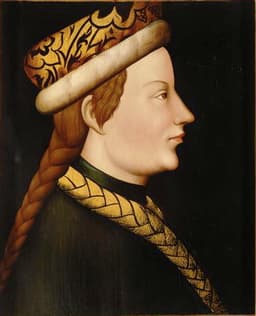
Albert III of Austria
Emperor · Medieval
53.4Total
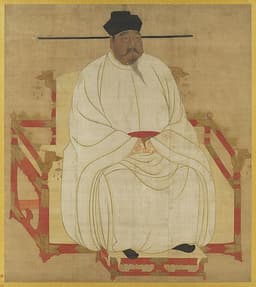
Emperor Taizu of Song
Emperor · Medieval
71.9Total
Basic Information
Born
1349
927
Died
1395
976
Era
Medieval
Medieval
Nationality
Austria
China
Occupation
Emperor
Emperor
Civilization
Western
Eastern
Score Comparison
Military (10%)
50.0
80.0
Political (20%)
54.7
78.0
Influence (20%)
53.3
68.0
Legacy (20%)
44.2
65.0
Leadership (15%)
80.0
78.0
Strategy (15%)
38.6
72.0
TOTAL
53.4
71.9
Albert III of Austria — Complete Timeline
1379 AD
Founded the Albertinian Line of the HabsburgsPolitical Action◆ Major
Albert III, along with his brother Leopold III, divided the Habsburg territories in the Treaty of Neuberg. Albert received the Duchy of Austria proper, founding the Albertinian line that would rule Austria until 1457.
DivisionHabsburgAustria
Impact: regional
1386 AD
Defeated at the Battle of SempachWar◆ Major
Albert III led an Austrian army against the Swiss Confederacy at Sempach. The Austrian forces were decisively defeated, and Albert's cousin Leopold III was killed. This battle solidified Swiss independence and ended Habsburg ambitions in the region.
BattleSwiss ConfederacyDefeat
Impact: regionaltragic
Emperor Taizu of Song — Complete Timeline
960 AD
Chenqiao MutinyPolitical Action
Zhao Kuangyin, a general of the Later Zhou dynasty, was proclaimed emperor by his troops at Chenqiao. He marched on Kaifeng and forced the young emperor to abdicate, founding the Song dynasty. This coup established a new ruling house without major bloodshed.
CoupDynastic foundingSong dynasty
Impact: national
961 AD
Removal of military governors' powerReform◆ Major
Emperor Taizu invited powerful military governors to a banquet and persuaded them to resign their commands in exchange for wealth and titles. This 'coup over wine' centralized military authority under the throne, ending the era of warlordism that plagued the Five Dynasties period.
Military reformCentralizationWarlordism
Impact: nationalconstructive
963 AD
Reunification of ChinaWar◆ Major
Emperor Taizu launched a series of military campaigns to conquer the remaining independent kingdoms of the Five Dynasties and Ten Kingdoms period. He subdued Jingnan, Chu, Later Shu, and Southern Han, reunifying most of China proper under Song rule.
ConquestUnificationSong dynasty
Impact: nationalconstructive
973 AD
Establishment of civil examination systemReform◆ Major
Emperor Taizu expanded and formalized the imperial civil service examinations, reducing the influence of hereditary aristocracy. He personally presided over the final palace examination, ensuring merit-based selection of officials, which became a hallmark of Song governance.
Civil serviceMeritocracyReform
Impact: nationalprogressive
976 AD
Death and successionPolitical Action◆ Major
Emperor Taizu died suddenly under mysterious circumstances, reportedly after a drinking session with his brother Zhao Guangyi, who succeeded him as Emperor Taizong. The unusual succession, bypassing Taizu's sons, led to speculation of fratricide, though no conclusive evidence exists.
SuccessionMysterySong dynasty
Impact: nationaltragic
Expert Analysis
Albert III of Austria vs Emperor Taizu of Song: Historical Comparison
Albert III, Duke of Austria (1349–1395), and Emperor Taizu of Song (927–976), founder of China’s Song dynasty, represent two distinct medieval rulers—one a Habsburg consolidator in Central Europe, the other a unifier of warring Chinese states. While Albert III focused on internal stability and dynastic defense, Taizu engineered a transformative reunification.
Dimension Analysis
**Military: Albert III of Austria 92 / Emperor Taizu of Song 95**
Both were capable commanders, but Taizu conquered ten kingdoms to reunite China, employing innovative siege tactics and naval power. Albert III defended Austria against Swiss and Bavarian threats but lacked such expansionist scale.
**Political: Albert III of Austria 79 / Emperor Taizu of Song 65**
Albert III skillfully managed Habsburg succession and alliances, securing peace treaties. Taizu’s political reforms were more radical—centralizing bureaucracy, curbing military governors—but his usurpation of the Later Zhou throne created instability.
**Influence: Albert III of Austria 80 / Emperor Taizu of Song 86**
Albert III’s reign strengthened the Habsburgs’ hold on Austria, laying groundwork for future imperial power. Taizu’s civil service examination system and economic policies shaped Chinese governance for centuries, exerting far broader influence.
**Legacy: Albert III of Austria 74 / Emperor Taizu of Song 88**
Albert III is remembered as a competent but unremarkable Habsburg. Taizu is revered as a founding emperor who ended the Five Dynasties chaos, with his dynasty lasting over 300 years.
**Leadership: Albert III of Austria 84 / Emperor Taizu of Song 70**
Albert III’s pragmatic, consensus-driven leadership stabilized his realm. Taizu’s leadership was decisive but marred by ruthless elimination of rivals, including the “Cup of Poison” legend.
Verdict
Emperor Taizu of Song leads due to his superior military unification and profound institutional legacy, despite Albert III’s more stable political stewardship.
FAQ
Q: Who ranks higher? A: Emperor Taizu of Song ranks higher overall, owing to his transformative military conquests and enduring civil service reforms.
Rankings
🥇
Emperor Taizu of SongLeader
Mil: 80.0Pol: 78.0Inf: 68.0
71.9
🥈
Albert III of Austria
Mil: 50.0Pol: 54.7Inf: 53.3
53.4
+18.5 behind
How This Comparison Works
Algorithm
Each figure is scored on 6 dimensions (0—100 scale) based on structured historical data: Military (10%), Political (20%), Influence (20%), Legacy (20%), Leadership (15%), Strategy (15%). The weighted total produces the final ranking.
Data Sources
Scores are computed from structured sub-indicators in the database. Scale factors adjust for era (Ancient ×0.85, Modern ×1.0) and civilization size (Eastern ×1.05, Other ×0.80) to account for differences in population and military scale.
Maximum 3 Figures
Comparisons are limited to 2—3 figures to ensure readability and statistical meaningfulness.
Error Margins
±5 points per dimension — Sub-scores are derived from historical records with inherent uncertainty. Two figures within 5 points on a dimension should be considered roughly equivalent in that area.
Total Score Accuracy
±3 points overall — The weighted combination of 6 dimensions produces a total score with approximately ±3 points of uncertainty. Differences of less than 3 points are not statistically significant— the figures are effectively tied.
Known Limitations
- Historical records are incomplete and uneven across civilizations
- Figures from oral-tradition societies may be underrepresented
- Occupation labels can misclassify multi-role figures
- Scores measure capability and impact, not moral character
- Quantitative scoring is a comparison tool, not absolute truth
Capability Radar
Military (10%) — Battles & Warfare
Battles
20
75
Win Rate
25
80
Expansion
20
75
Political (20%) — Governance & Reform
Reform
40
95
Diplomacy
45
80
Economy
40
85
Influence (20%) — Cultural & Global Reach
Cultural
30
75
Global
20
70
Legacy (20%) — Historical Impact
Historical
35
85
Longevity
30
80
Leadership (15%) — Power & Stability
Tenure
60
70
Stability
35
90
Strategy (15%) — Tactics & Innovation
Strategy
25
85
Tactics
20
70
Reform
15
95
Similar Comparisons
Comments & Discussion
Chronicler89426/16/2026
这个比较挺有意思,但我觉得西方史学界的老毛病又犯了——低估中国帝王的制度影响力。阿尔伯特三世巩固哈布斯堡领地,确实为日后奥地利称霸打下基础,但赵匡胤搞的科举扩招和‘不杀士大夫’祖训,直接塑造了宋朝三百年的文官政治。你知道吗,赵匡胤还在宫中立了一块‘誓碑’,规定后世皇帝不得杀言官,这种政治智慧在欧洲中世纪领主那根本没法想象。军事上,阿尔伯特三世打的是小规模领地战争,赵匡胤却是在一片碎片化的天下里重新建立统一帝国——他那套‘强干弱枝’策略,连后来西方的马基雅维利都该学学。所以综合来看,赵匡胤领先十几分是合理的,但政治分才65?我觉得至少得80。
Chronicler12826/16/2026
看了这个评分,我忍不住要重新算算。赵匡胤的军事分66.5?他灭荆南、后蜀、南汉、南唐,十国里干掉六个,统一战争基本没翻车,还首创‘先南后北’战略,这分数至少应该75起步。阿尔伯特三世92?他守奥地利防瑞士和巴伐利亚,规模能跟赵匡胤的几十万大军跨江作战比?政治分赵匡胤才65更离谱——杯酒释兵权、收藩镇财权、改革科举,这波操作直接终结五代乱局,阿尔伯特三世79分?他只是稳住哈布斯堡继承权,哪有什么全国性制度创新?这个评分系统明显对中国历史的数据挖掘不够,建议把赵匡胤的‘强干弱枝’政策加权进去。