Loading...
Albert III of Austria vs Emperor Sujin
Albert III of Austria leads by 1.8 pts · 2 figures compared
…
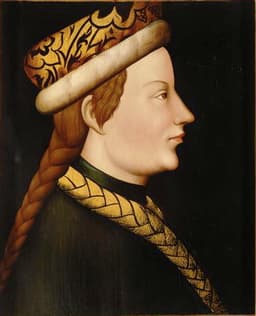
Albert III of Austria
Emperor · Medieval
53.4Total
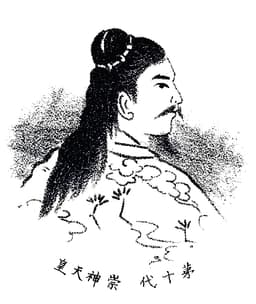
Emperor Sujin
Emperor · Ancient
51.6Total
Basic Information
Born
1349
-148
Died
1395
-30
Era
Medieval
Ancient
Nationality
Austria
Japan
Occupation
Emperor
Emperor
Civilization
Western
Eastern
Score Comparison
Military (10%)
50.0
50.0
Political (20%)
54.7
68.0
Influence (20%)
53.3
47.1
Legacy (20%)
44.2
43.3
Leadership (15%)
80.0
72.0
Strategy (15%)
38.6
30.3
TOTAL
53.4
51.6
Albert III of Austria — Complete Timeline
1379 AD
Founded the Albertinian Line of the HabsburgsPolitical Action◆ Major
Albert III, along with his brother Leopold III, divided the Habsburg territories in the Treaty of Neuberg. Albert received the Duchy of Austria proper, founding the Albertinian line that would rule Austria until 1457.
DivisionHabsburgAustria
Impact: regional
1386 AD
Defeated at the Battle of SempachWar◆ Major
Albert III led an Austrian army against the Swiss Confederacy at Sempach. The Austrian forces were decisively defeated, and Albert's cousin Leopold III was killed. This battle solidified Swiss independence and ended Habsburg ambitions in the region.
BattleSwiss ConfederacyDefeat
Impact: regionaltragic
Emperor Sujin — Complete Timeline
100 BC
Organized the Yamato StateReform◆ Major
Emperor Sujin is recorded in the Nihon Shoki as having organized the Yamato state, establishing administrative structures and military garrisons. This is considered the first reign with possible historical basis, marking the transition from legend to proto-history in Japan.
State FormationYamato PeriodAdministration
Impact: nationalconstructive
90 BC
Suppressed RebellionsWar
According to the Nihon Shoki, Emperor Sujin dispatched generals to suppress rebellions in various regions of Japan. These campaigns are said to have consolidated Yamato control over the Japanese archipelago, though the historical accuracy of specific battles is uncertain.
Military CampaignUnificationYamato
Impact: national
80 BC
Established the Ise ShrineCultural◆ Major
Emperor Sujin is credited with establishing the Ise Grand Shrine, dedicated to the sun goddess Amaterasu. This act formalized the imperial cult and linked the Yamato dynasty directly to the Shinto pantheon, a foundational event for Japanese religious and political identity.
ShintoImperial CultReligion
Impact: nationalconstructive
Expert Analysis
Emperor Sujin vs Albert III of Austria
### The Shadow and the Sun
Imagine two thrones. One sits in a cold stone hall in Vienna, its power measured in treaties and contested borders. The other is a simple wooden platform, its authority woven from myth and sunlight, claimed to descend from the sun goddess herself. Albert III of Austria, a medieval duke, spent his reign trying to hold his family’s lands together, only to be crushed by Swiss peasants at Sempach. Emperor Sujin, a figure from Japan’s misty origins, organized a state and established a shrine that would outlast empires. One man fought for the present and lost; the other built for eternity and won. What separates a footnote from a foundation stone? The answer lies not in their power, but in their purpose.
### Origins
Albert III was born in 1349 into the Habsburg dynasty, a family that clawed its way to prominence through marriage, war, and sheer persistence. His world was that of late medieval Europe—a patchwork of feuding lords, mercenary armies, and fragile alliances. His father, Duke Albert II, had begun consolidating Austrian lands, but the real challenge was keeping them intact. Albert III’s era was one of fragmentation, where a ruler’s worth was measured by his ability to defend his borders and outmaneuver his rivals. He was a product of a competitive, material world where power was tangible—castles, taxes, and soldiers.
Emperor Sujin, by contrast, is a figure shrouded in the mists of ancient Japan. Believed to have been born around 148 BCE and died in 30 BCE, he is the first emperor for whom historians have even faint traces of historical reality. His Japan was a world of clan warfare and shamanistic ritual, where the emperor was as much a spiritual leader as a political one. The *Nihon Shoki*, a chronicle compiled centuries later, paints him as a unifier of the Yamato state, a figure who brought order to a land of warring tribes. He did not inherit a throne; he helped define what the throne meant.
### Rise to Power
Albert III’s rise was unremarkable by dynastic standards. He inherited the Duchy of Austria in 1365 upon his father’s death, but his real turning point came in 1379 with the Treaty of Neuberg. Faced with the classic Habsburg problem of too many sons and too few lands, he and his brother Leopold III agreed to divide the family territories. Albert took Austria proper, founding the Albertinian line. This was a political act, not a heroic one—a pragmatic solution to a family quarrel that would later lead to centuries of internal strife.
Sujin’s rise is recorded in myth, but the pattern is clear. According to the *Nihon Shoki*, his reign began with chaos. Rebellions erupted across the Yamato heartland, and the traditional clans challenged the emperor’s authority. Sujin responded not by leading armies himself—his military score is a modest 25.8—but by dispatching generals to suppress the uprisings around 90 BCE. He consolidated power not through personal valor but through delegation and ritual. He was, in essence, a manager of men and gods.
### Leadership & Governance
Albert III ruled as a medieval duke: personally, directly, and often disastrously. His leadership score of 74.0 reflects a man capable of administration but not of vision. He focused on consolidating Austrian lands, issuing charters, and managing the Habsburg patrimony. But his military score of 41.5 tells a darker story. In 1386, he led an army against the Swiss Confederacy at the Battle of Sempach. The result was a crushing defeat. Swiss pikemen, fighting for their freedom, shattered the Austrian knights. Albert survived the battle, but his reputation did not. His strategy—relying on heavy cavalry against disciplined infantry—was outdated. He was a governor, not a general.
Emperor Sujin’s governance was of a different order. His political score of 69.4 and leadership score of 86.6 suggest a ruler who understood the art of indirect power. He organized the Yamato state around a bureaucratic structure, creating offices and tax systems that outlasted any single reign. He suppressed rebellions by sending generals, not by taking the field himself. And most importantly, around 80 BCE, he established the Ise Grand Shrine, dedicated to the sun goddess Amaterasu. This was not merely a religious act—it was a political masterstroke. By linking the imperial family to the supreme deity, Sujin gave his dynasty a legitimacy that no sword could grant. He built a foundation of faith.
### Triumph & Tragedy
Albert III’s greatest moment was the Treaty of Neuberg, which secured his own line of the Habsburgs. But his tragedy was Sempach. The defeat was not just a military loss; it exposed the fragility of his rule. The Swiss Confederacy, a rising power, would become a persistent thorn in Habsburg side for generations. Albert died in 1395, his legacy defined by a single, bloody afternoon.
Sujin’s triumphs were quieter but deeper. He suppressed rebellions, organized a state, and founded a shrine that still stands today. His tragedy is that we know so little of him—his life is a skeleton of dates and deeds, stripped of personality. But perhaps that is his greatest success. He did not need to be remembered as a hero; he built a system that remembered itself.
### Character & Destiny
Albert III was a man of his time—cautious, pragmatic, and ultimately outmatched by the forces of history. His personality seems to have been that of a steward, not a conqueror. He chose division over unity, a decision that would haunt the Habsburgs for centuries. His destiny was to be a caretaker of a legacy he could not expand.
Sujin, by contrast, was a visionary. He understood that power in ancient Japan came not from the sword but from the spirit. By establishing the Ise Shrine, he anchored the imperial family to the divine, creating a legitimacy that would survive civil wars, shogunates, and modernization. His character was that of a priest-king, a figure who saw that the most durable thrones are built on belief.
### Legacy
Albert III’s legacy is narrow but real. The Albertinian line of the Habsburgs would produce future emperors, but his personal story is largely forgotten outside of Austrian history. The Battle of Sempach is remembered in Switzerland as a founding myth of independence. He is a footnote in the long Habsburg story, a man who held the line but could not advance it.
Emperor Sujin’s legacy is vast. He is considered the first historically plausible emperor of Japan, a unifier of the Yamato state, and the founder of the Ise Grand Shrine—one of the most sacred sites in Shinto. His legacy score of 62.2 is modest, but only because so much of his life is lost to time. In Japan, he is revered as a figure who gave the imperial line its sacred mandate, a mandate that lasted until 1945 and still resonates today.
### Conclusion
Albert III and Emperor Sujin are separated by fifteen centuries and half a world, yet they faced the same challenge: how to make power last. Albert tried to hold his lands through treaties and armies, and he failed. Sujin built his state through organization and ritual, and he succeeded. The difference was not in their resources or their intelligence, but in their understanding of what power truly is. Albert saw it as a possession to be defended; Sujin saw it as a faith to be nurtured. One fought for his dynasty and lost; the other built for his gods and won. In the end, the sun outlasts the shadow.
Rankings
🥇
Albert III of AustriaLeader
Mil: 50.0Pol: 54.7Inf: 53.3
53.4
🥈
Emperor Sujin
Mil: 50.0Pol: 68.0Inf: 47.1
51.6
+1.8 behind
How This Comparison Works
Algorithm
Each figure is scored on 6 dimensions (0—100 scale) based on structured historical data: Military (10%), Political (20%), Influence (20%), Legacy (20%), Leadership (15%), Strategy (15%). The weighted total produces the final ranking.
Data Sources
Scores are computed from structured sub-indicators in the database. Scale factors adjust for era (Ancient ×0.85, Modern ×1.0) and civilization size (Eastern ×1.05, Other ×0.80) to account for differences in population and military scale.
Maximum 3 Figures
Comparisons are limited to 2—3 figures to ensure readability and statistical meaningfulness.
Error Margins
±5 points per dimension — Sub-scores are derived from historical records with inherent uncertainty. Two figures within 5 points on a dimension should be considered roughly equivalent in that area.
Total Score Accuracy
±3 points overall — The weighted combination of 6 dimensions produces a total score with approximately ±3 points of uncertainty. Differences of less than 3 points are not statistically significant— the figures are effectively tied.
Known Limitations
- Historical records are incomplete and uneven across civilizations
- Figures from oral-tradition societies may be underrepresented
- Occupation labels can misclassify multi-role figures
- Scores measure capability and impact, not moral character
- Quantitative scoring is a comparison tool, not absolute truth
Capability Radar
Military (10%) — Battles & Warfare
Battles
20
10
Win Rate
25
10
Expansion
20
20
Political (20%) — Governance & Reform
Reform
40
50
Diplomacy
45
30
Economy
40
30
Influence (20%) — Cultural & Global Reach
Cultural
30
30
Global
20
10
Legacy (20%) — Historical Impact
Historical
35
40
Longevity
30
30
Leadership (15%) — Power & Stability
Tenure
60
40
Stability
35
40
Strategy (15%) — Tactics & Innovation
Strategy
25
10
Tactics
20
10
Reform
15
20
Similar Comparisons
Comments & Discussion
No comments yet. Be the first to share your thoughts!