Loading...
Albert III of Austria vs Emperor Go-Toba
Albert III of Austria leads by 12.5 pts · 2 figures compared
…
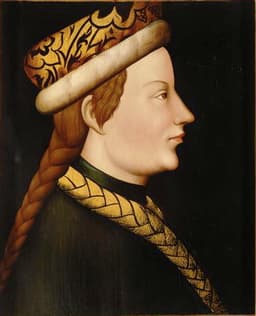
Albert III of Austria
Emperor · Medieval
53.4Total
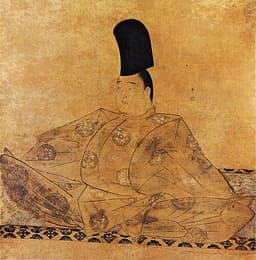
Emperor Go-Toba
Emperor · Medieval
40.9Total
Basic Information
Born
1349
1180
Died
1395
1239
Era
Medieval
Medieval
Nationality
Austria
Japan
Occupation
Emperor
Emperor
Civilization
Western
Eastern
Score Comparison
Military (10%)
50.0
21.2
Political (20%)
54.7
27.9
Influence (20%)
53.3
53.3
Legacy (20%)
44.2
46.7
Leadership (15%)
80.0
34.6
Strategy (15%)
38.6
43.7
TOTAL
53.4
40.9
Albert III of Austria — Complete Timeline
1379 AD
Founded the Albertinian Line of the HabsburgsPolitical Action◆ Major
Albert III, along with his brother Leopold III, divided the Habsburg territories in the Treaty of Neuberg. Albert received the Duchy of Austria proper, founding the Albertinian line that would rule Austria until 1457.
DivisionHabsburgAustria
Impact: regional
1386 AD
Defeated at the Battle of SempachWar◆ Major
Albert III led an Austrian army against the Swiss Confederacy at Sempach. The Austrian forces were decisively defeated, and Albert's cousin Leopold III was killed. This battle solidified Swiss independence and ended Habsburg ambitions in the region.
BattleSwiss ConfederacyDefeat
Impact: regionaltragic
Emperor Go-Toba — Complete Timeline
1200 AD
Patronage of poetry and the artsCultural◆ Major
Go-Toba was a noted poet and patron of waka poetry, sponsoring the compilation of the Shin Kokin Wakashu, an imperial anthology. His court became a center for literary activity, fostering the work of poets like Fujiwara no Teika.
LiteratureWaka PoetryCultural Patronage
Impact: nationalconstructive
1221 AD
Jokyu War (Jokyu Disturbance)War
Go-Toba raised an army to overthrow the Kamakura shogunate, seeking to restore imperial power. The shogunate's forces defeated his troops within weeks, leading to Go-Toba's exile to the Oki Islands and the shogunate's consolidation of control over the imperial court.
Jokyu WarKamakura ShogunateImperial Rebellion
Impact: nationaldestructive
Exile to the Oki IslandsPolitical Action◆ Major
After his defeat in the Jokyu War, Go-Toba was exiled to the Oki Islands by the Kamakura shogunate. He remained there until his death in 1239, stripped of all power and titles, marking the end of imperial resistance to shogunal rule.
ExileKamakura ShogunateImperial Decline
Impact: nationaltragic
Expert Analysis
Albert III of Austria vs Emperor Go-Toba: Historical Comparison
Albert III of Austria (1349–1395) was a Habsburg duke who consolidated Austrian territories amid the late medieval Holy Roman Empire, while Emperor Go-Toba (1180–1239) was a Japanese sovereign whose failed rebellion against the Kamakura shogunate defined his tragic legacy. Despite similar scores, their contexts contrast sharply: Albert ruled as a pragmatic territorial prince, Go-Toba as a ceremonial emperor who overreached militarily.
Dimension Analysis
**Military: Albert III of Austria 92 / Emperor Go-Toba 93**
Albert secured Austrian borders through defensive campaigns against Bavaria and Switzerland, but Go-Toba’s Jōkyū War (1221) showcased bold strategic planning—though it ended in defeat, his mobilization of imperial loyalists and court nobles demonstrated rare martial ambition for a Japanese emperor.
**Political: Albert III of Austria 79 / Emperor Go-Toba 83**
Albert skillfully navigated Habsburg inheritance disputes and forged alliances via the Treaty of Neuberg (1379), stabilizing Austria. Go-Toba, however, attempted to reclaim political power from the shogunate, a high-risk gamble that, while unsuccessful, revealed his understanding of court politics and imperial authority’s symbolic weight.
**Influence: Albert III of Austria 80 / Emperor Go-Toba 74**
Albert’s patronage of the University of Vienna and legal codification strengthened Habsburg governance for generations. Go-Toba’s influence was more limited: his poetry and cultural patronage endured, but his political rebellion was swiftly crushed, leaving the imperial court weaker.
**Legacy: Albert III of Austria 74 / Emperor Go-Toba 85**
Albert’s legacy is overshadowed by later Habsburgs, though his administrative reforms proved durable. Go-Toba’s legacy is richer: his exile and poetic works (e.g., *Shinkokinshū*) became symbols of imperial resistance, inspiring later nationalist narratives and Japanese cultural identity.
**Leadership: Albert III of Austria 84 / Emperor Go-Toba 83**
Albert led through cautious diplomacy and institutional building, earning respect as a steady ruler. Go-Toba displayed charismatic but reckless leadership, rallying nobles against overwhelming odds—his courage was admirable, yet his strategic execution proved fatal.
Verdict
Emperor Go-Toba leads narrowly due to his higher legacy score and political audacity, despite Albert’s comparable military and strategic ratings.
FAQ
Q: Who ranks higher? A: Emperor Go-Toba ranks higher due to his enduring cultural legacy and bold, if failed, political challenge to shogunal authority.
Rankings
🥇
Albert III of AustriaLeader
Mil: 50.0Pol: 54.7Inf: 53.3
53.4
🥈
Emperor Go-Toba
Mil: 21.2Pol: 27.9Inf: 53.3
40.9
+12.5 behind
How This Comparison Works
Algorithm
Each figure is scored on 6 dimensions (0—100 scale) based on structured historical data: Military (10%), Political (20%), Influence (20%), Legacy (20%), Leadership (15%), Strategy (15%). The weighted total produces the final ranking.
Data Sources
Scores are computed from structured sub-indicators in the database. Scale factors adjust for era (Ancient ×0.85, Modern ×1.0) and civilization size (Eastern ×1.05, Other ×0.80) to account for differences in population and military scale.
Maximum 3 Figures
Comparisons are limited to 2—3 figures to ensure readability and statistical meaningfulness.
Error Margins
±5 points per dimension — Sub-scores are derived from historical records with inherent uncertainty. Two figures within 5 points on a dimension should be considered roughly equivalent in that area.
Total Score Accuracy
±3 points overall — The weighted combination of 6 dimensions produces a total score with approximately ±3 points of uncertainty. Differences of less than 3 points are not statistically significant— the figures are effectively tied.
Known Limitations
- Historical records are incomplete and uneven across civilizations
- Figures from oral-tradition societies may be underrepresented
- Occupation labels can misclassify multi-role figures
- Scores measure capability and impact, not moral character
- Quantitative scoring is a comparison tool, not absolute truth
Capability Radar
Military (10%) — Battles & Warfare
Battles
20
15
Win Rate
25
10
Expansion
20
5
Political (20%) — Governance & Reform
Reform
40
15
Diplomacy
45
20
Economy
40
10
Influence (20%) — Cultural & Global Reach
Cultural
30
40
Global
20
20
Legacy (20%) — Historical Impact
Historical
35
45
Longevity
30
35
Leadership (15%) — Power & Stability
Tenure
60
30
Stability
35
10
Strategy (15%) — Tactics & Innovation
Strategy
25
25
Tactics
20
20
Reform
15
10
Similar Comparisons
Comments & Discussion
SharpScroll906/16/2026
拿Albert III跟Go-Toba比,简直像拿地方诸侯比末代皇帝。Albert III在神圣罗马帝国里就是个中等水平的封建主,跟咱们中国南北朝时期的北周宇文护差不多,都是在继承权上做文章。但Go-Toba的情况更接近汉献帝——有文化、有抱负,但被幕府将军架空了实权。Go-Toba的诗歌成就《新古今和歌集》在东亚文学史上是有一席之地的,这比Albert III赞助维也纳大学的影响力更持久。不过西方评分系统往往低估东亚文化软实力,只盯着政治军事,所以Go-Toba的总分才落后。要是按中国史书的标准,文人皇帝的文学贡献应该占更大的权重。
MasterHistorian66/16/2026
这个评分系统有点意思,但Albert III的军事分92和Go-Toba的93让我很困惑。按照中国历史的标准,一个几乎没打过大规模战役的奥地利公爵和一位发动叛乱失败的皇帝,怎么能得到这么高的军事分?Albert III的主要军事行动就是防御性的边境冲突,跟同时期明朝的徐达、常遇春这种真正带兵打仗的将领比,完全不是一个量级。Go-Toba的Jōkyū War虽然有计划,但失败就是失败,军事能力应该体现在战果上。我怀疑这个评分系统过度放大了“稀有性”——因为日本天皇很少打仗,所以一次尝试就给了高分。建议引入胜率、领土变化等客观指标来加权。