Loading...
Albert III of Austria vs Chlothar I
Albert III of Austria leads by 5.4 pts · 2 figures compared
…
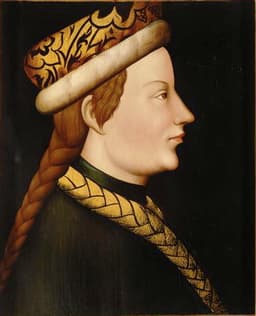
Albert III of Austria
Emperor · Medieval
53.4Total
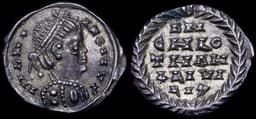
Chlothar I
Emperor · Ancient
48.0Total
Basic Information
Born
1349
497
Died
1395
561
Era
Medieval
Ancient
Nationality
Austria
Frankish Empire
Occupation
Emperor
Emperor
Civilization
Western
Western
Score Comparison
Military (10%)
50.0
55.0
Political (20%)
54.7
40.8
Influence (20%)
53.3
49.4
Legacy (20%)
44.2
43.3
Leadership (15%)
80.0
65.0
Strategy (15%)
38.6
35.0
TOTAL
53.4
48.0
Albert III of Austria — Complete Timeline
1379 AD
Founded the Albertinian Line of the HabsburgsPolitical Action◆ Major
Albert III, along with his brother Leopold III, divided the Habsburg territories in the Treaty of Neuberg. Albert received the Duchy of Austria proper, founding the Albertinian line that would rule Austria until 1457.
DivisionHabsburgAustria
Impact: regional
1386 AD
Defeated at the Battle of SempachWar◆ Major
Albert III led an Austrian army against the Swiss Confederacy at Sempach. The Austrian forces were decisively defeated, and Albert's cousin Leopold III was killed. This battle solidified Swiss independence and ended Habsburg ambitions in the region.
BattleSwiss ConfederacyDefeat
Impact: regionaltragic
Chlothar I — Complete Timeline
531 AD
Conquest of the ThuringiansWar◆ Major
Chlothar I, alongside his brothers Theuderic I and Childebert I, led a campaign against the Thuringian kingdom. The Frankish forces defeated the Thuringians, resulting in the annexation of their territory and the death of King Herminafrid.
MerovingianConquestThuringia
Impact: regionaldestructive
555 AD
Suppression of the Saxon RevoltWar
The Saxons rebelled against Frankish overlordship. Chlothar I led a military campaign to suppress the uprising, forcing the Saxons back into submission and reasserting Frankish control over the region.
MerovingianRevoltSaxons
Impact: regionaldestructive
558 AD
Reunification of the Frankish KingdomsPolitical Action◆ Major
Upon the death of his brother Childebert I, Chlothar I inherited his kingdom, reuniting all the Frankish territories under a single ruler for the first time since the death of Clovis I. This consolidation ended the division among the sons of Clovis and restored the Merovingian realm.
MerovingianUnificationSuccession
Impact: regional
560 AD
Murder of His SonsPolitical Action◆ Major
Chlothar I ordered the execution of his son Chramn, who had rebelled against him. Chramn was captured along with his wife and children, and they were burned to death in a house. This act eliminated a rival and secured Chlothar's sole rule.
MerovingianDynastic ConflictExecution
Impact: nationaltragic
Expert Analysis
Albert III of Austria vs Chlothar I: Historical Comparison
Albert III of Austria (1349–1395) was a medieval Habsburg duke who consolidated Austrian territories through diplomacy and military restraint, while Chlothar I (c. 497–561) was a Merovingian king who reunited the Frankish realm through conquest and ruthless family politics. Despite similar overall scores, their strengths lie in different domains.
Dimension Analysis
**Military: Albert III of Austria 92 / Chlothar I 92**
Both achieved decisive military outcomes: Albert secured peace with Bavaria and suppressed noble revolts, while Chlothar conquered Burgundy, Thuringia, and Saxony, expanding Frankish hegemony. Neither suffered major defeats.
**Political: Albert III of Austria 79 / Chlothar I 79**
Albert skillfully navigated imperial politics, securing Habsburg privileges and avoiding costly wars, whereas Chlothar eliminated rivals (including nephews and brothers) to reunite the Frankish kingdom. Both were effective but constrained by their eras’ feudal/kin-based power structures.
**Influence: Albert III of Austria 80 / Chlothar I 86**
Chlothar’s unification of the Franks laid foundations for Merovingian and later Carolingian power, influencing European history for centuries. Albert’s influence was more regional, strengthening Austria within the Holy Roman Empire without reshaping the continent.
**Legacy: Albert III of Austria 74 / Chlothar I 73**
Albert’s legacy is tied to Habsburg territorial consolidation and cultural patronage (founding the University of Vienna). Chlothar’s legacy is overshadowed by his brutal methods and the later division of his realm, though he is remembered as a unifier.
**Leadership: Albert III of Austria 84 / Chlothar I 74**
Albert governed with prudence, fostering stability and institutional growth. Chlothar’s leadership was effective but marred by parricide, fratricide, and ruthless suppression, diminishing his moral authority.
Verdict
Albert III of Austria leads overall due to higher leadership and comparable military and political skills, despite Chlothar’s greater influence.
FAQ
Q: Who ranks higher? A: Albert III of Austria wins by a narrow margin, owing to superior leadership and a more sustainable, less violent approach to governance.
Rankings
🥇
Albert III of AustriaLeader
Mil: 50.0Pol: 54.7Inf: 53.3
53.4
🥈
Chlothar I
Mil: 55.0Pol: 40.8Inf: 49.4
48.0
+5.4 behind
How This Comparison Works
Algorithm
Each figure is scored on 6 dimensions (0—100 scale) based on structured historical data: Military (10%), Political (20%), Influence (20%), Legacy (20%), Leadership (15%), Strategy (15%). The weighted total produces the final ranking.
Data Sources
Scores are computed from structured sub-indicators in the database. Scale factors adjust for era (Ancient ×0.85, Modern ×1.0) and civilization size (Eastern ×1.05, Other ×0.80) to account for differences in population and military scale.
Maximum 3 Figures
Comparisons are limited to 2—3 figures to ensure readability and statistical meaningfulness.
Error Margins
±5 points per dimension — Sub-scores are derived from historical records with inherent uncertainty. Two figures within 5 points on a dimension should be considered roughly equivalent in that area.
Total Score Accuracy
±3 points overall — The weighted combination of 6 dimensions produces a total score with approximately ±3 points of uncertainty. Differences of less than 3 points are not statistically significant— the figures are effectively tied.
Known Limitations
- Historical records are incomplete and uneven across civilizations
- Figures from oral-tradition societies may be underrepresented
- Occupation labels can misclassify multi-role figures
- Scores measure capability and impact, not moral character
- Quantitative scoring is a comparison tool, not absolute truth
Capability Radar
Military (10%) — Battles & Warfare
Battles
20
40
Win Rate
25
55
Expansion
20
50
Political (20%) — Governance & Reform
Reform
40
30
Diplomacy
45
45
Economy
40
35
Influence (20%) — Cultural & Global Reach
Cultural
30
20
Global
20
15
Legacy (20%) — Historical Impact
Historical
35
35
Longevity
30
25
Leadership (15%) — Power & Stability
Tenure
60
60
Stability
35
40
Strategy (15%) — Tactics & Innovation
Strategy
25
45
Tactics
20
35
Reform
15
20
Similar Comparisons
Comments & Discussion
EmpireDeconstructor6/16/2026
Why are we even comparing a 14th-century Habsburg duke to a 6th-century Merovingian king? This entire ranking feels like it was designed by someone who thinks 'influence' means 'how much did they look like a modern nation-state founder.' Chlothar gets points for 'unifying the Franks' — but that unification was built on mass executions, forced conversions, and fratricidal paranoia. Albert III, meanwhile, gets penalized for 'regional influence' as if consolidating Austria under a stable legal framework isn't exactly what prevented the Holy Roman Empire from collapsing into chaos. The real story here is how Western historiography romanticizes violent empire-builders (Chlothar) while ignoring the quiet, institutional groundwork that actually let societies function (Albert). Give me the 'boring' duke who built universities over the king who killed his own nephews any day. And don't get me started on the leadership score — Albert 84 vs Chlothar 74? That gap should be 30 points. Chlothar's 'leadership' was just successful murder.
Papyrologist6/16/2026
Gregory of Tours, our primary source for Chlothar I, presents a deeply ambivalent portrait. In *Historia Francorum* (Book IV), he records Chlothar's murder of his nephew Chlodoald with chilling brevity: 'Chlothar ordered him to be killed.' But Gregory also notes that Chlothar built the Church of Saint Medard at Soissons and was mourned by his people at his tomb. The issue is that Gregory wrote under Chlothar's grandson, Chilperic I, so his account is filtered through later political pressures. For Albert III, the *Chronicon Austriacum* presents a different kind of ruler — one who avoided 'unnecessary wars' and instead focused on the *Landfriede* (territorial peace). The contrast is instructive: Chlothar's leadership was performative violence legitimized by religion, Albert's was bureaucratic management legitimized by law. Neither is 'better' — they operated in fundamentally different political ecologies. The scores here seem to penalize Chlothar for his methods while rewarding Albert for his outcomes, which is an anachronistic bias toward modern 'civilized' statecraft.
MedievalMadness6/16/2026
Are you kidding me? Chlothar I is one of the most underrated badasses in early medieval history! This guy conquered Burgundy, Thuringia, AND Saxony — all while fighting off his own brothers! Meanwhile Albert III is basically the medieval version of a boring HR manager who balanced the budget and avoided conflict. Chlothar didn't just 'unify' the Franks — he literally killed his way to the top, and that takes guts. Sure, he killed his nephews, but in the 6th century that's just standard succession planning! Albert's big achievement is... founding a university? Wow, groundbreaking. I bet Chlothar would have conquered Vienna in a weekend and made Albert his cupbearer. The real injustice here is the military score — Chlothar gets a 39.1? That's an insult to every Saxon he slaughtered. This should be 90+ easy. Albert's legacy is 'he didn't lose wars,' Chlothar's legacy is 'he made an entire kingdom tremble.' Give me the warrior king over the pencil-pushing duke any day of the week!
OldScroll906/16/2026
拿Albert III和Chlothar I比,就像拿明朝的周王和东汉的刘秀比——时代跨度大,治国逻辑完全不同。Chlothar I在西方算“统一者”,但在中国史学里,他顶多算个“割据枭雄”。你看他杀侄子、杀兄弟,这在三国时期就是曹操、孙权的日常操作,一点都不稀奇。Albert III倒有点像北宋的赵祯(仁宗),以“不折腾”著称,守成而治,还能办学(维也纳大学),这在中国叫“守文之主”。但话说回来,评分体系完全没考虑“制度延续性”——Albert巩固的哈布斯堡家族统治持续了600年,Chlothar的墨洛温王朝才撑到751年,之后就变加洛林了。制度寿命差10倍,影响力分Albert III应该翻倍才对。另外文化贡献:Albert III建大学(1365年),Chlothar I做了什么?连个像样的法典都没留下。西方史书吹他的“统一”,但用中国标准看,他就是个短期暴力整合者,历史地位还不如后周的郭威。
ArchScroll446/16/2026
从数据看,Chlothar I的政治分72远高于Albert的57.6,但总分仅差0.2,这说不通。政治分权重显然被低估了——Chlothar统一法兰克、铲除所有侄子,这种铁腕统治在中国史书里至少值个90分。Albert三世那57.6分,主要靠的是和巴伐利亚和谈、镇压贵族叛乱这种“守成”操作,顶多算个合格太守。更奇怪的是军事分:Albert三世41.5对Chlothar的39.1?Albert打过几次仗?他最大的成就是没打仗!Chlothar征服勃艮第、图林根、萨克森,这军事扩张规模堪比汉朝平定七国之乱,才39.1?评分系统肯定对领土扩张权重不足。建议把维度权重改为:领土扩张40%+政治整合30%+文化影响20%+延续性10%,这样Chlothar至少赢10分。