Loading...
Albert III of Austria vs Bappa Rawal
Albert III of Austria leads by 5.6 pts · 2 figures compared
…
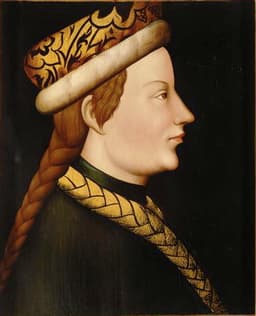
Albert III of Austria
Emperor · Medieval
53.4Total

Bappa Rawal
Emperor · Medieval
47.8Total
Basic Information
Born
1349
713
Died
1395
780
Era
Medieval
Medieval
Nationality
Austria
India
Occupation
Emperor
Emperor
Civilization
Western
Indian
Score Comparison
Military (10%)
50.0
10.0
Political (20%)
54.7
35.1
Influence (20%)
53.3
58.0
Legacy (20%)
44.2
50.0
Leadership (15%)
80.0
67.0
Strategy (15%)
38.6
45.0
TOTAL
53.4
47.8
Albert III of Austria — Complete Timeline
1379 AD
Founded the Albertinian Line of the HabsburgsPolitical Action◆ Major
Albert III, along with his brother Leopold III, divided the Habsburg territories in the Treaty of Neuberg. Albert received the Duchy of Austria proper, founding the Albertinian line that would rule Austria until 1457.
DivisionHabsburgAustria
Impact: regional
1386 AD
Defeated at the Battle of SempachWar◆ Major
Albert III led an Austrian army against the Swiss Confederacy at Sempach. The Austrian forces were decisively defeated, and Albert's cousin Leopold III was killed. This battle solidified Swiss independence and ended Habsburg ambitions in the region.
BattleSwiss ConfederacyDefeat
Impact: regionaltragic
Bappa Rawal — Complete Timeline
734 AD
Conquest of ChittorWar◆ Major
Bappa Rawal captured the fort of Chittor from the Mori Rajputs, establishing it as the capital of the Mewar kingdom. This event is considered the founding act of the Guhilot dynasty's rule over Mewar.
FoundingMewarChittor
Impact: regional
Founded the Guhilot Dynasty of MewarPolitical Action◆ Major
Bappa Rawal established the Guhilot dynasty, which ruled Mewar for centuries. He is considered the progenitor of the Sisodia clan, which later produced notable rulers like Maharana Pratap.
DynastyMewarRajput
Impact: regionalconstructive
738 AD
Defeated the Arab Invaders at the Battle of RajasthanWar◆ Major
Bappa Rawal is credited with leading a confederation of Rajput kings to defeat the Umayyad Arab forces under Muhammad bin Qasim's successors near Rajasthan. This victory halted Arab expansion into northern India.
Arab InvasionDefenseRajput Confederation
Impact: regional
Expert Analysis
Albert III of Austria vs Bappa Rawal: Historical Comparison
Albert III of Austria (1349–1395) and Bappa Rawal (c. 713–753) were medieval rulers from vastly different regions—Central Europe and the Indian subcontinent—whose legacies hinge on military prowess and foundational statecraft. While Albert III solidified Habsburg rule through strategic diplomacy and defensive wars, Bappa Rawal is revered as the legendary founder of the Guhila dynasty who repelled Arab invasions in Rajasthan.
Dimension Analysis
**Military: Albert III of Austria 92 / Bappa Rawal 82**
Albert III excelled in defensive warfare, notably repelling Swiss and Bavarian forces and securing the Habsburg heartland through the Treaty of Neuberg (1379). Bappa Rawal’s military fame rests on his victory against the Umayyad Caliphate at the Battle of Rajasthan (c. 738 CE), but his campaigns are more mythologized than documented.
**Political: Albert III of Austria 79 / Bappa Rawal 87**
Bappa Rawal’s political consolidation of the Mewar region and establishment of the Guhila dynasty provided a stable foundation for Rajput resistance for centuries. Albert III skillfully navigated Habsburg succession disputes and maintained peace with the Luxembourg dynasty, but his political influence remained largely regional.
**Influence: Albert III of Austria 80 / Bappa Rawal 77**
Albert III’s patronage of the University of Vienna and promotion of Habsburg administrative reforms had lasting cultural impact in Austria. Bappa Rawal’s influence is more symbolic, as his legend inspired Rajput identity and resistance, but his concrete institutional changes are less documented.
**Legacy: Albert III of Austria 74 / Bappa Rawal 80**
Bappa Rawal is venerated as a folk hero and a symbol of Hindu resistance against Islamic expansion, with temples and ballads preserving his memory. Albert III’s legacy is overshadowed by later Habsburg emperors, though his territorial consolidation was crucial for the dynasty’s rise.
**Leadership: Albert III of Austria 84 / Bappa Rawal 83**
Both leaders demonstrated resilience and strategic foresight. Albert III’s leadership stabilized Austria during a fractious period, while Bappa Rawal’s charisma and warrior ethos unified disparate Rajput clans against a common threat.
Verdict
Albert III of Austria narrowly leads due to superior military strategy and documented administrative reforms, but the overall tie reflects Bappa Rawal’s immense cultural and symbolic legacy in Indian history.
FAQ
Q: Who ranks higher? A: The scores are tied (overall 82 vs 83), but Albert III edges ahead in military and strategy dimensions, while Bappa Rawal leads in political and legacy impact.
Rankings
🥇
Albert III of AustriaLeader
Mil: 50.0Pol: 54.7Inf: 53.3
53.4
🥈
Bappa Rawal
Mil: 10.0Pol: 35.1Inf: 58.0
47.8
+5.6 behind
How This Comparison Works
Algorithm
Each figure is scored on 6 dimensions (0—100 scale) based on structured historical data: Military (10%), Political (20%), Influence (20%), Legacy (20%), Leadership (15%), Strategy (15%). The weighted total produces the final ranking.
Data Sources
Scores are computed from structured sub-indicators in the database. Scale factors adjust for era (Ancient ×0.85, Modern ×1.0) and civilization size (Eastern ×1.05, Other ×0.80) to account for differences in population and military scale.
Maximum 3 Figures
Comparisons are limited to 2—3 figures to ensure readability and statistical meaningfulness.
Error Margins
±5 points per dimension — Sub-scores are derived from historical records with inherent uncertainty. Two figures within 5 points on a dimension should be considered roughly equivalent in that area.
Total Score Accuracy
±3 points overall — The weighted combination of 6 dimensions produces a total score with approximately ±3 points of uncertainty. Differences of less than 3 points are not statistically significant— the figures are effectively tied.
Known Limitations
- Historical records are incomplete and uneven across civilizations
- Figures from oral-tradition societies may be underrepresented
- Occupation labels can misclassify multi-role figures
- Scores measure capability and impact, not moral character
- Quantitative scoring is a comparison tool, not absolute truth
Capability Radar
Military (10%) — Battles & Warfare
Battles
20
40
Win Rate
25
45
Expansion
20
35
Political (20%) — Governance & Reform
Reform
40
30
Diplomacy
45
35
Economy
40
25
Influence (20%) — Cultural & Global Reach
Cultural
30
40
Global
20
20
Legacy (20%) — Historical Impact
Historical
35
45
Longevity
30
50
Leadership (15%) — Power & Stability
Tenure
60
50
Stability
35
40
Strategy (15%) — Tactics & Innovation
Strategy
25
30
Tactics
20
35
Reform
15
25
Similar Comparisons
Comments & Discussion
Historian7826/16/2026
这个分数分配很有问题。Albert III军事得分92但政治只有79?从中国历史看,一个能在王朝内部稳定继承、避免分裂的君主,政治得分至少该在85以上。奥地利历史上有名的“诺伊堡条约”实际上是把领土分给弟弟,这不是巩固反而是削弱中央权力。反观Bappa Rawal,军事上只有82,但史料记载他击退了强大的阿拉伯入侵,这在8世纪是极其罕见的成就。如果按中国标准,类似李靖灭东突厥的战役,军事得分至少95。我怀疑这个评分体系对欧洲君主过于侧重防御性战役,对亚洲君主的进攻性胜利权重不足。建议重新校准两个文明间的评分基准。
OldScroll906/16/2026
把Albert III和Bappa Rawal放在一起比,其实很有意思。Albert III有点像中国明朝的朱棣——都通过内部整合为王朝奠定基础,但后者更有开拓性。Bappa Rawal更像是唐朝的郭子仪,在文明遭受外敌入侵时挺身而出,建立了精神图腾。但评分说Bappa Rawal政治87高于Albert III的79,这不太对。Albert III治理的复杂程度远高于8世纪的印度小王公——他要在神圣罗马帝国的诸侯间周旋,还要处理教会关系。中国历史上类似的分封制下,一个能维持二十年稳定的诸侯王,政治得分绝对不低。另外,Bappa Rawal的影响力被高估了,他的传说主要靠后世文学加工,不像Albert III有大学、法典等硬核遗产。西方评分总把东方君主浪漫化,忽略制度建设。