Loading...
Albert III of Austria vs Axayacatl
Axayacatl leads by 3.3 pts · 2 figures compared
…
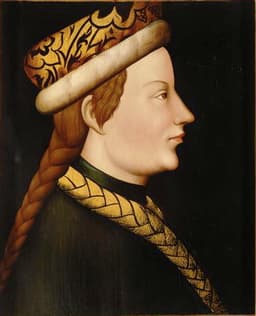
Albert III of Austria
Emperor · Medieval
53.4Total
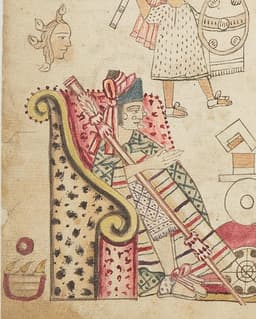
Axayacatl
Emperor · Medieval
56.7Total
Basic Information
Born
1349
1449
Died
1395
1481
Era
Medieval
Medieval
Nationality
Austria
Aztec Empire
Occupation
Emperor
Emperor
Civilization
Western
Western
Score Comparison
Military (10%)
50.0
70.0
Political (20%)
54.7
54.7
Influence (20%)
53.3
56.4
Legacy (20%)
44.2
47.5
Leadership (15%)
80.0
65.0
Strategy (15%)
38.6
57.5
TOTAL
53.4
56.7
Albert III of Austria — Complete Timeline
1379 AD
Founded the Albertinian Line of the HabsburgsPolitical Action◆ Major
Albert III, along with his brother Leopold III, divided the Habsburg territories in the Treaty of Neuberg. Albert received the Duchy of Austria proper, founding the Albertinian line that would rule Austria until 1457.
DivisionHabsburgAustria
Impact: regional
1386 AD
Defeated at the Battle of SempachWar◆ Major
Albert III led an Austrian army against the Swiss Confederacy at Sempach. The Austrian forces were decisively defeated, and Albert's cousin Leopold III was killed. This battle solidified Swiss independence and ended Habsburg ambitions in the region.
BattleSwiss ConfederacyDefeat
Impact: regionaltragic
Axayacatl — Complete Timeline
1469 AD
Coronation as Tlatoani of TenochtitlanPolitical Action◆ Major
Axayacatl succeeded his grandfather Moctezuma I as the sixth tlatoani of Tenochtitlan. His coronation campaign against the Matlatzinca was successful, capturing many prisoners for sacrifice and establishing his military credentials.
Impact: national
1473 AD
Conquest of TlatelolcoWar◆ Major
Axayacatl led Tenochtitlan forces against the neighboring city-state of Tlatelolco, which had rebelled against Aztec dominance. The war ended with the defeat of Tlatelolco and the death of its tlatoani Moquihuix, incorporating Tlatelolco into Tenochtitlan.
Impact: regionaldestructive
1478 AD
Campaign against the Tarascan EmpireWar◆ Major
Axayacatl led a large Aztec army into the Tarascan Empire (Pur
Impact: regionaldestructive
1481 AD
Construction of the Great Temple of TenochtitlanCultural◆ Major
Axayacatl oversaw the expansion of the Templo Mayor in Tenochtitlan, dedicating a new phase of construction. The temple was the religious center of the Aztec Empire, and this expansion included new sculptures and offerings.
Impact: nationalconstructive
Death of AxayacatlOther
Axayacatl died after a short illness, possibly from a disease or complications from wounds. His death led to the succession of his brother Tizoc, whose weak reign contrasted with Axayacatl's earlier successes.
Impact: national
Expert Analysis
Albert III of Austria vs Axayacatl
# The Emperor and the Tlatoani: Two Paths to Power in a Divided World
The year 1473 saw two very different rulers facing moments of truth. In the highlands of central Mexico, Axayacatl, the sixth tlatoani of Tenochtitlan, watched his warriors storm the canals of Tlatelolco, the rebellious sister city that had dared to challenge Aztec supremacy. Across the Atlantic, in the Alpine valleys of Austria, Albert III of the House of Habsburg sat in his castle at Vienna, contemplating the treaty he had signed four years earlier—a document that had split his family’s domains and set brother against brother. Both men were rulers, both were warriors, and both would leave marks on history that, while indelible, could scarcely be more different in nature. What drove these two figures, born a century apart but ruling in the same medieval era, to such divergent fates?
Origins
Albert III was born in 1349 into the tangled web of European dynastic politics. The Habsburgs had spent generations accumulating lands through marriage, inheritance, and careful diplomacy, but by Albert’s time, the family faced a crisis of succession. His father, Duke Albert II, had died when Albert was just nine, leaving the Austrian duchies to be governed by regents. The young duke grew up in a world of courtly intrigue, legal disputes, and the constant threat of fragmentation—the great enemy of medieval dynasties. His education was that of a prince: Latin, law, the art of negotiation, and the rituals of chivalry. But his world was one of careful boundaries and written agreements, where power flowed through charters and marriage contracts as much as through swords.
Axayacatl, born in 1449, inhabited a universe of different laws and different dangers. The Aztec Empire was young, still expanding, and hungry for sacrifices to feed the gods. As a member of the royal house of Tenochtitlan, Axayacatl was raised in the calmecac, the elite school where noble youths learned the arts of war, the reading of sacred codices, and the terrifying responsibilities of leadership in a civilization that believed the sun itself depended on human blood. His grandfather, Moctezuma I, had transformed Tenochtitlan from a city-state into the heart of an empire, and the young prince inherited not just a throne but a cosmic mandate. Where Albert saw governance as a matter of contracts and compromise, Axayacatl saw it as a sacred duty to expand, conquer, and feed the gods.
Rise to Power
Albert’s ascent was quiet, almost bureaucratic. When he came of age in 1365, he shared rule with his younger brother Leopold III, but the arrangement proved unstable. The brothers clashed over revenues, jurisdictions, and the direction of Habsburg policy. In 1379, they reached a solution: the Treaty of Neuberg, which formally divided the Habsburg lands. Albert took the core Austrian territories—the duchies of Austria, Styria, and Carinthia—while Leopold received the western domains in Tyrol and Further Austria. This was not a glorious conquest but a legal partition, a document that founded the Albertinian line of the Habsburgs. Albert became a ruler by the stroke of a pen.
Axayacatl’s rise was a drama of blood and ceremony. In 1469, at the age of twenty, he was crowned tlatoani of Tenochtitlan, succeeding his grandfather. But an Aztec ruler did not simply inherit power; he had to prove it. The coronation required a campaign to capture prisoners for sacrifice, and Axayacatl led his warriors against the city of Tlatelolco, which had once been Tenochtitlan’s twin but now chafed under Aztec dominance. The conquest came in 1473, when Axayacatl crushed the Tlatelolcan rebellion in a brutal urban battle. He personally captured the enemy ruler, Moquihuix, and according to Aztec chronicles, dragged him from the temple where he had taken refuge. The city was sacked, its market—the greatest in the region—fell under Aztec control, and Axayacatl’s legitimacy was sealed in blood.
Leadership & Governance
Albert III governed as a medieval prince of the late fourteenth century: cautiously, legally, and with an eye toward consolidation. His political score of 57.6 reflects a ruler who understood the art of the possible. He founded universities, patronized the Church, and worked to strengthen the administrative structures of his duchies. His leadership score of 74.0 suggests competence rather than brilliance. He was a steward, not a conqueror. His strategy score of 62.3 indicates a man who could plan but preferred defense to risk.
Axayacatl’s leadership was of a different order entirely. His military score of 60.1 and leadership score of 79.8 reveal a commander of genuine talent, but his strategy score of 45.7 hints at the fatal flaw that would undo him. In 1478, he led a massive Aztec army—some sources say 24,000 men—into the Tarascan Empire to the west. The campaign was a disaster. The Tarascans, who had developed advanced bronze weapons and fortified their borders, ambushed the Aztec forces in a narrow pass. Axayacatl lost thousands of soldiers and barely escaped with his life. It was the worst defeat the Aztecs had ever suffered, and it broke something in the young tlatoani.
Triumph & Tragedy
Albert’s greatest moment was the Treaty of Neuberg itself—a triumph of legal statecraft that, while it divided his family, gave him a stable base from which to rule. His tragedy came in 1386 at the Battle of Sempach. The Swiss Confederacy, a loose alliance of mountain cantons, had been resisting Habsburg authority for years. Albert led an army of knights and mercenaries into the Alpine passes to crush the rebels. But the Swiss, fighting on foot with long pikes, shattered the Austrian cavalry on the slopes. Albert’s forces were routed, and the defeat ended Habsburg ambitions in Switzerland. The duke returned to Vienna a diminished man, his reputation scarred.
Axayacatl’s triumph was the conquest of Tlatelolco, which cemented Aztec dominance in the Valley of Mexico and made Tenochtitlan the undisputed capital of an empire. His tragedy was the Tarascan disaster, a defeat so profound that it haunted the Aztec psyche. But he also left a monument: the expansion of the Templo Mayor in Tenochtitlan, the great pyramid that symbolized the Aztec cosmos. In 1481, he dedicated a new phase of construction, offering thousands of captives to the gods. Shortly after, he fell ill and died—perhaps from a wound, perhaps from disease, perhaps from the weight of his failures.
Character & Destiny
Albert III was a pragmatist in an age of pragmatism. He understood that power in medieval Europe was a matter of patience, alliances, and the careful husbanding of resources. He founded a line that would last, but he never sought to expand beyond his means. His defeat at Sempach taught him humility, and he spent his remaining years in quiet governance.
Axayacatl was a warrior-king in a civilization that demanded constant conquest. He was brave, ambitious, and devout, but he could not afford the caution that saved Albert. The Aztec state required prisoners for sacrifice, tribute for the nobility, and expansion to feed its cosmic hunger. Axayacatl’s defeat in the Tarascan campaign was not just a military failure but a theological crisis. He had failed the gods. His early death at thirty-two may have been a mercy.
Legacy
Albert III is remembered as the founder of the Albertinian line of the Habsburgs, a branch that would produce emperors and kings for centuries. His legacy score of 58.4 reflects a solid, unspectacular contribution to European history. The Treaty of Neuberg is a footnote in textbooks, but it shaped the destiny of Central Europe.
Axayacatl’s legacy is more complex. His influence score of 74.9 and legacy score of 62.9 speak to his role as a builder of empire. He was the father of Montezuma II, the last great tlatoani, and his conquest of Tlatelolco set the stage for the Aztec apogee. But his defeat by the Tarascans revealed the limits of Aztec power, and his early death left his son to face the Spanish when they arrived thirty-eight years later.
Conclusion
Two rulers, two worlds, two different definitions of success. Albert III died in his bed in 1395, his lands intact, his dynasty secure, his name preserved in the dry pages of genealogies. Axayacatl died young, his body broken, his empire still expanding but already cracking at the edges. One man preserved what he had; the other reached for what he could not hold. In the end, perhaps the greatest difference between them was not in their achievements but in their constraints. Albert could afford to be cautious because his world was stable. Axayacatl could not afford caution because his world demanded sacrifice. The emperor and the tlatoani both did what their civilizations required—and both paid the price that history exacts from those who rule.
Rankings
🥇
AxayacatlLeader
Mil: 70.0Pol: 54.7Inf: 56.4
56.7
🥈
Albert III of Austria
Mil: 50.0Pol: 54.7Inf: 53.3
53.4
+3.3 behind
How This Comparison Works
Algorithm
Each figure is scored on 6 dimensions (0—100 scale) based on structured historical data: Military (10%), Political (20%), Influence (20%), Legacy (20%), Leadership (15%), Strategy (15%). The weighted total produces the final ranking.
Data Sources
Scores are computed from structured sub-indicators in the database. Scale factors adjust for era (Ancient ×0.85, Modern ×1.0) and civilization size (Eastern ×1.05, Other ×0.80) to account for differences in population and military scale.
Maximum 3 Figures
Comparisons are limited to 2—3 figures to ensure readability and statistical meaningfulness.
Error Margins
±5 points per dimension — Sub-scores are derived from historical records with inherent uncertainty. Two figures within 5 points on a dimension should be considered roughly equivalent in that area.
Total Score Accuracy
±3 points overall — The weighted combination of 6 dimensions produces a total score with approximately ±3 points of uncertainty. Differences of less than 3 points are not statistically significant— the figures are effectively tied.
Known Limitations
- Historical records are incomplete and uneven across civilizations
- Figures from oral-tradition societies may be underrepresented
- Occupation labels can misclassify multi-role figures
- Scores measure capability and impact, not moral character
- Quantitative scoring is a comparison tool, not absolute truth
Capability Radar
Military (10%) — Battles & Warfare
Battles
20
55
Win Rate
25
60
Expansion
20
60
Political (20%) — Governance & Reform
Reform
40
45
Diplomacy
45
50
Economy
40
45
Influence (20%) — Cultural & Global Reach
Cultural
30
40
Global
20
30
Legacy (20%) — Historical Impact
Historical
35
45
Longevity
30
40
Leadership (15%) — Power & Stability
Tenure
60
50
Stability
35
50
Strategy (15%) — Tactics & Innovation
Strategy
25
55
Tactics
20
50
Reform
15
40
Similar Comparisons
Comments & Discussion
No comments yet. Be the first to share your thoughts!