Loading...
Albert III of Austria vs Atahualpa
Albert III of Austria leads by 8.9 pts · 2 figures compared
…
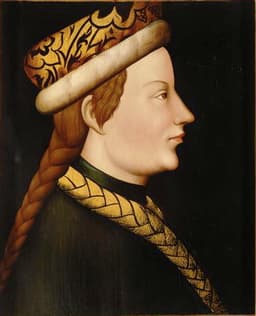
Albert III of Austria
Emperor · Medieval
53.4Total
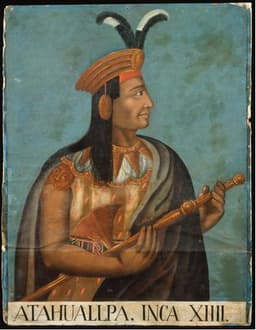
Atahualpa
Emperor · Medieval
44.5Total
Basic Information
Born
1349
1502
Died
1395
1533
Era
Medieval
Medieval
Nationality
Austria
Inca Empire
Occupation
Emperor
Emperor
Civilization
Western
Other
Score Comparison
Military (10%)
50.0
46.7
Political (20%)
54.7
27.9
Influence (20%)
53.3
57.2
Legacy (20%)
44.2
46.7
Leadership (15%)
80.0
39.0
Strategy (15%)
38.6
38.3
TOTAL
53.4
44.5
Albert III of Austria — Complete Timeline
1379 AD
Founded the Albertinian Line of the HabsburgsPolitical Action◆ Major
Albert III, along with his brother Leopold III, divided the Habsburg territories in the Treaty of Neuberg. Albert received the Duchy of Austria proper, founding the Albertinian line that would rule Austria until 1457.
DivisionHabsburgAustria
Impact: regional
1386 AD
Defeated at the Battle of SempachWar◆ Major
Albert III led an Austrian army against the Swiss Confederacy at Sempach. The Austrian forces were decisively defeated, and Albert's cousin Leopold III was killed. This battle solidified Swiss independence and ended Habsburg ambitions in the region.
BattleSwiss ConfederacyDefeat
Impact: regionaltragic
Atahualpa — Complete Timeline
1532 AD
Victory in the Inca Civil WarWar◆ Major
Atahualpa defeated his brother Hu
Civil WarSuccessionInca Empire
Impact: regionaldestructive
Capture at CajamarcaWar
Francisco Pizarro ambushed Atahualpa at Cajamarca, capturing the Inca emperor after a surprise attack. Spanish forces killed thousands of unarmed Inca attendants while Atahualpa was taken prisoner, marking the beginning of Spanish conquest.
Spanish ConquestAmbushPizarro
Impact: globaltragic
1533 AD
Ransom Room PaymentPolitical Action◆ Major
Atahualpa offered to fill a room with gold and silver in exchange for his release. Over several months, the Inca delivered approximately 6 tons of gold and 12 tons of silver, the largest ransom in history, but Pizarro executed him anyway.
RansomGoldSpanish Greed
Impact: regionaltragic
Execution by GarrotePolitical Action
Pizarro ordered Atahualpa's execution by garrote after a mock trial accused him of treason, idolatry, and ordering Hu
ExecutionSpanish ConquestEnd of Empire
Impact: globaltragic
Expert Analysis
Origins
**Albert III of Austria** (1349–1395) was born into the powerful Habsburg dynasty, the third son of Duke Albert II of Austria. His early life was shaped by the complex politics of the Holy Roman Empire and the Habsburgs' ambition to expand their territories. Albert received a knightly education, preparing him for military and administrative roles. The division of Habsburg lands after his father's death led to rivalry with his brother Leopold III, culminating in the Treaty of Neuberg (1379), which split the family domains. Albert retained the Duchy of Austria proper, founding the Albertinian line.
**Atahualpa** (c. 1500–1533) was the son of Inca Emperor Huayna Capac and a Quito noblewoman. Raised in the northern part of the empire, he was favored by his father and given command of the army in Quito. His early life was marked by the vast expansion of the Inca Empire under his father's rule. Atahualpa's upbringing was martial and administrative, learning the intricacies of Inca governance and warfare. The death of Huayna Capac around 1525 triggered a succession crisis, pitting Atahualpa against his half-brother Huáscar.
Rise to Power
Albert III's rise came through inheritance and negotiation. After his father's death in 1358, Albert and his brothers initially ruled jointly. However, tensions led to the 1379 Treaty of Neuberg, where Albert received Austria proper (including Vienna) while Leopold took Styria, Carinthia, and Tyrol. Albert's political acumen (scored 54.7) ensured he maintained control over the core Habsburg lands. He also served as a mediator in imperial politics, earning respect among German princes.
Atahualpa's rise was through civil war. After Huayna Capac's death, Huáscar claimed the throne from Cusco, while Atahualpa ruled from Quito. The conflict escalated into a brutal civil war (1529–1532). Atahualpa's military strategy (scored 38.3) and leadership (39.0) proved effective; he won decisive battles, culminating in the Battle of Quipaipan (1532), where he captured Huáscar. Atahualpa then consolidated power, executing Huáscar's supporters and securing his position as the sole Inca ruler.
Leadership & Governance
Albert III governed the Duchy of Austria with a focus on stability and economic development. He fostered trade, supported the Church, and maintained relative peace. His leadership score of 80.0 reflects his ability to manage the Albertinian line's domains without major upheaval. He also engaged in diplomacy, such as mediating disputes among German nobles. However, his military ventures were less successful, as seen in the Battle of Sempach (1386), where his forces were routed by the Swiss Confederacy, leading to a loss of influence.
Atahualpa's governance was centralized and authoritarian. He reorganized the Inca state after the civil war, purging rival factions and strengthening the role of the Sapa Inca. He continued the Inca tradition of labor taxation (mita) and state redistribution. However, his leadership was tested by the arrival of Spanish conquistadors. His political score (27.9) indicates poor handling of the Spanish threat; he underestimated Pizarro's forces and was captured at Cajamarca. Atahualpa's attempt to ransom himself (filling a room with gold) showed his wealth but also his naivety in dealing with Europeans.
Triumph & Tragedy
Albert III's greatest success was founding the Albertinian line, which ensured Habsburg continuity in Austria. He maintained internal peace and economic stability. His greatest failure was the defeat at Sempach, where he lost key territories and saw his cousin Leopold II killed. This setback diminished Habsburg power in Switzerland.
Atahualpa's triumph was winning the Inca Civil War, unifying the empire under his rule. He also amassed immense wealth, controlling an empire stretching from modern Ecuador to Chile. His tragedy was his capture and execution by Pizarro. Despite delivering tons of gold and silver for his ransom, he was garroted in 1533, effectively ending the Inca Empire. His political score of 27.9 reflects his catastrophic misjudgment.
Character & Destiny
Albert III was prudent and cautious, traits that helped him preserve his domains but also led to military timidity. He lacked aggressive ambition, preferring diplomacy to war. His character shaped a stable but unremarkable reign. Historians view him as a competent administrator but not a great military leader.
Atahualpa was proud and ruthless, as shown by his execution of Huáscar's family. He was decisive in war but inflexible in crisis. His belief in his own divinity led him to underestimate the Spanish. His destiny was sealed by his refusal to convert to Christianity and his failure to understand Spanish motives. His total score of 44.5 reflects a leader of great potential undone by fatal errors.
Legacy
Albert III's legacy is the Albertinian line of the Habsburgs, which continued until 1457. He contributed to the long-term stability of Austria. However, his impact is overshadowed by other Habsburgs. His legacy score of 44.2 is modest.
Atahualpa's legacy is immense as the last Inca emperor, symbolizing the fall of the Inca civilization. His story is a cautionary tale of conquest and cultural collision. The gold ransom and his execution are iconic events in world history. His influence score of 57.2 reflects his enduring symbolic power.
Conclusion
Albert III of Austria, with a total score of 53.4, had a more stable and effective reign than Atahualpa (44.5). Albert's leadership score (80.0) and political acumen (54.7) enabled him to preserve his dynasty and territory. Atahualpa's military (46.7) and political (27.9) scores were lower, and his reign ended in disaster. While Atahualpa's story is more dramatic, Albert's impact on Habsburg continuity was more concrete. Thus, Albert III of Austria had a greater historical impact in terms of stable governance and dynastic endurance.
Rankings
🥇
Albert III of AustriaLeader
Mil: 50.0Pol: 54.7Inf: 53.3
53.4
🥈
Atahualpa
Mil: 46.7Pol: 27.9Inf: 57.2
44.5
+8.9 behind
How This Comparison Works
Algorithm
Each figure is scored on 6 dimensions (0—100 scale) based on structured historical data: Military (10%), Political (20%), Influence (20%), Legacy (20%), Leadership (15%), Strategy (15%). The weighted total produces the final ranking.
Data Sources
Scores are computed from structured sub-indicators in the database. Scale factors adjust for era (Ancient ×0.85, Modern ×1.0) and civilization size (Eastern ×1.05, Other ×0.80) to account for differences in population and military scale.
Maximum 3 Figures
Comparisons are limited to 2—3 figures to ensure readability and statistical meaningfulness.
Error Margins
±5 points per dimension — Sub-scores are derived from historical records with inherent uncertainty. Two figures within 5 points on a dimension should be considered roughly equivalent in that area.
Total Score Accuracy
±3 points overall — The weighted combination of 6 dimensions produces a total score with approximately ±3 points of uncertainty. Differences of less than 3 points are not statistically significant— the figures are effectively tied.
Known Limitations
- Historical records are incomplete and uneven across civilizations
- Figures from oral-tradition societies may be underrepresented
- Occupation labels can misclassify multi-role figures
- Scores measure capability and impact, not moral character
- Quantitative scoring is a comparison tool, not absolute truth
Capability Radar
Military (10%) — Battles & Warfare
Battles
20
40
Win Rate
25
35
Expansion
20
20
Political (20%) — Governance & Reform
Reform
40
10
Diplomacy
45
20
Economy
40
15
Influence (20%) — Cultural & Global Reach
Cultural
30
40
Global
20
35
Legacy (20%) — Historical Impact
Historical
35
50
Longevity
30
30
Leadership (15%) — Power & Stability
Tenure
60
15
Stability
35
10
Strategy (15%) — Tactics & Innovation
Strategy
25
25
Tactics
20
30
Reform
15
10
Similar Comparisons
Comments & Discussion
No comments yet. Be the first to share your thoughts!