Loading...
Albert III of Austria vs Alexios I Komnenos
Alexios I Komnenos leads by 25.0 pts · 2 figures compared
…
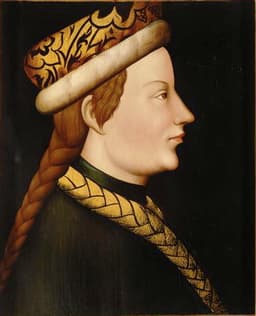
Albert III of Austria
Emperor · Medieval
53.4Total
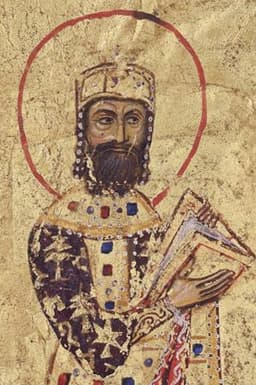
Alexios I Komnenos
Emperor · Medieval
78.4Total
Basic Information
Born
1349
1048
Died
1395
1118
Era
Medieval
Medieval
Nationality
Austria
Byzantine Empire
Occupation
Emperor
Emperor
Civilization
Western
Western
Score Comparison
Military (10%)
50.0
61.7
Political (20%)
54.7
78.0
Influence (20%)
53.3
88.0
Legacy (20%)
44.2
80.0
Leadership (15%)
80.0
78.0
Strategy (15%)
38.6
68.0
TOTAL
53.4
78.4
Albert III of Austria — Complete Timeline
1379 AD
Founded the Albertinian Line of the HabsburgsPolitical Action◆ Major
Albert III, along with his brother Leopold III, divided the Habsburg territories in the Treaty of Neuberg. Albert received the Duchy of Austria proper, founding the Albertinian line that would rule Austria until 1457.
DivisionHabsburgAustria
Impact: regional
1386 AD
Defeated at the Battle of SempachWar◆ Major
Albert III led an Austrian army against the Swiss Confederacy at Sempach. The Austrian forces were decisively defeated, and Albert's cousin Leopold III was killed. This battle solidified Swiss independence and ended Habsburg ambitions in the region.
BattleSwiss ConfederacyDefeat
Impact: regionaltragic
Alexios I Komnenos — Complete Timeline
1081 AD
Battle of DyrrhachiumWar◆ Major
Alexios I Komnenos was defeated by the Norman army under Robert Guiscard at Dyrrhachium. The Byzantine forces were routed, and Alexios barely escaped. This loss allowed the Normans to occupy much of the western Balkans, though Alexios later recovered some territory.
Norman InvasionDefeatBalkans
Impact: regionaltragic
1090 AD
Reforms of the Byzantine Military and EconomyReform◆ Major
Alexios I implemented a series of reforms to restore Byzantine power. He reorganized the army by relying more on foreign mercenaries, reformed the currency (the hyperpyron), and granted tax exemptions to the Church. These measures stabilized the empire after decades of decline.
Military ReformEconomic ReformKomnenian Restoration
Impact: nationalconstructive
1095 AD
Appeal to the West: Council of PiacenzaPolitical Action
Alexios I sent envoys to Pope Urban II at the Council of Piacenza, requesting military aid against the Seljuk Turks. This appeal contributed to Urban's call for the First Crusade at the Council of Clermont later that year, initiating the Crusader movement.
First CrusadePope Urban IISeljuk Turks
Impact: global
1097 AD
First Crusade: Siege of NicaeaWar◆ Major
Alexios I cooperated with the Crusader army to besiege and capture Nicaea from the Seljuk Turks. The city was surrendered to Byzantine control, and Alexios used the Crusaders to recover key territories in Anatolia, though tensions later arose over land claims.
First CrusadeNicaeaByzantine-Crusader Relations
Impact: regionalconstructive
Expert Analysis
Alexios I Komnenos vs Albert III of Austria
### The Emperor and the Duke: Two Paths Through the Medieval World
History loves a contrast, and few are as stark as the lives of Alexios I Komnenos and Albert III of Austria. One man, desperate and driven from his throne, would summon the armies of Christendom from across a continent, unleashing a force that would reshape the world for centuries. The other, secure in his Alpine valleys, spent a lifetime carefully stitching together a patchwork of lands, only to see his ambitions shattered on a Swiss battlefield. Both ruled in the same medieval millennium, yet their stories feel like echoes from different planets. What separated the emperor who founded a dynasty from the duke who founded a line? The answer lies not just in their choices, but in the very nature of the worlds they inherited.
### Origins: The Weight of a Crown
Alexios I Komnenos was born in 1048 into a Byzantine world that was bleeding. The old Roman Empire of the East, once the unquestioned master of the Mediterranean, had been shattered at Manzikert in 1071. The Seljuk Turks had swallowed Anatolia, the empire’s heartland and recruiting ground. The treasury was empty, the army was a shadow, and the throne was a revolving door of generals and courtiers. Alexios grew up not in a palace of serene power, but in a camp of constant crisis. His family, the Komnenoi, were military aristocrats who had learned to survive by their wits and their swords. He was a product of a civilization fighting for its life.
Albert III of Austria, born a century later in 1349, inhabited a different world entirely. The Holy Roman Empire was a loose confederation of princes, cities, and bishops, where power was measured in inherited titles and shrewd marriages. The Habsburgs, Albert’s family, were not emperors yet—they were dukes, steadily accumulating territory through a policy of patient acquisition. Albert was born into stability, not crisis. His father, Albert II, had ruled for decades. The great plagues that had ravaged Europe were receding. The challenge for Albert was not survival, but consolidation. He inherited a machine that was already running; his job was to keep it oiled.
### Rise to Power: The Coup and the Treaty
Alexios did not inherit his throne; he took it. In 1081, at the age of 33, he led a military revolt against the weak and unpopular Emperor Nikephoros III Botaneiates. It was a gamble born of desperation. The empire was collapsing, and the aristocracy believed only a strong general could save it. Alexios marched on Constantinople, his soldiers proclaiming him emperor. He entered the city not in triumph, but in a tense, bloody negotiation, forcing the abdication of his predecessor. His rise was a violent, high-stakes seizure of power from a failing state. He was a warlord who had to become a statesman overnight.
Albert’s path was orderly and legal. When his father died in 1365, Albert and his younger brother Leopold inherited the Habsburg lands jointly. For fourteen years, they ruled together, a partnership that grew increasingly strained. In 1379, they formalized a separation with the Treaty of Neuberg. Albert took the core Austrian duchies, including Vienna, while Leopold took the more scattered territories in Styria, Carinthia, and Tyrol. This was not a coup, but a careful division of assets. Albert founded the Albertinian line of the Habsburgs, a branch that would one day inherit the imperial throne. His rise was a matter of paperwork and patience, not bloodshed.
### Leadership & Governance: The Emperor’s Grip and the Duke’s Hand
As emperor, Alexios was a master of improvisation. His military score of 71.2 reflects a commander who was more brilliant at survival than at open battle. His first major test, the Battle of Dyrrhachium in 1081, was a disaster. He was routed by the Norman Robert Guiscard, his army shattered, his treasury looted. But Alexios learned. He never again fought a pitched battle he could not win. Instead, he used diplomacy, bribery, and strategic retreats. His political score of 80.0 is his true measure. He reformed the Byzantine economy and military in 1090, relying increasingly on foreign mercenaries and granting land in exchange for military service—a system called *pronoia*. He was a pragmatist, not a reformer in the grand sense. He was patching a leaky ship to keep it afloat.
His most audacious move was the appeal to the West at the Council of Piacenza in 1095. He asked Pope Urban II for a few hundred mercenaries. Instead, he got the First Crusade. Alexios skillfully managed this unruly host, cooperating with them to recapture Nicaea in 1097. He was a master of using forces he could not fully control. His leadership score of 79.6 reflects a man who inspired loyalty through necessity, not charisma. He was the emperor who held the line.
Albert III ruled with a quieter hand. His military score of 41.5 is low, but it is deceptive. He was not a warrior; he was an administrator. His political score of 57.6 reflects a cautious, conservative ruler. He focused on consolidating his lands, building alliances, and fostering trade. He was a good duke, not a great one. His reign was a long, steady summer, punctuated by one terrible storm.
### Triumph & Tragedy: The Crusade and the Rout
Alexios’s greatest triumph was the recovery of Nicaea in 1097. The city, once the heart of Byzantine Asia Minor, had been lost to the Turks for two decades. By skillfully negotiating with the Crusaders, Alexios secured its return to the empire without a costly siege. It was a masterpiece of political and military cooperation. His greatest tragedy was the First Crusade itself. He had asked for a small force; he received a mass migration. The Crusaders despised him, and he distrusted them. The relationship was poisoned from the start, and it would haunt Byzantium for generations. Alexios died in 1118, having restored some of the empire’s power, but having also opened a door he could never close.
Albert’s tragedy came in a single afternoon. In 1386, he led an army against the Swiss Confederacy at the Battle of Sempach. The Swiss were farmers and mountaineers, armed with long pikes. The Austrian knights, confident in their armor and horses, charged into a trap. The Swiss formation held, and the knights were slaughtered. Albert himself was not killed, but the defeat was catastrophic. His reputation was shattered, his treasury drained, and his ambitions for expansion permanently checked. He died nine years later in 1395, a man who had spent a lifetime building, only to see his work undone in a single, bloody hour.
### Character & Destiny: The Pragmatist and the Steward
Alexios was a survivor. His personality was shaped by constant crisis. He was cunning, adaptable, and ruthless when necessary. He lied to the Crusaders, broke promises, and manipulated everyone around him. But he did so to save his empire. He was a man who understood that in a fallen world, purity was a luxury he could not afford. His destiny was to be the founder of a dynasty, the Komnenian restoration, that would last a century. But his choices also set the stage for the Fourth Crusade, which would destroy Constantinople in 1204. He saved the empire, but planted the seeds of its final fall.
Albert was a steward. His personality was shaped by stability. He was cautious, methodical, and conservative. He was not a visionary; he was a caretaker. His destiny was to be a founder of a line, the Albertinian Habsburgs, that would one day rule the Holy Roman Empire. But his personal tragedy at Sempach showed the limits of his world. He was a man of the old order, facing the new reality of disciplined infantry and rising city-states. He could not adapt, and he paid the price.
### Legacy: The Echo and the Seed
Alexios I Komnenos left a legacy of 75.0, a complex and ambiguous one. He is remembered as the emperor who began the Crusades, a decision that would define the Mediterranean for two centuries. He is also remembered as the restorer of Byzantine power, a man who pulled his empire back from the brink. His influence score of 72.0 reflects this duality. He is a figure of both salvation and damnation.
Albert III of Austria left a legacy of 58.4, a quieter but more stable one. He is remembered as the founder of the Albertinian line, a branch of the Habsburgs that would produce emperors. His defeat at Sempach is a footnote, not a defining tragedy. He is a figure of consolidation, not transformation. His influence score of 71.0, higher than his military or political scores, shows that his true impact was in the structure he built, not the battles he fought.
### Conclusion: The Emperor’s Fire and the Duke’s Stone
In the end, Alexios and Albert represent two fundamental types of medieval ruler. Alexios was the emperor of fire, burning bright and hot, shaping his world through crisis and audacity. He was a man of the frontier, where empires lived and died. Albert was the duke of stone, patient and enduring, building his legacy through slow accretion. He was a man of the heartland, where stability was the highest virtue. Both succeeded in their own ways, and both failed. Alexios saved his empire but unleashed a monster. Albert built a dynasty but could not defend it. Their stories remind us that leadership is not a single quality, but a response to circumstance. The emperor who summons a crusade and the duke who loses a battle are not so different after all. They are both men, standing at the edge of history, trying to hold back the dark.
Rankings
🥇
Alexios I KomnenosLeader
Mil: 61.7Pol: 78.0Inf: 88.0
78.4
🥈
Albert III of Austria
Mil: 50.0Pol: 54.7Inf: 53.3
53.4
+25.0 behind
How This Comparison Works
Algorithm
Each figure is scored on 6 dimensions (0—100 scale) based on structured historical data: Military (10%), Political (20%), Influence (20%), Legacy (20%), Leadership (15%), Strategy (15%). The weighted total produces the final ranking.
Data Sources
Scores are computed from structured sub-indicators in the database. Scale factors adjust for era (Ancient ×0.85, Modern ×1.0) and civilization size (Eastern ×1.05, Other ×0.80) to account for differences in population and military scale.
Maximum 3 Figures
Comparisons are limited to 2—3 figures to ensure readability and statistical meaningfulness.
Error Margins
±5 points per dimension — Sub-scores are derived from historical records with inherent uncertainty. Two figures within 5 points on a dimension should be considered roughly equivalent in that area.
Total Score Accuracy
±3 points overall — The weighted combination of 6 dimensions produces a total score with approximately ±3 points of uncertainty. Differences of less than 3 points are not statistically significant— the figures are effectively tied.
Known Limitations
- Historical records are incomplete and uneven across civilizations
- Figures from oral-tradition societies may be underrepresented
- Occupation labels can misclassify multi-role figures
- Scores measure capability and impact, not moral character
- Quantitative scoring is a comparison tool, not absolute truth
Capability Radar
Military (10%) — Battles & Warfare
Battles
20
75
Win Rate
25
70
Expansion
20
60
Political (20%) — Governance & Reform
Reform
40
85
Diplomacy
45
90
Economy
40
70
Influence (20%) — Cultural & Global Reach
Cultural
30
70
Global
20
75
Legacy (20%) — Historical Impact
Historical
35
85
Longevity
30
80
Leadership (15%) — Power & Stability
Tenure
60
80
Stability
35
75
Strategy (15%) — Tactics & Innovation
Strategy
25
85
Tactics
20
80
Reform
15
75
Similar Comparisons
Comments & Discussion
No comments yet. Be the first to share your thoughts!