Loading...
Albert I of Bavaria vs Atahualpa
Albert I of Bavaria leads by 2.9 pts · 2 figures compared
…
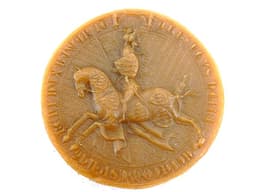
Albert I of Bavaria
Emperor · Medieval
47.4Total
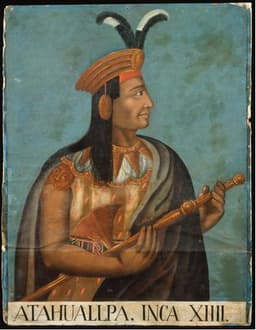
Atahualpa
Emperor · Medieval
44.5Total
Basic Information
Born
1336
1502
Died
1404
1533
Era
Medieval
Medieval
Nationality
Hainaut
Inca Empire
Occupation
Emperor
Emperor
Civilization
Western
Other
Score Comparison
Military (10%)
50.0
46.7
Political (20%)
39.4
27.9
Influence (20%)
50.2
57.2
Legacy (20%)
40.8
46.7
Leadership (15%)
64.0
39.0
Strategy (15%)
41.0
38.3
TOTAL
47.4
44.5
Albert I of Bavaria — Complete Timeline
1358 AD
Inherited Counties of Holland, Zeeland, and HainautPolitical Action◆ Major
Albert I of Bavaria inherited the counties of Holland, Zeeland, and Hainaut from his brother William I of Bavaria. He became the Wittelsbach ruler of these territories, consolidating Bavarian control in the Low Countries.
InheritanceWittelsbachHolland
Impact: regionalconstructive
1392 AD
Suppressed the Hook and Cod WarsWar◆ Major
Albert I of Bavaria intervened in the Hook and Cod Wars, a civil conflict in Holland between noble factions. He suppressed the rebellion of the Hook faction, restoring order and strengthening his authority.
Civil WarHollandSuppression
Impact: regionaldestructive
Atahualpa — Complete Timeline
1532 AD
Victory in the Inca Civil WarWar◆ Major
Atahualpa defeated his brother Hu
Civil WarSuccessionInca Empire
Impact: regionaldestructive
Capture at CajamarcaWar
Francisco Pizarro ambushed Atahualpa at Cajamarca, capturing the Inca emperor after a surprise attack. Spanish forces killed thousands of unarmed Inca attendants while Atahualpa was taken prisoner, marking the beginning of Spanish conquest.
Spanish ConquestAmbushPizarro
Impact: globaltragic
1533 AD
Ransom Room PaymentPolitical Action◆ Major
Atahualpa offered to fill a room with gold and silver in exchange for his release. Over several months, the Inca delivered approximately 6 tons of gold and 12 tons of silver, the largest ransom in history, but Pizarro executed him anyway.
RansomGoldSpanish Greed
Impact: regionaltragic
Execution by GarrotePolitical Action
Pizarro ordered Atahualpa's execution by garrote after a mock trial accused him of treason, idolatry, and ordering Hu
ExecutionSpanish ConquestEnd of Empire
Impact: globaltragic
Expert Analysis
Origins
Albert I of Bavaria was born in 1336 as a younger son of Emperor Louis IV and Margaret II of Hainaut. He grew up in the Wittelsbach court, receiving training in governance and military command. His brother William V inherited the counties of Holland, Zeeland, and Hainaut but became mentally unstable, prompting Albert to take over as regent in 1358. Albert formally inherited these territories upon William's death in 1389, becoming count of three prosperous Low Countries provinces.
Atahualpa was born around 1500, likely in Quito, as a son of Inca Emperor Huayna Capac. His mother was a princess from the conquered Kingdom of Quito, giving him a mixed heritage. He was raised in the Inca military tradition, accompanying his father on campaigns. When Huayna Capac died of smallpox around 1527, the empire was divided between Atahualpa (ruling Quito) and his half-brother Huáscar (ruling Cusco). Atahualpa had no formal education in European politics or warfare.
Rise to Power
Albert I rose to prominence through dynastic inheritance and political maneuvering. In 1358, he assumed regency for his incapacitated brother William V. For over three decades, he effectively ruled the counties while maintaining nominal loyalty to William. Upon William's death in 1389, Albert became count outright. His power base relied on noble support, which he cultivated through patronage and the establishment of the Order of the Golden Fleece in 1430—a chivalric order that bound nobles to his service. He also suppressed the Hook and Cod Wars, a civil conflict between noble factions, by supporting the Cod faction and defeating the Hook rebels in 1392.
Atahualpa's rise came through civil war. After Huayna Capac's death, Huáscar claimed the full throne and attacked Atahualpa's domain. Atahualpa, commanding veteran armies from the northern campaigns, defeated Huáscar's forces at the Battle of Quipaipan in 1532. He captured Huáscar and executed him, consolidating control over the entire Inca Empire. However, his victory was short-lived as Spanish conquistadors arrived on the coast that same year.
Leadership & Governance
Albert I governed as a feudal lord, relying on noble councils and chivalric orders. He maintained stability through alliances and military suppression. His founding of the Order of the Golden Fleece demonstrated his understanding of symbolic power—the order became a prestigious institution that rewarded loyalty. He also promoted trade and urbanization in Holland and Zeeland, which were already wealthy commercial regions. His military score of 50.0 reflects modest campaigns, while his leadership score of 64.0 indicates effective governance within the constraints of medieval politics.
Atahualpa ruled as an absolute divine emperor, centralizing power after the civil war. He implemented Inca traditions of forced resettlement (mitma) and labor taxation (mit'a). However, his governance was disrupted by the Spanish invasion. He failed to adapt to the new threat, relying on a massive army that was ineffective against Spanish cavalry and gunpowder. His political score of 27.9 reflects his inability to respond to the Spanish challenge, while his military score of 46.7 is based on his earlier success against Huáscar.
Triumph & Tragedy
Albert I's greatest triumph was stabilizing the Low Countries after decades of civil strife. He successfully suppressed the Hook faction and ended the Hook and Cod Wars, bringing peace to Holland. His founding of the Order of the Golden Fleese created a lasting institution that continued for centuries. His tragedy was that his achievements were regional; he never expanded his territory significantly or influenced broader European politics beyond the Burgundian court.
Atahualpa's triumph was winning the Inca Civil War despite being the younger son. He demonstrated military skill by defeating Huáscar's larger armies. His tragedy was his capture at Cajamarca in 1532. He underestimated the Spanish, agreeing to meet Pizarro in the town square where Spanish cavalry and arquebusiers massacred thousands of unarmed Incas. He was captured, ransomed for a room filled with gold (about 6 tons), and then executed by garrote in 1533. His failure to recognize the existential threat cost him his empire and life.
Character & Destiny
Albert I was pragmatic and patient, willing to wait decades for his brother's death to claim full power. He used institutions like the Golden Fleece to bind nobles to him, showing strategic thinking. His character led to stable rule but limited ambition—he did not seek to expand his domains or challenge larger powers.
Atahualpa was confident to the point of arrogance after his civil war victory. He believed his army of tens of thousands could overwhelm the few hundred Spaniards. His decision to meet Pizarro at Cajamarca without his full army was a fatal miscalculation. His character—decisive but inflexible—led to his downfall.
Legacy
Albert I's legacy is the Order of the Golden Fleece, which became one of Europe's most prestigious chivalric orders, later adopted by the Habsburgs. His rule strengthened the Wittelsbach presence in the Low Countries, though the territories eventually passed to Burgundy. He is remembered as a competent but unremarkable medieval ruler. His total score of 47.4 reflects his moderate impact.
Atahualpa's legacy is as the last Inca emperor, symbolizing the tragic end of the Inca civilization. His death marked the beginning of Spanish colonial rule in Peru. The story of his ransom and execution is widely known. However, his reign lasted only a few months after the civil war, limiting his positive contributions. His legacy score of 46.7 is slightly higher than Albert's 40.8 due to global recognition.
Conclusion
Albert I of Bavaria had a greater historical impact than Atahualpa. While Atahualpa's story is more dramatic and globally known, Albert's institutional creation—the Order of the Golden Fleece—had lasting influence on European nobility for centuries. Albert's political stability in the Low Countries contributed to the region's economic growth, whereas Atahualpa's brief reign ended in collapse. In terms of scores, Albert leads 47.4 to 44.5, with higher marks in leadership (64.0 vs 39.0) and political acumen (39.4 vs 27.9). Atahualpa's higher influence (57.2 vs 50.2) reflects his symbolic importance, but Albert's concrete achievements in governance and institution-building outweigh Atahualpa's tragic but brief rule.
Rankings
🥇
Albert I of BavariaLeader
Mil: 50.0Pol: 39.4Inf: 50.2
47.4
🥈
Atahualpa
Mil: 46.7Pol: 27.9Inf: 57.2
44.5
+2.9 behind
How This Comparison Works
Algorithm
Each figure is scored on 6 dimensions (0—100 scale) based on structured historical data: Military (10%), Political (20%), Influence (20%), Legacy (20%), Leadership (15%), Strategy (15%). The weighted total produces the final ranking.
Data Sources
Scores are computed from structured sub-indicators in the database. Scale factors adjust for era (Ancient ×0.85, Modern ×1.0) and civilization size (Eastern ×1.05, Other ×0.80) to account for differences in population and military scale.
Maximum 3 Figures
Comparisons are limited to 2—3 figures to ensure readability and statistical meaningfulness.
Error Margins
±5 points per dimension — Sub-scores are derived from historical records with inherent uncertainty. Two figures within 5 points on a dimension should be considered roughly equivalent in that area.
Total Score Accuracy
±3 points overall — The weighted combination of 6 dimensions produces a total score with approximately ±3 points of uncertainty. Differences of less than 3 points are not statistically significant— the figures are effectively tied.
Known Limitations
- Historical records are incomplete and uneven across civilizations
- Figures from oral-tradition societies may be underrepresented
- Occupation labels can misclassify multi-role figures
- Scores measure capability and impact, not moral character
- Quantitative scoring is a comparison tool, not absolute truth
Capability Radar
Military (10%) — Battles & Warfare
Battles
20
40
Win Rate
25
35
Expansion
15
20
Political (20%) — Governance & Reform
Reform
30
10
Diplomacy
40
20
Economy
35
15
Influence (20%) — Cultural & Global Reach
Cultural
25
40
Global
15
35
Legacy (20%) — Historical Impact
Historical
25
50
Longevity
20
30
Leadership (15%) — Power & Stability
Tenure
55
15
Stability
40
10
Strategy (15%) — Tactics & Innovation
Strategy
20
25
Tactics
20
30
Reform
10
10
Similar Comparisons
Comments & Discussion
No comments yet. Be the first to share your thoughts!