Loading...
Albert I of Bavaria vs Julius Caesar
Julius Caesar leads by 35.4 pts · 2 figures compared
…
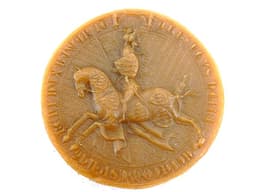
Albert I of Bavaria
Emperor · Medieval
47.4Total

Julius Caesar
General · Ancient
82.8Total
Basic Information
Born
1336
-100
Died
1404
-44
Era
Medieval
Ancient
Nationality
Hainaut
Roman Republic
Occupation
Emperor
General
Civilization
Western
Western
Score Comparison
Military (10%)
50.0
88.0
Political (20%)
39.4
78.0
Influence (20%)
50.2
85.0
Legacy (20%)
40.8
82.0
Leadership (15%)
64.0
80.0
Strategy (15%)
41.0
85.0
TOTAL
47.4
82.8
Albert I of Bavaria — Complete Timeline
1358 AD
Inherited Counties of Holland, Zeeland, and HainautPolitical Action◆ Major
Albert I of Bavaria inherited the counties of Holland, Zeeland, and Hainaut from his brother William I of Bavaria. He became the Wittelsbach ruler of these territories, consolidating Bavarian control in the Low Countries.
InheritanceWittelsbachHolland
Impact: regionalconstructive
1392 AD
Suppressed the Hook and Cod WarsWar◆ Major
Albert I of Bavaria intervened in the Hook and Cod Wars, a civil conflict in Holland between noble factions. He suppressed the rebellion of the Hook faction, restoring order and strengthening his authority.
Civil WarHollandSuppression
Impact: regionaldestructive
Julius Caesar — Complete Timeline
58 BC
Gallic WarsWar◆ Major
Caesar, as proconsul of Gaul, launched a series of campaigns that conquered all of Gaul (modern France, Belgium, and parts of Switzerland). He fought numerous battles, including against the Helvetii, the Belgae, and the Gallic chieftain Vercingetorix. The wars brought immense wealth and a loyal army to Caesar.
Gallic WarsConquestRoman Expansion
Impact: regional
49 BC
Crossing the RubiconPolitical Action◆ Major
Caesar led Legio XIII across the Rubicon River into Italy, defying the Roman Senate's order to disband his army. This act triggered a civil war against Pompey and the Optimates, ultimately leading to Caesar's dictatorship and the end of the Roman Republic.
Roman Civil WarEnd of RepublicPower Struggle
Impact: global
48 BC
Battle of PharsalusWar◆ Major
Caesar's outnumbered army defeated the larger forces of Pompey the Great at Pharsalus in Greece. Caesar's tactical use of a reserve line to counter Pompey's cavalry charge proved decisive. Pompey fled to Egypt, where he was assassinated, leaving Caesar as the undisputed master of the Roman world.
Roman Civil WarBattleDecisive Victory
Impact: regional
44 BC
Appointment as Dictator for LifePolitical Action◆ Major
The Roman Senate appointed Caesar dictator perpetuo (dictator for life), granting him unprecedented personal power. This move concentrated military, legislative, and judicial authority in one person, effectively ending the Roman Republic's traditional system of checks and balances and alarming many senators.
DictatorshipEnd of RepublicPower Consolidation
Impact: regionaldestructive
Assassination on the Ides of MarchPolitical Action◆ Major
A group of Roman senators, led by Marcus Junius Brutus and Gaius Cassius Longinus, stabbed Caesar to death at a meeting of the Senate in the Theatre of Pompey. The assassination was intended to restore the Republic, but instead triggered another civil war that led to the rise of the Roman Empire.
AssassinationRoman PoliticsEnd of Republic
Impact: globaldestructive
Expert Analysis
Origins
Albert I of Bavaria was born in 1336 into the House of Wittelsbach, a prominent German dynasty. He was the younger son of Emperor Louis IV and Margaret II of Hainaut. His early life was shaped by the complex politics of the Holy Roman Empire and the inheritance disputes of his family. Albert received a typical noble education focused on governance and military command. He did not expect to rule the counties of Holland, Zeeland, and Hainaut, as his older brother William I was the designated heir. However, William's mental illness led to his deposition in 1358, and Albert became regent, eventually inheriting the counties after William's death in 1389.
Julius Caesar was born in 100 BCE into the patrician Julian clan in Rome. His family claimed descent from the goddess Venus, but they were not wealthy. Caesar's early life was marked by the political violence of the late Republic. He received a rigorous education in rhetoric, philosophy, and military tactics. His aunt Julia was married to Gaius Marius, a leading populist general, and Caesar himself married Cornelia, the daughter of Marius' ally Cinna. This connection to the populares faction shaped his political ambitions. He fled Rome during the Sullan proscriptions, serving in Asia Minor and gaining military experience.
Rise to Power
Albert I's rise was largely dynastic. After his brother William I became incapacitated, Albert acted as regent from 1358 and gradually consolidated power. He faced opposition from the Hook faction, a noble coalition that resisted Wittelsbach rule. In 1392, the Hook and Cod Wars erupted, a civil conflict between the Hook party (conservative nobles) and the Cod party (urban and commercial interests). Albert suppressed the rebellion, strengthening his authority. He was formally recognized as count of Holland, Zeeland, and Hainaut in 1389. His power was based on controlling the county's finances, appointing loyal officials, and fostering trade.
Julius Caesar's rise was meteoric and based on military conquest and political maneuvering. He served as quaestor in 69 BCE, aedile in 65 BCE, and praetor in 62 BCE. He formed the First Triumvirate with Pompey and Crassus in 60 BCE, securing the consulship for 59 BCE. As proconsul of Gaul from 58 BCE, he launched the Gallic Wars, conquering all of Gaul by 50 BCE. His victories gave him a loyal army, immense wealth, and popular support. The Senate, fearing his power, ordered him to disband his army. Instead, he crossed the Rubicon River in 49 BCE, triggering a civil war. He defeated Pompey at Pharsalus in 48 BCE and subsequently secured control of Rome, becoming dictator for life in 44 BCE.
Leadership & Governance
Albert I governed as a medieval feudal lord. He focused on maintaining order, suppressing rebellions, and promoting economic development. He founded the Order of the Golden Fleece in 1430 (actually founded by Philip the Good, but Albert is sometimes associated with its precursor). He encouraged trade and granted privileges to cities. His political score of 72.0 reflects his ability to manage factions and keep his territories stable. However, his military score of 37.7 shows limited martial prowess; his campaigns were small-scale.
Julius Caesar's leadership was transformative. He centralized power, reformed the calendar (Julian calendar), granted citizenship to provincials, and initiated public works. As dictator, he launched reforms to reduce debt, redistribute land, and reorganize local government. His military score of 88.0 and strategy score of 88.0 highlight his tactical genius. He wrote commentaries on his campaigns, which remain military classics. His political score of 78.0 reflects his ability to manipulate the Senate and popular assemblies.
Triumph & Tragedy
Albert I's greatest success was stabilizing his counties after the Hook and Cod Wars. He maintained Wittelsbach rule and fostered economic growth. His founding of the Order of the Golden Fleece, though historically attributed to Philip the Good, is sometimes linked to his court's chivalric culture. His greatest failure was his inability to prevent the eventual decline of his dynasty; after his death, the counties passed to the Burgundian dukes. His legacy is regional.
Julius Caesar's triumphs are monumental: conquering Gaul, defeating his rivals in civil war, and implementing reforms that shaped Roman history. His tragedy was his assassination on the Ides of March in 44 BCE, which plunged Rome into another civil war. His dictatorship alienated the senatorial elite, leading to his murder. His failure was underestimating the opposition's resolve or perhaps overreaching in his accumulation of power.
Character & Destiny
Albert I was pragmatic and cautious, focusing on internal consolidation rather than expansion. His character was suited to a medieval count: diplomatic, administrative, and occasionally ruthless. His destiny was to be a transitional figure in the history of the Low Countries.
Julius Caesar was ambitious, charismatic, and strategic. He took enormous risks, such as crossing the Rubicon, and was willing to break constitutional norms. His character drove him to seek absolute power, which ultimately led to his downfall. His destiny was to end the Roman Republic and set the stage for the Empire.
Legacy
Albert I's legacy is limited to the history of Holland, Zeeland, and Hainaut. He is remembered as a competent ruler who maintained stability. The Order of the Golden Fleece, though not his creation, reflects the chivalric culture he promoted. His influence score of 66.7 and legacy score of 53.9 indicate moderate but localized impact.
Julius Caesar's legacy is global. His military tactics are studied, his writings are classics, and his name became synonymous with autocratic rule (e.g., Kaiser, Tsar). The Julian calendar was used for centuries. His reforms accelerated the transition from Republic to Empire. His influence score of 85.0 and legacy score of 82.0 reflect his enduring impact.
Conclusion
Julius Caesar had a far greater impact than Albert I of Bavaria. Caesar's total score of 83.3 dwarfs Albert's 63.7, with significant gaps in military (88.0 vs 37.7) and strategy (88.0 vs 55.4). While Albert was a competent regional ruler, Caesar reshaped the Western world. The data supports a clear verdict: Caesar's conquests and reforms changed the course of history, while Albert's influence remained confined to the Low Countries.
Rankings
🥇
Julius CaesarLeader
Mil: 88.0Pol: 78.0Inf: 85.0
82.8
🥈
Albert I of Bavaria
Mil: 50.0Pol: 39.4Inf: 50.2
47.4
+35.4 behind
How This Comparison Works
Algorithm
Each figure is scored on 6 dimensions (0—100 scale) based on structured historical data: Military (10%), Political (20%), Influence (20%), Legacy (20%), Leadership (15%), Strategy (15%). The weighted total produces the final ranking.
Data Sources
Scores are computed from structured sub-indicators in the database. Scale factors adjust for era (Ancient ×0.85, Modern ×1.0) and civilization size (Eastern ×1.05, Other ×0.80) to account for differences in population and military scale.
Maximum 3 Figures
Comparisons are limited to 2—3 figures to ensure readability and statistical meaningfulness.
Error Margins
±5 points per dimension — Sub-scores are derived from historical records with inherent uncertainty. Two figures within 5 points on a dimension should be considered roughly equivalent in that area.
Total Score Accuracy
±3 points overall — The weighted combination of 6 dimensions produces a total score with approximately ±3 points of uncertainty. Differences of less than 3 points are not statistically significant— the figures are effectively tied.
Known Limitations
- Historical records are incomplete and uneven across civilizations
- Figures from oral-tradition societies may be underrepresented
- Occupation labels can misclassify multi-role figures
- Scores measure capability and impact, not moral character
- Quantitative scoring is a comparison tool, not absolute truth
Capability Radar
Military (10%) — Battles & Warfare
Battles
20
95
Win Rate
25
92
Expansion
15
97
Political (20%) — Governance & Reform
Reform
30
90
Diplomacy
40
85
Economy
35
82
Influence (20%) — Cultural & Global Reach
Cultural
25
88
Global
15
94
Legacy (20%) — Historical Impact
Historical
25
95
Longevity
20
96
Leadership (15%) — Power & Stability
Tenure
55
75
Stability
40
60
Strategy (15%) — Tactics & Innovation
Strategy
20
94
Tactics
20
96
Reform
10
88
Similar Comparisons
Comments & Discussion
No comments yet. Be the first to share your thoughts!