Loading...
Al-Zahir vs Chilperic I
Chilperic I leads by 2.3 pts · 2 figures compared
…

Al-Zahir
Emperor · Medieval
37.3Total
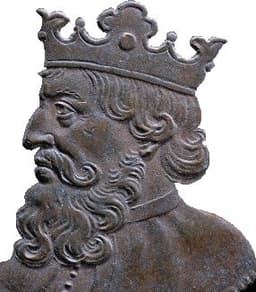
Chilperic I
Emperor · Medieval
39.6Total
Basic Information
Born
1176
539
Died
1226
584
Era
Medieval
Medieval
Nationality
Abbasid Caliphate
Frankish Empire
Occupation
Emperor
Emperor
Civilization
Middle Eastern
Western
Score Comparison
Military (10%)
20.0
45.0
Political (20%)
32.1
26.4
Influence (20%)
46.3
47.1
Legacy (20%)
36.7
38.3
Leadership (15%)
34.6
41.5
Strategy (15%)
45.0
35.7
TOTAL
37.3
39.6
Chilperic I — Complete Timeline
573 AD
War with Sigebert IWar◆ Major
Chilperic I invaded Austrasia, triggering a civil war with his brother Sigebert I. The conflict involved shifting alliances and battles across Neustria and Austrasia, including the siege of Tournai. It ended inconclusively with Sigebert's assassination.
MerovingianCivil WarNeustria
Impact: regionaldestructive
575 AD
Assassination of Sigebert IPolitical Action◆ Major
Chilperic I's wife Fredegund is believed to have orchestrated the assassination of Sigebert I, king of Austrasia and Chilperic's brother. Sigebert was stabbed with poisoned daggers at Vitry-en-Artois, ending the conflict between Neustria and Austrasia temporarily.
MerovingianAssassinationFredegund
Impact: regionaldestructive
579 AD
Tax Reforms and Conflicts with the ChurchReform
Chilperic I attempted to impose new taxes on church lands and property, leading to conflict with bishops, particularly Gregory of Tours. The reforms were resisted and eventually abandoned after widespread opposition and ecclesiastical condemnation.
MerovingianTaxationChurch Conflict
Impact: nationaldestructive
580 AD
Construction of the Circus at SoissonsCultural
Chilperic I ordered the construction of a circus (hippodrome) in Soissons, imitating Roman spectacles. This project reflected his interest in Roman culture and his desire to project imperial authority, though it was criticized by contemporaries like Gregory of Tours.
MerovingianArchitectureRoman Influence
Expert Analysis
Origins
Al-Zahir was born around 1176 as Abu Nasr Muhammad, son of the Abbasid Caliph al-Nasir. He grew up in the caliphal court of Baghdad, receiving a traditional Islamic education in theology, law, and administration. His father's long reign (1180-1225) provided stability, but al-Zahir remained largely in the background, holding no significant military or administrative posts before his accession.
Chilperic I was born around 539 in the Frankish Merovingian dynasty, the son of King Clotaire I and his wife Aregund. He was raised in the Frankish tradition of warrior kingship, learning to lead warbands and manage estates. After Clotaire's death in 561, the kingdom was divided among his four sons, with Chilperic receiving the small kingdom of Soissons (later Neustria). His early life was marked by rivalry with his brothers, especially Sigebert I of Austrasia.
Rise to Power
Al-Zahir became caliph upon his father's death on October 7, 1225, at the age of about 49. His reign was brief, lasting only until July 10, 1226—less than a year. He had no major political or military achievements before or during his caliphate; his main act was to appoint his son al-Mustansir as successor. His rise was purely dynastic, without any personal struggle or notable turning point.
Chilperic I rose to power after Clotaire's death in 561, inheriting the smallest portion of the Frankish realm. He immediately sought to expand his territory, marrying Galswintha (sister of Brunhild, wife of Sigebert) in 566, but soon had her murdered to marry his mistress Fredegund. This triggered a bitter feud with Sigebert. In 575, Chilperic's forces were defeated by Sigebert, but Fredegund orchestrated Sigebert's assassination in 575, turning the war in Chilperic's favor. He then extended his rule over much of the Frankish lands.
Leadership & Governance
Al-Zahir's leadership was minimal. He issued no known reforms, conducted no military campaigns, and left no administrative changes. His only recorded action was confirming the succession of his son. He scored 34.6 in leadership and 32.1 in political, reflecting his near-total lack of independent governance. He died of natural causes before he could establish any policy.
Chilperic I was an active but erratic ruler. He scored 41.5 in leadership and 26.4 in political. He attempted to impose tax reforms on church lands, leading to conflicts with bishops like Gregory of Tours. He also built a circus in Soissons, imitating Roman games, and tried to impose new taxes on the populace. His governance was marked by brutality: he ordered the murder of his wife Galswintha and persecuted his rivals. He also engaged in military campaigns, scoring 45.0 in military, but his strategies were often reactive. His reign saw frequent civil wars with his brothers.
Triumph & Tragedy
Al-Zahir's triumph was simply ensuring a smooth succession for his son al-Mustansir, who would rule for 16 years. His tragedy was his short reign—he had no time to achieve anything significant. His legacy score of 36.7 reflects obscurity.
Chilperic I's triumph was his survival and expansion of Neustria despite initial defeats. He successfully eliminated his rival Sigebert I and expanded his territory. His tragedy was his own assassination in 584, possibly ordered by his wife Fredegund or his nobles. His wars devastated the Frankish countryside and weakened the Merovingian dynasty. His tax policies bred resentment, and his personal cruelty (including murder of his wife) tarnished his reputation.
Character & Destiny
Al-Zahir was likely a passive figure, content to follow his father's legacy. His short reign suggests he may have been in poor health or lacked ambition. His character remains shadowy; he made no decisions that shaped his destiny beyond dying quickly.
Chilperic I was aggressive, cunning, and ruthless. He was described by Gregory of Tours as "the Nero of his age," highlighting his cruelty and love of spectacle. His marriage to Fredegund, a former servant, and his willingness to murder for power show a pragmatic but violent character. His destiny was shaped by his inability to maintain peace, leading to his assassination. He died at the hands of an unknown assailant while returning from a hunt.
Legacy
Al-Zahir left no lasting impact. His son al-Mustansir would be the last effective Abbasid caliph before the Mongol sack of Baghdad in 1258. Al-Zahir's brief reign is a footnote in Islamic history.
Chilperic I's legacy is mixed. He is remembered as a brutal but ambitious Merovingian king. His construction of the circus at Soissons reflects Roman influence on Frankish culture. His conflicts with the church foreshadowed later struggles between secular and ecclesiastical power. However, his legacy score of 38.3 is low because the Merovingian dynasty soon declined, and his reign contributed to internal weakening. He is often overshadowed by his wife Fredegund and his rival Brunhild.
Conclusion
Chilperic I had greater impact than Al-Zahir. His total score of 39.6 against 37.3 reflects his longer reign (23 years vs. less than 1) and more active governance. While both are minor figures, Chilperic's actions—including civil wars, tax reforms, and building projects—shaped Frankish history in the 6th century. Al-Zahir's reign was too brief to leave any mark. The score gap of 2.3 points is small, but in terms of historical significance, Chilperic I clearly surpasses Al-Zahir.
Rankings
🥇
Chilperic ILeader
Mil: 45.0Pol: 26.4Inf: 47.1
39.6
🥈
Al-Zahir
Mil: 20.0Pol: 32.1Inf: 46.3
37.3
+2.3 behind
How This Comparison Works
Algorithm
Each figure is scored on 6 dimensions (0—100 scale) based on structured historical data: Military (10%), Political (20%), Influence (20%), Legacy (20%), Leadership (15%), Strategy (15%). The weighted total produces the final ranking.
Data Sources
Scores are computed from structured sub-indicators in the database. Scale factors adjust for era (Ancient ×0.85, Modern ×1.0) and civilization size (Eastern ×1.05, Other ×0.80) to account for differences in population and military scale.
Maximum 3 Figures
Comparisons are limited to 2—3 figures to ensure readability and statistical meaningfulness.
Error Margins
±5 points per dimension — Sub-scores are derived from historical records with inherent uncertainty. Two figures within 5 points on a dimension should be considered roughly equivalent in that area.
Total Score Accuracy
±3 points overall — The weighted combination of 6 dimensions produces a total score with approximately ±3 points of uncertainty. Differences of less than 3 points are not statistically significant— the figures are effectively tied.
Known Limitations
- Historical records are incomplete and uneven across civilizations
- Figures from oral-tradition societies may be underrepresented
- Occupation labels can misclassify multi-role figures
- Scores measure capability and impact, not moral character
- Quantitative scoring is a comparison tool, not absolute truth
Capability Radar
Military (10%) — Battles & Warfare
Battles
5
30
Win Rate
5
25
Expansion
5
20
Political (20%) — Governance & Reform
Reform
10
20
Diplomacy
10
25
Economy
10
15
Influence (20%) — Cultural & Global Reach
Cultural
10
15
Global
5
5
Legacy (20%) — Historical Impact
Historical
10
20
Longevity
10
10
Leadership (15%) — Power & Stability
Tenure
30
40
Stability
10
10
Strategy (15%) — Tactics & Innovation
Strategy
5
15
Tactics
5
20
Reform
5
10
Similar Comparisons
Comments & Discussion
No comments yet. Be the first to share your thoughts!