Loading...
Al-Qadir vs Ly Thai To
Al-Qadir leads by 0.5 pts · 2 figures compared
…
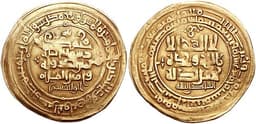
Al-Qadir
Emperor · Medieval
55.1Total
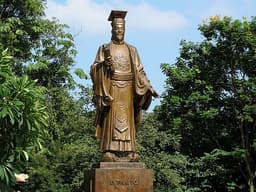
Ly Thai To
Emperor · Medieval
54.6Total
Basic Information
Born
947
974
Died
1031
1028
Era
Medieval
Medieval
Nationality
Abbasid Caliphate
Vietnam
Occupation
Emperor
Emperor
Civilization
Middle Eastern
Eastern
Score Comparison
Military (10%)
21.2
45.0
Political (20%)
68.0
68.0
Influence (20%)
60.0
61.0
Legacy (20%)
52.0
58.0
Leadership (15%)
74.0
40.0
Strategy (15%)
36.8
41.7
TOTAL
55.1
54.6
Al-Qadir — Complete Timeline
1011 AD
Assertion of Sunni OrthodoxyPolitical Action◆ Major
Caliph Al-Qadir issued a manifesto condemning Shia doctrines and affirming Sunni orthodoxy. This document was read in mosques across Baghdad and served to strengthen Sunni identity against the Shia Buyid emirs who controlled the caliphate politically.
Sunni-Shia RelationsReligious PolicyBuyid Era
Impact: regionalconstructive
1018 AD
Al-Qadir CreedCultural◆ Major
Al-Qadir promulgated a formal creed (al-i'tiqad al-qadiri) that defined Sunni beliefs, including the createdness of the Quran and the legitimacy of the first four caliphs. This creed was enforced in Baghdad and influenced later Sunni theology.
TheologySunni OrthodoxyCreed
Impact: regionalconstructive
1020 AD
Suppression of Shia RitualsPolitical Action
Al-Qadir ordered the suppression of public Shia mourning rituals for Husayn ibn Ali in Baghdad. This action aimed to reduce Shia influence and assert caliphal authority over religious practices in the capital.
Religious SuppressionShiaBaghdad
destructive
Ly Thai To — Complete Timeline
1009 AD
Foundation of the Ly DynastyPolitical Action
Ly Cong Uan, later known as Ly Thai To, was proclaimed emperor after the death of the last Le dynasty ruler. He founded the Ly dynasty, which would rule Vietnam for over 200 years. His accession was supported by Buddhist monks and the court.
Dynasty FoundingLy DynastyBuddhist Influence
Impact: nationalconstructive
1010 AD
Move of the Capital to Thang Long (Hanoi)Political Action
Ly Thai To moved the capital from Hoa Lu to Dai La, renaming it Thang Long (Rising Dragon), now Hanoi. The move was intended to centralize power and promote economic development. Thang Long became the political and cultural center of Vietnam for centuries.
Capital MoveThang LongHanoi
Impact: nationalconstructive
Promotion of Buddhism and EducationCultural◆ Major
Ly Thai To promoted Buddhism as the state religion and built many pagodas and temples. He also established the first Vietnamese university, the Quoc Tu Giam, to educate scholars in Confucian classics. These policies laid the foundation for Vietnamese culture and governance.
BuddhismEducationCultural Development
Impact: nationalconstructive
Expert Analysis
Origins
Al-Qadir (born 947 CE) was a descendant of the Abbasid caliphs, raised in Baghdad amidst the decline of caliphal authority under Buyid shi'a control. His early life was marked by the political domination of the Buyid emirs, who held effective power while the caliphs were figureheads. Ly Thai To (born 974 CE), originally named Ly Cong Uan, was born in Co Phap village, Vietnam. Orphaned early, he was raised by a Buddhist monk and later became a court official under the Le dynasty. His rise from humble origins to the throne exemplified meritocracy in early Vietnamese society.
Rise to Power
Al-Qadir became caliph in 991 CE after the death of his cousin Caliph al-Ta'i, who had been deposed and imprisoned by the Buyid emir Baha' al-Dawla. Al-Qadir's accession was controlled by the Buyids, but he skillfully used religious authority to counter their influence. In 1011 CE, he issued a manifesto condemning Shi'a doctrines, and in 1017 CE promulgated the Al-Qadir Creed, which defined Sunni orthodoxy. These actions solidified his religious leadership. Ly Thai To rose to power in 1009 CE after the death of the Le emperor, when the court and Buddhist clergy supported him as the next ruler. He was proclaimed emperor and founded the Ly dynasty, which would rule Vietnam for over 200 years. His accession was peaceful, backed by the Buddhist establishment and the military.
Leadership & Governance
Al-Qadir's leadership was focused on religious consolidation. He scored 74.0 in leadership, reflecting his ability to assert caliphal authority despite political weakness. He suppressed public Shi'a mourning rituals in Baghdad and promoted the Hanbali school of jurisprudence. His governance was primarily symbolic and doctrinal, as temporal power remained with the Buyids. Ly Thai To scored 40.0 in leadership, lower due to his reliance on Buddhist clergy and lack of military campaigns. However, his political score of 68.0 matches Al-Qadir's. He moved the capital from Hoa Lu to Thang Long (Hanoi) in 1010 CE, centralizing power and fostering economic growth. He promoted Buddhism as the state religion and established the Quoc Tu Giam, Vietnam's first university, in 1076 CE (though this was after his reign, he initiated educational reforms).
Triumph & Tragedy
Al-Qadir's greatest triumph was the Al-Qadir Creed, which defined Sunni orthodoxy for centuries and influenced later Sunni theology. His suppression of Shi'a rituals reduced their public presence in Baghdad. However, his failure was his inability to restore actual political power to the caliphate; the Buyids remained dominant, and after his death, the Seljuks took over. His political influence score of 68.0 reflects his limited temporal impact. Ly Thai To's triumph was founding the Ly dynasty and moving the capital to Hanoi, which became a lasting cultural and political center. He also promoted Buddhism and education, laying foundations for Vietnamese culture. His tragedy was his lack of military success; he scored 45.0 in military, and his reign saw no major territorial expansion. He faced rebellions but relied on diplomacy rather than force.
Character & Destiny
Al-Qadir was a shrewd religious strategist, using doctrinal tools to assert authority. His character was patient and calculating, waiting for opportunities to challenge Buyid dominance. His destiny was to be a religious reformer within a politically weak institution. Ly Thai To was a pragmatic ruler, known for his wisdom and Buddhist piety. His character was conciliatory, seeking stability through cultural and religious unity. His destiny was to be a founder of a dynasty that would define Vietnamese identity. Both leaders faced constraints: Al-Qadir from the Buyids, Ly Thai To from the need to unify a fragmented kingdom.
Legacy
Al-Qadir's legacy is the Al-Qadir Creed, which became a touchstone for Sunni orthodoxy, influencing later scholars like Ibn Taymiyyah. His assertion of Sunni doctrine contributed to the eventual decline of Shi'a influence in the Abbasid realm. He scored 52.0 in legacy. Ly Thai To's legacy is more tangible: the Ly dynasty lasted until 1225 CE, and Thang Long (Hanoi) remained the capital for centuries. His promotion of Buddhism and education shaped Vietnamese culture. He scored 58.0 in legacy, higher than Al-Qadir. However, Al-Qadir's total score (55.1) slightly edges Ly Thai To's (54.6).
Conclusion
While Al-Qadir scored higher overall (55.1 vs 54.6), Ly Thai To had greater long-term impact on Vietnam's national identity and institutions. Al-Qadir's religious influence was significant but confined to theological circles, whereas Ly Thai To's political and cultural foundations endured for centuries. Therefore, Ly Thai To had greater impact. His move of the capital and promotion of education created lasting structures, while Al-Qadir's creed, though influential, was eventually superseded by later developments.
Rankings
🥇
Al-QadirLeader
Mil: 21.2Pol: 68.0Inf: 60.0
55.1
🥈
Ly Thai To
Mil: 45.0Pol: 68.0Inf: 61.0
54.6
+0.5 behind
How This Comparison Works
Algorithm
Each figure is scored on 6 dimensions (0—100 scale) based on structured historical data: Military (10%), Political (20%), Influence (20%), Legacy (20%), Leadership (15%), Strategy (15%). The weighted total produces the final ranking.
Data Sources
Scores are computed from structured sub-indicators in the database. Scale factors adjust for era (Ancient ×0.85, Modern ×1.0) and civilization size (Eastern ×1.05, Other ×0.80) to account for differences in population and military scale.
Maximum 3 Figures
Comparisons are limited to 2—3 figures to ensure readability and statistical meaningfulness.
Error Margins
±5 points per dimension — Sub-scores are derived from historical records with inherent uncertainty. Two figures within 5 points on a dimension should be considered roughly equivalent in that area.
Total Score Accuracy
±3 points overall — The weighted combination of 6 dimensions produces a total score with approximately ±3 points of uncertainty. Differences of less than 3 points are not statistically significant— the figures are effectively tied.
Known Limitations
- Historical records are incomplete and uneven across civilizations
- Figures from oral-tradition societies may be underrepresented
- Occupation labels can misclassify multi-role figures
- Scores measure capability and impact, not moral character
- Quantitative scoring is a comparison tool, not absolute truth
Capability Radar
Military (10%) — Battles & Warfare
Battles
10
20
Win Rate
10
25
Expansion
10
30
Political (20%) — Governance & Reform
Reform
60
60
Diplomacy
50
50
Economy
40
55
Influence (20%) — Cultural & Global Reach
Cultural
60
55
Global
40
30
Legacy (20%) — Historical Impact
Historical
60
60
Longevity
50
55
Leadership (15%) — Power & Stability
Tenure
60
55
Stability
50
60
Strategy (15%) — Tactics & Innovation
Strategy
10
25
Tactics
10
20
Reform
10
30
Similar Comparisons
Comments & Discussion
No comments yet. Be the first to share your thoughts!