Loading...
Alfonso I of Aragon vs Stefan Lazarevic
Alfonso I of Aragon leads by 0.8 pts · 2 figures compared
…
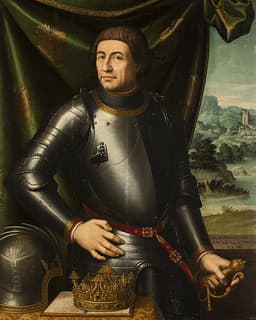
Alfonso I of Aragon
Emperor · Medieval
57.2Total
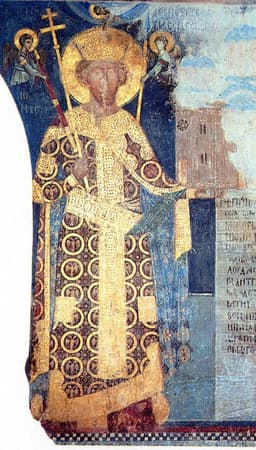
Stefan Lazarevic
Emperor · Medieval
56.4Total
Basic Information
Born
1073
1377
Died
1134
1427
Era
Medieval
Medieval
Nationality
Aragon
Serbia
Occupation
Emperor
Emperor
Civilization
Western
Western
Score Comparison
Military (10%)
60.0
30.0
Political (20%)
48.0
68.0
Influence (20%)
55.7
57.2
Legacy (20%)
49.2
48.3
Leadership (15%)
74.0
74.0
Strategy (15%)
66.3
57.5
TOTAL
57.2
56.4
Alfonso I of Aragon — Complete Timeline
1109 AD
Marriage to Urraca of Leon and CastilePolitical Action◆ Major
Alfonso I married Queen Urraca of Leon and Castile, uniting the kingdoms of Aragon, Navarre, Leon, and Castile. The union was politically unstable, leading to conflict with Urraca and the Church, and was annulled by the Pope in 1114.
MarriagePolitical UnionConflict
Impact: regional
1118 AD
Conquest of ZaragozaWar◆ Major
Alfonso I led a coalition of Aragonese, Navarrese, and French crusaders to capture the city of Zaragoza from the Almoravid Moors. This victory made Zaragoza the capital of Aragon and significantly expanded Christian territory in the Ebro valley.
ReconquistaConquestAragon
Impact: regionalconstructive
1120 AD
Battle of CutandaWar◆ Major
Alfonso I defeated a large Almoravid army at Cutanda, near Calamocha. This victory consolidated Christian control over the Ebro valley and opened the way for further Aragonese advances into Moorish territory.
ReconquistaBattleAragon
Impact: regionalconstructive
1134 AD
Battle of FragaWar◆ Major
Alfonso I was defeated and killed by Almoravid forces near Fraga while attempting to besiege the town. His death without direct heirs led to a succession crisis in Aragon and Navarre, separating the two kingdoms.
ReconquistaBattleDeath
Impact: regionaltragic
Stefan Lazarevic — Complete Timeline
1389 AD
Battle of Kosovo (as vassal commander)War◆ Major
Stefan Lazarevi
Ottoman vassalageBattleCrusader defeat
Impact: regional
1402 AD
Despot of Serbia under Ottoman suzeraintyPolitical Action◆ Major
After the Battle of Ankara, Stefan Lazarevi
Despot titleOttoman vassalageAutonomy
Impact: regionalconstructive
1407 AD
Construction of the Resava Monastery (Manasija)Cultural◆ Major
Stefan Lazarevi
Monastery foundationCultural centerManuscript production
Impact: nationalconstructive
1420 AD
Poetic works and literary patronageCultural
Stefan Lazarevi
PoetryLiterary patronageCultural legacy
Impact: nationalconstructive
1427 AD
Death and succession crisisOther
Stefan Lazarevi
Succession crisisDynasty endOttoman pressure
Impact: nationaltragic
Expert Analysis
Origins
Alfonso I of Aragon, born around 1073, was the second son of King Sancho Ramirez of Aragon and Navarre. His early years were shaped by the Reconquista, the Christian reconquest of Iberia. He received military training and was exposed to the frontier warfare against the Almoravid Moors. In 1094, his father died, and his brother Peter I became king. Alfonso served as a commander in his brother's campaigns.
Stefan Lazarevic, born around 1377, was the son of Prince Lazar Hrebeljanovic, ruler of Moravian Serbia. His early life was marked by the Ottoman threat. In 1389, his father died at the Battle of Kosovo, and Stefan, still a child, became ruler under the regency of his mother, Princess Milica. He received an education that included both military training and literary studies, influenced by the Byzantine and Serbian cultural traditions.
Rise to Power
Alfonso I became King of Aragon and Navarre in 1104 after his brother Peter I died without heirs. He immediately pursued aggressive campaigns against the Moors. His first major success was the conquest of Zaragoza in 1118, leading a coalition of Aragonese, Navarrese, and French crusaders. This victory made him a prominent Christian leader in Iberia. In 1120, he defeated a large Almoravid army at the Battle of Cutanda, consolidating control over the Ebro valley.
Stefan Lazarevic rose to power in a vassal relationship with the Ottoman Empire. After the Battle of Kosovo in 1389, Serbia became an Ottoman vassal. Stefan served as a loyal vassal commander under Sultan Bayezid I, fighting at the Battle of Nicopolis in 1396 and other campaigns. In 1402, after the Battle of Ankara, he was granted the title of Despot by the Byzantine Emperor Manuel II Palaiologos, ruling Serbia as an Ottoman vassal but with increasing autonomy.
Leadership & Governance
Alfonso I was a military leader first and foremost. His governance was focused on expanding his kingdom and securing frontier territories. He granted fueros (charters) to conquered towns, encouraging repopulation. However, his political skills were limited. His marriage to Queen Urraca of Leon and Castile (1109) was intended to unite the Christian kingdoms but led to civil war due to their mutual hostility. The marriage was annulled in 1114, and Alfonso spent years fighting Urraca and her supporters.
Stefan Lazarevic was a more adept politician. He maintained Serbia's autonomy under Ottoman suzerainty by balancing between the Ottomans and the Byzantines. He strengthened the central government, promoted trade, and fostered cultural development. He founded the Resava Monastery (Manasija) as a fortified cultural center, and patronized scholars and artists. His political score of 68.0 reflects his effective diplomacy and governance, compared to Alfonso's 48.0.
Triumph & Tragedy
Alfonso I's greatest triumph was the conquest of Zaragoza in 1118, a major city that had been under Muslim rule for centuries. This victory opened the Ebro valley for Christian settlement and boosted his prestige. His tragedy came at the Battle of Fraga in 1134, where he was defeated and killed by Almoravid forces while attempting to besiege the town. His death without direct heirs led to a succession crisis, splitting his kingdoms between his brother Ramiro II (Aragon) and García Ramírez (Navarre).
Stefan Lazarevic's triumphs include securing Serbian autonomy and fostering a cultural renaissance. His founding of the Resava Monastery preserved Serbian medieval culture and literature. His poetry, such as 'Slovo ljubve', is a testament to his literary skill. However, his tragedy was his reliance on the Ottomans, which limited true independence. He died in 1427 without legitimate heirs, leading to a succession crisis that eventually weakened Serbia. His military score of 30.0 reflects his subordinate role in Ottoman campaigns.
Character & Destiny
Alfonso I was known as 'the Battler' for his relentless military campaigns. He was courageous and determined but also rash and politically inept. His inability to manage his marriage to Urraca and his fatal assault on Fraga show a lack of strategic caution. His leadership score of 74.0 is high, but his strategy score of 66.3 indicates some tactical skill, though his final battle was a disaster.
Stefan Lazarevic was a knight and poet, combining martial prowess with intellectual refinement. He was pragmatic and diplomatic, able to navigate the treacherous politics of the Ottoman court. However, his vassal status limited his martial achievements. His character was more contemplative, reflected in his literary works. His leadership score is also 74.0, but his military score is only 30.0.
Legacy
Alfonso I's legacy is tied to the Reconquista. His conquest of Zaragoza was a key step in the Christian reconquest of Spain. However, his lack of heirs and the subsequent division of his kingdom limited his long-term impact. Aragon continued to expand, but his personal dynasty ended. His influence score of 55.7 and legacy score of 49.2 reflect a significant but not transformative role.
Stefan Lazarevic's legacy is more cultural than political. The Resava Monastery became a center of Serbian culture, and his patronage of literature and the arts contributed to the Serbian medieval renaissance. His political maneuvering preserved Serbian autonomy for a time. However, his vassalage to the Ottomans and the eventual fall of Serbia to the Ottomans in 1459 overshadow his achievements. His influence score of 57.2 and legacy score of 48.3 are similar to Alfonso's.
Conclusion
Alfonso I of Aragon had a greater impact than Stefan Lazarevic, despite the narrow score gap of 0.8 points. Alfonso's military achievements, particularly the conquest of Zaragoza, directly advanced the Reconquista and reshaped the political map of Iberia. Stefan Lazarevic, while politically adept and culturally influential, operated within the constraints of Ottoman suzerainty and did not fundamentally alter Serbia's trajectory. Alfonso's aggressive expansionism set the stage for future Aragonese power, whereas Stefan's legacy was largely cultural preservation. Thus, Alfonso I's impact was more transformative and enduring.
Rankings
🥇
Alfonso I of AragonLeader
Mil: 60.0Pol: 48.0Inf: 55.7
57.2
🥈
Stefan Lazarevic
Mil: 30.0Pol: 68.0Inf: 57.2
56.4
+0.8 behind
How This Comparison Works
Algorithm
Each figure is scored on 6 dimensions (0—100 scale) based on structured historical data: Military (10%), Political (20%), Influence (20%), Legacy (20%), Leadership (15%), Strategy (15%). The weighted total produces the final ranking.
Data Sources
Scores are computed from structured sub-indicators in the database. Scale factors adjust for era (Ancient ×0.85, Modern ×1.0) and civilization size (Eastern ×1.05, Other ×0.80) to account for differences in population and military scale.
Maximum 3 Figures
Comparisons are limited to 2—3 figures to ensure readability and statistical meaningfulness.
Error Margins
±5 points per dimension — Sub-scores are derived from historical records with inherent uncertainty. Two figures within 5 points on a dimension should be considered roughly equivalent in that area.
Total Score Accuracy
±3 points overall — The weighted combination of 6 dimensions produces a total score with approximately ±3 points of uncertainty. Differences of less than 3 points are not statistically significant— the figures are effectively tied.
Known Limitations
- Historical records are incomplete and uneven across civilizations
- Figures from oral-tradition societies may be underrepresented
- Occupation labels can misclassify multi-role figures
- Scores measure capability and impact, not moral character
- Quantitative scoring is a comparison tool, not absolute truth
Capability Radar
Military (10%) — Battles & Warfare
Battles
70
45
Win Rate
75
50
Expansion
65
35
Political (20%) — Governance & Reform
Reform
45
55
Diplomacy
50
65
Economy
40
50
Influence (20%) — Cultural & Global Reach
Cultural
40
55
Global
35
30
Legacy (20%) — Historical Impact
Historical
55
50
Longevity
40
40
Leadership (15%) — Power & Stability
Tenure
60
60
Stability
45
45
Strategy (15%) — Tactics & Innovation
Strategy
70
50
Tactics
65
55
Reform
40
40
Similar Comparisons
Comments & Discussion
No comments yet. Be the first to share your thoughts!