Loading...
Al-Muttaqi vs Henry VII of Luxembourg
Henry VII of Luxembourg leads by 7.7 pts · 2 figures compared
…
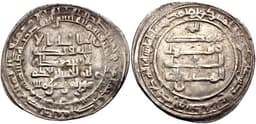
Al-Muttaqi
Emperor · Medieval
37.5Total

Henry VII of Luxembourg
Emperor · Medieval
45.2Total
Basic Information
Born
908
1275
Died
968
1313
Era
Medieval
Medieval
Nationality
Abbasid Caliphate
Holy Roman Empire
Occupation
Emperor
Emperor
Civilization
Middle Eastern
Western
Score Comparison
Military (10%)
20.0
10.0
Political (20%)
32.1
43.7
Influence (20%)
45.5
55.7
Legacy (20%)
35.8
45.8
Leadership (15%)
39.0
51.9
Strategy (15%)
45.0
45.0
TOTAL
37.5
45.2
Al-Muttaqi — Complete Timeline
940 AD
Accession of Al-MuttaqiPolitical Action◆ Major
Al-Muttaqi became caliph after the death of Al-Radi. His reign was dominated by the struggle between the Hamdanids and the Buyids for control of Baghdad and the caliphate.
AccessionPower StruggleHamdanids
Impact: national
944 AD
Deposition and Blinding by the BuyidsPolitical Action◆ Major
Al-Muttaqi was deposed by the Buyid emir Mu'izz al-Dawla, who had taken control of Baghdad. He was blinded and imprisoned, becoming a puppet of the Buyids. This event solidified Buyid dominance over the caliphate.
DepositionBlindingBuyid Control
Impact: nationaltragic
968 AD
Death of Al-MuttaqiPolitical Action
Al-Muttaqi died in captivity, having been blinded and imprisoned for over two decades. His long imprisonment symbolized the complete subjugation of the Abbasid caliphs to the Buyid dynasty.
DeathImprisonmentBuyid
Impact: nationaltragic
Henry VII of Luxembourg — Complete Timeline
1308 AD
Election as King of GermanyPolitical Action◆ Major
Henry, Count of Luxembourg, was elected King of Germany after the assassination of Albert I. His election was supported by the Archbishop of Mainz and marked the rise of the Luxembourg dynasty.
ElectionLuxembourg Dynasty
Impact: national
1310 AD
Italian Campaign and Coronation as Holy Roman EmperorPolitical Action
Henry VII led an expedition to Italy to be crowned Holy Roman Emperor. He was crowned King of Italy in Milan in 1311 and Holy Roman Emperor in Rome in 1312, but faced opposition from Guelph factions and King Robert of Naples.
CoronationItalian Campaign
Impact: global
1313 AD
Death near SienaOther◆ Major
Henry VII died suddenly near Siena, Italy, possibly from malaria or poison. His death ended his campaign to restore imperial authority in Italy and left the empire without a clear successor.
DeathUnfinished Campaign
Impact: regionaltragic
Expert Analysis
Origins
Al-Muttaqi was born in 908 CE into the Abbasid caliphate, the son of Caliph al-Muqtadir. He grew up in a court increasingly dominated by military strongmen, with the caliph's authority already diminished. His early life was shaped by the factional struggles between Turkish and Persian officials, and he received a traditional Islamic education but little practical governance experience.
Henry VII was born around 1273 CE into the House of Luxembourg, a minor comital family in the Holy Roman Empire. His father, Henry III of Luxembourg, provided him with a strong territorial base. He was educated in chivalric and administrative traditions, and his marriage to Margaret of Brabant connected him to powerful networks. Unlike Al-Muttaqi, Henry inherited a stable county and had years of governance experience before seeking higher office.
Rise to Power
Al-Muttaqi became caliph in 940 CE after the death of his brother al-Radi. His accession was orchestrated by the powerful vizier Ibn Ra'iq, but the caliphate was already fractured. The Hamdanids from Mosul and the Buyids from Persia vied for control of Baghdad. Al-Muttaqi's reign (940-944) was marked by constant power struggles, with the caliph as a pawn. In 944, the Buyid emir Mu'izz al-Dawla captured Baghdad, deposed al-Muttaqi, blinded him, and imprisoned him. His rise was essentially a passive event—he was placed on the throne by others and removed by force.
Henry VII rose through election. After the assassination of King Albert I in 1308, the prince-electors chose Henry as King of Germany in 1308, supported by his brother Baldwin, Archbishop of Trier. He was crowned at Aachen in 1309. His rise was active: he leveraged his family connections, negotiated with the electors, and promised to restore imperial authority. His coronation as Holy Roman Emperor in 1312 by Pope Clement V was the culmination of his Italian campaign, a deliberate strategy to revive the empire.
Leadership & Governance
Al-Muttaqi's leadership was reactive and weak. He attempted to play the Hamdanids and Buyids against each other, but lacked military or financial resources. He could not prevent the Buyid takeover; his governance was nominal. His reign saw no significant reforms or laws. He scored 39.0 in leadership and 20.0 in military, reflecting his helplessness.
Henry VII, scoring 51.9 in leadership and 10.0 in military, was a decisive ruler who pursued a clear agenda: restore imperial authority in Italy. He issued the "Constitutio contra incendarios" to curb urban violence, and negotiated with city-states like Pisa and Genoa. His Italian campaign aimed to impose imperial jurisdiction over Guelph and Ghibelline factions. However, his military score is low because his army was small and he avoided major battles, relying on diplomacy.
Triumph & Tragedy
Al-Muttaqi's greatest success was simply surviving as caliph for four years in a collapsing system. His tragedy was complete: deposed, blinded, and imprisoned for over two decades until his death in 968. He became a symbol of the Abbasid decline. His political score of 32.1 reflects his inability to retain power.
Henry VII's triumph was his coronation as Holy Roman Emperor in 1312, the first since Frederick II in 1220. He restored the prestige of the imperial title. His tragedy was his sudden death near Siena in 1313, likely from malaria or poison, at age 38. His campaign to pacify Italy collapsed, and the empire fell back into conflict. His legacy score of 45.8 shows a mixed but enduring impact.
Character & Destiny
Al-Muttaqi was a passive figure, shaped by circumstances. His decision to seek help from the Hamdanids against the Buyids backfired, leading to his downfall. He lacked the ruthlessness or cunning needed in the treacherous politics of Baghdad. His destiny was to be a victim.
Henry VII was ambitious and idealistic. He believed in the universal authority of the Holy Roman Empire and risked everything to revive it. His character was determined but also naive—he trusted the volatile Italian city-states. His death cut short his vision, but his efforts inspired later emperors like Charles IV.
Legacy
Al-Muttaqi's legacy is negligible. He is remembered only as one of the many powerless caliphs of the Abbasid decline. His blinding and imprisonment epitomized the caliphate's subjugation to secular powers. His influence score is 45.5, but this is likely due to his symbolic role rather than any positive achievement.
Henry VII's legacy is more substantial. He revived the imperial title and established the House of Luxembourg as a major dynasty. His son John became King of Bohemia, and his grandson Charles IV became a great emperor. Henry's attempt to restore imperial authority in Italy set a precedent for later interventions. He scored 45.8 in legacy, reflecting his role as a transitional figure between medieval and early modern empire.
Conclusion
Henry VII of Luxembourg had a greater impact than Al-Muttaqi. His total score of 45.2 versus 37.5 reflects this. Henry actively shaped events: he was elected king, crowned emperor, and launched a campaign that influenced European politics for decades. Al-Muttaqi was a passive victim of forces he could not control. While Henry's death prevented full success, his legacy endured through his dynasty and the imperial idea. Al-Muttaqi's reign was a footnote in Abbasid decline. The score gap of 7.7 points underscores Henry's superior influence, leadership, and legacy.
Rankings
🥇
Henry VII of LuxembourgLeader
Mil: 10.0Pol: 43.7Inf: 55.7
45.2
🥈
Al-Muttaqi
Mil: 20.0Pol: 32.1Inf: 45.5
37.5
+7.7 behind
How This Comparison Works
Algorithm
Each figure is scored on 6 dimensions (0—100 scale) based on structured historical data: Military (10%), Political (20%), Influence (20%), Legacy (20%), Leadership (15%), Strategy (15%). The weighted total produces the final ranking.
Data Sources
Scores are computed from structured sub-indicators in the database. Scale factors adjust for era (Ancient ×0.85, Modern ×1.0) and civilization size (Eastern ×1.05, Other ×0.80) to account for differences in population and military scale.
Maximum 3 Figures
Comparisons are limited to 2—3 figures to ensure readability and statistical meaningfulness.
Error Margins
±5 points per dimension — Sub-scores are derived from historical records with inherent uncertainty. Two figures within 5 points on a dimension should be considered roughly equivalent in that area.
Total Score Accuracy
±3 points overall — The weighted combination of 6 dimensions produces a total score with approximately ±3 points of uncertainty. Differences of less than 3 points are not statistically significant— the figures are effectively tied.
Known Limitations
- Historical records are incomplete and uneven across civilizations
- Figures from oral-tradition societies may be underrepresented
- Occupation labels can misclassify multi-role figures
- Scores measure capability and impact, not moral character
- Quantitative scoring is a comparison tool, not absolute truth
Capability Radar
Military (10%) — Battles & Warfare
Battles
5
40
Win Rate
5
35
Expansion
5
45
Political (20%) — Governance & Reform
Reform
10
30
Diplomacy
10
55
Economy
10
35
Influence (20%) — Cultural & Global Reach
Cultural
5
30
Global
5
35
Legacy (20%) — Historical Impact
Historical
10
45
Longevity
5
30
Leadership (15%) — Power & Stability
Tenure
20
40
Stability
5
25
Strategy (15%) — Tactics & Innovation
Strategy
5
40
Tactics
5
30
Reform
5
20
Similar Comparisons
Comments & Discussion
No comments yet. Be the first to share your thoughts!