Loading...
Al-Muttaqi vs Aripert II
Aripert II leads by 2.4 pts · 2 figures compared
…

Al-Muttaqi
Emperor · Medieval
37.5Total
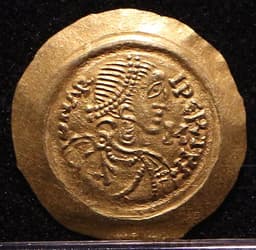
Aripert II
Emperor · Medieval
39.9Total
Basic Information
Born
908
680
Died
968
712
Era
Medieval
Medieval
Nationality
Abbasid Caliphate
Lombards
Occupation
Emperor
Emperor
Civilization
Middle Eastern
Western
Score Comparison
Military (10%)
20.0
50.0
Political (20%)
32.1
27.9
Influence (20%)
45.5
47.9
Legacy (20%)
35.8
37.5
Leadership (15%)
39.0
38.1
Strategy (15%)
45.0
36.8
TOTAL
37.5
39.9
Al-Muttaqi — Complete Timeline
940 AD
Accession of Al-MuttaqiPolitical Action◆ Major
Al-Muttaqi became caliph after the death of Al-Radi. His reign was dominated by the struggle between the Hamdanids and the Buyids for control of Baghdad and the caliphate.
AccessionPower StruggleHamdanids
Impact: national
944 AD
Deposition and Blinding by the BuyidsPolitical Action◆ Major
Al-Muttaqi was deposed by the Buyid emir Mu'izz al-Dawla, who had taken control of Baghdad. He was blinded and imprisoned, becoming a puppet of the Buyids. This event solidified Buyid dominance over the caliphate.
DepositionBlindingBuyid Control
Impact: nationaltragic
968 AD
Death of Al-MuttaqiPolitical Action
Al-Muttaqi died in captivity, having been blinded and imprisoned for over two decades. His long imprisonment symbolized the complete subjugation of the Abbasid caliphs to the Buyid dynasty.
DeathImprisonmentBuyid
Impact: nationaltragic
Aripert II — Complete Timeline
701 AD
Accession to the Lombard ThronePolitical Action
Aripert II became king of the Lombards after the death of his father Cunincpert. He was the last ruler of the Bavarian dynasty, which had dominated Lombard politics for decades.
KingshipDynastyLombard Kingdom
Impact: national
705 AD
War with the Duchy of SpoletoWar
Aripert II fought a war against the Duchy of Spoleto, a rebellious Lombard duchy. The conflict weakened the kingdom and led to territorial losses, undermining royal authority.
Civil WarRebellionLombard Kingdom
Impact: nationaldestructive
712 AD
Death and End of Bavarian DynastyPolitical Action◆ Major
Aripert II died, possibly by suicide, after a failed military campaign. His death ended the Bavarian dynasty's rule over the Lombards, leading to a period of instability and the rise of new dynasties.
Dynastic EndDeathLombard Kingdom
Impact: nationaltragic
Expert Analysis
Origins
Al-Muttaqi (born 908 CE) was an Abbasid caliph who ascended to the throne in 940 CE following the death of his brother Al-Radi. He was the son of Caliph al-Muqtadir, but his family had already lost effective power to military strongmen. The Abbasid caliphate, once a vast empire, had fragmented into autonomous emirates, and the caliphs in Baghdad were increasingly figureheads. Al-Muttaqi's early life was shaped by court intrigues and the rising influence of the Buyids, a Shia Persian dynasty that would soon dominate Baghdad.
Aripert II (born c. 680 CE) was a Lombard king of the Bavarian dynasty, succeeding his father Cunincpert in 700 CE. The Lombards ruled much of Italy, but their kingdom was plagued by internal divisions and external threats from the Byzantine Empire and the Papacy. Aripert II was the last of his line, and his reign marked the end of the Bavarian dynasty's control over the Lombards.
Rise to Power
Al-Muttaqi became caliph in 940 CE after the death of Al-Radi, but his authority was immediately contested. The Hamdanids from Mosul and the Buyids from Persia vied for control of Baghdad. Al-Muttaqi initially allied with the Hamdanid emir Nasir al-Dawla to counter the Buyids, but this alliance failed. In 944 CE, the Buyid emir Mu'izz al-Dawla entered Baghdad, deposed Al-Muttaqi, and blinded him. His rise was thus a brief, powerless interlude between stronger rivals.
Aripert II became king in 700 CE after his father Cunincpert's death. He inherited a relatively stable kingdom but soon faced rebellion from the Duchy of Spoleto, a semi-autonomous Lombard duchy. His war against Spoleto (c. 701-702 CE) was a disaster; he lost territory and his army was weakened. His rise was marked by a failed attempt to assert central authority, leading to his eventual downfall.
Leadership & Governance
Al-Muttaqi's leadership score of 39.0 reflects his inability to govern effectively. He was a pawn in the struggle between the Hamdanids and Buyids, and his reign saw no significant reforms or policies. He attempted to play factions against each other but lacked the military or political resources to succeed. His governance was essentially nonexistent, as the Buyids stripped him of any real power.
Aripert II, with a leadership score of 38.1, was similarly weak. He tried to maintain Lombard unity but failed to suppress the Spoleto rebellion. His military campaign (military score 50.0) was poorly executed, leading to defeat. He may have committed suicide after the loss (account vary), ending his dynasty. His governance was marked by internal strife rather than constructive rule.
Triumph & Tragedy
Al-Muttaqi's only triumph was surviving for over two decades in captivity after his deposition, but his tragedy was total: he was blinded and imprisoned, a symbol of the Abbasid caliphate's impotence. His reign saw no achievements beyond a brief period of nominal rule.
Aripert II's triumph was maintaining his throne for a few years despite challenges, but his tragedy was losing the war with Spoleto and possibly taking his own life. His death ended the Bavarian dynasty, leading to a period of instability for the Lombards.
Character & Destiny
Al-Muttaqi was cautious but indecisive, failing to secure lasting alliances. His character of passivity led to his dependence on stronger powers, which ultimately betrayed him. Historical assessments paint him as a tragic figure caught in forces beyond his control.
Aripert II was perhaps overambitious, attempting to crush Spoleto but lacking the strategic skill (strategy score 36.8). His character led to a failed gamble that cost him his kingdom and life. Both were victims of their times, but Aripert at least made an active choice to fight.
Legacy
Al-Muttaqi's legacy is minimal; he is remembered as one of the many puppet caliphs of the Buyid era. His blinding symbolized the caliphate's decline, with an influence score of 45.5 and legacy 35.8. The Abbasid caliphate continued as a religious figurehead until 1258, but Al-Muttaqi did little to shape that.
Aripert II's legacy is tied to the end of the Bavarian dynasty. The Lombard kingdom survived under new rulers, but his failure weakened the kingdom, contributing to its eventual conquest by Charlemagne in 774. He scored 47.9 in influence and 37.5 in legacy.
Conclusion
While Aripert II had a slightly higher total score (39.9 vs 37.5), neither figure had significant impact. Al-Muttaqi was a complete puppet with no real power, while Aripert II at least attempted to act militarily. However, both were failures in leadership. The greater impact belongs to Aripert II because his actions (or inactions) led to the end of a dynasty, whereas Al-Muttaqi's reign was just one of many powerless caliphates. Aripert II's military score of 50.0, though low, exceeds Al-Muttaqi's 20.0, and his influence score of 47.9 surpasses Al-Muttaqi's 45.5. Thus, Aripert II had a slightly greater, albeit still minor, impact on history.
Rankings
🥇
Aripert IILeader
Mil: 50.0Pol: 27.9Inf: 47.9
39.9
🥈
Al-Muttaqi
Mil: 20.0Pol: 32.1Inf: 45.5
37.5
+2.4 behind
How This Comparison Works
Algorithm
Each figure is scored on 6 dimensions (0—100 scale) based on structured historical data: Military (10%), Political (20%), Influence (20%), Legacy (20%), Leadership (15%), Strategy (15%). The weighted total produces the final ranking.
Data Sources
Scores are computed from structured sub-indicators in the database. Scale factors adjust for era (Ancient ×0.85, Modern ×1.0) and civilization size (Eastern ×1.05, Other ×0.80) to account for differences in population and military scale.
Maximum 3 Figures
Comparisons are limited to 2—3 figures to ensure readability and statistical meaningfulness.
Error Margins
±5 points per dimension — Sub-scores are derived from historical records with inherent uncertainty. Two figures within 5 points on a dimension should be considered roughly equivalent in that area.
Total Score Accuracy
±3 points overall — The weighted combination of 6 dimensions produces a total score with approximately ±3 points of uncertainty. Differences of less than 3 points are not statistically significant— the figures are effectively tied.
Known Limitations
- Historical records are incomplete and uneven across civilizations
- Figures from oral-tradition societies may be underrepresented
- Occupation labels can misclassify multi-role figures
- Scores measure capability and impact, not moral character
- Quantitative scoring is a comparison tool, not absolute truth
Capability Radar
Military (10%) — Battles & Warfare
Battles
5
15
Win Rate
5
20
Expansion
5
10
Political (20%) — Governance & Reform
Reform
10
20
Diplomacy
10
25
Economy
10
20
Influence (20%) — Cultural & Global Reach
Cultural
5
10
Global
5
5
Legacy (20%) — Historical Impact
Historical
10
15
Longevity
5
10
Leadership (15%) — Power & Stability
Tenure
20
30
Stability
5
15
Strategy (15%) — Tactics & Innovation
Strategy
5
10
Tactics
5
15
Reform
5
5
Similar Comparisons
Comments & Discussion
No comments yet. Be the first to share your thoughts!