Loading...
Aripert II vs Edward the Martyr
Edward the Martyr leads by 0.2 pts · 2 figures compared
…
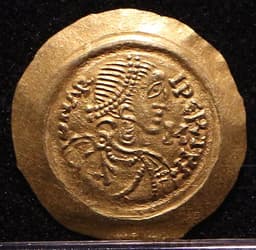
Aripert II
Emperor · Medieval
39.9Total

Edward the Martyr
Emperor · Medieval
40.1Total
Basic Information
Born
680
962
Died
712
978
Era
Medieval
Medieval
Nationality
Lombards
England
Occupation
Emperor
Emperor
Civilization
Western
Western
Score Comparison
Military (10%)
50.0
14.5
Political (20%)
27.9
35.0
Influence (20%)
47.9
47.1
Legacy (20%)
37.5
35.8
Leadership (15%)
38.1
55.3
Strategy (15%)
36.8
43.7
TOTAL
39.9
40.1
Aripert II — Complete Timeline
701 AD
Accession to the Lombard ThronePolitical Action
Aripert II became king of the Lombards after the death of his father Cunincpert. He was the last ruler of the Bavarian dynasty, which had dominated Lombard politics for decades.
KingshipDynastyLombard Kingdom
Impact: national
705 AD
War with the Duchy of SpoletoWar
Aripert II fought a war against the Duchy of Spoleto, a rebellious Lombard duchy. The conflict weakened the kingdom and led to territorial losses, undermining royal authority.
Civil WarRebellionLombard Kingdom
Impact: nationaldestructive
712 AD
Death and End of Bavarian DynastyPolitical Action◆ Major
Aripert II died, possibly by suicide, after a failed military campaign. His death ended the Bavarian dynasty's rule over the Lombards, leading to a period of instability and the rise of new dynasties.
Dynastic EndDeathLombard Kingdom
Impact: nationaltragic
Edward the Martyr — Complete Timeline
975 AD
Coronation as King of EnglandPolitical Action
Edward succeeded his father Edgar as King of England at age 13. His short reign was marked by conflict between monastic reformers and secular nobles.
Anglo-Saxon EnglandCoronationMinor king
Impact: national
978 AD
Murdered at Corfe CastlePolitical Action◆ Major
Edward was stabbed to death while visiting his stepmother Aelfthryth at Corfe Castle. The murder was likely orchestrated by his stepmother to secure the throne for her son Aethelred.
Anglo-Saxon EnglandMurderSuccession
Impact: nationaltragic
Expert Analysis
Origins
Aripert II was a Lombard king of the Bavarian dynasty, born around 680 AD. He was the son of King Cunincpert, who had consolidated Lombard power in Italy. His family background was steeped in the complex politics of the Lombard kingdom, which controlled much of Italy after the fall of the Western Roman Empire. Little is known of his education, but he would have been trained in military and governance from a young age.
Edward the Martyr was born around 962 AD, the eldest son of King Edgar the Peaceful of England. His mother was Æthelflæd, Edgar's first wife, but after her death, Edgar married Ælfthryth, who would become Edward's stepmother. Edward was raised in the royal court, likely receiving a Christian education from monastic tutors, reflecting the strong influence of the Benedictine reform movement in England.
Rise to Power
Aripert II ascended the Lombard throne in 701 AD upon his father Cunincpert's death. His rise was straightforward as the legitimate heir, but he faced immediate challenges from rebellious Lombard dukes, particularly in the Duchy of Spoleto. He fought a war against Spoleto, which weakened the kingdom and led to territorial losses, undermining his authority.
Edward became King of England in 975 AD at age 13, after his father Edgar's death. His accession was contested by supporters of his half-brother Æthelred, who was only seven. The dispute was fueled by Ælfthryth, who favored her own son. Edward's coronation was rushed, and his reign was marked by conflict between monastic reformers and secular nobles who resented the church's growing power.
Leadership & Governance
Aripert II's leadership was characterized by military focus, but his political scores are low (27.9). He attempted to assert royal control over the Lombard duchies but failed to quell rebellion. His war with Spoleto drained resources and ended without decisive victory. He lacked the political acumen to build lasting alliances, leading to his isolation.
Edward's leadership score of 55.3 reflects his ability to maintain the throne despite opposition. He relied heavily on advisors like Dunstan, Archbishop of Canterbury, who promoted monastic reform. However, Edward's short reign (975-978) saw a revival of anti-monastic sentiment, and he struggled to balance reformist and aristocratic interests. His political score (35.0) indicates limited effectiveness.
Triumph & Tragedy
Aripert II's greatest success was maintaining the Bavarian dynasty's rule for a few years, but his failure was catastrophic: his death in 712 AD ended the dynasty. He died after a failed military campaign, possibly by suicide, leading to a period of instability. His total score of 39.9 reflects this mixed record, with military at 50.0 being his highest.
Edward's triumph was his coronation and brief reign, which preserved the legitimacy of the royal line. His tragedy was his murder at Corfe Castle in 978 AD, stabbed by retainers of his stepmother. This act made him a martyr, and he was later canonized. However, his death plunged England into a regency under Æthelred, whose disastrous reign led to Viking conquest.
Character & Destiny
Aripert II's character is shadowy; his actions suggest a ruler who was militarily competent but politically naive. His decision to fight Spoleto without securing peace elsewhere weakened his position. His possible suicide indicates a lack of resilience. Historical assessments view him as the last of his line, unable to adapt to the shifting power dynamics of Lombard Italy.
Edward's character is portrayed as pious and just, but his youth made him vulnerable. His murder was a direct result of the power struggle orchestrated by Ælfthryth. His destiny was shaped by the factionalism of the English court. Later chroniclers, like William of Malmesbury, described him as a gentle king whose death was a great loss.
Legacy
Aripert II's legacy is minimal; he is remembered primarily as the last Bavarian dynasty king. His death led to the rise of the Liutprand dynasty, which restored Lombard power. His influence score of 47.9 is moderate, but his legacy score of 37.5 indicates limited enduring impact.
Edward's legacy is more significant. His murder made him a saint, and his cult persisted in England for centuries. He is remembered as a martyr for the church, and his death highlighted the dangers of court intrigue. His legacy score of 35.8 is slightly lower than Aripert's, but his influence score of 47.1 is comparable. However, Edward's story has greater narrative power, influencing later medieval historiography.
Conclusion
While Edward the Martyr has a slightly higher total score (40.1 vs 39.9), the gap is negligible. However, Edward's impact is more profound: his death triggered a succession crisis that weakened England, paving the way for Viking invasions. Aripert II's end merely ended a dynasty without broader consequences. Therefore, Edward the Martyr had a greater impact on history, as his murder shaped English political and religious memory for generations.
Rankings
🥇
Edward the MartyrLeader
Mil: 14.5Pol: 35.0Inf: 47.1
40.1
🥈
Aripert II
Mil: 50.0Pol: 27.9Inf: 47.9
39.9
+0.2 behind
How This Comparison Works
Algorithm
Each figure is scored on 6 dimensions (0—100 scale) based on structured historical data: Military (10%), Political (20%), Influence (20%), Legacy (20%), Leadership (15%), Strategy (15%). The weighted total produces the final ranking.
Data Sources
Scores are computed from structured sub-indicators in the database. Scale factors adjust for era (Ancient ×0.85, Modern ×1.0) and civilization size (Eastern ×1.05, Other ×0.80) to account for differences in population and military scale.
Maximum 3 Figures
Comparisons are limited to 2—3 figures to ensure readability and statistical meaningfulness.
Error Margins
±5 points per dimension — Sub-scores are derived from historical records with inherent uncertainty. Two figures within 5 points on a dimension should be considered roughly equivalent in that area.
Total Score Accuracy
±3 points overall — The weighted combination of 6 dimensions produces a total score with approximately ±3 points of uncertainty. Differences of less than 3 points are not statistically significant— the figures are effectively tied.
Known Limitations
- Historical records are incomplete and uneven across civilizations
- Figures from oral-tradition societies may be underrepresented
- Occupation labels can misclassify multi-role figures
- Scores measure capability and impact, not moral character
- Quantitative scoring is a comparison tool, not absolute truth
Capability Radar
Military (10%) — Battles & Warfare
Battles
15
4
Win Rate
20
7
Expansion
10
9
Political (20%) — Governance & Reform
Reform
20
5
Diplomacy
25
5
Economy
20
5
Influence (20%) — Cultural & Global Reach
Cultural
10
5
Global
5
5
Legacy (20%) — Historical Impact
Historical
15
10
Longevity
10
5
Leadership (15%) — Power & Stability
Tenure
30
5
Stability
15
5
Strategy (15%) — Tactics & Innovation
Strategy
10
17
Tactics
15
16
Reform
5
23
Similar Comparisons
Comments & Discussion
No comments yet. Be the first to share your thoughts!