Loading...
Al-Mutadid vs Injong of Goryeo
Al-Mutadid leads by 12.5 pts · 2 figures compared
…
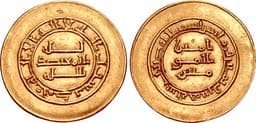
Al-Mutadid
Emperor · Medieval
57.9Total

Injong of Goryeo
Emperor · Medieval
45.4Total
Basic Information
Born
857
1109
Died
902
1146
Era
Medieval
Medieval
Nationality
Abbasid Caliphate
Korea
Occupation
Emperor
Emperor
Civilization
Middle Eastern
Eastern
Score Comparison
Military (10%)
52.5
25.9
Political (20%)
68.0
37.9
Influence (20%)
55.7
50.2
Legacy (20%)
47.5
45.0
Leadership (15%)
74.0
62.2
Strategy (15%)
55.0
39.6
TOTAL
57.9
45.4
Al-Mutadid — Complete Timeline
883 AD
Suppression of the Zanj RebellionWar◆ Major
Al-Mutadid, as regent and later caliph, led the final campaign that crushed the Zanj Rebellion. The rebel leader Ali ibn Muhammad was killed, and the revolt was brutally suppressed, restoring some order to southern Iraq.
Zanj RebellionMilitary CampaignRestoration
Impact: regionalconstructive
901 AD
Execution of the Qarmatian LeaderPolitical Action
Al-Mutadid ordered the execution of a captured Qarmatian leader, Yahya ibn Zikrawayh. This act was part of his efforts to suppress the Qarmatian movement, which threatened Abbasid rule in Syria and Iraq.
QarmatiansExecutionSuppression
Impact: regionaldestructive
Injong of Goryeo — Complete Timeline
1135 AD
Myocheong rebellionWar◆ Major
The Buddhist monk Myocheong led a rebellion in Pyongyang, advocating for moving the capital and attacking the Jurchen Jin dynasty. King Injong initially supported the plan but later opposed it, leading to a three-year revolt that was crushed by the general Kim Bu-sik.
RebellionCapital MoveGoryeo
Impact: nationaldestructive
1136 AD
Suppression of the Myocheong rebellion by Kim Bu-sikWar◆ Major
General Kim Bu-sik, acting on Injong's orders, besieged and captured Pyongyang, ending the Myocheong rebellion. The victory strengthened the authority of the civil bureaucracy over military and religious factions, but also deepened regional tensions.
Civil WarMilitary CampaignGoryeo
Impact: national
1140 AD
Adoption of the 'Goryeo dogyeong' (Goryeo Code)Reform
Injong oversaw the compilation of a new legal code based on Tang and Song Chinese models. The code standardized administrative procedures and criminal law, but its implementation was uneven due to aristocratic resistance.
Legal ReformCodeGoryeo
Impact: nationalconstructive
Expert Analysis
Origins
Al-Mutadid (c. 857–902 CE) was born into the Abbasid caliphal family as Ahmad ibn Talha. His father, Al-Muwaffaq, was the effective regent during the reign of his brother Caliph Al-Mu'tamid. Al-Mutadid grew up in a court weakened by civil war and external threats, including the Zanj Rebellion. He received military training and early command experience under his father, learning the arts of war and politics in a turbulent era.
Injong of Goryeo (1109–1146 CE), born Wang Hae, was the 17th monarch of the Goryeo dynasty. He was the son of King Yejong and Queen Sundeok. His education was steeped in Confucian classics and Korean traditions, preparing him for a ceremonial role rather than military command. The Goryeo court was dominated by powerful aristocratic families and scholar-officials, limiting the king's direct authority.
Rise to Power
Al-Mutadid rose to power through military success. In 883, he led campaigns against the Zanj rebels and later against the Tulunids in Egypt. His father's death in 891 made him regent for his cousin, but he quickly sidelined the young caliph. In 892, he became caliph after the death of Al-Mu'tamid, with strong support from the military. His rise was marked by decisive action: he executed rivals and centralized control.
Injong ascended the throne in 1122 at age 13 after his father's death. His early reign was dominated by his mother and powerful officials like Kim Bu-sik. In 1135, the monk Myocheong launched a rebellion in Pyongyang, advocating war against the Jurchen Jin dynasty and a capital move. Injong initially wavered, showing sympathy for Myocheong's ideas, but ultimately sided with Kim Bu-sik, who crushed the rebellion in 1136. Injong's rise was passive; he was a figurehead rather than a driving force.
Leadership & Governance
Al-Mutadid governed as a hands-on military caliph. He personally led campaigns, reorganized the army, and appointed loyalists to key posts. He restored Abbasid authority in Egypt by defeating the Tulunids in 905, reasserting direct rule. He also executed Qarmatian leader Yahya ibn Zikrawayh in 901, suppressing religious dissent. His governance was pragmatic: he used terror and rewards to maintain control. He scored 74.0 in Leadership, reflecting his active role.
Injong governed through delegating to scholar-officials. He oversaw the compilation of the 'Goryeo dogyeong' (Goryeo Code) in 1134, a legal code based on Tang and Song models, which standardized administration. However, he lacked military initiative; during the Myocheong rebellion, he relied on General Kim Bu-sik to suppress it. His political score of 37.9 indicates weak personal authority. Injong's style was passive, allowing ministers to dominate.
Triumph & Tragedy
Al-Mutadid's greatest triumph was crushing the Zanj Rebellion (869–883), which had threatened the Abbasid heartland. His final campaign in 883 killed the rebel leader Ali ibn Muhammad, ending 14 years of upheaval. He also restored Egypt to caliphal control, securing rich tax revenues. However, his reign was marred by the rise of the Qarmatians, a heretical sect he could not eradicate. He executed their leader but the movement grew after his death. His military score of 52.5 reflects mixed success.
Injong's triumph was surviving the Myocheong rebellion through Kim Bu-sik's loyalty. The suppression in 1136 strengthened central authority. He also promoted Confucian scholarship and legal reform. His tragedy was his indecisiveness: he initially supported Myocheong's plans, alienating loyalists. The rebellion cost many lives and damaged the economy. Injong's military score of 25.9 shows his reliance on others. He died in 1146, leaving a court still factionalized.
Character & Destiny
Al-Mutadid was ruthless, energetic, and ambitious. He personally led troops and executed rivals without hesitation. His character drove him to restore Abbasid power, but his harshness bred resentment. He died at 45, possibly poisoned, leaving a fragile state. His political score of 68.0 suggests he was effective but not visionary.
Injong was scholarly, cautious, and indecisive. He valued Confucian ideals but lacked the will to enforce them. His destiny was to be a puppet king, overshadowed by his generals. He died at 38, possibly of illness, with his reforms incomplete. His total score of 45.4 reflects limited impact.
Legacy
Al-Mutadid's legacy is as a restorer of Abbasid authority, but it was short-lived. After his death, the caliphate declined into fragmentation. His military campaigns regained Egypt temporarily, but the Qarmatians and other forces soon eroded gains. His score of 47.5 in Legacy indicates moderate long-term influence.
Injong's legacy is tied to the Goryeo Code and the defeat of Myocheong. The code influenced Korean law for centuries. However, his reign is often seen as weak. His legacy score of 45.0 is slightly lower. In Korean history, he is remembered as a king who allowed scholars to govern, but not as a strong leader.
Conclusion
Al-Mutadid had a greater impact than Injong. His total score of 57.9 vs 45.4 reflects his active restoration of Abbasid power, while Injong was a passive figure. Al-Mutadid's military campaigns and political consolidation, though flawed, directly shaped the Islamic world. Injong's reforms were important but dependent on others. The score gap of 12.5 points underscores this. Al-Mutadid's actions had more immediate and far-reaching consequences, making him the more significant historical figure.
Rankings
🥇
Al-MutadidLeader
Mil: 52.5Pol: 68.0Inf: 55.7
57.9
🥈
Injong of Goryeo
Mil: 25.9Pol: 37.9Inf: 50.2
45.4
+12.5 behind
How This Comparison Works
Algorithm
Each figure is scored on 6 dimensions (0—100 scale) based on structured historical data: Military (10%), Political (20%), Influence (20%), Legacy (20%), Leadership (15%), Strategy (15%). The weighted total produces the final ranking.
Data Sources
Scores are computed from structured sub-indicators in the database. Scale factors adjust for era (Ancient ×0.85, Modern ×1.0) and civilization size (Eastern ×1.05, Other ×0.80) to account for differences in population and military scale.
Maximum 3 Figures
Comparisons are limited to 2—3 figures to ensure readability and statistical meaningfulness.
Error Margins
±5 points per dimension — Sub-scores are derived from historical records with inherent uncertainty. Two figures within 5 points on a dimension should be considered roughly equivalent in that area.
Total Score Accuracy
±3 points overall — The weighted combination of 6 dimensions produces a total score with approximately ±3 points of uncertainty. Differences of less than 3 points are not statistically significant— the figures are effectively tied.
Known Limitations
- Historical records are incomplete and uneven across civilizations
- Figures from oral-tradition societies may be underrepresented
- Occupation labels can misclassify multi-role figures
- Scores measure capability and impact, not moral character
- Quantitative scoring is a comparison tool, not absolute truth
Capability Radar
Military (10%) — Battles & Warfare
Battles
55
20
Win Rate
60
15
Expansion
50
5
Political (20%) — Governance & Reform
Reform
55
30
Diplomacy
50
40
Economy
45
30
Influence (20%) — Cultural & Global Reach
Cultural
40
30
Global
35
10
Legacy (20%) — Historical Impact
Historical
45
40
Longevity
40
30
Leadership (15%) — Power & Stability
Tenure
60
60
Stability
50
20
Strategy (15%) — Tactics & Innovation
Strategy
55
10
Tactics
50
10
Reform
45
5
Similar Comparisons
Comments & Discussion
No comments yet. Be the first to share your thoughts!