Loading...
Al-Mutadid vs Napoleon Bonaparte
Napoleon Bonaparte leads by 13.0 pts · 2 figures compared
…
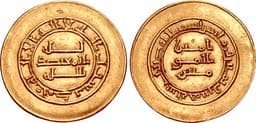
Al-Mutadid
Emperor · Medieval
57.9Total

Napoleon Bonaparte
General · Modern
70.9Total
Basic Information
Born
857
1769
Died
902
1821
Era
Medieval
Modern
Nationality
Abbasid Caliphate
France
Occupation
Emperor
General
Civilization
Middle Eastern
Western
Score Comparison
Military (10%)
52.5
94.0
Political (20%)
68.0
72.0
Influence (20%)
55.7
40.0
Legacy (20%)
47.5
80.0
Leadership (15%)
74.0
78.0
Strategy (15%)
55.0
90.0
TOTAL
57.9
70.9
Al-Mutadid — Complete Timeline
883 AD
Suppression of the Zanj RebellionWar◆ Major
Al-Mutadid, as regent and later caliph, led the final campaign that crushed the Zanj Rebellion. The rebel leader Ali ibn Muhammad was killed, and the revolt was brutally suppressed, restoring some order to southern Iraq.
Zanj RebellionMilitary CampaignRestoration
Impact: regionalconstructive
901 AD
Execution of the Qarmatian LeaderPolitical Action
Al-Mutadid ordered the execution of a captured Qarmatian leader, Yahya ibn Zikrawayh. This act was part of his efforts to suppress the Qarmatian movement, which threatened Abbasid rule in Syria and Iraq.
QarmatiansExecutionSuppression
Impact: regionaldestructive
Napoleon Bonaparte — Complete Timeline
1799 AD
Coup of 18 BrumaireOther◆ Major
Napoleon Bonaparte, with support from his brother Lucien and key political figures, overthrew the Directory in a bloodless coup. He established the Consulate with himself as First Consul, effectively becoming the ruler of France. This event ended the French Revolution's most unstable period.
French RevolutionCoupRise to Power
Impact: regional
1804 AD
Promulgation of the Napoleonic CodeOther◆ Major
Napoleon enacted the Civil Code of the French, known as the Napoleonic Code, a comprehensive set of laws that replaced the fragmented feudal legal systems. The code established legal equality, protected property rights, and secularized law. It became the basis for legal systems in many European and world countries.
Legal ReformNapoleonic CodeCivil Law
Impact: globalconstructive
1805 AD
Battle of AusterlitzWar◆ Major
Napoleon's Grande Arm
Napoleonic WarsBattleDecisive Victory
Impact: global
1812 AD
Invasion of RussiaWar◆ Major
Napoleon led the Grande Arm
Napoleonic WarsInvasionDisaster
Impact: globaldestructive
1815 AD
Battle of WaterlooWar◆ Major
Napoleon's French army was defeated by the combined forces of the Duke of Wellington's Anglo-Allied army and Gebhard Leberecht von Bl
Napoleonic WarsBattleFinal Defeat
Impact: globaldestructive
Expert Analysis
al-mutadid-vs-napoleon-bonaparte
# The Emperor and the Caliph: Two Paths to Power in Different Ages
On a June morning in 1815, Napoleon Bonaparte watched his Imperial Guard march toward the British lines at Waterloo, knowing that everything—his empire, his legacy, the very map of Europe—hung in the balance. A thousand years earlier, in the year 901, another ruler sat in his palace in Baghdad, ordering the execution of a captured rebel leader, hoping that a single death might restore order to a crumbling caliphate. Both men fought to reclaim lost glory. One reshaped the world; the other held back the tide. Why did their paths diverge so dramatically?
Origins
Napoleon was born in 1769 on the island of Corsica, a recent French acquisition, into a minor noble family with more pride than wealth. The son of a lawyer who had collaborated with the French occupiers, young Napoleon grew up speaking Italian-accented French, an outsider in a nation that would one day worship him. France in the late eighteenth century was a cauldron of revolution, a society tearing down its old structures and creating space for ambition unbound by birth.
Al-Mutadid, born in 857, entered a very different world. He was the grandson of a caliph, raised in the labyrinthine politics of the Abbasid court in Baghdad, where power flowed through bloodlines and palace intrigue. The Abbasid Caliphate had already passed its golden age; the great days of Harun al-Rashid were a fading memory. By the time al-Mutadid came of age, Turkish slave soldiers had become kingmakers, and the caliph's authority barely extended beyond the palace walls. He learned early that survival meant mastering the arts of manipulation and patience.
Rise to Power
Napoleon's ascent was meteoric, made possible by the chaos of the French Revolution. At twenty-four, he drove the British out of Toulon and became a brigadier general. By twenty-six, he was commanding the Army of Italy, winning battles that made him a national hero. His 1799 coup d'état placed him at the head of France at age thirty. The revolution had destroyed the old hierarchy; a gifted artillery officer could become emperor, provided he had the nerve to seize the moment.
Al-Mutadid's rise was slower, more treacherous. He served as regent under his weak-willed cousin, the Caliph al-Mutamid, while the real power lay with the caliph's brother, al-Muwaffaq. For years, al-Mutadid waited, building alliances, commanding campaigns, and watching his father figure die in 891. Only then did he become caliph—at thirty-five, already seasoned and suspicious. His path required not revolutionary daring but courtly cunning, the ability to survive when one wrong word meant death.
Leadership & Governance
Napoleon ruled through energy and vision. He reorganized French law into the Napoleonic Code, centralized the bureaucracy, and created a system of meritocratic advancement. His military genius—scoring 94 in strategy—was legendary: he moved armies faster than his enemies thought possible, struck at their weakest points, and turned defeat into victory through sheer force of will. But his political score of 75 reflects a fatal flaw: he could conquer but could not consolidate. He placed his brothers on thrones across Europe, but these puppet kingdoms never earned loyalty.
Al-Mutadid governed through restoration and calculation. His military score of 15 seems low, but it measures a different kind of warfare—not sweeping campaigns but targeted strikes to reassert control. In 883, he crushed the Zanj Rebellion, a brutal slave uprising that had plagued the caliphate for fifteen years. In 905, his forces reconquered Egypt from the Tulunid dynasty, restoring direct Abbasid rule after decades of autonomy. His political score of 54 reflects modest success: he reduced Turkish influence, reformed administration, and stabilized the treasury. But he could not reverse the caliphate's long decline—only slow it.
Triumph & Tragedy
Napoleon's greatest triumph was Austerlitz in 1805, where he destroyed a combined Russian and Austrian army and crowned himself master of Europe. His greatest tragedy was the 1812 invasion of Russia, a catastrophic miscalculation that cost half a million men. The retreat from Moscow revealed the limits of his ambition: he could win battles but not winters, could conquer nations but not hold them.
Al-Mutadid's triumph was quieter but no less significant. By crushing the Zanj and reasserting control over Egypt, he restored the caliphate's prestige for a generation. His tragedy was the Qarmatian threat that he could not fully extinguish. In 901, he executed the captured leader Yahya ibn Zikrawayh, but the movement survived and would eventually sack Mecca itself. His victories were rearguard actions, buying time for a dying empire.
Character & Destiny
Napoleon was driven by an insatiable hunger for glory. "Impossible is a word to be found only in the dictionary of fools," he once said. His personality—arrogant, restless, brilliant—propelled him to heights no Corsican had ever reached, but it also blinded him to limits. He could not stop, could not share power, could not accept that even genius has boundaries.
Al-Mutadid was shaped by caution and realism. He knew that the caliphate was a wounded beast; his goal was not to conquer new lands but to hold what remained. He was ruthless when necessary—executing rebels, suppressing dissent—but he understood the value of patience. He could not dream of restoring Harun al-Rashid's empire; he could only hope to pass on a stronger realm to his son.
Legacy
Napoleon left a continent transformed. The Napoleonic Code influences legal systems from France to Louisiana. His wars spread nationalism across Europe, planting seeds that would bloom into modern Germany and Italy. His legend endures as the archetype of the self-made conqueror—flawed, magnificent, doomed.
Al-Mutadid left a caliphate breathing for another generation. His son, al-Muktafi, continued his work, but the decline resumed within decades. Today, al-Mutadid is remembered by specialists, not schoolchildren. His legacy is measured not in glory but in postponement—the quiet heroism of a man who held the line when the line was all that mattered.
Conclusion
Standing at Waterloo, Napoleon saw his empire dissolve in a single afternoon. Sitting in Baghdad, al-Mutadid saw his work slowly unravel over decades. One man's tragedy was spectacular, the other's was gradual. But both faced the same fundamental question: what can one ruler do when the forces of history are against him? Napoleon answered with audacity, al-Mutadid with endurance. Neither succeeded in the way they hoped, but both remind us that leadership is not about winning forever—it is about acting with courage in the moment you are given.
Rankings
🥇
Napoleon BonaparteLeader
Mil: 94.0Pol: 72.0Inf: 40.0
70.9
🥈
Al-Mutadid
Mil: 52.5Pol: 68.0Inf: 55.7
57.9
+13.0 behind
How This Comparison Works
Algorithm
Each figure is scored on 6 dimensions (0—100 scale) based on structured historical data: Military (10%), Political (20%), Influence (20%), Legacy (20%), Leadership (15%), Strategy (15%). The weighted total produces the final ranking.
Data Sources
Scores are computed from structured sub-indicators in the database. Scale factors adjust for era (Ancient ×0.85, Modern ×1.0) and civilization size (Eastern ×1.05, Other ×0.80) to account for differences in population and military scale.
Maximum 3 Figures
Comparisons are limited to 2—3 figures to ensure readability and statistical meaningfulness.
Error Margins
±5 points per dimension — Sub-scores are derived from historical records with inherent uncertainty. Two figures within 5 points on a dimension should be considered roughly equivalent in that area.
Total Score Accuracy
±3 points overall — The weighted combination of 6 dimensions produces a total score with approximately ±3 points of uncertainty. Differences of less than 3 points are not statistically significant— the figures are effectively tied.
Known Limitations
- Historical records are incomplete and uneven across civilizations
- Figures from oral-tradition societies may be underrepresented
- Occupation labels can misclassify multi-role figures
- Scores measure capability and impact, not moral character
- Quantitative scoring is a comparison tool, not absolute truth
Capability Radar
Military (10%) — Battles & Warfare
Battles
55
95
Win Rate
60
90
Expansion
50
95
Political (20%) — Governance & Reform
Reform
55
95
Diplomacy
50
80
Economy
45
85
Influence (20%) — Cultural & Global Reach
Cultural
40
85
Global
35
90
Legacy (20%) — Historical Impact
Historical
45
95
Longevity
40
90
Leadership (15%) — Power & Stability
Tenure
60
85
Stability
50
70
Strategy (15%) — Tactics & Innovation
Strategy
55
95
Tactics
50
98
Reform
45
92
Similar Comparisons
Comments & Discussion
No comments yet. Be the first to share your thoughts!