Loading...
Al-Mutadid vs Julius Caesar
Julius Caesar leads by 24.9 pts · 2 figures compared
…
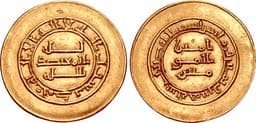
Al-Mutadid
Emperor · Medieval
57.9Total

Julius Caesar
General · Ancient
82.8Total
Basic Information
Born
857
-100
Died
902
-44
Era
Medieval
Ancient
Nationality
Abbasid Caliphate
Roman Republic
Occupation
Emperor
General
Civilization
Middle Eastern
Western
Score Comparison
Military (10%)
52.5
88.0
Political (20%)
68.0
78.0
Influence (20%)
55.7
85.0
Legacy (20%)
47.5
82.0
Leadership (15%)
74.0
80.0
Strategy (15%)
55.0
85.0
TOTAL
57.9
82.8
Al-Mutadid — Complete Timeline
883 AD
Suppression of the Zanj RebellionWar◆ Major
Al-Mutadid, as regent and later caliph, led the final campaign that crushed the Zanj Rebellion. The rebel leader Ali ibn Muhammad was killed, and the revolt was brutally suppressed, restoring some order to southern Iraq.
Zanj RebellionMilitary CampaignRestoration
Impact: regionalconstructive
901 AD
Execution of the Qarmatian LeaderPolitical Action
Al-Mutadid ordered the execution of a captured Qarmatian leader, Yahya ibn Zikrawayh. This act was part of his efforts to suppress the Qarmatian movement, which threatened Abbasid rule in Syria and Iraq.
QarmatiansExecutionSuppression
Impact: regionaldestructive
Julius Caesar — Complete Timeline
58 BC
Gallic WarsWar◆ Major
Caesar, as proconsul of Gaul, launched a series of campaigns that conquered all of Gaul (modern France, Belgium, and parts of Switzerland). He fought numerous battles, including against the Helvetii, the Belgae, and the Gallic chieftain Vercingetorix. The wars brought immense wealth and a loyal army to Caesar.
Gallic WarsConquestRoman Expansion
Impact: regional
49 BC
Crossing the RubiconPolitical Action◆ Major
Caesar led Legio XIII across the Rubicon River into Italy, defying the Roman Senate's order to disband his army. This act triggered a civil war against Pompey and the Optimates, ultimately leading to Caesar's dictatorship and the end of the Roman Republic.
Roman Civil WarEnd of RepublicPower Struggle
Impact: global
48 BC
Battle of PharsalusWar◆ Major
Caesar's outnumbered army defeated the larger forces of Pompey the Great at Pharsalus in Greece. Caesar's tactical use of a reserve line to counter Pompey's cavalry charge proved decisive. Pompey fled to Egypt, where he was assassinated, leaving Caesar as the undisputed master of the Roman world.
Roman Civil WarBattleDecisive Victory
Impact: regional
44 BC
Appointment as Dictator for LifePolitical Action◆ Major
The Roman Senate appointed Caesar dictator perpetuo (dictator for life), granting him unprecedented personal power. This move concentrated military, legislative, and judicial authority in one person, effectively ending the Roman Republic's traditional system of checks and balances and alarming many senators.
DictatorshipEnd of RepublicPower Consolidation
Impact: regionaldestructive
Assassination on the Ides of MarchPolitical Action◆ Major
A group of Roman senators, led by Marcus Junius Brutus and Gaius Cassius Longinus, stabbed Caesar to death at a meeting of the Senate in the Theatre of Pompey. The assassination was intended to restore the Republic, but instead triggered another civil war that led to the rise of the Roman Empire.
AssassinationRoman PoliticsEnd of Republic
Impact: globaldestructive
Expert Analysis
al-mutadid-vs-julius-caesar
# The Crossing and the Restoration
On a January morning in 49 BCE, Julius Caesar stood at the banks of the Rubicon, a small river in northern Italy. He knew that leading his army across would mean civil war—and that there was no turning back. "The die is cast," he reportedly said, and he crossed. Eight hundred miles to the east, and nearly a thousand years later, another ruler faced his own Rubicon. Al-Mutadid, the sixteenth Abbasid caliph, inherited a caliphate in ruins, its authority hollowed out by Turkish mercenaries and provincial rebels. He never crossed a river to seize power—he had to rebuild a house that was already burning.
Origins
Julius Caesar was born into the chaos of the late Roman Republic, a world of bitter aristocratic rivalries and crumbling traditions. His family, the Julii, claimed descent from the goddess Venus—a lineage that gave him status but not wealth. Rome in the first century BCE was a republic in name only, dominated by a senatorial oligarchy that was increasingly unable to govern an empire. Caesar’s youth was marked by civil war, exile, and the dictatorship of Sulla, who had proscribed his enemies and murdered thousands. From the start, Caesar learned that politics was a blood sport.
Al-Mutadid came into a different kind of crisis. Born in 857 CE, he was the son of Caliph al-Muwaffaq, the real power behind the throne during the reign of his ineffective brother. The Abbasid Caliphate, once the heart of the Islamic world, had been shredded by the Anarchy at Samarra—a decade of chaos in which Turkish slave soldiers murdered caliphs at will. By the time al-Mutadid reached adulthood, the caliph’s authority barely extended beyond Baghdad. Egypt was ruled by the Tulunids, Syria was contested by local warlords, and the Zanj Rebellion—a massive slave uprising in southern Iraq—had brought the empire to its knees. Where Caesar was born into a system that still had the potential for greatness, al-Mutadid was born into one that had already broken.
Rise to Power
Caesar’s path to power was a masterpiece of calculated risk. He climbed the traditional ladder of Roman offices—quaestor, aedile, praetor—but he did so with a flair for spectacle. He borrowed vast sums to stage games and public works, winning the loyalty of the Roman mob. His military command in Gaul, from 58 to 50 BCE, gave him a veteran army and a reputation for invincibility. But it also made him an outlaw in the eyes of his enemies in the Senate, who demanded he disband his forces and return to Rome as a private citizen. Caesar refused. The crossing of the Rubicon was the climax of a career built on defying limits.
Al-Mutadid’s rise was more constrained. He was not a rebel but a restorer. His father, al-Muwaffaq, had already begun the fight against the Zanj Rebellion, and when al-Muwaffaq died in 891, al-Mutadid inherited both the war and the regency. He became caliph in 892, after the death of his uncle al-Mutamid. Unlike Caesar, who seized power by breaking the law, al-Mutadid took power by reasserting it. His challenge was not to conquer but to reclaim.
Leadership & Governance
Caesar governed through audacity and speed. As a general, he was unmatched: he conquered all of Gaul in eight years, crossed the Rhine into Germany, and landed in Britain—all while writing commentaries that made his deeds legendary. His political reforms as dictator were sweeping: he reformed the calendar (giving us the Julian calendar), expanded the Senate to include provincials, and began ambitious public works. But his rule was also a one-man show. He centralized power, accumulated honors, and accepted the title of dictator for life. He governed like a king in all but name.
Al-Mutadid ruled with a different kind of wisdom. He was not a conqueror but a consolidator. His military campaigns were focused and surgical: the final suppression of the Zanj Rebellion in 883, the execution of the Qarmatian leader Yahya ibn Zikrawayh in 901, and the reconquest of Egypt from the Tulunids in 905. Each victory restored a piece of the caliphate’s lost territory. He also reformed the administration, reducing the power of Turkish soldiers and reasserting the caliph’s control over the treasury. His political score of 53.7 reflects a ruler who was competent but not transformative—he stabilized, but he did not revolutionize.
Triumph & Tragedy
Caesar’s greatest triumph was his conquest of Gaul, which added a vast province to Rome and made him the richest man in the Republic. His greatest tragedy was his own success: the fear he inspired led to his assassination on the Ides of March, 44 BCE, stabbed by senators who called themselves liberators. He died at the height of his power, leaving a legacy of civil war that would end the Republic forever.
Al-Mutadid’s triumph was the restoration of Abbasid authority. When he became caliph, the empire was a patchwork of rebellions and breakaway states. When he died in 902, Baghdad was again the center of the Islamic world, and the caliph’s word carried weight from Egypt to Persia. But his tragedy was that his work did not last. His successors lacked his discipline, and within a generation, the caliphate would fall under the control of the Buyids, a Persian dynasty that reduced the caliph to a figurehead. Al-Mutadid rebuilt the house, but he could not change the neighborhood.
Character & Destiny
Caesar was driven by an insatiable ambition. He wanted to be first—in Rome, in history, in the world. His personality was magnetic, his generosity legendary, his ruthlessness absolute. He pardoned his enemies, but he never forgot a slight. His destiny was to destroy the Republic and create the Empire, even if he did not live to see it. He was a man who bent history to his will.
Al-Mutadid was driven by duty. He was a caliph who believed in the office, not just in power. His military score of 15.2 is deceptively low—it reflects a leader who fought wars of restoration, not expansion. His strategy score of 66.0 suggests a careful planner, not a gambler. Where Caesar took risks, al-Mutadid took precautions. Where Caesar broke rules, al-Mutadid enforced them. Their characters shaped their fates: Caesar died because he pushed too far, while al-Mutadid died in bed, having pushed just far enough.
Legacy
Caesar’s legacy is everywhere. His name became a title—Caesar, Kaiser, Tsar. His writings are still read. His reforms outlived him. He is remembered as the man who ended the Roman Republic and began the Roman Empire, for better or worse. His total score of 83.3 places him among the giants of history.
Al-Mutadid’s legacy is more modest. He is remembered by historians as a capable restorer, a caliph who briefly reversed the decline of the Abbasid dynasty. His score of 59.4 reflects a leader who was effective but not transformative. He is not a household name, even in the Middle East. But he deserves respect: he took a broken empire and gave it ten more years of life.
Conclusion
Caesar and al-Mutadid faced the same fundamental problem: how to rule when the old order is dying. Caesar answered by burning the old order down and building a new one. Al-Mutadid answered by patching the old order back together. One was a revolutionary, the other a restorer. History remembers the revolutionary, but it was the restorer who kept the lights on. Both men remind us that leadership is not about scores or statistics—it is about the choices made when the die is cast.
Rankings
🥇
Julius CaesarLeader
Mil: 88.0Pol: 78.0Inf: 85.0
82.8
🥈
Al-Mutadid
Mil: 52.5Pol: 68.0Inf: 55.7
57.9
+24.9 behind
How This Comparison Works
Algorithm
Each figure is scored on 6 dimensions (0—100 scale) based on structured historical data: Military (10%), Political (20%), Influence (20%), Legacy (20%), Leadership (15%), Strategy (15%). The weighted total produces the final ranking.
Data Sources
Scores are computed from structured sub-indicators in the database. Scale factors adjust for era (Ancient ×0.85, Modern ×1.0) and civilization size (Eastern ×1.05, Other ×0.80) to account for differences in population and military scale.
Maximum 3 Figures
Comparisons are limited to 2—3 figures to ensure readability and statistical meaningfulness.
Error Margins
±5 points per dimension — Sub-scores are derived from historical records with inherent uncertainty. Two figures within 5 points on a dimension should be considered roughly equivalent in that area.
Total Score Accuracy
±3 points overall — The weighted combination of 6 dimensions produces a total score with approximately ±3 points of uncertainty. Differences of less than 3 points are not statistically significant— the figures are effectively tied.
Known Limitations
- Historical records are incomplete and uneven across civilizations
- Figures from oral-tradition societies may be underrepresented
- Occupation labels can misclassify multi-role figures
- Scores measure capability and impact, not moral character
- Quantitative scoring is a comparison tool, not absolute truth
Capability Radar
Military (10%) — Battles & Warfare
Battles
55
95
Win Rate
60
92
Expansion
50
97
Political (20%) — Governance & Reform
Reform
55
90
Diplomacy
50
85
Economy
45
82
Influence (20%) — Cultural & Global Reach
Cultural
40
88
Global
35
94
Legacy (20%) — Historical Impact
Historical
45
95
Longevity
40
96
Leadership (15%) — Power & Stability
Tenure
60
75
Stability
50
60
Strategy (15%) — Tactics & Innovation
Strategy
55
94
Tactics
50
96
Reform
45
88
Similar Comparisons
Comments & Discussion
No comments yet. Be the first to share your thoughts!