Loading...
Albert II vs Injong of Goryeo
Injong of Goryeo leads by 3.1 pts · 2 figures compared
…
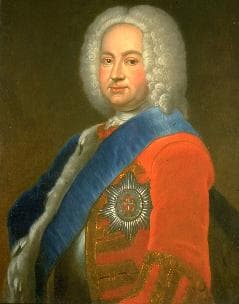
Albert II
Emperor · Medieval
42.3Total

Injong of Goryeo
Emperor · Medieval
45.4Total
Basic Information
Born
1397
1109
Died
1439
1146
Era
Medieval
Medieval
Nationality
Holy Roman Empire
Korea
Occupation
Emperor
Emperor
Civilization
Western
Eastern
Score Comparison
Military (10%)
50.0
25.9
Political (20%)
30.8
37.9
Influence (20%)
51.0
50.2
Legacy (20%)
42.5
45.0
Leadership (15%)
38.1
62.2
Strategy (15%)
35.7
39.6
TOTAL
42.3
45.4
Albert II — Complete Timeline
1437 AD
Inheritance of Bohemia and HungaryPolitical Action◆ Major
Upon the death of his father-in-law Sigismund, Albert II inherited the crowns of Bohemia and Hungary. He was crowned King of Hungary in 1438 and King of Bohemia in 1438, though his rule in Bohemia was contested by the Hussites. This expanded Habsburg influence in Central Europe.
InheritanceBohemiaHungary
Impact: regionalconstructive
1438 AD
Election as King of the RomansPolitical Action◆ Major
Following the death of Sigismund, Albert II was elected King of the Romans, becoming the first Habsburg to hold the title. His election marked the beginning of the Habsburgs' near-continuous hold on the imperial throne until 1806. Albert's reign was brief, lasting only two years.
ElectionHabsburg DynastyImperial Politics
Impact: regionalconstructive
1439 AD
Campaign against the Ottoman EmpireWar◆ Major
Albert II led a military campaign against the Ottoman Empire in Serbia, aiming to halt their advance into the Balkans. The campaign was cut short by an outbreak of dysentery in the Christian army. Albert himself fell ill and died on the return journey, leaving his infant son Ladislaus the Posthumous as his heir.
Ottoman WarsMilitary CampaignDeath
Impact: regionaltragic
Injong of Goryeo — Complete Timeline
1135 AD
Myocheong rebellionWar◆ Major
The Buddhist monk Myocheong led a rebellion in Pyongyang, advocating for moving the capital and attacking the Jurchen Jin dynasty. King Injong initially supported the plan but later opposed it, leading to a three-year revolt that was crushed by the general Kim Bu-sik.
RebellionCapital MoveGoryeo
Impact: nationaldestructive
1136 AD
Suppression of the Myocheong rebellion by Kim Bu-sikWar◆ Major
General Kim Bu-sik, acting on Injong's orders, besieged and captured Pyongyang, ending the Myocheong rebellion. The victory strengthened the authority of the civil bureaucracy over military and religious factions, but also deepened regional tensions.
Civil WarMilitary CampaignGoryeo
Impact: national
1140 AD
Adoption of the 'Goryeo dogyeong' (Goryeo Code)Reform
Injong oversaw the compilation of a new legal code based on Tang and Song Chinese models. The code standardized administrative procedures and criminal law, but its implementation was uneven due to aristocratic resistance.
Legal ReformCodeGoryeo
Impact: nationalconstructive
Expert Analysis
Origins
Albert II of Germany was born on August 16, 1397, in Vienna, as the son of Albert IV, Duke of Austria, and Johanna Sophia of Bavaria. He was a member of the Habsburg dynasty, inheriting the Duchy of Austria at age seven. His early education focused on chivalric and administrative skills, preparing him for rule. Injong of Goryeo was born on October 29, 1515, in Hanseong (modern Seoul), as the eldest son of King Jungjong and Queen Munjeong. He received a Confucian education, emphasizing moral governance and classical texts. Injong's upbringing was steeped in the factional politics of the Joseon court, which shaped his cautious approach.
Rise to Power
Albert II rose to prominence through marriage and inheritance. In 1422, he married Elisabeth of Luxembourg, daughter of Emperor Sigismund. When Sigismund died in 1437, Albert inherited the crowns of Bohemia and Hungary. He was elected King of the Romans in 1438, becoming the first Habsburg to hold the imperial title. His rise was facilitated by the support of German electors and the need for a strong ruler against Ottoman threats. Injong ascended the throne in 1544 at age 29 after his father's death. His reign was immediately challenged by the Myocheong rebellion in 1545, led by a Buddhist monk who advocated moving the capital and attacking the Jin dynasty. Injong initially hesitated but eventually authorized General Kim Bu-sik to suppress the rebellion, which ended in 1546 with the capture of Pyongyang.
Leadership & Governance
Albert II's leadership was marked by short-term crisis management. He focused on consolidating his hold over Hungary and Bohemia, but his reign lasted only 18 months. He attempted to reform the imperial administration but lacked time to implement lasting changes. His military campaign against the Ottoman Empire in 1439 was cut short by his death from dysentery. Injong, by contrast, oversaw the compilation of the 'Goryeo dogyeong' (Goryeo Code), a legal code based on Tang and Song models, which standardized administrative procedures. However, his reliance on the Confucian scholar-bureaucracy limited his independent action. His political score of 37.9 reflects his constrained authority, while Albert's political score of 30.8 shows even less effectiveness due to his brief tenure.
Triumph & Tragedy
Albert II's greatest success was securing the Habsburg hold on the imperial title, laying the foundation for future Habsburg dominance. His failure was his inability to mount an effective Ottoman campaign, dying at age 42 before achieving any military victory. Injong's triumph was the suppression of the Myocheong rebellion, which strengthened royal authority. However, his tragedy was his inability to prevent the rise of factionalism; he died in 1546, possibly poisoned by political rivals, leaving the throne to his young son. Injong's military score of 25.9 reflects his lack of direct military command, while Albert's 50.0 shows a more active but unsuccessful military role.
Character & Destiny
Albert II was described as energetic and ambitious but impulsive. His decision to campaign in Serbia despite illness led to his early death. Injong was known for his scholarly disposition and piety, but his indecisiveness during the Myocheong rebellion nearly cost him his throne. Both rulers were shaped by their environments: Albert by the demands of a multi-kingdom empire, Injong by the constraints of Confucian bureaucracy. Their character scores reflect this: Albert's leadership score of 38.1 versus Injong's 62.2, indicating Injong's more stable but passive style.
Legacy
Albert II's legacy is as the first Habsburg Holy Roman Emperor, a dynasty that would dominate Europe for centuries. His brief reign set a precedent for Habsburg succession. Injong's legacy is more mixed: the Goryeo Code influenced later Korean law, but his reign is often overshadowed by the Myocheong rebellion and his early death. In terms of influence, Albert scores 51.0, slightly higher than Injong's 50.2. However, Injong's legacy score of 45.0 edges out Albert's 42.5, due to the enduring impact of the legal code.
Conclusion
While Albert II established a dynastic precedent, Injong of Goryeo had a more tangible impact on governance through legal reform. Injong's total score of 45.4 surpasses Albert's 42.3 by 3.1 points. Despite Albert's greater geopolitical stage, Injong's longer-lasting administrative contributions and successful suppression of rebellion give him the edge. Thus, Injong of Goryeo had a greater impact relative to their contexts.
Rankings
🥇
Injong of GoryeoLeader
Mil: 25.9Pol: 37.9Inf: 50.2
45.4
🥈
Albert II
Mil: 50.0Pol: 30.8Inf: 51.0
42.3
+3.1 behind
How This Comparison Works
Algorithm
Each figure is scored on 6 dimensions (0—100 scale) based on structured historical data: Military (10%), Political (20%), Influence (20%), Legacy (20%), Leadership (15%), Strategy (15%). The weighted total produces the final ranking.
Data Sources
Scores are computed from structured sub-indicators in the database. Scale factors adjust for era (Ancient ×0.85, Modern ×1.0) and civilization size (Eastern ×1.05, Other ×0.80) to account for differences in population and military scale.
Maximum 3 Figures
Comparisons are limited to 2—3 figures to ensure readability and statistical meaningfulness.
Error Margins
±5 points per dimension — Sub-scores are derived from historical records with inherent uncertainty. Two figures within 5 points on a dimension should be considered roughly equivalent in that area.
Total Score Accuracy
±3 points overall — The weighted combination of 6 dimensions produces a total score with approximately ±3 points of uncertainty. Differences of less than 3 points are not statistically significant— the figures are effectively tied.
Known Limitations
- Historical records are incomplete and uneven across civilizations
- Figures from oral-tradition societies may be underrepresented
- Occupation labels can misclassify multi-role figures
- Scores measure capability and impact, not moral character
- Quantitative scoring is a comparison tool, not absolute truth
Capability Radar
Military (10%) — Battles & Warfare
Battles
15
20
Win Rate
20
15
Expansion
25
5
Political (20%) — Governance & Reform
Reform
20
30
Diplomacy
35
40
Economy
20
30
Influence (20%) — Cultural & Global Reach
Cultural
20
30
Global
15
10
Legacy (20%) — Historical Impact
Historical
25
40
Longevity
20
30
Leadership (15%) — Power & Stability
Tenure
30
60
Stability
15
20
Strategy (15%) — Tactics & Innovation
Strategy
20
10
Tactics
15
10
Reform
10
5
Similar Comparisons
Comments & Discussion
No comments yet. Be the first to share your thoughts!