Loading...
Al-Mustasim vs Louis the Child
Al-Mustasim leads by 1.2 pts · 2 figures compared
…
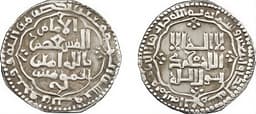
Al-Mustasim
Emperor · Medieval
40.8Total
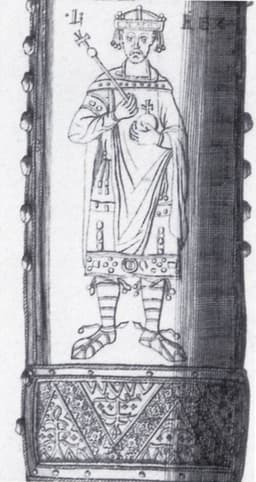
Louis the Child
Emperor · Medieval
39.6Total
Basic Information
Born
1213
893
Died
1258
911
Era
Medieval
Medieval
Nationality
Abbasid Caliphate
East Francia
Occupation
Emperor
Emperor
Civilization
Middle Eastern
Western
Score Comparison
Military (10%)
50.0
20.0
Political (20%)
26.4
35.0
Influence (20%)
46.3
45.5
Legacy (20%)
36.7
35.8
Leadership (15%)
48.4
49.9
Strategy (15%)
38.6
45.0
TOTAL
40.8
39.6
Al-Mustasim — Complete Timeline
1258 AD
Siege of BaghdadWar
Mongol forces under Hulagu Khan besieged and captured Baghdad. Al-Mustasim was executed, ending the Abbasid Caliphate in Baghdad. The city was sacked, resulting in massive destruction and loss of life, marking a turning point in Islamic history.
Mongol InvasionFall of BaghdadEnd of Caliphate
Impact: globaltragic
Louis the Child — Complete Timeline
900 AD
Accession as King of East FranciaPolitical Action◆ Major
Louis succeeded his father Arnulf of Carinthia as king of East Francia at age six or seven. His minority led to regency by Archbishop Hatto I of Mainz and other nobles, weakening royal authority.
SuccessionRegency
Impact: national
907 AD
Magyar Invasions of East FranciaWar◆ Major
During Louis's reign, Magyar (Hungarian) raiders repeatedly invaded East Francia. The East Frankish army suffered a major defeat at the Battle of Pressburg in 907, leading to loss of control over the March of Pannonia.
Magyar RaidsMilitary Defeat
Impact: regionaldestructive
911 AD
Death without HeirsPolitical Action
Louis died at age 18 without legitimate children, ending the Carolingian line in East Francia. The East Frankish nobility elected Conrad I as king, marking the transition to non-Carolingian rule.
Dynastic EndElection
Impact: national
Expert Analysis
Origins
Al-Mustasim (full name: Al-Mustasim Billah) was born around 1213 in Baghdad, the son of Caliph al-Zahir and a Turkish slave concubine. He became caliph in 1242 after the death of his brother al-Mustansir. His upbringing in the Abbasid court was marked by luxury and intrigue, but he lacked military or political experience. In contrast, Louis the Child was born in 893 in Altötting, Bavaria, the only legitimate son of King Arnulf of Carinthia and Ota, a member of the Conradine dynasty. Louis was crowned king of East Francia at age six or seven in 900, inheriting a realm plagued by internal strife and external threats. His early life was dominated by regents, particularly Archbishop Hatto I of Mainz, who shaped his brief reign.
Rise to Power
Al-Mustasim ascended to the caliphate without significant opposition, inheriting a shrinking but still influential Abbasid state. His rise was due to dynastic succession, not personal merit. He faced immediate challenges from the Mongol Empire, which under Hulagu Khan was expanding westward. Louis the Child became king after his father Arnulf's death in 899. His accession was contested by rivals, but the East Frankish nobility accepted him due to the lack of alternatives. The regency of Hatto I and others managed the kingdom, but Louis's minority weakened central authority. Both rulers came to power during periods of existential threat: the Mongols for Al-Mustasim, and Magyar invasions for Louis.
Leadership & Governance
Al-Mustasim's leadership was passive and indecisive. He ignored warnings from his vizier and military commanders about the Mongol threat, preferring to rely on diplomatic overtures that failed. He reduced military spending and dismissed capable advisors. His governance was marked by corruption and factionalism. Louis the Child, due to his youth, had little direct control. The regency led by Hatto I and Bishop Adalbero of Augsburg governed in his name, but they struggled to unite the fractious duchies (Saxony, Bavaria, Swabia, Franconia). Louis's reign saw the collapse of Carolingian authority, as local dukes gained power. Al-Mustasim scored 48.4 in leadership, slightly lower than Louis's 49.9, but both were ineffective. In political acumen, Al-Mustasim's 26.4 reflects his poor decisions, while Louis's 35.0 indicates slightly better handling of court politics, albeit through regents.
Triumph & Tragedy
Al-Mustasim's greatest success was maintaining the caliphate for 16 years despite internal decay. However, his tragic failure was the Siege of Baghdad (1258), where he refused to submit to Hulagu Khan, leading to the city's sack, the massacre of hundreds of thousands, and his own execution. He scored 50.0 in military, but his strategy of 38.6 was inadequate. Louis the Child's reign had no triumphs; his only notable event was his coronation. His tragedy was the Magyar invasions, culminating in the Battle of Pressburg (907), where the East Frankish army was annihilated, and Louis's authority evaporated. He died childless in 911 at age 18, ending the Carolingian dynasty in East Francia. Louis scored 20.0 in military, reflecting his inability to defend his realm.
Character & Destiny
Al-Mustasim was described by contemporaries as pleasure-loving, arrogant, and stubborn. He dismissed advice, trusting in his own flawed judgment. His character directly caused the fall of Baghdad; had he negotiated or prepared militarily, the caliphate might have survived. Louis the Child was a pawn of his regents. His early death prevented any personal development. Historians view him as a tragic figure, a boy-king unable to shape his destiny. Both were victims of circumstances beyond their control, but Al-Mustasim's choices accelerated his downfall, while Louis's fate was sealed by his youth.
Legacy
Al-Mustasim's legacy is the end of the Abbasid Caliphate in Baghdad, a pivotal event in Islamic history. The Mongols destroyed the center of Islamic learning, causing a cultural and political shift. He is remembered as a symbol of incompetence and decline. Louis the Child's legacy is the transition from Carolingian to Ottonian rule. His death led to the election of Conrad I, the first non-Carolingian king, paving the way for the Holy Roman Empire. He scored 36.7 in legacy, slightly above Al-Mustasim's 36.3. Both are footnotes in history, but Louis's end marked a new beginning, whereas Al-Mustasim's end was a catastrophe.
Conclusion
While Al-Mustasim has a higher total score (40.8 vs 39.6), his impact was more destructive: his incompetence led to the destruction of Baghdad and the Abbasid Caliphate. Louis the Child, though equally weak, presided over a transition that ultimately strengthened East Francia. Al-Mustasim's reign was a disaster that set back Islamic civilization; Louis's reign was a collapse that allowed new structures to emerge. Therefore, Louis the Child had a more positive long-term impact, as his failure cleared the way for the more capable Ottonian dynasty. Al-Mustasim's legacy is purely negative; he is the cautionary tale of a ruler who lost everything.
Rankings
🥇
Al-MustasimLeader
Mil: 50.0Pol: 26.4Inf: 46.3
40.8
🥈
Louis the Child
Mil: 20.0Pol: 35.0Inf: 45.5
39.6
+1.2 behind
How This Comparison Works
Algorithm
Each figure is scored on 6 dimensions (0—100 scale) based on structured historical data: Military (10%), Political (20%), Influence (20%), Legacy (20%), Leadership (15%), Strategy (15%). The weighted total produces the final ranking.
Data Sources
Scores are computed from structured sub-indicators in the database. Scale factors adjust for era (Ancient ×0.85, Modern ×1.0) and civilization size (Eastern ×1.05, Other ×0.80) to account for differences in population and military scale.
Maximum 3 Figures
Comparisons are limited to 2—3 figures to ensure readability and statistical meaningfulness.
Error Margins
±5 points per dimension — Sub-scores are derived from historical records with inherent uncertainty. Two figures within 5 points on a dimension should be considered roughly equivalent in that area.
Total Score Accuracy
±3 points overall — The weighted combination of 6 dimensions produces a total score with approximately ±3 points of uncertainty. Differences of less than 3 points are not statistically significant— the figures are effectively tied.
Known Limitations
- Historical records are incomplete and uneven across civilizations
- Figures from oral-tradition societies may be underrepresented
- Occupation labels can misclassify multi-role figures
- Scores measure capability and impact, not moral character
- Quantitative scoring is a comparison tool, not absolute truth
Capability Radar
Military (10%) — Battles & Warfare
Battles
5
5
Win Rate
5
5
Expansion
0
5
Political (20%) — Governance & Reform
Reform
0
5
Diplomacy
5
5
Economy
5
5
Influence (20%) — Cultural & Global Reach
Cultural
5
5
Global
10
5
Legacy (20%) — Historical Impact
Historical
15
10
Longevity
5
5
Leadership (15%) — Power & Stability
Tenure
10
10
Stability
0
5
Strategy (15%) — Tactics & Innovation
Strategy
5
5
Tactics
5
5
Reform
0
5
Similar Comparisons
Comments & Discussion
No comments yet. Be the first to share your thoughts!