Loading...
Al-Mustasim vs Urraca of Panama
Al-Mustasim leads by 3.4 pts · 2 figures compared
…
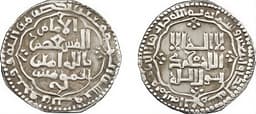
Al-Mustasim
Emperor · Medieval
40.8Total

Urraca of Panama
Emperor · Medieval
37.4Total
Basic Information
Born
1213
1480
Died
1258
1530
Era
Medieval
Medieval
Nationality
Abbasid Caliphate
Cueva
Occupation
Emperor
Emperor
Civilization
Middle Eastern
Other
Score Comparison
Military (10%)
50.0
21.2
Political (20%)
26.4
27.9
Influence (20%)
46.3
47.9
Legacy (20%)
36.7
35.8
Leadership (15%)
48.4
41.5
Strategy (15%)
38.6
39.6
TOTAL
40.8
37.4
Al-Mustasim — Complete Timeline
1258 AD
Siege of BaghdadWar
Mongol forces under Hulagu Khan besieged and captured Baghdad. Al-Mustasim was executed, ending the Abbasid Caliphate in Baghdad. The city was sacked, resulting in massive destruction and loss of life, marking a turning point in Islamic history.
Mongol InvasionFall of BaghdadEnd of Caliphate
Impact: globaltragic
Urraca of Panama — Complete Timeline
1520 AD
Led Cueva Resistance Against SpanishWar◆ Major
Urraca of Panama led the Cueva people in armed resistance against Spanish conquistadors in the Dari
Cueva ResistancePanamaIndigenous Leadership
Impact: regional
1530 AD
Captured and Executed by SpanishPolitical Action
Urraca was captured by Spanish forces after a prolonged campaign. She was executed by the Spanish, likely by hanging or beheading. Her death ended the organized Cueva resistance, and she is remembered as a symbol of indigenous defiance in Panama.
ExecutionSpanish ConquestMartyrdom
Impact: regionaltragic
Expert Analysis
Origins
Al-Mustasim, born in 1213, was the 37th and final caliph of the Abbasid Caliphate. He inherited a declining empire plagued by internal strife and external threats. His father, Al-Mustansir, had attempted reforms, but Al-Mustasim lacked the political acumen to navigate the crumbling state. His reign began in 1242 after his father's death. In contrast, Urraca of Panama, born around 1490, was a female leader of the Cueva people in the Darién region. Little is known of her early life, but she emerged as a chief or queen among the Cueva, a society with matrilineal elements. Her background was shaped by the arrival of Spanish conquistadors in the early 16th century, which threatened her people's existence.
Rise to Power
Al-Mustasim's rise was straightforward: he became caliph upon his father's death in 1242. However, his power was limited by the influence of Turkish slave soldiers and the Mongol threat. He focused on court intrigue rather than military preparedness. Urraca's rise to power came through resistance. After Spanish incursions into Darién in the 1510s, she organized and led the Cueva resistance. Her leadership emerged from the chaos of conquest, as she united disparate groups to fight the Spanish. Key allies included other indigenous leaders, while opponents were the conquistadors like Vasco Núñez de Balboa and later Pedro Arias Dávila.
Leadership & Governance
Al-Mustasim's leadership was characterized by indecision and reliance on advisors. He failed to strengthen Baghdad's defenses despite warnings of Mongol invasion. His governance was marked by corruption and factionalism. For example, he ignored advice to raise an army, leading to a score of 48.4 in leadership. Urraca, in contrast, led from the front. She organized guerrilla attacks on Spanish settlements and supply lines. Her governance style was decentralized, relying on local support. She scored 41.5 in leadership, reflecting her ability to inspire but limited strategic reach.
Triumph & Tragedy
Al-Mustasim's greatest success was surviving 16 years as caliph despite internal and external pressures. However, his greatest failure was the fall of Baghdad in 1258. During the Siege of Baghdad, Mongol forces under Hulagu Khan captured the city, and Al-Mustasim was executed. The sacking resulted in mass casualties and destruction of libraries. Urraca's triumph was successfully resisting Spanish conquest for over a decade. She scored 47.9 in influence for inspiring later resistance. Her tragedy came when she was captured and executed by the Spanish, likely in 1531. Her death ended organized Cueva resistance, and the Spanish consolidated control.
Character & Destiny
Al-Mustasim was described as weak-willed and pleasure-seeking, more interested in his harem than state affairs. His character directly led to his downfall: he refused to pay tribute to the Mongols or prepare for war. Historical assessments note his incompetence as a key factor in the fall of the Abbasid Caliphate. Urraca was characterized as determined and resourceful. She adapted guerrilla tactics to counter Spanish technology. Her destiny was sealed by the overwhelming force of the Spanish Empire; her resistance delayed but could not prevent conquest. Her character made her a symbol of resistance.
Legacy
Al-Mustasim's legacy is as the last caliph of Baghdad. His death ended the Abbasid Caliphate as a political entity, though a shadow caliphate continued in Cairo. Culturally, the destruction of Baghdad set back Islamic civilization. He scores 36.7 in legacy. Urraca's legacy is as a female resistance leader. She is remembered in Panama as a symbol of indigenous defiance. Her scores include 35.8 in legacy. However, her impact is more localized, while Al-Mustasim's marks a global historical turning point.
Conclusion
Al-Mustasim had a greater historical impact due to his role in the fall of the Abbasid Caliphate, a central event in world history. His total score of 40.8 versus Urraca's 37.4 reflects this. While Urraca's resistance is notable, it did not alter the course of empires. Al-Mustasim's inaction directly enabled the Mongol sack of Baghdad, which reshaped the Middle East. Thus, Al-Mustasim's influence on global history is more significant.
Rankings
🥇
Al-MustasimLeader
Mil: 50.0Pol: 26.4Inf: 46.3
40.8
🥈
Urraca of Panama
Mil: 21.2Pol: 27.9Inf: 47.9
37.4
+3.4 behind
How This Comparison Works
Algorithm
Each figure is scored on 6 dimensions (0—100 scale) based on structured historical data: Military (10%), Political (20%), Influence (20%), Legacy (20%), Leadership (15%), Strategy (15%). The weighted total produces the final ranking.
Data Sources
Scores are computed from structured sub-indicators in the database. Scale factors adjust for era (Ancient ×0.85, Modern ×1.0) and civilization size (Eastern ×1.05, Other ×0.80) to account for differences in population and military scale.
Maximum 3 Figures
Comparisons are limited to 2—3 figures to ensure readability and statistical meaningfulness.
Error Margins
±5 points per dimension — Sub-scores are derived from historical records with inherent uncertainty. Two figures within 5 points on a dimension should be considered roughly equivalent in that area.
Total Score Accuracy
±3 points overall — The weighted combination of 6 dimensions produces a total score with approximately ±3 points of uncertainty. Differences of less than 3 points are not statistically significant— the figures are effectively tied.
Known Limitations
- Historical records are incomplete and uneven across civilizations
- Figures from oral-tradition societies may be underrepresented
- Occupation labels can misclassify multi-role figures
- Scores measure capability and impact, not moral character
- Quantitative scoring is a comparison tool, not absolute truth
Capability Radar
Military (10%) — Battles & Warfare
Battles
5
15
Win Rate
5
10
Expansion
0
5
Political (20%) — Governance & Reform
Reform
0
10
Diplomacy
5
15
Economy
5
10
Influence (20%) — Cultural & Global Reach
Cultural
5
20
Global
10
5
Legacy (20%) — Historical Impact
Historical
15
15
Longevity
5
10
Leadership (15%) — Power & Stability
Tenure
10
20
Stability
0
10
Strategy (15%) — Tactics & Innovation
Strategy
5
15
Tactics
5
20
Reform
0
5
Similar Comparisons
Comments & Discussion
No comments yet. Be the first to share your thoughts!