Loading...
Al-Radi vs Louis the Child
Louis the Child leads by 2.1 pts · 2 figures compared
…

Al-Radi
Emperor · Medieval
37.5Total
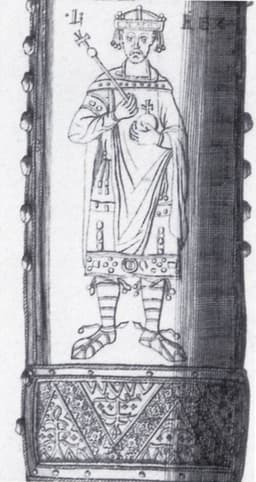
Louis the Child
Emperor · Medieval
39.6Total
Basic Information
Born
909
893
Died
940
911
Era
Medieval
Medieval
Nationality
Abbasid Caliphate
East Francia
Occupation
Emperor
Emperor
Civilization
Middle Eastern
Western
Score Comparison
Military (10%)
20.0
20.0
Political (20%)
30.7
35.0
Influence (20%)
47.9
45.5
Legacy (20%)
37.5
35.8
Leadership (15%)
33.6
49.9
Strategy (15%)
45.0
45.0
TOTAL
37.5
39.6
Al-Radi — Complete Timeline
934 AD
Accession of Al-RadiPolitical Action◆ Major
Al-Radi became caliph after the deposition of Al-Qahir. His reign saw the continued decline of Abbasid power, with the rise of the Buyid dynasty in Persia and the Hamdanids in Syria.
AccessionDeclineBuyids
Impact: national
940 AD
Last Friday Prayer Led by a CaliphCultural◆ Major
Al-Radi led the Friday prayers in Baghdad, a traditional duty of the caliph. This was the last time an Abbasid caliph personally performed this function, as later caliphs were too weak or controlled by others.
Friday PrayerTraditionLast
Impact: national
Death of Al-RadiPolitical Action◆ Major
Al-Radi died at age 31, possibly from illness. His death marked the end of the last caliph who had any real authority, as his successors were figureheads under Buyid control.
DeathEnd of EraBuyid Control
Impact: nationaltragic
Louis the Child — Complete Timeline
900 AD
Accession as King of East FranciaPolitical Action◆ Major
Louis succeeded his father Arnulf of Carinthia as king of East Francia at age six or seven. His minority led to regency by Archbishop Hatto I of Mainz and other nobles, weakening royal authority.
SuccessionRegency
Impact: national
907 AD
Magyar Invasions of East FranciaWar◆ Major
During Louis's reign, Magyar (Hungarian) raiders repeatedly invaded East Francia. The East Frankish army suffered a major defeat at the Battle of Pressburg in 907, leading to loss of control over the March of Pannonia.
Magyar RaidsMilitary Defeat
Impact: regionaldestructive
911 AD
Death without HeirsPolitical Action
Louis died at age 18 without legitimate children, ending the Carolingian line in East Francia. The East Frankish nobility elected Conrad I as king, marking the transition to non-Carolingian rule.
Dynastic EndElection
Impact: national
Expert Analysis
Origins
Al-Radi, born in 907 CE, was the son of Caliph al-Muqtadir. He grew up in the Abbasid court in Baghdad, a city still grand but already eroded by decades of political infighting and the increasing power of military commanders. His education was typical for a prince, but his early life was overshadowed by the factionalism that had reduced his father to a figurehead. Al-Radi was not prepared for the complexities of ruling a crumbling empire.
Louis the Child, born in 893 CE, was the son of King Arnulf of Carinthia. He inherited the throne of East Francia at the age of six or seven in 900 CE, following his father's death. His upbringing was supervised by regents, notably Archbishop Hatto I of Mainz, and he was surrounded by powerful nobles who saw his minority as an opportunity to consolidate their own power. Louis never ruled independently.
Rise to Power
Al-Radi became caliph in 934 CE after his uncle al-Qahir was deposed and blinded. His accession was orchestrated by the court faction that had previously controlled his predecessor. Al-Radi's reign began with a semblance of authority, but real power lay with the viziers and military leaders, such as the Turkish general Bajkam. The caliphate was already in decline, with provinces breaking away and the treasury depleted.
Louis the Child was crowned king in 900 CE at Forchheim, with the support of the East Frankish nobility. His reign was dominated by regents, including Hatto I and Bishop Salomo of Constance. The major turning point was his death without heirs in 911 CE, which ended the Carolingian line in East Francia. The nobility then elected Conrad I, marking the transition to a new dynasty.
Leadership & Governance
Al-Radi attempted to restore some caliphal authority. He personally led Friday prayers in Baghdad, a traditional duty of the caliph, which was the last time an Abbasid caliph performed this function. However, his political score of 30.7 reflects his limited impact. He was unable to curb the power of the Buyids, who were expanding their influence. His military score of 20.0 indicates his lack of control over the army.
Louis the Child, with a political score of 35.0 and leadership score of 49.9, was slightly more effective within his constrained role. However, he was a child king, and governance was exercised by regents. During his reign, the East Frankish army suffered a major defeat at the Battle of Pressburg in 907 CE against Magyar raiders, leading to loss of territory and prestige. Louis's leadership was nominal, as decisions were made by others.
Triumph & Tragedy
Al-Radi's greatest success was maintaining the unity of the caliphate for a time, despite the encroachment of the Buyids. He also led Friday prayers, a symbolic act that boosted his image. His tragedy was his inability to reverse the decline; he died at age 31 in 940 CE, possibly from illness, leaving the caliphate weaker than before. His death marked the end of any real caliphal authority, as successors became puppets.
Louis the Child's triumph was simply surviving his minority without being overthrown, a feat given the power struggles. His tragedy was his early death at age 18 without heirs, extinguishing the Carolingian line in East Francia. The Magyar invasions during his reign exposed the kingdom's vulnerability, and his legacy is one of failed defense and transition to a new ruling house.
Character & Destiny
Al-Radi was described as pious and cultured, but he lacked the ruthlessness needed to consolidate power. His decision to lead prayers showed a desire for religious authority, but he could not translate that into political control. His character was that of a figurehead who accepted his limitations, leading to a passive destiny.
Louis the Child was never able to develop his own character due to his early death. He was a pawn of regents, and his destiny was shaped by external forces: the Magyar invasions and the ambitions of the nobility. His total score of 39.6 slightly exceeds Al-Radi's 37.5, suggesting a marginally stronger impact, but both were ultimately weak rulers.
Legacy
Al-Radi's legacy is as the last caliph who attempted to exercise any real authority. His reign is seen as the point of no return for the Abbasid caliphate, after which it became a ceremonial institution under Buyid control. He is remembered primarily for the symbolic act of leading Friday prayers.
Louis the Child's legacy is as the last Carolingian ruler of East Francia. His death led to the election of Conrad I, ending the Carolingian dynasty and paving the way for the Ottonian dynasty. The Magyar invasions during his reign highlighted the need for stronger central authority, which later rulers like Henry the Fowler addressed.
Conclusion
While Al-Radi and Louis the Child both presided over declining realms, Louis the Child had a slightly greater impact due to the consequences of his death. Al-Radi's reign was a slow fade, but Louis's death triggered a dynastic change that shaped the future of Germany. However, neither achieved significant personal success. Louis the Child scores 39.6 total, compared to Al-Radi's 37.5, but the gap is narrow. Ultimately, Louis the Child had a more transformative legacy because his death forced a political reorganization, whereas Al-Radi's reign merely continued the existing decline.
Rankings
🥇
Louis the ChildLeader
Mil: 20.0Pol: 35.0Inf: 45.5
39.6
🥈
Al-Radi
Mil: 20.0Pol: 30.7Inf: 47.9
37.5
+2.1 behind
How This Comparison Works
Algorithm
Each figure is scored on 6 dimensions (0—100 scale) based on structured historical data: Military (10%), Political (20%), Influence (20%), Legacy (20%), Leadership (15%), Strategy (15%). The weighted total produces the final ranking.
Data Sources
Scores are computed from structured sub-indicators in the database. Scale factors adjust for era (Ancient ×0.85, Modern ×1.0) and civilization size (Eastern ×1.05, Other ×0.80) to account for differences in population and military scale.
Maximum 3 Figures
Comparisons are limited to 2—3 figures to ensure readability and statistical meaningfulness.
Error Margins
±5 points per dimension — Sub-scores are derived from historical records with inherent uncertainty. Two figures within 5 points on a dimension should be considered roughly equivalent in that area.
Total Score Accuracy
±3 points overall — The weighted combination of 6 dimensions produces a total score with approximately ±3 points of uncertainty. Differences of less than 3 points are not statistically significant— the figures are effectively tied.
Known Limitations
- Historical records are incomplete and uneven across civilizations
- Figures from oral-tradition societies may be underrepresented
- Occupation labels can misclassify multi-role figures
- Scores measure capability and impact, not moral character
- Quantitative scoring is a comparison tool, not absolute truth
Capability Radar
Military (10%) — Battles & Warfare
Battles
5
5
Win Rate
5
5
Expansion
5
5
Political (20%) — Governance & Reform
Reform
10
5
Diplomacy
15
5
Economy
10
5
Influence (20%) — Cultural & Global Reach
Cultural
15
5
Global
10
5
Legacy (20%) — Historical Impact
Historical
15
10
Longevity
10
5
Leadership (15%) — Power & Stability
Tenure
20
10
Stability
10
5
Strategy (15%) — Tactics & Innovation
Strategy
5
5
Tactics
5
5
Reform
5
5
Similar Comparisons
Comments & Discussion
No comments yet. Be the first to share your thoughts!