Loading...
Al-Mustasim vs Charles the Fat
Al-Mustasim leads by 2.4 pts · 2 figures compared
…
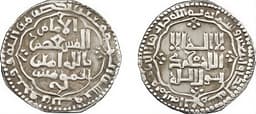
Al-Mustasim
Emperor · Medieval
40.8Total

Charles the Fat
Emperor · Medieval
38.4Total
Basic Information
Born
1213
839
Died
1258
888
Era
Medieval
Medieval
Nationality
Abbasid Caliphate
East Francia
Occupation
Emperor
Emperor
Civilization
Middle Eastern
Western
Score Comparison
Military (10%)
50.0
22.6
Political (20%)
26.4
27.9
Influence (20%)
46.3
47.1
Legacy (20%)
36.7
39.2
Leadership (15%)
48.4
45.0
Strategy (15%)
38.6
36.8
TOTAL
40.8
38.4
Al-Mustasim — Complete Timeline
1258 AD
Siege of BaghdadWar
Mongol forces under Hulagu Khan besieged and captured Baghdad. Al-Mustasim was executed, ending the Abbasid Caliphate in Baghdad. The city was sacked, resulting in massive destruction and loss of life, marking a turning point in Islamic history.
Mongol InvasionFall of BaghdadEnd of Caliphate
Impact: globaltragic
Charles the Fat — Complete Timeline
881 AD
Imperial Coronation (881)Cultural◆ Major
Charles the Fat was crowned Holy Roman Emperor by Pope John VIII on February 12, 881, in Rome. This coronation recognized his authority over Italy and the imperial title, but his actual power remained limited and contested.
CoronationEmperorPapal Approval
Impact: regional
884 AD
Reunification of the Carolingian EmpirePolitical Action
Charles the Fat inherited the kingdoms of East Francia (876), Italy (879), and West Francia (884), briefly reuniting the Carolingian Empire under a single ruler for the last time. This reunification was fragile and did not last beyond his deposition.
ReunificationCarolingian EmpireImperial Unity
Impact: global
885 AD
Siege of Paris (885-886)War◆ Major
Viking forces besieged Paris for nearly a year. Charles the Fat led a relief army but chose to pay the Vikings a tribute of 700 pounds of silver to lift the siege, rather than fight. This decision was widely seen as cowardly and weakened his authority.
Viking SiegeTributeWeakness
Impact: regionaldestructive
887 AD
Deposition of Charles the FatPolitical Action
Charles the Fat was deposed by an assembly of nobles at Tribur in November 887. His deposition was due to his failure to defend against Viking raids and his declining health. The empire was then divided among regional rulers, ending the unified Carolingian Empire.
DepositionEnd of EmpireCarolingian
Impact: globaldestructive
888 AD
Death of Charles the FatOther◆ Major
Charles the Fat died on January 13, 888, in Neidingen, shortly after his deposition. His death marked the final collapse of the unified Carolingian Empire. The empire fragmented into several successor kingdoms, including France, Germany, and Italy.
DeathFragmentationCarolingian
Impact: globaltragic
Expert Analysis
Origins
Al-Mustasim (full name: Abu Ahmad Abdallah ibn al-Mustansir) was born around 1212 in Baghdad, the son of Caliph al-Mustansir. He was raised in the opulent but politically declining Abbasid court, receiving a traditional Islamic education but little military or administrative training. His family had ruled the caliphate for centuries, but by his time, the empire was fragmented, with real power often held by military commanders and provincial governors. Al-Mustasim was known for his piety and interest in religious scholarship, but he lacked the decisiveness and strategic vision needed to lead a crumbling state.
Charles the Fat (born 839) was a scion of the Carolingian dynasty, the son of Louis the German, king of East Francia. He was raised in a court accustomed to power struggles and Viking raids. Charles inherited a tradition of imperial rule but also the weaknesses of a divided empire. He was described by contemporaries as physically frail and prone to illness, possibly epileptic, which may have affected his leadership. His early life was marked by his father's efforts to secure his succession, but he was not the most capable of Louis's sons.
Rise to Power
Al-Mustasim became caliph in 1242 after the death of his father. His accession was uncontested, but the Abbasid Caliphate was already a shadow of its former self, controlling little more than Baghdad and its environs. The real power in the region was wielded by the Ayyubids and later the Mongols, who were rapidly expanding westward. Al-Mustasim's reign was marked by internal strife and financial mismanagement, as he squandered resources on luxury projects rather than strengthening the military.
Charles the Fat's rise was more gradual. He became king of East Francia in 876 upon his father's death, but his brothers Carloman and Louis III inherited other portions. After their deaths, Charles inherited Italy in 879 and West Francia in 884, effectively reuniting the Carolingian Empire for the first time since Charlemagne. He was crowned Holy Roman Emperor by Pope John VIII in 881, a symbolic high point. However, his authority was fragile, relying on the loyalty of nobles who were increasingly independent.
Leadership & Governance
Al-Mustasim's governance was characterized by indecision and poor counsel. He ignored warnings about the Mongol threat from his own advisors, including the vizier Ibn al-Alqami, who may have been in secret communication with the Mongols. The caliph refused to pay tribute or negotiate seriously, while cutting military spending and alienating key commanders. His leadership score of 48.4 reflects a ruler who was neither tyrannical nor effective, but ultimately failed to act when it mattered most.
Charles the Fat's governance was similarly weak. He relied on diplomacy and tribute rather than military force. During the Siege of Paris (885-886), he led a relief army but instead of fighting, he paid the Vikings 700 pounds of silver to lift the siege—a decision that enraged his subjects and undermined his authority. His political score of 27.9 indicates a ruler who could not command loyalty or respect. He was deposed in 887 after nobles declared him unfit to rule.
Triumph & Tragedy
Al-Mustasim's greatest triumph was arguably his survival for 16 years as caliph, maintaining a semblance of Abbasid authority despite internal decay. However, his greatest tragedy was the fall of Baghdad in 1258. The Mongols, led by Hulagu Khan, besieged the city and breached its walls. Al-Mustasim was executed by being rolled in a carpet and trampled to death—a humiliating end. The sack of Baghdad resulted in the destruction of the House of Wisdom and the loss of countless manuscripts, representing a major blow to Islamic civilization. Al-Mustasim's military score of 50.0 is generous given his complete failure to defend his capital.
Charles the Fat's triumph was the brief reunification of the Carolingian Empire, a feat not achieved since Charlemagne. He was crowned emperor and ruled over a vast territory. But his tragedy was his deposition and the subsequent fragmentation of the empire. His failure to defend Paris and his reliance on tribute made him look weak. After his deposition in 887, the empire split into several kingdoms, never to be reunited. Charles died in 888, a broken man. His military score of 22.6 is among the lowest for any ruler, reflecting his utter lack of martial success.
Character & Destiny
Al-Mustasim was described as pious but naive, easily swayed by flatterers. He trusted his vizier, who may have betrayed him, and refused to take decisive action. His character—indecisive, overconfident in his religious authority, and dismissive of military realities—sealed his fate. He scored 48.4 in leadership, but his strategic score of 38.6 shows he lacked the foresight to adapt to the Mongol threat.
Charles the Fat was physically sickly and perhaps epileptic, which may have affected his judgment. He was a peacemaker by nature, but in a violent age, this was seen as weakness. His inability to project strength led to his downfall. His leadership score of 45.0 is misleading, as his actual effectiveness was lower. He scored 36.8 in strategy, reflecting his poor decision-making at Paris.
Legacy
Al-Mustasim is remembered as the last Abbasid caliph of Baghdad, a symbol of the end of an era. The destruction of Baghdad was a turning point in Islamic history. His legacy score of 36.7 is low because his failures are overshadowed by the Mongol conquest. However, his name is invoked as a cautionary tale about hubris and neglect.
Charles the Fat's legacy is similarly negative. He is often considered the worst Carolingian emperor, whose incompetence led to the empire's collapse. His legacy score of 39.2 is slightly higher because he at least briefly reunited the empire. But he is not remembered fondly. The Viking siege of Paris became a symbol of Frankish weakness.
Conclusion
Neither ruler covered themselves in glory. Al-Mustasim scored 40.8 overall, slightly above Charles the Fat's 38.4. But the gap of 2.4 points is small. Al-Mustasim's failure led to the destruction of a great city and the end of a dynasty, while Charles's failure led to the fragmentation of an empire. In terms of impact, Al-Mustasim's actions had greater historical consequences—the fall of Baghdad altered the course of Islamic and world history. Charles the Fat's deposition merely accelerated a decline already underway. Therefore, Al-Mustasim had a greater (negative) impact, but both are among the most ineffective rulers in history.
Rankings
🥇
Al-MustasimLeader
Mil: 50.0Pol: 26.4Inf: 46.3
40.8
🥈
Charles the Fat
Mil: 22.6Pol: 27.9Inf: 47.1
38.4
+2.4 behind
How This Comparison Works
Algorithm
Each figure is scored on 6 dimensions (0—100 scale) based on structured historical data: Military (10%), Political (20%), Influence (20%), Legacy (20%), Leadership (15%), Strategy (15%). The weighted total produces the final ranking.
Data Sources
Scores are computed from structured sub-indicators in the database. Scale factors adjust for era (Ancient ×0.85, Modern ×1.0) and civilization size (Eastern ×1.05, Other ×0.80) to account for differences in population and military scale.
Maximum 3 Figures
Comparisons are limited to 2—3 figures to ensure readability and statistical meaningfulness.
Error Margins
±5 points per dimension — Sub-scores are derived from historical records with inherent uncertainty. Two figures within 5 points on a dimension should be considered roughly equivalent in that area.
Total Score Accuracy
±3 points overall — The weighted combination of 6 dimensions produces a total score with approximately ±3 points of uncertainty. Differences of less than 3 points are not statistically significant— the figures are effectively tied.
Known Limitations
- Historical records are incomplete and uneven across civilizations
- Figures from oral-tradition societies may be underrepresented
- Occupation labels can misclassify multi-role figures
- Scores measure capability and impact, not moral character
- Quantitative scoring is a comparison tool, not absolute truth
Capability Radar
Military (10%) — Battles & Warfare
Battles
5
15
Win Rate
5
10
Expansion
0
10
Political (20%) — Governance & Reform
Reform
0
20
Diplomacy
5
25
Economy
5
20
Influence (20%) — Cultural & Global Reach
Cultural
5
10
Global
10
10
Legacy (20%) — Historical Impact
Historical
15
25
Longevity
5
10
Leadership (15%) — Power & Stability
Tenure
10
40
Stability
0
15
Strategy (15%) — Tactics & Innovation
Strategy
5
15
Tactics
5
10
Reform
0
5
Similar Comparisons
Comments & Discussion
No comments yet. Be the first to share your thoughts!