Loading...
Charles the Fat vs Peter of Castile
Peter of Castile leads by 11.0 pts · 2 figures compared
…
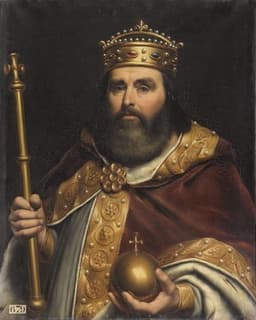
Charles the Fat
Emperor · Medieval
38.4Total
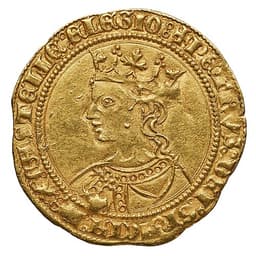
Peter of Castile
Emperor · Medieval
49.4Total
Basic Information
Born
839
1334
Died
888
1369
Era
Medieval
Medieval
Nationality
East Francia
Castile
Occupation
Emperor
Emperor
Civilization
Western
Western
Score Comparison
Military (10%)
22.6
50.0
Political (20%)
27.9
39.4
Influence (20%)
47.1
52.5
Legacy (20%)
39.2
44.2
Leadership (15%)
45.0
55.3
Strategy (15%)
36.8
60.0
TOTAL
38.4
49.4
Charles the Fat — Complete Timeline
881 AD
Imperial Coronation (881)Cultural◆ Major
Charles the Fat was crowned Holy Roman Emperor by Pope John VIII on February 12, 881, in Rome. This coronation recognized his authority over Italy and the imperial title, but his actual power remained limited and contested.
CoronationEmperorPapal Approval
Impact: regional
884 AD
Reunification of the Carolingian EmpirePolitical Action
Charles the Fat inherited the kingdoms of East Francia (876), Italy (879), and West Francia (884), briefly reuniting the Carolingian Empire under a single ruler for the last time. This reunification was fragile and did not last beyond his deposition.
ReunificationCarolingian EmpireImperial Unity
Impact: global
885 AD
Siege of Paris (885-886)War◆ Major
Viking forces besieged Paris for nearly a year. Charles the Fat led a relief army but chose to pay the Vikings a tribute of 700 pounds of silver to lift the siege, rather than fight. This decision was widely seen as cowardly and weakened his authority.
Viking SiegeTributeWeakness
Impact: regionaldestructive
887 AD
Deposition of Charles the FatPolitical Action
Charles the Fat was deposed by an assembly of nobles at Tribur in November 887. His deposition was due to his failure to defend against Viking raids and his declining health. The empire was then divided among regional rulers, ending the unified Carolingian Empire.
DepositionEnd of EmpireCarolingian
Impact: globaldestructive
888 AD
Death of Charles the FatOther◆ Major
Charles the Fat died on January 13, 888, in Neidingen, shortly after his deposition. His death marked the final collapse of the unified Carolingian Empire. The empire fragmented into several successor kingdoms, including France, Germany, and Italy.
DeathFragmentationCarolingian
Impact: globaltragic
Peter of Castile — Complete Timeline
1358 AD
Killed his half-brother FadriquePolitical Action◆ Major
Peter ordered the execution of his half-brother Fadrique, Grand Master of the Order of Santiago, at the Alc
Castilian Civil WarRoyal MurderTrastámara
Impact: nationaldestructive
1367 AD
Battle of NájeraWar◆ Major
Peter, allied with Edward the Black Prince of England, defeated the forces of his half-brother Henry of Trast
Castilian Civil WarHundred Years' WarBattle
Impact: regional
1369 AD
Killed by Henry of TrastámaraPolitical Action
Peter was captured and killed by his half-brother Henry of Trast
Castilian Civil WarDynastic ChangeAssassination
Impact: nationaltragic
Expert Analysis
Origins
Charles the Fat was born in 839 in East Francia, the youngest son of Louis the German. As a member of the Carolingian dynasty, he inherited a fragmented empire. His early life was shaped by the division of the realm among his brothers. Peter of Castile was born in 1334 in Burgos, the son of Alfonso XI of Castile and Maria of Portugal. His childhood was marked by his father's neglect and his mother's political isolation. Peter received a solid education but grew up in a court rife with factionalism and violence.
Rise to Power
Charles the Fat's rise was gradual and opportunistic. He inherited East Francia in 876 upon his father's death. In 879, he gained Italy after the death of his brother Carloman. In 884, following the death of his nephew Carloman II, he inherited West Francia, thus reuniting the Carolingian Empire for the first time since the death of his grandfather Louis the Pious. His imperial coronation by Pope John VIII in 881 formalized his supremacy. Peter of Castile became king at age 16 in 1350 after his father's death from plague. His early reign was dominated by his mother and her allies, but he soon asserted his authority by executing his half-brother Fadrique in 1358, signaling a ruthless consolidation of power. His conflict with his half-brother Henry of Trastámara escalated into a full-scale civil war.
Leadership & Governance
Charles the Fat's leadership was characterized by passivity and reliance on appeasement. Facing Viking raids, he often paid tribute rather than fight. In 885-886, during the Siege of Paris, he assembled a large army but chose to pay the Vikings 700 pounds of silver to lift the siege, undermining his authority. He issued capitularies but lacked the will to enforce them. Peter of Castile governed through fear and violence. He executed nobles and family members suspected of disloyalty, earning the epithet "the Cruel." He reformed the royal administration, increasing royal revenue and justice, but his methods alienated the nobility. His alliance with England against France and Aragon showed strategic thinking, but his brutal tactics destabilized the kingdom.
Triumph & Tragedy
Charles the Fat's greatest triumph was the brief reunification of the Carolingian Empire in 884, a feat not achieved since his grandfather. His imperial coronation in 881 symbolized his nominal supremacy over Christendom. However, his greatest failure was his deposition in 887 by nobles at Tribur, due to his inability to defend the realm from Vikings. His death in 888 marked the final collapse of the Carolingian Empire. Peter of Castile's triumph was his victory at the Battle of Nájera in 1367, where, allied with Edward the Black Prince, he defeated Henry of Trastámara's forces, temporarily reclaiming his throne. His tragedy was his betrayal and murder in 1369 by his half-brother after the siege of Montiel. He failed to secure lasting support, and his cruelty turned allies against him.
Character & Destiny
Charles the Fat was indecisive and sickly, suffering from epilepsy. His reliance on diplomacy and tribute over military action reflected a cautious but weak character. His deposition was a direct result of his perceived ineffectiveness. Historical assessments, such as those by the chronicler Regino of Prüm, depict him as a ruler who failed to meet the challenges of his time. Peter of Castile was ruthless, vengeful, and paranoid. His execution of half-brother Fadrique and others created enemies. His character, as described in the chronicle of Pedro López de Ayala, was that of a tyrant who trusted no one. His fate—killed by his own half-brother—was a consequence of his own violent policies.
Legacy
Charles the Fat's legacy is that of the last unified Carolingian emperor. His deposition and death led to the fragmentation of the Carolingian Empire into separate kingdoms, ending the dream of a restored Roman Empire. He scored 39.2 in legacy, reflecting his role as a transitional figure. Peter of Castile's legacy is more complex. He is remembered as a brutal king, but his reign also saw the strengthening of royal institutions. His death led to the Trastámara dynasty's rise, which ruled Castile for centuries. He scored 44.2 in legacy, slightly higher due to his longer impact on Castilian history.
Conclusion
Peter of Castile had a greater impact than Charles the Fat. With a total score of 49.4 compared to Charles's 38.4, Peter's military (50.0 vs 22.6) and strategy (60.0 vs 36.8) scores highlight his more active role in shaping events. While Charles's reunification was a historical footnote, Peter's civil war and murder changed the course of Castilian and Spanish history, leading to the rise of the Trastámara dynasty that would eventually unite Spain. Charles's failure was a collapse; Peter's failure was a transformation. Thus, Peter of Castile is the more significant historical figure.
Rankings
🥇
Peter of CastileLeader
Mil: 50.0Pol: 39.4Inf: 52.5
49.4
🥈
Charles the Fat
Mil: 22.6Pol: 27.9Inf: 47.1
38.4
+11.0 behind
How This Comparison Works
Algorithm
Each figure is scored on 6 dimensions (0—100 scale) based on structured historical data: Military (10%), Political (20%), Influence (20%), Legacy (20%), Leadership (15%), Strategy (15%). The weighted total produces the final ranking.
Data Sources
Scores are computed from structured sub-indicators in the database. Scale factors adjust for era (Ancient ×0.85, Modern ×1.0) and civilization size (Eastern ×1.05, Other ×0.80) to account for differences in population and military scale.
Maximum 3 Figures
Comparisons are limited to 2—3 figures to ensure readability and statistical meaningfulness.
Error Margins
±5 points per dimension — Sub-scores are derived from historical records with inherent uncertainty. Two figures within 5 points on a dimension should be considered roughly equivalent in that area.
Total Score Accuracy
±3 points overall — The weighted combination of 6 dimensions produces a total score with approximately ±3 points of uncertainty. Differences of less than 3 points are not statistically significant— the figures are effectively tied.
Known Limitations
- Historical records are incomplete and uneven across civilizations
- Figures from oral-tradition societies may be underrepresented
- Occupation labels can misclassify multi-role figures
- Scores measure capability and impact, not moral character
- Quantitative scoring is a comparison tool, not absolute truth
Capability Radar
Military (10%) — Battles & Warfare
Battles
15
55
Win Rate
10
50
Expansion
10
35
Political (20%) — Governance & Reform
Reform
20
40
Diplomacy
25
30
Economy
20
35
Influence (20%) — Cultural & Global Reach
Cultural
10
30
Global
10
25
Legacy (20%) — Historical Impact
Historical
25
40
Longevity
10
35
Leadership (15%) — Power & Stability
Tenure
40
50
Stability
15
20
Strategy (15%) — Tactics & Innovation
Strategy
15
40
Tactics
10
45
Reform
5
30
Similar Comparisons
Comments & Discussion
No comments yet. Be the first to share your thoughts!