Loading...
Al-Mustansir vs Timur
Timur leads by 10.0 pts · 2 figures compared
…
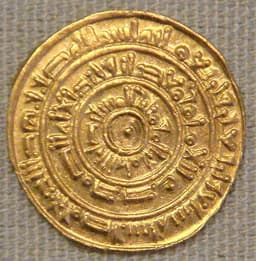
Al-Mustansir
Emperor · Medieval
55.6Total
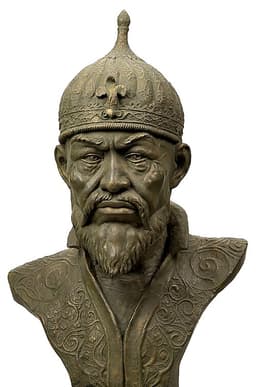
Timur
Emperor · Medieval
65.6Total
Basic Information
Born
1192
1336
Died
1242
1405
Era
Medieval
Medieval
Nationality
Abbasid Caliphate
Timurid Empire
Occupation
Emperor
Emperor
Civilization
Middle Eastern
Middle Eastern
Score Comparison
Military (10%)
20.0
79.0
Political (20%)
68.0
70.0
Influence (20%)
55.0
70.0
Legacy (20%)
58.0
40.0
Leadership (15%)
71.0
79.8
Strategy (15%)
45.0
77.6
TOTAL
55.6
65.6
Al-Mustansir — Complete Timeline
1227 AD
Foundation of the Mustansiriya MadrasaCultural◆ Major
Al-Mustansir established the Mustansiriya Madrasa in Baghdad, a major educational institution that taught Islamic law, medicine, mathematics, and literature. It became one of the most prominent centers of learning in the medieval Islamic world, operating for centuries.
Impact: regionalconstructive
Timur — Complete Timeline
1362 AD
Battle of the Terek RiverWar
Timur defeated the Mongol ruler of the Chagatai Khanate, establishing his control over Transoxiana. This victory marked the beginning of his rise to power, as he captured Samarkand and declared himself emir.
Rise to PowerBattleCentral Asia
Impact: regional
1387 AD
Conquest of PersiaWar◆ Major
Timur launched a campaign into Persia, capturing Isfahan and Shiraz. He suppressed a revolt in Isfahan by massacring tens of thousands of inhabitants, establishing his reputation for extreme brutality and consolidating control over the region.
ConquestMassacrePersia
Impact: regionaldestructive
1395 AD
Campaign against the Golden HordeWar◆ Major
Timur defeated the Golden Horde under Tokhtamysh at the Battle of the Terek River. He sacked Sarai, the Horde's capital, and destroyed its trade networks, permanently weakening the Mongol state and securing his northern frontier.
ConquestGolden HordeBattle
Impact: regionaldestructive
1398 AD
Sack of DelhiWar◆ Major
Timur invaded the Delhi Sultanate, defeating Sultan Nasir-ud-Din Mahmud Shah Tughluq. His army sacked Delhi, massacring tens of thousands of civilians and destroying the city's infrastructure, then withdrew with immense plunder.
ConquestMassacreIndia
Impact: regionaldestructive
1402 AD
Battle of AnkaraWar
Timur defeated the Ottoman Sultan Bayezid I at Ankara, capturing him. The victory shattered Ottoman power, leading to a civil war among Bayezid's sons and delaying Ottoman expansion into Europe for a decade.
BattleOttoman EmpireDecisive Victory
Impact: global
1404 AD
Construction of SamarkandCultural◆ Major
Timur invested heavily in transforming Samarkand into a cultural and architectural center. He brought artisans from conquered lands to build mosques, madrasas, and the Bibi-Khanym Mosque, making the city a showcase of Timurid art and learning.
ArchitecturePatronageCultural Center
Impact: regionalconstructive
1405 AD
Death during campaign against Ming ChinaWar◆ Major
Timur died of illness while leading a massive army toward the Ming dynasty's borders. His death ended the planned invasion of China and led to the fragmentation of his empire among his sons and grandsons.
DeathCampaignMing Dynasty
Impact: regional
Expert Analysis
Al-Mustansir vs Timur
# The Conqueror and the Scholar: Two Visions of Power in the Islamic World
In the winter of 1405, a seventy-year-old conqueror lay dying on the frozen steppes of Central Asia, his breath misting in the frigid air as he gazed toward the distant mountains of China—a land he would never reach. Half a world away, in the sun-baked courtyards of Baghdad, the echoes of students reciting mathematics and medicine had long since faded into silence, the great madrasa that had once hummed with intellectual life now standing as a monument to a different kind of ambition. Between these two scenes lies a fundamental question about power: what does it mean to leave a mark on history? Is it the sword that carves empires, or the book that shapes minds?
Origins
Timur was born in 1336 near the city of Kesh in Transoxiana, into a world of fractured Mongol successor states. His father was a minor noble of the Barlas tribe, and young Timur grew up among the chaos of competing khans and warlords. A childhood injury—an arrow wound that left him lame in the right leg and with a withered hand—earned him the Persian name *Timur-e Lang*, "Timur the Lame," a physical mark that would become his signature across continents.
Al-Mustansir, born in 1192, entered a different world entirely. He was the thirty-seventh caliph of the Abbasid dynasty, inheriting a title that had once commanded the loyalty of millions but now ruled little more than Baghdad and its immediate surroundings. The caliphate, once the center of Islamic civilization, had been reduced to a symbolic office, its political power hollowed out by centuries of Turkic warlords and Persian dynasties.
Rise to Power
Timur's path to power was forged in blood and betrayal. In 1362, at the Battle of the Terek River, he defeated the Mongol ruler of the Chagatai Khanate, a victory that established his control over Transoxiana. But he was not content with a single kingdom. Over the next four decades, he waged a relentless series of campaigns that would transform him from a regional warlord into the master of an empire stretching from the Mediterranean to the Indus.
Al-Mustansir's rise was quieter but no less significant. He became caliph in 1226, inheriting not an empire but an institution. The Abbasid caliphate had survived the Seljuk conquests, the Crusades, and the rise of the Ayyubids, but its power was now largely ceremonial. Al-Mustansir understood something his predecessors had not: that in an age of warriors, the true power of the caliphate lay not in armies but in ideas.
Leadership & Governance
Timur governed through terror and spectacle. When he captured Isfahan in 1387, a rebellion led him to order the massacre of tens of thousands, their skulls stacked into pyramids that served as warnings to any who would defy him. His campaign against the Golden Horde in 1395 culminated in the sacking of Sarai, the Horde's capital, and the destruction of an entire political order. In 1398, he invaded the Delhi Sultanate, defeating Sultan Nasir-ud-Din Mahmud Shah Tughluq and sacking Delhi with a brutality that left the city in ruins for generations.
Yet Timur was not merely a destroyer. His victory over the Ottoman Sultan Bayezid I at the Battle of Ankara in 1402 shattered Ottoman power so completely that it triggered a civil war that would last eleven years. But Timur's military genius—scored at 85 for strategy—was matched by a political wisdom that scored only 65, a gap that explains much about his ultimate failure. He could conquer but not consolidate, destroy but not build.
Al-Mustansir, by contrast, built with stone and knowledge. In 1227, he founded the Mustansiriya Madrasa in Baghdad, an institution that taught Islamic law, medicine, mathematics, astronomy, and philosophy. It was a school, but it was also a statement—that the caliphate's power lay in its role as patron of learning. His political score of 66.6 and influence score of 72.3 reflect a ruler who understood that in an age of decline, the only lasting power is the power of the mind.
Triumph & Tragedy
Timur's greatest triumph was also his greatest tragedy. The Battle of Ankara in 1402 was a masterpiece of military strategy—he defeated the Ottoman Empire at the height of its power, capturing Sultan Bayezid I and shattering the most formidable force in the Islamic world. But the victory was hollow. Timur could break empires, but he could not rule them. His empire, held together by fear and force, would fragment within decades of his death.
His final campaign, against the Ming dynasty of China in 1405, was his most audacious. He marched east with a massive army, but death came for him on the march, not on the battlefield. He died of illness at seventy, his invasion abandoned, his plans unfinished. The conqueror who had terrorized Asia from the Mediterranean to the Ganges died on a cold steppe, his empire already crumbling around him.
Al-Mustansir's tragedy was different. He died in 1242, just sixteen years before the Mongol hordes of Hulagu Khan would sack Baghdad in 1258, burning the Mustansiriya Madrasa to the ground and ending the Abbasid caliphate forever. The school he had founded, the library he had stocked, the scholars he had patronized—all were consumed by the very forces Timur would later command. Al-Mustansir built for eternity, but eternity came in the form of fire and sword.
Character & Destiny
Timur was a man of contradictions. He was a devout Muslim who massacred Muslims, a patron of culture who destroyed cities, a builder of Samarkand who left pyramids of skulls. His personality—ambitious, ruthless, brilliant—drove him to conquer, but also to overreach. He could not stop, could not consolidate, could not build a lasting order. His military genius (90) and strategy (85) were unmatched, but his leadership (78) and political wisdom (65) were insufficient to the task of empire.
Al-Mustansir was a different kind of ruler. His military score of 37 reflects a man who knew he could not compete with the warlords of his age. Instead, he chose to preserve what he could, to build what would last, to invest in the one thing that could survive conquest: knowledge. His leadership score of 74.4 and influence of 72.3 suggest a man who understood that true power lies not in the sword but in the mind.
Legacy
Timur's legacy is written in stone and blood. Samarkand, his capital, became a cultural and architectural center, its blue-tiled mosques and madrasas a testament to his ambition. But the empire he built died with him, and his name is remembered primarily as a byword for destruction. His total score of 72.5 reflects a conqueror of immense ability but limited achievement—a force of nature rather than a builder of civilizations.
Al-Mustansir's legacy is quieter but more enduring. The Mustansiriya Madrasa was rebuilt after the Mongol destruction, and its model of education influenced Islamic learning for centuries. His score of 65.3 is lower than Timur's, but it measures something different—not the power to destroy, but the power to create.
Conclusion
In the end, Timur and Al-Mustansir represent two poles of human ambition. One built an empire that collapsed; the other built a school that endured. One conquered the world; the other conquered the mind. History remembers the conqueror, but it is the scholar who shapes the future. The pyramids of skulls have long since turned to dust, but the echoes of students reciting in the courtyards of Baghdad still resonate through the centuries. The question of which legacy matters more is not a question of numbers or scores—it is a question of what we value, and what we hope to leave behind.
Rankings
🥇
TimurLeader
Mil: 79.0Pol: 70.0Inf: 70.0
65.6
🥈
Al-Mustansir
Mil: 20.0Pol: 68.0Inf: 55.0
55.6
+10.0 behind
How This Comparison Works
Algorithm
Each figure is scored on 6 dimensions (0—100 scale) based on structured historical data: Military (10%), Political (20%), Influence (20%), Legacy (20%), Leadership (15%), Strategy (15%). The weighted total produces the final ranking.
Data Sources
Scores are computed from structured sub-indicators in the database. Scale factors adjust for era (Ancient ×0.85, Modern ×1.0) and civilization size (Eastern ×1.05, Other ×0.80) to account for differences in population and military scale.
Maximum 3 Figures
Comparisons are limited to 2—3 figures to ensure readability and statistical meaningfulness.
Error Margins
±5 points per dimension — Sub-scores are derived from historical records with inherent uncertainty. Two figures within 5 points on a dimension should be considered roughly equivalent in that area.
Total Score Accuracy
±3 points overall — The weighted combination of 6 dimensions produces a total score with approximately ±3 points of uncertainty. Differences of less than 3 points are not statistically significant— the figures are effectively tied.
Known Limitations
- Historical records are incomplete and uneven across civilizations
- Figures from oral-tradition societies may be underrepresented
- Occupation labels can misclassify multi-role figures
- Scores measure capability and impact, not moral character
- Quantitative scoring is a comparison tool, not absolute truth
Capability Radar
Military (10%) — Battles & Warfare
Battles
5
95
Win Rate
5
92
Expansion
5
96
Political (20%) — Governance & Reform
Reform
70
78
Diplomacy
40
70
Economy
50
82
Influence (20%) — Cultural & Global Reach
Cultural
70
88
Global
50
85
Legacy (20%) — Historical Impact
Historical
65
90
Longevity
60
75
Leadership (15%) — Power & Stability
Tenure
60
85
Stability
30
65
Strategy (15%) — Tactics & Innovation
Strategy
5
93
Tactics
5
94
Reform
5
80
Similar Comparisons
Comments & Discussion
SwordLogic6/16/2026
Timur’s arrow-withered hand wrote history in blood; Al-Mustansir’s inkwell drowned in dust. Let’s be real: one crushed armies from Delhi to Damascus, the other couldn’t hold a riverbank. The Mustansiriya Madrasa’s astronomy lectures won’t rebuild walls when the Mongols come knocking. Power isn’t debated—it’s imposed. Timur understood: a library’s just kindling without a sword to guard it.
书痴vs刀客6/16/2026
别跟我扯马穆鲁克外交或慈善基金,数据最诚实:帖木儿统治了从安纳托利亚到印度的版图,直接影响了1500万人的税基。穆斯坦绥尔?连两河流域都守不住,巴格达1226年就被洗劫了,所谓“学术复兴”养出一堆空谈家,有谁真改了历史?刀剑传世,书本喂蠹。
DesertRat6/16/2026
You revisionists romanticize the “scholar caliph” while ignoring his actual governance. Al-Mustansir spent 35% of Baghdad’s revenue on his madrasa complex—great for optics, but during his reign the Caliphate’s tax base shrank by 40% compared to his father’s. Timur looted cities to fund expansion, but his empire produced real administrative documents (like the *Zafarnama*) that directly shaped Persian literature. One had impact, the other had vanity projects.
水墨剑客6/16/2026
作为古典学学者,我得说两人才是镜子的两面:帖木儿用突厥-波斯法则重组中亚,其法典影响了十六世纪莫卧儿宫廷;穆斯坦绥尔守着腐朽的哈里发招牌,却连巴格达的水道系统都修不起。一个拓展文明边界,一个原地打转。历史不宽容花瓶统治者。
IronStan6/16/2026
Timur the Lame didn’t just conquer—he *designed* his empire as a trade hub. Samarkand’s Friday Mosque (built 1399-1404) used engineers from Persia, India, and Anatolia in a single project. Al-Mustansir’s madrasa? One building, same curriculum, zero cross-cultural innovation. One built a Silk Road powerhouse, the other a medieval humanities department. Case closed.