Loading...
Al-Mustansir vs Mao Zedong
Mao Zedong leads by 23.8 pts · 2 figures compared
…
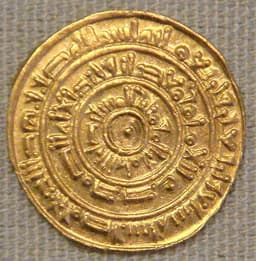
Al-Mustansir
Emperor · Medieval
55.6Total
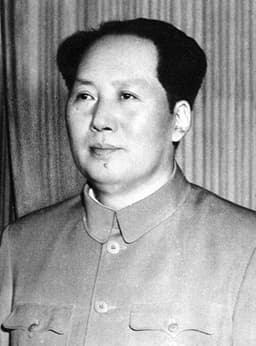
Mao Zedong
Politician · Modern
79.4Total
Basic Information
Born
1192
1893
Died
1242
1976
Era
Medieval
Modern
Nationality
Abbasid Caliphate
China
Occupation
Emperor
Politician
Civilization
Middle Eastern
Eastern
Score Comparison
Military (10%)
20.0
75.0
Political (20%)
68.0
88.0
Influence (20%)
55.0
85.0
Legacy (20%)
58.0
70.0
Leadership (15%)
71.0
85.0
Strategy (15%)
45.0
72.0
TOTAL
55.6
79.4
Al-Mustansir — Complete Timeline
1227 AD
Foundation of the Mustansiriya MadrasaCultural◆ Major
Al-Mustansir established the Mustansiriya Madrasa in Baghdad, a major educational institution that taught Islamic law, medicine, mathematics, and literature. It became one of the most prominent centers of learning in the medieval Islamic world, operating for centuries.
Impact: regionalconstructive
Mao Zedong — Complete Timeline
1934 AD
Long MarchWar
Mao Zedong led the Chinese Red Army on a strategic retreat from Nationalist forces, covering approximately 6,000 miles over 370 days. The march solidified Mao's leadership within the Chinese Communist Party and became a foundational myth of the Communist revolution.
Chinese Civil WarCommunist RevolutionRetreat
Impact: national
1949 AD
Proclamation of the People's Republic of ChinaPolitical Action
Mao Zedong declared the founding of the People's Republic of China from Tiananmen Gate in Beijing. This ended the Chinese Civil War and established Communist rule over mainland China, with Mao as Chairman of the Central People's Government.
Founding of PRCCommunist VictoryRevolution
Impact: global
1958 AD
Great Leap ForwardReform◆ Major
Mao launched a campaign to rapidly industrialize China and collectivize agriculture. The policy led to widespread mismanagement, resulting in a famine that caused an estimated 15-45 million deaths between 1959 and 1961.
FamineIndustrializationCollectivization
Impact: nationaldestructive
1960 AD
Sino-Soviet SplitPolitical Action◆ Major
Mao's ideological differences with Soviet leader Nikita Khrushchev led to a breakdown in relations between China and the Soviet Union. The split ended the Sino-Soviet alliance and reshaped global Cold War dynamics, with China pursuing an independent path.
Cold WarIdeological ConflictAlliance Breakdown
Impact: global
1966 AD
Cultural RevolutionPolitical Action
Mao initiated a sociopolitical movement to purge capitalist and traditional elements from Chinese society. The Red Guard youth groups attacked intellectuals and officials, leading to widespread violence, destruction of cultural artifacts, and an estimated 1-2 million deaths.
Political PurgeSocial UpheavalRed Guard
Impact: nationaldestructive
1971 AD
Ping-Pong DiplomacyCultural◆ Major
Mao approved an invitation for the U.S. table tennis team to visit China, initiating a thaw in Sino-American relations. This cultural exchange paved the way for President Nixon's visit to China in 1972 and the eventual normalization of diplomatic ties.
DiplomacyU.S.-China RelationsCultural Exchange
Impact: globalconstructive
Expert Analysis
Al-Mustansir vs Mao Zedong
# The Scholar and the Revolutionary
On a spring morning in 1227, the Caliph al-Mustansir stood before the gates of a new palace in Baghdad, a building that would not house his court but something far more enduring: the Mustansiriya Madrasa, the greatest university the Islamic world had ever seen. Seven centuries later, in October 1949, Mao Zedong climbed the Tiananmen Gate in Beijing and declared a new China born from revolution. One man built a monument to learning; the other tore down a civilization to rebuild it. Both sought to reshape their worlds, yet their paths could not have diverged more sharply. What drove these two leaders—one a caliph in the twilight of an empire, the other a peasant's son who became the father of a new nation—to such different fates?
Origins
Al-Mustansir was born in 1192 into the House of Abbas, the dynasty that had ruled the Islamic world for nearly five centuries. His world was Baghdad, the fabled City of Peace, which by his time had survived the Crusades but was encircled by enemies—the Mongols gathering in the east, the Crusader states in the west. He inherited a caliphate that was a shadow of its former glory, its political power fractured among sultans and emirs, yet still the spiritual center of Sunni Islam. His was a world of inherited legitimacy, where a man's destiny was written in his bloodline.
Mao Zedong was born in 1893 in Shaoshan, a village in Hunan province, the son of a prosperous farmer. China in his youth was a civilization in collapse—the Qing dynasty tottered, foreign powers carved up its ports, and peasants starved in famines that killed millions. Mao grew up watching his father beat his mother, witnessing the cruelty of a world where survival meant submission. He devoured books—Chinese classics, then Western philosophy, then revolutionary pamphlets. His world was one of upheaval, where a man could rise not by birth but by will.
Rise to Power
Al-Mustansir became caliph in 1226, inheriting a throne that required no struggle. His path was smooth, his authority unquestioned, his challenge to govern a realm already in decline. He had no wars to win, no rivals to crush—only an empire to manage.
Mao’s rise was forged in fire. In 1934, he led the Chinese Red Army on the Long March, a 6,000-mile retreat through some of the most hostile terrain on earth. It was a military disaster that became a political triumph: Mao emerged from the march as the undisputed leader of the Chinese Communist Party. His path was one of survival against overwhelming odds, of strategy honed in the crucible of civil war. By 1949, when he stood on Tiananmen Gate, he had defeated both the Japanese and the Nationalists. He had not inherited power—he had seized it.
Leadership & Governance
Al-Mustansir governed as a patron, not a revolutionary. His great achievement was the Mustansiriya Madrasa, a sprawling complex of lecture halls, libraries, and hostels that taught law, medicine, mathematics, and theology. He poured state funds into scholarships, attracting scholars from across the Islamic world. His score of 74.4 in leadership reflects a ruler who understood that power lay not in armies but in knowledge—yet his military score of 37.0 reveals the fatal weakness: he neglected the sword for the pen.
Mao governed as a force of nature. His Political score of 82.0 and Leadership of 80.6 reflect a man who commanded absolute loyalty. In 1958, he launched the Great Leap Forward, a campaign to industrialize China overnight by mobilizing hundreds of millions of peasants. It was a vision of breathtaking ambition—and catastrophic execution. Mismanagement and famine killed an estimated 20 to 45 million people. In 1966, he unleashed the Cultural Revolution, a purge of intellectuals, bureaucrats, and anyone deemed "bourgeois." The Red Guard destroyed temples, burned books, and humiliated professors. Where al-Mustansir built a university, Mao burned them.
Triumph & Tragedy
Al-Mustansir’s triumph was the Mustansiriya Madrasa, which became the intellectual heart of the Islamic world for centuries. It survived the Mongol sack of Baghdad in 1258—a testament to his foresight. His tragedy was that he could not save his empire. The Mongols would destroy Baghdad a decade after his death, and his legacy would be preserved only in stone and manuscript.
Mao’s triumph was the creation of a unified, independent China. He ended a century of humiliation, expelled foreign powers, and gave his people a sense of national pride. The Sino-Soviet Split of 1960 freed China from Moscow’s orbit, and Ping-Pong Diplomacy in 1971 opened the door to the West. His tragedy was the cost: millions dead from his policies, a generation traumatized, and a society scarred by suspicion. He died in 1976, leaving a China that was powerful but broken.
Character & Destiny
Al-Mustansir was a builder, not a destroyer. His personality was that of a scholar-king—measured, cautious, focused on the long game. He believed that knowledge could outlast armies, and he was right. But his caution also meant he failed to prepare for the Mongol storm. His destiny was to be the last great Abbasid caliph, a man who built a lighthouse while the tide was rising.
Mao was a destroyer who believed creation required destruction. He was ruthless, charismatic, and utterly convinced of his own vision. He once said, "Political power grows out of the barrel of a gun." His personality was forged in struggle—against his father, against the Nationalists, against nature itself. He saw the world as a battlefield, and he fought until his last breath. His destiny was to be the father of modern China, but also its tormentor.
Legacy
Al-Mustansir’s legacy is the Mustansiriya Madrasa, which still stands in Baghdad today, a UNESCO World Heritage site. His Influence score of 72.3 and Legacy of 68.5 reflect a man remembered not for power but for wisdom. He is a footnote in history books, but his madrasa shaped Islamic education for centuries.
Mao’s legacy is China itself. His Influence score of 79.7 and Legacy of 69.9 place him among the titans of history, but his memory is contested. To some, he is the liberator who stood up to the West; to others, a tyrant who destroyed lives. China today bears his imprint in its authoritarian structure, its revolutionary pride, and its scars. He is both father and ghost.
Conclusion
What separates a scholar from a revolutionary? Al-Mustansir inherited a throne and chose to build a library. Mao seized a nation and chose to burn everything down. One believed in teaching; the other believed in tearing. Their scores tell the story: al-Mustansir’s total of 65.3, Mao’s of 76.4. But numbers cannot capture the difference between a man who built a monument to learning and a man who sacrificed a generation for power. In the end, both were children of their times—one born into a world of fading glory, the other into a world of fire. And both left behind worlds they could never have imagined.
Rankings
🥇
Mao ZedongLeader
Mil: 75.0Pol: 88.0Inf: 85.0
79.4
🥈
Al-Mustansir
Mil: 20.0Pol: 68.0Inf: 55.0
55.6
+23.8 behind
How This Comparison Works
Algorithm
Each figure is scored on 6 dimensions (0—100 scale) based on structured historical data: Military (10%), Political (20%), Influence (20%), Legacy (20%), Leadership (15%), Strategy (15%). The weighted total produces the final ranking.
Data Sources
Scores are computed from structured sub-indicators in the database. Scale factors adjust for era (Ancient ×0.85, Modern ×1.0) and civilization size (Eastern ×1.05, Other ×0.80) to account for differences in population and military scale.
Maximum 3 Figures
Comparisons are limited to 2—3 figures to ensure readability and statistical meaningfulness.
Error Margins
±5 points per dimension — Sub-scores are derived from historical records with inherent uncertainty. Two figures within 5 points on a dimension should be considered roughly equivalent in that area.
Total Score Accuracy
±3 points overall — The weighted combination of 6 dimensions produces a total score with approximately ±3 points of uncertainty. Differences of less than 3 points are not statistically significant— the figures are effectively tied.
Known Limitations
- Historical records are incomplete and uneven across civilizations
- Figures from oral-tradition societies may be underrepresented
- Occupation labels can misclassify multi-role figures
- Scores measure capability and impact, not moral character
- Quantitative scoring is a comparison tool, not absolute truth
Capability Radar
Military (10%) — Battles & Warfare
Battles
5
85
Win Rate
5
80
Expansion
5
85
Political (20%) — Governance & Reform
Reform
70
95
Diplomacy
40
80
Economy
50
70
Influence (20%) — Cultural & Global Reach
Cultural
70
90
Global
50
90
Legacy (20%) — Historical Impact
Historical
65
95
Longevity
60
85
Leadership (15%) — Power & Stability
Tenure
60
95
Stability
30
60
Strategy (15%) — Tactics & Innovation
Strategy
5
85
Tactics
5
75
Reform
5
90
Similar Comparisons
Comments & Discussion
BaghdadBricks6/16/2026
Al-Mustansir poured silver into books while Mongols sharpened swords at his gates. Founding the Mustansiriya in 1227 wasn't visionary—it was a caliph's vanity project, funding theology debates while Genghis's horde crept closer. By 1258, every scroll burned in the Tigris. Mao at least understood power: land reform before libraries. One built a library; the other built a nation that would eventually build its own. Priorities matter when history's knocking.
沙漠学者6/16/2026
把毛和穆斯坦绥尔比?这简直是拿火炮跟烛台比。毛搞的是土地革命、妇女解放、扫盲运动,直接砸碎千年封建枷锁。穆斯坦绥尔呢?修个经学院就成了“伟人”?他维护的不过是宗教精英的圈子,伊拉克老百姓识字率至今没上去。历史看结果,不是看嘴皮子。
CipherSkeptic6/16/2026
You're cherry-picking a library vs a declaration. The "scholar vs revolutionary" frame is lazy. Al-Mustansir's madrasa hosted law, medicine, math—not just scripture. Mao's early literacy campaigns actually built on Qing-era foundations. Both men had mixed legacies that don't fit tidy archetypes. If we're comparing institutional impact, wait until you see what the Mongols actually destroyed versus what the Cultural Revolution disrupted. Nuance matters, not just dramatic contrasts.
历史侦探6/16/2026
说穆斯坦绥尔是“学者”,真够讽刺的。他在位时阿拔斯王朝正垂死挣扎,做样子修个学校就当自己是明君。实际上,他任由突厥近卫军腐败横行,对蒙古威胁视而不见——1221年花剌子模被屠城,他还以为巴格达铜墙铁壁?毛至少明白:不破不立。穆斯坦绥尔是在废墟上抹粉,毛是在废墟上盖楼。哪个有胆识,一目了然。