Loading...
Al-Mustansir vs King Taejo of Goryeo
King Taejo of Goryeo leads by 14.5 pts · 2 figures compared
…
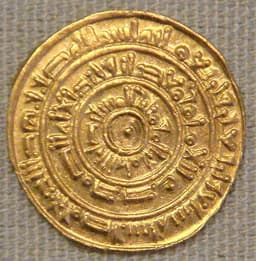
Al-Mustansir
Emperor · Medieval
55.6Total
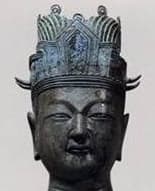
King Taejo of Goryeo
Emperor · Medieval
70.1Total
Basic Information
Born
1192
877
Died
1242
943
Era
Medieval
Medieval
Nationality
Abbasid Caliphate
Korea
Occupation
Emperor
Emperor
Civilization
Middle Eastern
Eastern
Score Comparison
Military (10%)
20.0
78.0
Political (20%)
68.0
72.0
Influence (20%)
55.0
65.0
Legacy (20%)
58.0
65.0
Leadership (15%)
71.0
82.0
Strategy (15%)
45.0
67.2
TOTAL
55.6
70.1
Al-Mustansir — Complete Timeline
1227 AD
Foundation of the Mustansiriya MadrasaCultural◆ Major
Al-Mustansir established the Mustansiriya Madrasa in Baghdad, a major educational institution that taught Islamic law, medicine, mathematics, and literature. It became one of the most prominent centers of learning in the medieval Islamic world, operating for centuries.
Impact: regionalconstructive
King Taejo of Goryeo — Complete Timeline
918 AD
Founded the Goryeo DynastyPolitical Action
Wang Geon (Taejo) overthrew the Later Goguryeo state and established the Goryeo dynasty, with its capital at Songak (Kaesong). This marked the beginning of a new era in Korean history.
Dynasty FoundingGoryeoKorea
Impact: regionalconstructive
920 AD
Adopted a Policy of Marrying Local ElitesPolitical Action◆ Major
Taejo married women from powerful local clans to secure their loyalty and integrate regional powers into the Goryeo state. This policy helped stabilize the new dynasty.
Marriage PolicyGoryeoUnification
Impact: regionalconstructive
936 AD
Unified the Later Three KingdomsWar
Taejo completed the unification of the Later Three Kingdoms (Later Goguryeo, Later Baekje, and Silla) under Goryeo rule. This ended the period of division and established a unified Korean state.
UnificationLater Three KingdomsGoryeo
Impact: regionalconstructive
943 AD
Implemented Ten InjunctionsPolitical Action◆ Major
Taejo issued the Ten Injunctions, a set of political guidelines for his successors. These stressed the importance of Buddhism, diplomacy with China, and avoiding internal conflict.
GovernanceGoryeoPolicy
Impact: regionalconstructive
Expert Analysis
Al-Mustansir vs King Taejo of Goryeo
# The Scholar and the Unifier
In the winter of 1227, as construction crews raised the vaulted arches of the Mustansiriya Madrasa on the banks of the Tigris, Caliph Al-Mustansir of Baghdad surveyed his greatest achievement. Nearly three centuries earlier and two thousand miles to the east, a Korean warlord named Wang Geon was forging a different kind of legacy—not of brick and mortar, but of blood and marriage alliances. Both men sought to build something lasting. One built a school; the other built a kingdom. Their stories reveal how two rulers, both medieval emperors, could pursue power through radically different paths, shaped by the civilizations they inherited and the challenges they faced.
Origins
Al-Mustansir was born in 1192 into a decaying Abbasid Caliphate that had long since lost its political grip on the Islamic world. The caliphs of Baghdad were spiritual figureheads by this point, presiding over a shrinking realm while military dynasties like the Ayyubids and Seljuks held real power. His father, Caliph Al-Zahir, had restored some authority, but the Abbasid state remained fragile—a gilded relic surrounded by wolves. Al-Mustansir inherited not an empire to expand, but a legacy to preserve.
Wang Geon, born in 877, came from a very different world. The Korean peninsula was fragmented into the Later Three Kingdoms—Later Goguryeo, Later Baekje, and Silla—locked in a brutal struggle for supremacy. Wang Geon’s father was a merchant and local lord in the Songak region, part of Later Goguryeo. Unlike Al-Mustansir, who was born into the highest echelon of a fading dynasty, Wang Geon rose from the provincial elite, learning statecraft and warfare in a cauldron of constant conflict.
Rise to Power
Al-Mustansir became caliph in 1226 without bloodshed, inheriting a throne that passed through hereditary succession. His path was predetermined: he was the son of a caliph, raised in the palace, trained in theology and administration. The challenge was not to seize power but to wield it effectively in a world where caliphs were often puppets.
Wang Geon’s rise was far more dramatic. He served as a general under Gung Ye, the ruler of Later Goguryeo, but grew disillusioned with his tyrannical king. In 918, Wang Geon overthrew Gung Ye in a coup, founding the Goryeo dynasty with its capital at Songak (modern-day Kaesong). This was no palace intrigue but a military seizure of power by a man who had earned the loyalty of soldiers and local elites through years of campaigning. His coronation was a declaration of ambition: he would not merely rule Later Goguryeo—he would unify the entire peninsula.
Leadership & Governance
The contrast between these two rulers sharpens when examining their governing philosophies. Al-Mustansir poured his energy into the Mustansiriya Madrasa, completed in 1227, a sprawling institution that taught Islamic law, medicine, mathematics, and literature. It was the largest university of its age, with a library, hospital, and dormitories for students from across the Muslim world. His political score of 66.6 and leadership score of 74.4 reflect a ruler who understood that soft power—knowledge, patronage, and religious legitimacy—was the Abbasids’ last weapon. He could not match Mongol armies or Turkish cavalry, but he could make Baghdad the intellectual beacon of Islam.
Wang Geon, by contrast, wielded hard power with surgical precision. His political score of 80.0 and leadership score of 80.1 reflect a master of alliance-building. In 920, he adopted a policy of marrying local elites—taking daughters of powerful clans as wives—to bind regional lords to the Goryeo state through family ties. This was not mere romance; it was strategic absorption. When he finally unified the Later Three Kingdoms in 936, defeating Later Baekje and absorbing Silla, he did so not just through military conquest but through negotiation, intermarriage, and the promise of inclusion. His military score of 74.6 and strategy score of 70.5 show a commander who knew that battles win wars, but marriages win peace.
Triumph & Tragedy
Al-Mustansir’s greatest triumph was the Madrasa, a monument to learning that would survive for centuries. Yet his tragedy was the world he could not save. In 1242, he died, and within sixteen years, the Mongols would sack Baghdad, slaughtering hundreds of thousands and extinguishing the Abbasid Caliphate. His school stood, but his dynasty fell. He had built for eternity in a time of imminent collapse.
Wang Geon’s triumph was the unification of Korea in 936, a feat that would shape Korean identity for a millennium. His tragedy was more subtle: the Ten Injunctions he issued in 943, a political testament for his successors, warned against the dangers of factionalism and foreign influence. Yet these very warnings revealed the fragility of his creation. Goryeo would endure for nearly five centuries, but internal strife and Mongol invasions would later test its foundations.
Character & Destiny
Al-Mustansir was a builder, not a warrior. His strategy score of 60.0 and military score of 37.0 suggest a man who avoided the battlefield, preferring the quiet authority of patronage. He believed that Islam’s strength lay in its scholars and that the caliph’s role was to be a custodian of culture. This was noble but ultimately insufficient—when the Mongols came, no library could stop them.
Wang Geon was a pragmatist. His Ten Injunctions, heavily influenced by Buddhism, urged successors to respect the faith, avoid excessive taxation, and maintain strong defenses. But they also revealed a man who understood that power required constant negotiation. He did not rule by divine right alone; he ruled by earning loyalty through marriage, land grants, and shared victory. His character was that of a unifier who knew that unity was never permanent.
Legacy
Al-Mustansir’s legacy is the Mustansiriya Madrasa, which continued as a center of learning through the Mongol period and beyond, eventually becoming part of the modern University of Baghdad. His influence score of 72.3 and legacy score of 68.5 reflect a ruler remembered more for his institution than his reign. Today, he is a footnote in Abbasid history—a caliph who built a school while the empire crumbled.
Wang Geon’s legacy is far grander. His Goryeo dynasty gave Korea its name (from “Goryeo”), and his unification set the stage for a unified Korean identity that persists today. His influence score of 70.7 and legacy score of 75.1 reflect a founder remembered as the father of a nation. Statues of Taejo stand in South Korea, and his Ten Injunctions are studied as early examples of Korean statecraft.
Conclusion
One ruler built a school to save a civilization; the other built a kingdom to forge a nation. Al-Mustansir and Wang Geon faced the same fundamental question—how to make power last—and answered it in ways that reflected their worlds. The Abbasid caliph, trapped in a dying order, invested in ideas. The Goryeo king, rising from chaos, invested in relationships. Both succeeded in their own terms, yet history judged them differently. The scholar caliph is remembered for his building; the warrior king is remembered for his people. Perhaps the truest measure of a ruler is not what they built, but what outlasted them.
Rankings
🥇
King Taejo of GoryeoLeader
Mil: 78.0Pol: 72.0Inf: 65.0
70.1
🥈
Al-Mustansir
Mil: 20.0Pol: 68.0Inf: 55.0
55.6
+14.5 behind
How This Comparison Works
Algorithm
Each figure is scored on 6 dimensions (0—100 scale) based on structured historical data: Military (10%), Political (20%), Influence (20%), Legacy (20%), Leadership (15%), Strategy (15%). The weighted total produces the final ranking.
Data Sources
Scores are computed from structured sub-indicators in the database. Scale factors adjust for era (Ancient ×0.85, Modern ×1.0) and civilization size (Eastern ×1.05, Other ×0.80) to account for differences in population and military scale.
Maximum 3 Figures
Comparisons are limited to 2—3 figures to ensure readability and statistical meaningfulness.
Error Margins
±5 points per dimension — Sub-scores are derived from historical records with inherent uncertainty. Two figures within 5 points on a dimension should be considered roughly equivalent in that area.
Total Score Accuracy
±3 points overall — The weighted combination of 6 dimensions produces a total score with approximately ±3 points of uncertainty. Differences of less than 3 points are not statistically significant— the figures are effectively tied.
Known Limitations
- Historical records are incomplete and uneven across civilizations
- Figures from oral-tradition societies may be underrepresented
- Occupation labels can misclassify multi-role figures
- Scores measure capability and impact, not moral character
- Quantitative scoring is a comparison tool, not absolute truth
Capability Radar
Military (10%) — Battles & Warfare
Battles
5
75
Win Rate
5
80
Expansion
5
80
Political (20%) — Governance & Reform
Reform
70
80
Diplomacy
40
75
Economy
50
70
Influence (20%) — Cultural & Global Reach
Cultural
70
70
Global
50
60
Legacy (20%) — Historical Impact
Historical
65
80
Longevity
60
75
Leadership (15%) — Power & Stability
Tenure
60
85
Stability
30
75
Strategy (15%) — Tactics & Innovation
Strategy
5
85
Tactics
5
70
Reform
5
65
Similar Comparisons
Comments & Discussion
IRONCRANE_ERUDITE6/16/2026
Al-Mustansir gets romanticized, but his madrasa was a PR stunt for a dying caliphate—a jewel on a corpse. Taejo built Goryeo from war and marriage, unifying a fractured peninsula through sheer pragmatism. One built walls of knowledge, the other walls of state. Give me the unifier any day; books don’t hold borders when the Mongols come knocking.
铁幕书生6/16/2026
别吹阿-穆斯坦绥尔了,他那些经学院不过是巴格达这头老骆驼的最后一根稻草。高丽太祖王建才是真狠人,靠婚姻拉拢豪族,拿刀尖统一后三国。一个修书斋,一个建国家——等蒙古铁蹄踏来时,你觉得哪边能多撑几年?别拿象牙塔当城堡。
DATAWRAITH6/16/2026
This comparison conflates apples and orangutans. Al-Mustansir’s Abbasid budget was a fraction of Taejo’s Goryeo—we’re talking maybe 200,000 dinars for the madrasa vs. a war economy funding decades of conquest. You can’t weigh a school against a kingdom without factoring in scale. Taejo’s unification cost thousands of lives; Al-Mustansir’s project cost silver. Different metrics, different outcomes.
楚汉刀客6/16/2026
你拿个末世花瓶和开国铁匠比?阿-穆斯坦绥尔那会儿连大马士革都指挥不动,王建可是亲手砍过后百济的旗子。比“遗产”?一个留了图书馆,一个留了统一的高丽——蒙古人后来把巴格达烧成灰时,高丽王朝可还在谈判桌上。这差距叫降维打击。
CLASSICUS_VIVUS6/16/2026
The madrasa wasn’t just a school; it was a statement—a final blaze of Abbasid intellectualism in a world of swords. Taejo’s marriages? Pragmatic, sure, but hardly heroic. Al-Mustansir chose to fund scholars when his caliphate was crumbling; that takes nerve. Taejo’s unification was inevitable—korea was always destined to consolidate. One man defied history; the other rode it.
平壤客6/16/2026
高丽太祖的“统一”是拼凑的——妻族几十家,权臣遍地走,王朝底色是妥协。而穆斯坦绥尔的经学院是纯粹的理想:让巴格达的灯光照亮文明。王建建了王朝,但百济余烬烧了三百年;阿尔-穆斯坦绥尔建了知识,后世学者从蒙古火堆里抢书时,靠的就是这类地方。谁更配叫“奠基者”?你选。