Loading...
Al-Mustansir vs Bappa Rawal
Al-Mustansir leads by 7.8 pts · 2 figures compared
…
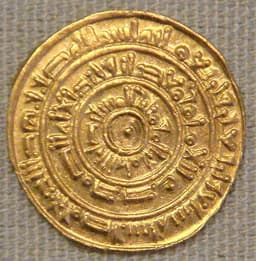
Al-Mustansir
Emperor · Medieval
55.6Total
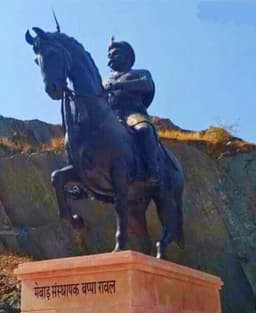
Bappa Rawal
Emperor · Medieval
47.8Total
Basic Information
Born
1192
713
Died
1242
780
Era
Medieval
Medieval
Nationality
Abbasid Caliphate
India
Occupation
Emperor
Emperor
Civilization
Middle Eastern
Indian
Score Comparison
Military (10%)
20.0
10.0
Political (20%)
68.0
35.1
Influence (20%)
55.0
58.0
Legacy (20%)
58.0
50.0
Leadership (15%)
71.0
67.0
Strategy (15%)
45.0
45.0
TOTAL
55.6
47.8
Al-Mustansir — Complete Timeline
1227 AD
Foundation of the Mustansiriya MadrasaCultural◆ Major
Al-Mustansir established the Mustansiriya Madrasa in Baghdad, a major educational institution that taught Islamic law, medicine, mathematics, and literature. It became one of the most prominent centers of learning in the medieval Islamic world, operating for centuries.
Impact: regionalconstructive
Bappa Rawal — Complete Timeline
734 AD
Conquest of ChittorWar◆ Major
Bappa Rawal captured the fort of Chittor from the Mori Rajputs, establishing it as the capital of the Mewar kingdom. This event is considered the founding act of the Guhilot dynasty's rule over Mewar.
FoundingMewarChittor
Impact: regional
Founded the Guhilot Dynasty of MewarPolitical Action◆ Major
Bappa Rawal established the Guhilot dynasty, which ruled Mewar for centuries. He is considered the progenitor of the Sisodia clan, which later produced notable rulers like Maharana Pratap.
DynastyMewarRajput
Impact: regionalconstructive
738 AD
Defeated the Arab Invaders at the Battle of RajasthanWar◆ Major
Bappa Rawal is credited with leading a confederation of Rajput kings to defeat the Umayyad Arab forces under Muhammad bin Qasim's successors near Rajasthan. This victory halted Arab expansion into northern India.
Arab InvasionDefenseRajput Confederation
Impact: regional
Expert Analysis
Al-Mustansir vs Bappa Rawal
# The Scholar and the Sword: Al-Mustansir and Bappa Rawal
On a dusty morning in Baghdad, circa 1227, the Caliph Al-Mustansir watched as laborers laid the final stones of what would become the greatest university of the Islamic world. Half a world away and five centuries earlier, a young Rajput warrior named Bappa Rawal stood atop the captured ramparts of Chittor, his sword still wet, gazing at a kingdom he had just won with blood and courage. One man built an empire of the mind; the other, an empire of steel and loyalty. Both shaped civilizations, yet their paths could not have diverged more sharply. What drove a caliph to invest in ink rather than iron, and a warrior to forge a dynasty from a single fortress?
Origins
Al-Mustansir was born into the twilight of the Abbasid Caliphate, a dynasty that had once ruled from Spain to Persia but now presided over a shrinking realm, hemmed in by Mamluks, Seljuks, and the ever-present Mongol threat. He was a prince of the palace, educated in law, theology, and administration, inheriting a world where the caliph’s authority was more symbolic than military. The great days of Harun al-Rashid were a fading memory. Al-Mustansir’s Baghdad was a city of scholars, poets, and merchants—a place where power flowed through words and trade routes, not cavalry charges.
Bappa Rawal, by contrast, emerged from the chaos of early medieval India, a land fractured by warring kingdoms and foreign incursions. He was a prince of the Guhilot clan, raised on tales of valor and the constant threat of Arab expansion from the west. According to Rajput tradition, he was born around 713 CE, a time when the Umayyad Caliphate had already conquered Sindh and was pushing into Rajasthan. His world was one of fortresses, swords, and shifting alliances—a crucible that demanded a warrior’s instincts from the cradle.
Rise to Power
Al-Mustansir ascended the caliphate in 1226, inheriting a throne that was more a pulpit than a power seat. His rise was not through conquest but through lineage and the quiet maneuvering of the Abbasid court. He had no great army to command, no rival kingdoms to crush. His power lay in his title as Commander of the Faithful, a spiritual authority that still commanded respect across the Islamic world. His opportunity came not on a battlefield but in a library.
Bappa Rawal’s rise was the stuff of legend. In 734 CE, he led a small band of Rajput warriors against the Mori Rajputs, who held the formidable fort of Chittor. The story goes that he infiltrated the fortress during a festival, then opened the gates for his men. He captured Chittor not by siege or diplomacy but by audacity and steel. That same year, he founded the Guhilot dynasty, planting a flag that would fly over Mewar for centuries. Then came his defining moment: in 738 CE, he united a confederation of Rajput kings to face the Umayyad army under Muhammad bin Qasim’s successor. At the Battle of Rajasthan, he defeated the Arab invaders, halting their eastward expansion into the Indian heartland. For Bappa Rawal, power was won with a sword and held with a warrior’s code.
Leadership & Governance
Al-Mustansir ruled as a patron, not a general. His military score of 37 reflects a caliph who never led an army. Instead, his political score of 66.6 and leadership of 74.4 point to a different kind of mastery. In 1227, he founded the Mustansiriya Madrasa in Baghdad, a vast institution that taught Islamic law, medicine, mathematics, and astronomy. It was one of the first universities in the world, with a library that rivaled any in the Islamic world. Al-Mustansir understood that in an age of crumbling empires, ideas were the only lasting currency. He governed through scholars, judges, and merchants, building a legacy of learning that would outlast the Abbasid dynasty itself.
Bappa Rawal ruled as a warrior-king. His military score of 31.1 may seem low, but it belies his tactical brilliance on the battlefield. His strategy score of 51 suggests a leader who relied on courage and coalition-building rather than complex maneuvers. He established a feudal system in Mewar, binding his Rajput nobles through oaths of loyalty and land grants. His governance was personal and direct: a king who ate with his men, rode with his cavalry, and commanded respect through example. He was the archetype of the Rajput ruler—fierce, honorable, and deeply tied to the land.
Triumph & Tragedy
Al-Mustansir’s greatest triumph was the Mustansiriya Madrasa, a beacon of learning that attracted students from across the Islamic world. It was his answer to the Mongol threat: not walls, but wisdom. Yet his tragedy was that he could not stop what was coming. In 1258, just sixteen years after his death, the Mongols under Hulagu Khan sacked Baghdad, burning libraries and ending the Abbasid Caliphate. The Mustansiriya survived, but the world Al-Mustansir had tried to preserve was shattered.
Bappa Rawal’s triumph was the Battle of Rajasthan in 738, where he turned back the tide of Arab expansion into India. For centuries, Rajputs would remember him as the savior of their civilization. His tragedy was more personal: after a long reign, he abdicated his throne and retired to a life of asceticism, perhaps disillusioned by the endless cycle of war and betrayal that defined Rajput politics. He died in obscurity, a warrior who had outlived his own legend.
Character & Destiny
Al-Mustansir was a builder, not a destroyer. His personality was shaped by the Abbasid tradition of learning and diplomacy. He saw the future in education, not conquest. But his destiny was tied to a dying empire, and his gentleness was no match for the Mongol storm. He was a man of his time—a time when the caliphate was a shadow, and shadows cannot hold back the dawn.
Bappa Rawal was a firebrand, a man who carved a kingdom from chaos. His character was forged in battle, and his destiny was to be the father of a dynasty. He lived by the sword and, in the end, perhaps tired of it. His legacy was not a building but a bloodline—the Sisodia Rajputs who would later defy the Mughals at Chittor and Haldighati. He was a man who chose action over reflection, and his destiny was to be remembered in ballads, not books.
Legacy
Al-Mustansir’s legacy is the Mustansiriya Madrasa, which survived the Mongol sack and continued as a center of learning for centuries. Today, it stands as a testament to the power of ideas in an age of violence. His influence score of 72.3 and legacy of 68.5 reflect a caliph who shaped the intellectual life of Islam, even if his political power was fleeting. He is remembered as a scholar-king, a man who built a university when others built walls.
Bappa Rawal’s legacy is the Guhilot dynasty and the Rajput identity itself. He is revered as the founder of Mewar, a kingdom that became synonymous with Rajput resistance. His influence score of 74.8 and legacy of 65.8 show a figure who shaped a culture’s imagination. He is remembered in folk songs and temple carvings, a warrior who stood at the crossroads of history and chose to fight.
Conclusion
Al-Mustansir and Bappa Rawal lived in different centuries, different worlds. One built a university; the other built a kingdom. One faced the Mongols with books; the other faced the Arabs with swords. Yet both understood something profound: that civilizations are built not just by armies, but by institutions and ideals. Al-Mustansir’s madrasa still stands; Bappa Rawal’s dynasty still echoes. In the end, perhaps the scholar and the sword are not so different. Both are tools for shaping the future. The question is which one you choose.
Rankings
🥇
Al-MustansirLeader
Mil: 20.0Pol: 68.0Inf: 55.0
55.6
🥈
Bappa Rawal
Mil: 10.0Pol: 35.1Inf: 58.0
47.8
+7.8 behind
How This Comparison Works
Algorithm
Each figure is scored on 6 dimensions (0—100 scale) based on structured historical data: Military (10%), Political (20%), Influence (20%), Legacy (20%), Leadership (15%), Strategy (15%). The weighted total produces the final ranking.
Data Sources
Scores are computed from structured sub-indicators in the database. Scale factors adjust for era (Ancient ×0.85, Modern ×1.0) and civilization size (Eastern ×1.05, Other ×0.80) to account for differences in population and military scale.
Maximum 3 Figures
Comparisons are limited to 2—3 figures to ensure readability and statistical meaningfulness.
Error Margins
±5 points per dimension — Sub-scores are derived from historical records with inherent uncertainty. Two figures within 5 points on a dimension should be considered roughly equivalent in that area.
Total Score Accuracy
±3 points overall — The weighted combination of 6 dimensions produces a total score with approximately ±3 points of uncertainty. Differences of less than 3 points are not statistically significant— the figures are effectively tied.
Known Limitations
- Historical records are incomplete and uneven across civilizations
- Figures from oral-tradition societies may be underrepresented
- Occupation labels can misclassify multi-role figures
- Scores measure capability and impact, not moral character
- Quantitative scoring is a comparison tool, not absolute truth
Capability Radar
Military (10%) — Battles & Warfare
Battles
5
40
Win Rate
5
45
Expansion
5
35
Political (20%) — Governance & Reform
Reform
70
30
Diplomacy
40
35
Economy
50
25
Influence (20%) — Cultural & Global Reach
Cultural
70
40
Global
50
20
Legacy (20%) — Historical Impact
Historical
65
45
Longevity
60
50
Leadership (15%) — Power & Stability
Tenure
60
50
Stability
30
40
Strategy (15%) — Tactics & Innovation
Strategy
5
30
Tactics
5
35
Reform
5
25
Similar Comparisons
Comments & Discussion
No comments yet. Be the first to share your thoughts!