Loading...
This comparison has not been analyzed yet.
One-time AI generation (~1 minute). Scores and timeline are already available below.
Al-Mustansir I vs Emperor Murakami
Emperor Murakami leads by 5.2 pts · 2 figures compared
…

Al-Mustansir I
Emperor · Medieval
45.0Total
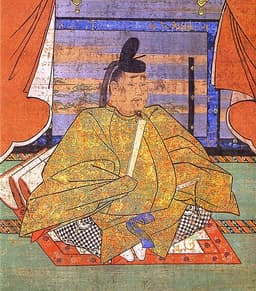
Emperor Murakami
Emperor · Medieval
50.2Total
Basic Information
Born
1192
926
Died
1242
967
Era
Medieval
Medieval
Nationality
Abbasid Caliphate
Japan
Occupation
Emperor
Emperor
Civilization
Middle Eastern
Eastern
Score Comparison
Military (10%)
20.0
49.0
Political (20%)
35.1
32.2
Influence (20%)
56.4
50.2
Legacy (20%)
47.5
45.0
Leadership (15%)
48.4
67.0
Strategy (15%)
45.0
66.3
TOTAL
45.0
50.2
Al-Mustansir I — Complete Timeline
1233 AD
Built the Mustansiriya MadrasaCultural
Al-Mustansir I founded the Mustansiriya Madrasa in Baghdad, a major educational institution teaching Islamic law, medicine, mathematics, and literature. It became one of the largest and most advanced universities of the medieval Islamic world.
EducationMadrasaBaghdad
Impact: globalconstructive
1240 AD
Reformed the Abbasid MilitaryReform◆ Major
Al-Mustansir I reorganized the Abbasid army, recruiting Turkic slave soldiers (mamluks) and strengthening defenses against Mongol threats. He built a new garrison city near Baghdad to house these troops.
Military ReformMamluksMongol Threat
Impact: regional
Emperor Murakami — Complete Timeline
946 AD
Peak of Fujiwara RegencyPolitical Action◆ Major
Emperor Murakami's reign saw the Fujiwara clan, led by Fujiwara no Saneyori, reach the height of their power as regents. The emperor's authority was largely ceremonial, with real power held by the Fujiwara. This period marked the consolidation of Fujiwara dominance.
FujiwaraRegencySaneyori
Impact: national
Maintenance of Peace and StabilityPolitical Action
Emperor Murakami's reign was relatively peaceful, with no major wars or rebellions. The central government maintained order, and the country enjoyed stability. This peace allowed the Fujiwara to consolidate their power and the court to focus on cultural pursuits.
PeaceStabilityHeian
Impact: nationalconstructive
950 AD
Promotion of Court Culture and CeremonyCultural
Emperor Murakami was a patron of courtly arts and ceremonies. He maintained elaborate rituals and festivals, including the Kamo Festival. His reign is noted for the refinement of Heian court culture, with an emphasis on elegance and protocol.
Court CultureCeremonyHeian
Impact: nationalconstructive
This comparison has not been analyzed yet.
One-time AI generation (~1 minute). Scores and timeline are already available below.
Rankings
🥇
Emperor MurakamiLeader
Mil: 49.0Pol: 32.2Inf: 50.2
50.2
🥈
Al-Mustansir I
Mil: 20.0Pol: 35.1Inf: 56.4
45.0
+5.2 behind
How This Comparison Works
Algorithm
Each figure is scored on 6 dimensions (0—100 scale) based on structured historical data: Military (10%), Political (20%), Influence (20%), Legacy (20%), Leadership (15%), Strategy (15%). The weighted total produces the final ranking.
Data Sources
Scores are computed from structured sub-indicators in the database. Scale factors adjust for era (Ancient ×0.85, Modern ×1.0) and civilization size (Eastern ×1.05, Other ×0.80) to account for differences in population and military scale.
Maximum 3 Figures
Comparisons are limited to 2—3 figures to ensure readability and statistical meaningfulness.
Error Margins
±5 points per dimension — Sub-scores are derived from historical records with inherent uncertainty. Two figures within 5 points on a dimension should be considered roughly equivalent in that area.
Total Score Accuracy
±3 points overall — The weighted combination of 6 dimensions produces a total score with approximately ±3 points of uncertainty. Differences of less than 3 points are not statistically significant— the figures are effectively tied.
Known Limitations
- Historical records are incomplete and uneven across civilizations
- Figures from oral-tradition societies may be underrepresented
- Occupation labels can misclassify multi-role figures
- Scores measure capability and impact, not moral character
- Quantitative scoring is a comparison tool, not absolute truth
Capability Radar
Military (10%) — Battles & Warfare
Battles
5
42
Win Rate
5
48
Expansion
5
50
Political (20%) — Governance & Reform
Reform
30
20
Diplomacy
30
30
Economy
30
30
Influence (20%) — Cultural & Global Reach
Cultural
50
30
Global
30
10
Legacy (20%) — Historical Impact
Historical
45
40
Longevity
40
30
Leadership (15%) — Power & Stability
Tenure
40
40
Stability
20
50
Strategy (15%) — Tactics & Innovation
Strategy
5
53
Tactics
5
59
Reform
5
63
Similar Comparisons
Comments & Discussion
No comments yet. Be the first to share your thoughts!