Loading...
Al-Mustanjid vs Henry II of Castile
Henry II of Castile leads by 10.3 pts · 2 figures compared
…
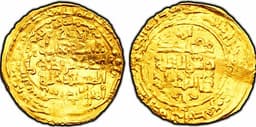
Al-Mustanjid
Emperor · Medieval
37.0Total
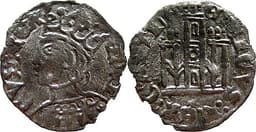
Henry II of Castile
Emperor · Medieval
47.3Total
Basic Information
Born
1124
1334
Died
1170
1379
Era
Medieval
Medieval
Nationality
Abbasid Caliphate
Castile
Occupation
Emperor
Emperor
Civilization
Middle Eastern
Western
Score Comparison
Military (10%)
20.0
25.0
Political (20%)
30.7
40.8
Influence (20%)
46.3
51.8
Legacy (20%)
35.0
45.8
Leadership (15%)
31.2
55.3
Strategy (15%)
54.3
60.0
TOTAL
37.0
47.3
Al-Mustanjid — Complete Timeline
1164 AD
Conflict with the FatimidsWar◆ Major
Al-Mustanjid sent military aid to the Zengid ruler Nur al-Din against the Fatimid caliphate in Egypt. This intervention contributed to the weakening of Fatimid power and the eventual rise of Saladin.
Fatimid DeclineZengid AllianceEgypt
Impact: regional
1168 AD
Assassination of VizierPolitical Action
Al-Mustanjid ordered the assassination of his powerful vizier, Ibn Hubayra, who had become too influential. This act demonstrated the caliph's desire to control his administration but also created instability.
AssassinationVizierPower Struggle
destructive
1170 AD
Death During CampaignOther
Al-Mustanjid died while on a military campaign against the Seljuks. His death was sudden and possibly due to illness or poisoning, ending his brief reign without major achievements.
DeathCampaignSeljuk War
tragic
Henry II of Castile — Complete Timeline
1369 AD
Battle of MontielWar◆ Major
Henry of Trastamara defeated the forces of Peter I at the Battle of Montiel. After the battle, Henry captured and killed Peter, ending the First Castilian Civil War and securing his claim to the throne.
BattleCivil WarCastile
Impact: nationaldestructive
Coronation as King of CastilePolitical Action◆ Major
Henry of Trastamara was crowned King of Castile after killing his half-brother Peter I. His coronation established the Trastamara dynasty, which would rule Castile and later Aragon for the next century.
CoronationTrastamaraCastile
Impact: national
Alliance with FrancePolitical Action◆ Major
Henry II formed a lasting alliance with France, supporting French interests in the Hundred Years' War against England. This alliance provided Castile with French military support and strengthened the Franco-Castilian axis.
AllianceFranceCastile
Impact: regionalconstructive
1370 AD
Reforms to the NobilityReform
Henry II redistributed lands and titles to his supporters, creating a new nobility loyal to the Trastamara dynasty. These reforms strengthened royal authority but also entrenched the power of the new noble class.
ReformNobilityCastile
Impact: nationalconstructive
Expert Analysis
Origins
Al-Mustanjid (born 1124) was the 12th Abbasid caliph, ruling from 1160 to 1170. He was the son of Caliph Al-Muqtafi and was raised in the caliphal palace in Baghdad. His early life was shaped by the declining power of the Abbasid caliphate, which had become a symbolic figurehead under Seljuk suzerainty. He received a traditional Islamic education and was groomed for leadership, but his reign was brief and largely reactive to external pressures.
Henry II of Castile (born 1334) was the illegitimate son of King Alfonso XI of Castile and Leonor de Guzmán. His early life was marked by the rivalry with his half-brother, Peter I, who was the legitimate heir. Henry was raised in the court of his father but after Alfonso's death, he faced persecution from Peter I, forcing him into exile in France. There, he gained military experience and formed alliances that would later help him seize the throne.
Rise to Power
Al-Mustanjid ascended to the caliphate after his father's death in 1160. His rise was smooth due to the established succession, but his power was limited. He quickly faced challenges from the Seljuk sultan and the Fatimid caliphate. His key turning point was his decision to support Nur al-Din against the Fatimids, which increased his influence in the region but also entangled him in costly conflicts.
Henry II's rise was violent and dramatic. After years in exile, he invaded Castile with French mercenaries. His major turning point was the Battle of Montiel in 1369, where he defeated and killed his half-brother Peter I. This victory secured his coronation and founded the Trastamara dynasty. His alliance with France, sealed by the Treaty of Toledo in 1368, provided crucial military and financial support.
Leadership & Governance
Al-Mustanjid's leadership was characterized by a desire to restore caliphal authority, but he was constrained by the Seljuk sultan and his own viziers. He ordered the assassination of his powerful vizier Ibn Hubayra in 1164 to assert control, but this alienated many officials. His governance lacked major reforms; he focused on maintaining the status quo and symbolic religious leadership. His military score of 20.0 reflects his limited role in campaigns, most of which were led by others.
Henry II was a pragmatic and ruthless ruler. He consolidated power by redistributing lands and titles to his supporters, creating a new nobility that owed loyalty to him. This reform strengthened royal authority but also entrenched a feudal system. He scored 55.3 in leadership and 40.8 in political skills, reflecting his ability to manipulate factions and secure alliances. His alliance with France brought Castile into the Hundred Years' War, providing naval support against England but also draining resources.
Triumph & Tragedy
Al-Mustanjid's greatest success was his intervention in Egypt, which weakened the Fatimid caliphate and bolstered Sunni Islam. However, his assassination of Ibn Hubayra was a strategic error that undermined his administration. His death during a campaign against the Seljuks in 1170 (likely poisoned) ended his reign abruptly, leaving no lasting reforms. His total score of 37.0 reflects a brief and largely ineffective rule.
Henry II's triumph was his successful seizure of the throne and establishment of a dynasty that ruled for over a century. His alliance with France brought prestige and military support. However, his reign was marred by ongoing conflict with Portugal and internal rebellions. His death in 1379 from natural causes allowed his son John I to succeed, but the dynasty faced challenges. His legacy score of 45.8 is higher than Al-Mustanjid's 35.0.
Character & Destiny
Al-Mustanjid was cautious and indecisive, often deferring to his viziers until he felt threatened. His assassination of Ibn Hubayra shows a paranoid streak. His sudden death while campaigning suggests he was not fully in control of his destiny. Historical assessments view him as a minor figure in Abbasid history, overshadowed by his predecessors and successors.
Henry II was ambitious, cunning, and willing to use violence to achieve his goals. His exile forged a resilience that served him well. His character was shaped by the brutal civil war against his half-brother, which made him pragmatic but also vengeful. He is remembered as a founder of a dynasty, but also as a usurper who killed a legitimate king.
Legacy
Al-Mustanjid's legacy is minimal. His support for Nur al-Din contributed to the end of the Fatimid caliphate, but his own caliphate continued to decline. He is largely forgotten outside academic circles. His influence score of 46.3 is modest.
Henry II's legacy is significant. The Trastamara dynasty he founded would rule Castile and later Aragon, leading to the unification of Spain under his descendants. His alliance with France set a precedent for Castilian involvement in European affairs. However, his redistribution of lands weakened the crown in the long run by empowering the nobility. He scored 51.8 in influence and 45.8 in legacy.
Conclusion
Henry II of Castile had a greater impact than Al-Mustanjid. His total score of 47.3 surpasses Al-Mustanjid's 37.0 by 10.3 points. Henry II founded a dynasty that shaped Spanish history for centuries, while Al-Mustanjid's brief rule did little to alter the trajectory of the Abbasid caliphate. Despite his violent rise and controversial methods, Henry II's political and strategic achievements (scoring 40.8 and 60.0 respectively) outweigh Al-Mustanjid's symbolic but ineffective caliphate. The data supports Henry II as the more influential and consequential ruler.
Rankings
🥇
Henry II of CastileLeader
Mil: 25.0Pol: 40.8Inf: 51.8
47.3
🥈
Al-Mustanjid
Mil: 20.0Pol: 30.7Inf: 46.3
37.0
+10.3 behind
How This Comparison Works
Algorithm
Each figure is scored on 6 dimensions (0—100 scale) based on structured historical data: Military (10%), Political (20%), Influence (20%), Legacy (20%), Leadership (15%), Strategy (15%). The weighted total produces the final ranking.
Data Sources
Scores are computed from structured sub-indicators in the database. Scale factors adjust for era (Ancient ×0.85, Modern ×1.0) and civilization size (Eastern ×1.05, Other ×0.80) to account for differences in population and military scale.
Maximum 3 Figures
Comparisons are limited to 2—3 figures to ensure readability and statistical meaningfulness.
Error Margins
±5 points per dimension — Sub-scores are derived from historical records with inherent uncertainty. Two figures within 5 points on a dimension should be considered roughly equivalent in that area.
Total Score Accuracy
±3 points overall — The weighted combination of 6 dimensions produces a total score with approximately ±3 points of uncertainty. Differences of less than 3 points are not statistically significant— the figures are effectively tied.
Known Limitations
- Historical records are incomplete and uneven across civilizations
- Figures from oral-tradition societies may be underrepresented
- Occupation labels can misclassify multi-role figures
- Scores measure capability and impact, not moral character
- Quantitative scoring is a comparison tool, not absolute truth
Capability Radar
Military (10%) — Battles & Warfare
Battles
5
45
Win Rate
5
40
Expansion
5
30
Political (20%) — Governance & Reform
Reform
10
30
Diplomacy
15
55
Economy
10
25
Influence (20%) — Cultural & Global Reach
Cultural
10
30
Global
5
20
Legacy (20%) — Historical Impact
Historical
10
40
Longevity
10
35
Leadership (15%) — Power & Stability
Tenure
20
50
Stability
15
20
Strategy (15%) — Tactics & Innovation
Strategy
5
40
Tactics
5
35
Reform
5
20
Similar Comparisons
Comments & Discussion
No comments yet. Be the first to share your thoughts!