Loading...
Al-Mustakfi vs George of Podebrady
George of Podebrady leads by 11.2 pts · 2 figures compared
…
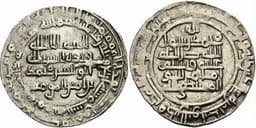
Al-Mustakfi
Emperor · Medieval
47.4Total
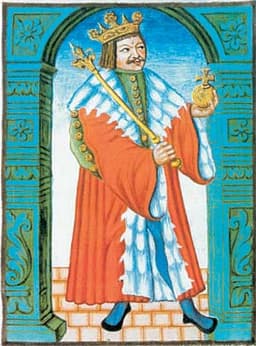
George of Podebrady
Emperor · Medieval
58.6Total
Basic Information
Born
905
1420
Died
949
1471
Era
Medieval
Medieval
Nationality
Abbasid Caliphate
Bohemia
Occupation
Emperor
Emperor
Civilization
Middle Eastern
Western
Score Comparison
Military (10%)
35.3
30.0
Political (20%)
39.4
72.0
Influence (20%)
60.0
60.0
Legacy (20%)
40.8
52.0
Leadership (15%)
45.0
74.0
Strategy (15%)
60.0
57.5
TOTAL
47.4
58.6
Al-Mustakfi — Complete Timeline
944 AD
Accession of Al-MustakfiPolitical Action◆ Major
Al-Mustakfi became caliph after the deposition of Al-Muttaqi. His reign was entirely under the control of the Buyid emir Mu'izz al-Dawla, who used the caliph as a figurehead to legitimize his rule.
AccessionBuyid ControlFigurehead
Impact: national
946 AD
Deposition and Blinding by the BuyidsPolitical Action◆ Major
Al-Mustakfi was deposed and blinded by Mu'izz al-Dawla after only two years. The Buyid emir accused him of plotting against him, but the real reason was to replace him with a more compliant caliph.
DepositionBlindingBuyid
Impact: nationaltragic
949 AD
Death of Al-MustakfiPolitical Action
Al-Mustakfi died shortly after his deposition, possibly murdered on the orders of the Buyids. His death marked the end of a short and powerless reign.
DeathMurderBuyid
Impact: nationaltragic
George of Podebrady — Complete Timeline
1458 AD
Elected King of BohemiaPolitical Action◆ Major
Following the death of King Ladislaus the Posthumous, the Bohemian Diet elected George of Pod
ElectionHussiteBohemian Politics
Impact: nationalconstructive
1464 AD
Proposed a European Peace LeaguePolitical Action◆ Major
George proposed a treaty for a European league of Christian princes to maintain peace and coordinate defense against the Ottoman Empire. The plan included a common council and army. It was not implemented but is considered an early precursor to the European Union.
DiplomacyPeace PlanEuropean Unity
Impact: globalconstructive
1466 AD
Conflict with the PapacyPolitical Action◆ Major
Pope Paul II excommunicated George for his Hussite beliefs and refusal to enforce Catholic uniformity. The pope declared a crusade against Bohemia and supported the rival claim of Matthias Corvinus of Hungary. This led to a war that weakened George's position.
ExcommunicationReligious ConflictPapal-Hussite War
Impact: regionaldestructive
1468 AD
War with Matthias CorvinusWar◆ Major
Matthias Corvinus of Hungary invaded Bohemia, claiming the throne with papal support. George's forces fought a defensive war, losing territory. The conflict ended inconclusively, but George was forced to recognize Matthias as heir to the Bohemian crown.
WarHungarian InvasionSuccession
Impact: regionaldestructive
1471 AD
Compacted with the Catholic NobilityPolitical Action
On his deathbed, George negotiated a compromise with the Catholic nobility of Bohemia. He agreed to recognize Vladislaus II of Poland as his successor, ensuring a Catholic king but preserving religious tolerance for Hussites. This helped prevent further civil war.
CompromiseSuccessionReligious Tolerance
Impact: nationalconstructive
Expert Analysis
Origins
Al-Mustakfi (born 905) was an Abbasid caliph in Baghdad, descending from the line of al-Muqtadir. He became caliph in 944 after the deposition of al-Muttaqi, but his authority was purely symbolic. The Abbasid caliphate had lost temporal power to regional dynasties, and Baghdad was under the control of the Buyid emir Mu'izz al-Dawla. Al-Mustakfi had no military or administrative experience, having been raised in the palace.
George of Podebrady (born 1420) came from a noble Bohemian family. His father was a Hussite leader, and George was raised in the Utraquist tradition. He received a practical education in governance and warfare, participating in the Hussite wars from a young age. Unlike Al-Mustakfi, George was active in politics and military campaigns before becoming king.
Rise to Power
Al-Mustakfi's accession was a result of Buyid manipulation. After deposing al-Muttaqi, Mu'izz al-Dawla chose al-Mustakfi as a compliant figurehead. He was installed in 944 without any popular support or independent power base. His reign lasted only two years (944-946).
George of Podebrady rose through political maneuvering. He became leader of the Utraquist Hussite faction and was elected regent for the young King Ladislaus in 1452. After Ladislaus's death in 1457, the Bohemian Diet elected George as king in 1458, a rare instance of a Hussite monarch. His election was contested by Catholic nobles, but he secured recognition through military and diplomatic efforts.
Leadership & Governance
Al-Mustakfi had no real leadership role. He performed ceremonial functions as caliph, such as leading Friday prayers, but all decisions were made by the Buyid emir. His political score of 39.4 reflects his powerlessness. He was unable to appoint officials or control finances.
George of Podebrady, scoring 74.0 in leadership, governed actively. He maintained a balance between Catholic and Utraquist factions, promoting religious tolerance through the Compact of Basel (1436). He strengthened royal authority, reformed the judiciary, and supported economic development. His proposal for a European peace league in 1462 was a visionary idea to unite Christian princes against the Ottoman threat, though it failed due to papal opposition.
Triumph & Tragedy
Al-Mustakfi's 'triumph' was merely surviving two years as caliph, but his tragedy was total: he was deposed and blinded by Mu'izz al-Dawla in 946, accused of plotting. He died shortly after, likely murdered. His legacy score of 40.8 reflects his insignificance.
George's greatest triumph was being elected king and maintaining power for 13 years despite excommunication and war. His tragedy was the conflict with the papacy: Pope Paul II excommunicated him in 1466 and declared a crusade, leading to invasion by Matthias Corvinus of Hungary. George lost territory and died in 1471, his peace league unrealized. His military score of 30.0 reflects his defensive wars.
Character & Destiny
Al-Mustakfi was passive and indecisive, a puppet whose fate was sealed by Buyid dominance. His character score of 45.0 indicates a lack of agency. He was unable to rally support or resist his deposition.
George was pragmatic and diplomatic, but also stubborn in his Hussite faith. His willingness to compromise with Catholics (e.g., accepting Vladislaus II as successor) showed political realism. However, his refusal to renounce Utraquism led to papal hostility. His strategy score of 57.5 reflects mixed success.
Legacy
Al-Mustakfi is a footnote in Abbasid history, representing the caliphate's decline. His blinding symbolized the Buyids' contempt for the caliphate. He had no lasting impact.
George of Podebrady is remembered as the 'Hussite King' and a pioneer of European peace ideas. His proposal for a league of princes influenced later concepts of collective security. He also secured the succession for the Jagiellonian dynasty, shaping Central European politics. His legacy score of 52.0 is moderate but higher than Al-Mustakfi's 40.8.
Conclusion
George of Podebrady had greater impact, scoring 58.6 total to Al-Mustakfi's 47.4. George was an active ruler who shaped Bohemia's religious and political landscape, while Al-Mustakfi was a powerless figurehead. George's ideas about European unity were ahead of his time, whereas Al-Mustakfi left no enduring achievements. The 11.2-point gap reflects George's tangible influence versus Al-Mustakfi's irrelevance.
Rankings
🥇
George of PodebradyLeader
Mil: 30.0Pol: 72.0Inf: 60.0
58.6
🥈
Al-Mustakfi
Mil: 35.3Pol: 39.4Inf: 60.0
47.4
+11.2 behind
How This Comparison Works
Algorithm
Each figure is scored on 6 dimensions (0—100 scale) based on structured historical data: Military (10%), Political (20%), Influence (20%), Legacy (20%), Leadership (15%), Strategy (15%). The weighted total produces the final ranking.
Data Sources
Scores are computed from structured sub-indicators in the database. Scale factors adjust for era (Ancient ×0.85, Modern ×1.0) and civilization size (Eastern ×1.05, Other ×0.80) to account for differences in population and military scale.
Maximum 3 Figures
Comparisons are limited to 2—3 figures to ensure readability and statistical meaningfulness.
Error Margins
±5 points per dimension — Sub-scores are derived from historical records with inherent uncertainty. Two figures within 5 points on a dimension should be considered roughly equivalent in that area.
Total Score Accuracy
±3 points overall — The weighted combination of 6 dimensions produces a total score with approximately ±3 points of uncertainty. Differences of less than 3 points are not statistically significant— the figures are effectively tied.
Known Limitations
- Historical records are incomplete and uneven across civilizations
- Figures from oral-tradition societies may be underrepresented
- Occupation labels can misclassify multi-role figures
- Scores measure capability and impact, not moral character
- Quantitative scoring is a comparison tool, not absolute truth
Capability Radar
Military (10%) — Battles & Warfare
Battles
32
45
Win Rate
35
50
Expansion
35
35
Political (20%) — Governance & Reform
Reform
0
70
Diplomacy
5
75
Economy
0
55
Influence (20%) — Cultural & Global Reach
Cultural
0
50
Global
0
40
Legacy (20%) — Historical Impact
Historical
5
55
Longevity
0
45
Leadership (15%) — Power & Stability
Tenure
5
65
Stability
0
45
Strategy (15%) — Tactics & Innovation
Strategy
40
50
Tactics
45
55
Reform
44
40
Similar Comparisons
Comments & Discussion
No comments yet. Be the first to share your thoughts!