Loading...
George of Podebrady vs Parakramabahu II
George of Podebrady leads by 6.9 pts · 2 figures compared
…
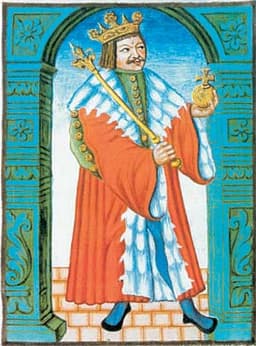
George of Podebrady
Emperor · Medieval
58.6Total
Parakramabahu II
Emperor · Medieval
51.7Total
Basic Information
Born
1420
1236
Died
1471
1270
Era
Medieval
Medieval
Nationality
Bohemia
Sri Lanka
Occupation
Emperor
Emperor
Civilization
Western
Indian
Score Comparison
Military (10%)
30.0
40.0
Political (20%)
72.0
68.0
Influence (20%)
60.0
55.7
Legacy (20%)
52.0
48.3
Leadership (15%)
74.0
40.0
Strategy (15%)
57.5
55.0
TOTAL
58.6
51.7
George of Podebrady — Complete Timeline
1458 AD
Elected King of BohemiaPolitical Action◆ Major
Following the death of King Ladislaus the Posthumous, the Bohemian Diet elected George of Pod
ElectionHussiteBohemian Politics
Impact: nationalconstructive
1464 AD
Proposed a European Peace LeaguePolitical Action◆ Major
George proposed a treaty for a European league of Christian princes to maintain peace and coordinate defense against the Ottoman Empire. The plan included a common council and army. It was not implemented but is considered an early precursor to the European Union.
DiplomacyPeace PlanEuropean Unity
Impact: globalconstructive
1466 AD
Conflict with the PapacyPolitical Action◆ Major
Pope Paul II excommunicated George for his Hussite beliefs and refusal to enforce Catholic uniformity. The pope declared a crusade against Bohemia and supported the rival claim of Matthias Corvinus of Hungary. This led to a war that weakened George's position.
ExcommunicationReligious ConflictPapal-Hussite War
Impact: regionaldestructive
1468 AD
War with Matthias CorvinusWar◆ Major
Matthias Corvinus of Hungary invaded Bohemia, claiming the throne with papal support. George's forces fought a defensive war, losing territory. The conflict ended inconclusively, but George was forced to recognize Matthias as heir to the Bohemian crown.
WarHungarian InvasionSuccession
Impact: regionaldestructive
1471 AD
Compacted with the Catholic NobilityPolitical Action
On his deathbed, George negotiated a compromise with the Catholic nobility of Bohemia. He agreed to recognize Vladislaus II of Poland as his successor, ensuring a Catholic king but preserving religious tolerance for Hussites. This helped prevent further civil war.
CompromiseSuccessionReligious Tolerance
Impact: nationalconstructive
Parakramabahu II — Complete Timeline
1236 AD
Establishment of Dambadeniya as CapitalPolitical Action◆ Major
Parakramabahu II established Dambadeniya as the capital of the Sinhalese kingdom. This marked the beginning of the Dambadeniya period, a new era of Sinhalese history.
CapitalFoundationGovernance
Impact: nationalconstructive
1240 AD
Patronage of LiteratureCultural
Parakramabahu II was a noted patron of literature. He himself wrote the 'Kavyasekaraya', a Sinhalese poem, and encouraged the composition of other works, fostering a cultural renaissance.
LiteraturePatronageCulture
Impact: nationalconstructive
Construction of the Temple of the Tooth in DambadeniyaCultural◆ Major
Parakramabahu II built a temple to house the Tooth Relic of the Buddha in Dambadeniya. This ensured the relic's safety and reinforced the capital's religious significance.
BuddhismRelicArchitecture
Impact: nationalconstructive
1255 AD
Expulsion of Kalinga MaghaWar
Parakramabahu II led a successful campaign to expel Kalinga Magha, the invader from the Kalinga region of India, from Sri Lanka. This ended a period of foreign occupation and restored Sinhalese rule.
LiberationMilitary CampaignForeign Invasion
Impact: national
Expert Analysis
Origins
George of Podebrady was born in 1420 into a noble Bohemian family. His father, Victor of Kunštát and Podebrady, was a prominent Hussite leader. George was raised in the Hussite tradition, which emphasized communion under both kinds and challenged papal authority. He received a practical education in military and political affairs, participating in the Hussite Wars from a young age.
Parakramabahu II was born around 1200 in Sri Lanka, a prince of the Sinhalese royal lineage. His early life was shaped by the invasion of Kalinga Magha in 1215, which displaced the ruling dynasty. He grew up in exile or under occupation, fostering a determination to restore Sinhalese sovereignty. His education included Buddhist scriptures, statecraft, and military training, typical for a medieval Sinhalese prince.
Rise to Power
George rose to power through the political and military turmoil following the Hussite Wars. In 1452, he became the leader of the Hussite party and later served as regent for the young King Ladislaus the Posthumous. Upon Ladislaus's death in 1457, the Bohemian Diet elected George as king on March 2, 1458, despite his Hussite faith. His election was a compromise between Catholic and Hussite factions, but it faced papal opposition.
Parakramabahu II's rise was more gradual and military-driven. After years of resistance against Kalinga Magha's rule, he emerged as a leader of the Sinhalese resistance. Around 1236, he captured the city of Dambadeniya and established it as his capital. His decisive military campaign culminated in the expulsion of Kalinga Magha from Sri Lanka around 1255, ending a 40-year occupation. He then consolidated his rule over the island, though limited to the southwestern regions.
Leadership & Governance
George of Podebrady governed as a moderate Hussite king, seeking to balance Catholic and Utraquist (Hussite) interests. He confirmed the Compacts of Basel in 1462, which had granted religious toleration to Hussites, but faced constant pressure from the papacy. In 1464, he proposed a European Peace League, a visionary plan for a union of Christian princes to maintain peace and coordinate defense against the Ottoman Empire. This plan included a common budget, arbitration mechanisms, and mutual defense. However, it was never implemented due to lack of support and papal hostility. Domestically, he strengthened royal authority and promoted economic development, but his reign was plagued by conflicts with the Catholic nobility and the papacy.
Parakramabahu II focused on rebuilding Sinhalese state and culture after the occupation. He established Dambadeniya as the capital, building fortifications and administrative structures. He constructed the Temple of the Tooth to house the sacred relic, reinforcing his legitimacy as a Buddhist ruler. He patronized literature, writing the 'Kavyasekaraya' poem and commissioning works like the 'Dalada Sirita'. His governance was centralized but limited in territorial control. He maintained diplomatic relations with other kingdoms, including Pandya and Chola, to secure peace.
Triumph & Tragedy
George's greatest triumph was his election as king, a remarkable achievement for a Hussite in a Catholic-majority realm. His proposal for a European peace league was ahead of its time, anticipating later collective security arrangements. However, his tragedy was the conflict with the papacy and the resulting war with Matthias Corvinus of Hungary. In 1468, Matthias invaded Bohemia with papal support, and George lost significant territory. He died in 1471 while the war continued, his kingdom weakened. His vision for European unity failed, and his Hussite reforms were largely undone after his death.
Parakramabahu II's triumph was the expulsion of Kalinga Magha, restoring Sinhalese independence. He successfully revived Buddhist culture and literature, earning a reputation as a patron of the arts. His tragedy was the limited extent of his reunification; he did not control the entire island, and the kingdom fragmented after his death. His capital Dambadeniya was later abandoned due to invasions. His literary works, while notable, did not have lasting political impact.
Character & Destiny
George was a pragmatic and diplomatic leader, skilled in negotiation but ultimately trapped by his religious convictions. His moderate stance alienated both radical Hussites and staunch Catholics. His proposal for a peace league shows visionary thinking, but his inability to secure papal acceptance doomed his reign. He scored 74.0 in leadership and 72.0 in political skill, reflecting effective governance but poor strategic outcomes (57.5).
Parakramabahu II was a determined and culturally minded ruler, focused on liberation and revival. His military score of 40.0 reflects his success in expelling invaders, but his leadership score of 40.0 suggests limited administrative reach. He was more a consolidator than an expander, and his legacy is tied to cultural patronage rather than enduring political structures.
Legacy
George of Podebrady is remembered as a pioneer of European integration. His peace league idea influenced later thinkers like Sully and Kant. He scored 60.0 in influence and 52.0 in legacy. In the Czech Republic, he is seen as a national hero, but his historical impact is limited by his failure to sustain Hussite power.
Parakramabahu II is revered in Sri Lanka as a liberator and cultural reviver. The Dambadeniya period is considered a golden age of Sinhalese literature. However, his legacy score of 48.3 reflects the short-lived nature of his achievements. The kingdom did not last, and his capital fell into ruin. He is a minor figure in global history.
Conclusion
George of Podebrady had greater impact on a global scale due to his visionary political proposal and the broader context of European history. His total score of 58.6 surpasses Parakramabahu's 51.7. While Parakramabahu's liberation of Sri Lanka was significant locally, George's ideas presaged modern international organizations. Therefore, George of Podebrady is the more historically consequential figure.
Rankings
🥇
George of PodebradyLeader
Mil: 30.0Pol: 72.0Inf: 60.0
58.6
🥈
Parakramabahu II
Mil: 40.0Pol: 68.0Inf: 55.7
51.7
+6.9 behind
How This Comparison Works
Algorithm
Each figure is scored on 6 dimensions (0—100 scale) based on structured historical data: Military (10%), Political (20%), Influence (20%), Legacy (20%), Leadership (15%), Strategy (15%). The weighted total produces the final ranking.
Data Sources
Scores are computed from structured sub-indicators in the database. Scale factors adjust for era (Ancient ×0.85, Modern ×1.0) and civilization size (Eastern ×1.05, Other ×0.80) to account for differences in population and military scale.
Maximum 3 Figures
Comparisons are limited to 2—3 figures to ensure readability and statistical meaningfulness.
Error Margins
±5 points per dimension — Sub-scores are derived from historical records with inherent uncertainty. Two figures within 5 points on a dimension should be considered roughly equivalent in that area.
Total Score Accuracy
±3 points overall — The weighted combination of 6 dimensions produces a total score with approximately ±3 points of uncertainty. Differences of less than 3 points are not statistically significant— the figures are effectively tied.
Known Limitations
- Historical records are incomplete and uneven across civilizations
- Figures from oral-tradition societies may be underrepresented
- Occupation labels can misclassify multi-role figures
- Scores measure capability and impact, not moral character
- Quantitative scoring is a comparison tool, not absolute truth
Capability Radar
Military (10%) — Battles & Warfare
Battles
45
45
Win Rate
50
50
Expansion
35
40
Political (20%) — Governance & Reform
Reform
70
50
Diplomacy
75
55
Economy
55
50
Influence (20%) — Cultural & Global Reach
Cultural
50
45
Global
40
30
Legacy (20%) — Historical Impact
Historical
55
50
Longevity
45
40
Leadership (15%) — Power & Stability
Tenure
65
60
Stability
45
55
Strategy (15%) — Tactics & Innovation
Strategy
50
55
Tactics
55
55
Reform
40
40
Similar Comparisons
Comments & Discussion
No comments yet. Be the first to share your thoughts!