Loading...
George of Podebrady vs Taejo of Goryeo
Taejo of Goryeo leads by 4.5 pts · 2 figures compared
…
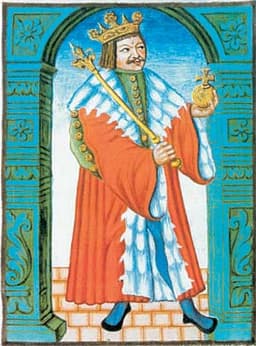
George of Podebrady
Emperor · Medieval
58.6Total
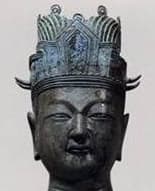
Taejo of Goryeo
Emperor · Medieval
63.1Total
Basic Information
Born
1420
877
Died
1471
943
Era
Medieval
Medieval
Nationality
Bohemia
Korea
Occupation
Emperor
Emperor
Civilization
Western
Eastern
Score Comparison
Military (10%)
30.0
61.7
Political (20%)
72.0
59.3
Influence (20%)
60.0
72.0
Legacy (20%)
52.0
55.0
Leadership (15%)
74.0
72.0
Strategy (15%)
57.5
55.0
TOTAL
58.6
63.1
George of Podebrady — Complete Timeline
1458 AD
Elected King of BohemiaPolitical Action◆ Major
Following the death of King Ladislaus the Posthumous, the Bohemian Diet elected George of Pod
ElectionHussiteBohemian Politics
Impact: nationalconstructive
1464 AD
Proposed a European Peace LeaguePolitical Action◆ Major
George proposed a treaty for a European league of Christian princes to maintain peace and coordinate defense against the Ottoman Empire. The plan included a common council and army. It was not implemented but is considered an early precursor to the European Union.
DiplomacyPeace PlanEuropean Unity
Impact: globalconstructive
1466 AD
Conflict with the PapacyPolitical Action◆ Major
Pope Paul II excommunicated George for his Hussite beliefs and refusal to enforce Catholic uniformity. The pope declared a crusade against Bohemia and supported the rival claim of Matthias Corvinus of Hungary. This led to a war that weakened George's position.
ExcommunicationReligious ConflictPapal-Hussite War
Impact: regionaldestructive
1468 AD
War with Matthias CorvinusWar◆ Major
Matthias Corvinus of Hungary invaded Bohemia, claiming the throne with papal support. George's forces fought a defensive war, losing territory. The conflict ended inconclusively, but George was forced to recognize Matthias as heir to the Bohemian crown.
WarHungarian InvasionSuccession
Impact: regionaldestructive
1471 AD
Compacted with the Catholic NobilityPolitical Action
On his deathbed, George negotiated a compromise with the Catholic nobility of Bohemia. He agreed to recognize Vladislaus II of Poland as his successor, ensuring a Catholic king but preserving religious tolerance for Hussites. This helped prevent further civil war.
CompromiseSuccessionReligious Tolerance
Impact: nationalconstructive
Taejo of Goryeo — Complete Timeline
918 AD
Battle of CheonjuWar◆ Major
Wang Geon, a general under the Later Goguryeo kingdom, defeated the forces of Gyeon Hwon at Cheonju. This victory solidified his power and set the stage for the founding of the Goryeo dynasty.
Later Three KingdomsGoryeo Foundation
Impact: regional
Founding of the Goryeo DynastyPolitical Action
Wang Geon declared himself king and founded the Goryeo dynasty, with its capital at Songak (modern Kaesong). He unified the Later Three Kingdoms (Later Goguryeo, Later Baekje, and Silla) through a combination of military conquest and diplomatic marriages.
Goryeo DynastyUnificationKorean History
Impact: regionalconstructive
936 AD
Unification of the Later Three KingdomsWar◆ Major
Taejo of Goryeo completed the unification of the Later Three Kingdoms by defeating the Later Baekje kingdom. This brought the entire Korean peninsula under Goryeo rule, ending the Later Three Kingdoms period.
UnificationLater Three KingdomsGoryeo
Impact: regionalconstructive
943 AD
Promulgation of the Ten InjunctionsReform◆ Major
Taejo issued the Ten Injunctions, a set of political and cultural guidelines for his successors. These injunctions emphasized Confucian governance, Buddhist patronage, and the importance of maintaining good relations with China.
GovernanceConfucianismBuddhism
Impact: nationalconstructive
Expert Analysis
Origins
George of Podebrady was born in 1420 into a noble family in Bohemia, part of the Holy Roman Empire. His father was a Hussite leader, and George grew up amidst the Hussite Wars, which shaped his religious and political views. He received a practical education in military and governance, emerging as a moderate Hussite leader after the wars.
Taejo of Goryeo, born Wang Geon in 877, was the son of a provincial noble in the Later Goguryeo kingdom. His family had a background in maritime trade and military service. Wang Geon began his career as a general under King Gung Ye, gaining experience in the chaotic Later Three Kingdoms period.
Rise to Power
George became the leader of the moderate Hussite faction after the death of King Ladislaus the Posthumous in 1457. The Bohemian Diet elected him king in 1458, despite opposition from the Catholic nobility and the Papacy. His election was a compromise between Hussites and Catholics, but tensions remained.
Taejo's rise was more military. He distinguished himself in battles against Later Baekje, most notably the Battle of Cheonju in 927, where he defeated forces of Gyeon Hwon. After his mentor Gung Ye was overthrown, Wang Geon was chosen as king in 918, founding the Goryeo dynasty. He then spent decades unifying the peninsula, finally defeating Later Baekje in 936.
Leadership & Governance
George ruled as a constitutional monarch, working with the Diet and respecting noble privileges. He attempted to balance Catholic and Hussite interests, but his religious tolerance alienated the Papacy. His major initiative was the 1464 proposal for a European Peace League, an early concept of collective security, but it failed due to lack of support.
Taejo established a centralized bureaucracy based on Confucian principles. His Ten Injunctions (943) provided guidelines for governance, including emphasis on Buddhism, defense of the northern frontier, and avoiding civil strife. He integrated local elites into his administration through marriage and appointments. His political score of 59.3 reflects effective but pragmatic leadership.
Triumph & Tragedy
George's greatest success was maintaining Bohemian independence despite papal hostility and Hungarian invasion. He secured a compromise on his deathbed (1471) that ensured a peaceful succession. His tragedy was the failure of his peace league and the devastation of Bohemia during the war with Matthias Corvinus, losing territory and facing internal rebellion.
Taejo's triumph was the unification of Korea, ending the Later Three Kingdoms period. He founded a dynasty that lasted 474 years. His tragedy was the suppression of local identities and the imposition of a centralized system that led to later conflicts. His military score of 61.7 reflects his success in conquest but not in strategic innovation.
Character & Destiny
George was a pragmatic diplomat, willing to compromise for stability. His moderate stance on religion made him a target for extremists on both sides. His character earned him the nickname "King of Two Peoples" (Catholics and Hussites), but ultimately his inability to satisfy both led to conflict. His leadership score of 74.0 reflects his diplomatic skills.
Taejo was a decisive military leader and shrewd administrator. He learned from the failures of earlier kingdoms, emphasizing unity and long-term stability. His Ten Injunctions show a forward-thinking mind. However, his reliance on family and regional elites created future succession problems. His leadership score of 72.0 is slightly lower due to less innovative governance.
Legacy
George is remembered as a pioneer of European unity, with his peace league seen as a precursor to modern international organizations. However, his legacy is overshadowed by the Hussite wars and his excommunication. In the Czech Republic, he is viewed as a national hero, but internationally his impact is limited. His legacy score is 52.0.
Taejo's legacy is immense in Korea. He founded the Goryeo dynasty, which gave Korea its name (from Goryeo). His Ten Injunctions influenced Korean governance for centuries. He is revered as a founding father, with his tomb designated a UNESCO World Heritage site. His legacy score of 55.0 reflects his lasting impact on Korean identity.
Conclusion
Taejo of Goryeo had a greater impact due to his successful unification and founding of a long-lasting dynasty. While George's peace league was visionary, it had no tangible effect on his time. Taejo's political score of 59.3 vs George's 72.0 might suggest George was more politically skilled, but Taejo's total score of 63.1 vs 58.6 indicates his overall effectiveness. Taejo's influence (72.0) and legacy (55.0) surpass George's (60.0 and 52.0). George's military score (30.0) was weak compared to Taejo's (61.7). In terms of concrete achievements, Taejo unified a peninsula and established a dynasty; George struggled to maintain his kingdom. Therefore, Taejo of Goryeo had greater historical impact.
Rankings
🥇
Taejo of GoryeoLeader
Mil: 61.7Pol: 59.3Inf: 72.0
63.1
🥈
George of Podebrady
Mil: 30.0Pol: 72.0Inf: 60.0
58.6
+4.5 behind
How This Comparison Works
Algorithm
Each figure is scored on 6 dimensions (0—100 scale) based on structured historical data: Military (10%), Political (20%), Influence (20%), Legacy (20%), Leadership (15%), Strategy (15%). The weighted total produces the final ranking.
Data Sources
Scores are computed from structured sub-indicators in the database. Scale factors adjust for era (Ancient ×0.85, Modern ×1.0) and civilization size (Eastern ×1.05, Other ×0.80) to account for differences in population and military scale.
Maximum 3 Figures
Comparisons are limited to 2—3 figures to ensure readability and statistical meaningfulness.
Error Margins
±5 points per dimension — Sub-scores are derived from historical records with inherent uncertainty. Two figures within 5 points on a dimension should be considered roughly equivalent in that area.
Total Score Accuracy
±3 points overall — The weighted combination of 6 dimensions produces a total score with approximately ±3 points of uncertainty. Differences of less than 3 points are not statistically significant— the figures are effectively tied.
Known Limitations
- Historical records are incomplete and uneven across civilizations
- Figures from oral-tradition societies may be underrepresented
- Occupation labels can misclassify multi-role figures
- Scores measure capability and impact, not moral character
- Quantitative scoring is a comparison tool, not absolute truth
Capability Radar
Military (10%) — Battles & Warfare
Battles
45
65
Win Rate
50
70
Expansion
35
70
Political (20%) — Governance & Reform
Reform
70
80
Diplomacy
75
75
Economy
55
70
Influence (20%) — Cultural & Global Reach
Cultural
50
70
Global
40
55
Legacy (20%) — Historical Impact
Historical
55
75
Longevity
45
70
Leadership (15%) — Power & Stability
Tenure
65
75
Stability
45
65
Strategy (15%) — Tactics & Innovation
Strategy
50
75
Tactics
55
60
Reform
40
55
Similar Comparisons
Comments & Discussion
No comments yet. Be the first to share your thoughts!