Loading...
George of Podebrady vs Napoleon Bonaparte
Napoleon Bonaparte leads by 12.3 pts · 2 figures compared
…
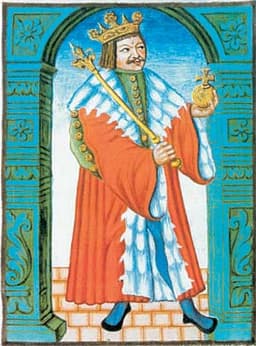
George of Podebrady
Emperor · Medieval
58.6Total

Napoleon Bonaparte
General · Modern
70.9Total
Basic Information
Born
1420
1769
Died
1471
1821
Era
Medieval
Modern
Nationality
Bohemia
France
Occupation
Emperor
General
Civilization
Western
Western
Score Comparison
Military (10%)
30.0
94.0
Political (20%)
72.0
72.0
Influence (20%)
60.0
40.0
Legacy (20%)
52.0
80.0
Leadership (15%)
74.0
78.0
Strategy (15%)
57.5
90.0
TOTAL
58.6
70.9
George of Podebrady — Complete Timeline
1458 AD
Elected King of BohemiaPolitical Action◆ Major
Following the death of King Ladislaus the Posthumous, the Bohemian Diet elected George of Pod
ElectionHussiteBohemian Politics
Impact: nationalconstructive
1464 AD
Proposed a European Peace LeaguePolitical Action◆ Major
George proposed a treaty for a European league of Christian princes to maintain peace and coordinate defense against the Ottoman Empire. The plan included a common council and army. It was not implemented but is considered an early precursor to the European Union.
DiplomacyPeace PlanEuropean Unity
Impact: globalconstructive
1466 AD
Conflict with the PapacyPolitical Action◆ Major
Pope Paul II excommunicated George for his Hussite beliefs and refusal to enforce Catholic uniformity. The pope declared a crusade against Bohemia and supported the rival claim of Matthias Corvinus of Hungary. This led to a war that weakened George's position.
ExcommunicationReligious ConflictPapal-Hussite War
Impact: regionaldestructive
1468 AD
War with Matthias CorvinusWar◆ Major
Matthias Corvinus of Hungary invaded Bohemia, claiming the throne with papal support. George's forces fought a defensive war, losing territory. The conflict ended inconclusively, but George was forced to recognize Matthias as heir to the Bohemian crown.
WarHungarian InvasionSuccession
Impact: regionaldestructive
1471 AD
Compacted with the Catholic NobilityPolitical Action
On his deathbed, George negotiated a compromise with the Catholic nobility of Bohemia. He agreed to recognize Vladislaus II of Poland as his successor, ensuring a Catholic king but preserving religious tolerance for Hussites. This helped prevent further civil war.
CompromiseSuccessionReligious Tolerance
Impact: nationalconstructive
Napoleon Bonaparte — Complete Timeline
1799 AD
Coup of 18 BrumaireOther◆ Major
Napoleon Bonaparte, with support from his brother Lucien and key political figures, overthrew the Directory in a bloodless coup. He established the Consulate with himself as First Consul, effectively becoming the ruler of France. This event ended the French Revolution's most unstable period.
French RevolutionCoupRise to Power
Impact: regional
1804 AD
Promulgation of the Napoleonic CodeOther◆ Major
Napoleon enacted the Civil Code of the French, known as the Napoleonic Code, a comprehensive set of laws that replaced the fragmented feudal legal systems. The code established legal equality, protected property rights, and secularized law. It became the basis for legal systems in many European and world countries.
Legal ReformNapoleonic CodeCivil Law
Impact: globalconstructive
1805 AD
Battle of AusterlitzWar◆ Major
Napoleon's Grande Arm
Napoleonic WarsBattleDecisive Victory
Impact: global
1812 AD
Invasion of RussiaWar◆ Major
Napoleon led the Grande Arm
Napoleonic WarsInvasionDisaster
Impact: globaldestructive
1815 AD
Battle of WaterlooWar◆ Major
Napoleon's French army was defeated by the combined forces of the Duke of Wellington's Anglo-Allied army and Gebhard Leberecht von Bl
Napoleonic WarsBattleFinal Defeat
Impact: globaldestructive
Expert Analysis
george-of-podebrady-vs-napoleon-bonaparte
# The Conqueror and the Conciliator
On a June morning in 1815, Napoleon Bonaparte stood on a muddy field near Waterloo, watching his Imperial Guard march into certain death. Two centuries earlier, in 1464, another leader sat in Prague, drafting a letter that would propose something the world had never seen: a league of European nations, bound together not by conquest, but by treaty. One man sought to dominate Europe through the thunder of cannon; the other sought to unite it through the whisper of diplomacy. Why did one path lead to St. Helena and the other to obscurity? The answer lies not merely in their achievements, but in the worlds that shaped them.
Origins
Napoleon Bonaparte was born in 1769 on the island of Corsica, a place that had only recently become French. His family belonged to the minor nobility, but they were poor, proud, and resentful of French rule. This outsider status forged in him a hunger for recognition that would never be satisfied. The French Revolution, erupting when he was twenty, shattered the old order and opened doors that birth alone could never have unlocked. He was a child of chaos, and chaos would be his medium.
George of Poděbrady was born in 1420 into a different kind of storm. Bohemia was then convulsed by the Hussite Wars, a religious conflict that pitted Czech reformers against the Catholic Church and the German Empire. His father was a Hussite leader, and George grew up in a world where faith and politics were indistinguishable. Where Napoleon saw opportunity in revolution, George saw the terrible cost of division. His era was medieval, hierarchical, and deeply religious—but it also contained the seeds of a new political order, one where compromise might prevail over annihilation.
Rise to Power
Napoleon’s ascent was a masterpiece of velocity. At twenty-four, he captured Toulon from the British; at twenty-six, he commanded the Army of Italy; at thirty, he made himself First Consul; at thirty-five, he crowned himself Emperor. Each step was a gamble, each victory a stepping stone. His political genius lay in recognizing that in post-revolutionary France, legitimacy came from success alone. He gave the French what they craved: order, glory, and a sense of national destiny.
George’s rise was slower, more deliberate, and far more constrained. He was elected King of Bohemia in 1458 by the Bohemian Diet, a body of nobles and clergy who chose him precisely because he was a moderate Hussite—acceptable to both the Utraquist majority and the Catholic minority. His legitimacy came not from conquest but from consensus. In a world where kings were anointed by God and crowned by the Pope, George’s election was a radical act: it asserted that a kingdom could choose its own ruler.
Leadership & Governance
Napoleon governed as he fought: with relentless energy and absolute control. His Napoleonic Code was a monument of rational law, sweeping away feudal privileges and establishing equality before the law. He built schools, roads, and a centralized bureaucracy that France still uses. But his domestic reforms were always in service of war. Every institution was designed to feed the army, every treaty was a prelude to the next campaign. The system worked brilliantly—until it collapsed.
George governed as a mediator. His great project was the 1464 proposal for a European Peace League, a visionary plan for a federation of Christian princes who would settle disputes by arbitration and unite against the Ottoman threat. It was the first serious proposal for a united Europe, anticipating the United Nations by five centuries. But the idea was too far ahead of its time. The Pope excommunicated George in 1466 for his Hussite heresy, and Matthias Corvinus of Hungary invaded Bohemia in 1468 with papal blessing. George spent his final years fighting a defensive war he had tried desperately to avoid.
Triumph & Tragedy
Napoleon’s greatest triumph was Austerlitz in 1805, where he destroyed the armies of Austria and Russia in a single day. His greatest tragedy was the invasion of Russia in 1812, where he lost half a million men to winter, starvation, and the vastness of the steppe. The tragedy was not an accident; it was the logical outcome of a system that could not stop. Napoleon could not make peace because peace would end his reason for being.
George’s triumph was his election itself—a peaceful transition of power in an age of war. His tragedy was that his vision of peace was destroyed by the very forces he sought to reconcile. On his deathbed in 1471, he negotiated a compromise with the Catholic nobility, agreeing to recognize Vladislaus as his successor. It was a quiet end, not a dramatic one. He died not on a battlefield but in a palace, surrounded by men who had once been his enemies.
Character & Destiny
Napoleon was a force of nature: brilliant, ruthless, and incapable of rest. “Power is my mistress,” he once said, and he meant it. His ambition was not a choice but a compulsion. He could not stop because he could not imagine a world where he was not at the center of it. This made him great; it also made him doomed.
George was a man of principle in an age of faith. He was a Hussite who believed in religious tolerance, a king who believed in constitutional government, a realist who dreamed of peace. His moderation was not weakness but a profound understanding that power, to be lasting, must be shared. This made him a better statesman than Napoleon—and a far less famous one.
Legacy
Napoleon’s legacy is written in stone and blood. The Napoleonic Code shaped the legal systems of Europe and beyond. His wars redrew the map of the continent. He is remembered as a titan, a genius, a monster—but always as someone who changed the world through force.
George’s legacy is written in ink and ideas. His proposal for a European peace league was forgotten for centuries, then rediscovered as a precursor to the European Union. He is remembered in the Czech Republic as a national hero, but outside it, he is virtually unknown. His vision was too gentle for his time, too rational for an age of faith.
Conclusion
The difference between Napoleon and George is the difference between the hammer and the hand. One sought to reshape the world by breaking it; the other sought to hold it together. Napoleon’s story is a tragedy of success: he got everything he wanted and lost it all. George’s story is a tragedy of failure: he achieved nothing he wanted, yet his ideas outlived him. In the end, perhaps the true measure of a leader is not how much power he accumulates, but whether his vision can survive his death. By that measure, the obscure Hussite king may have more to teach us than the emperor of Europe.
Rankings
🥇
Napoleon BonaparteLeader
Mil: 94.0Pol: 72.0Inf: 40.0
70.9
🥈
George of Podebrady
Mil: 30.0Pol: 72.0Inf: 60.0
58.6
+12.3 behind
How This Comparison Works
Algorithm
Each figure is scored on 6 dimensions (0—100 scale) based on structured historical data: Military (10%), Political (20%), Influence (20%), Legacy (20%), Leadership (15%), Strategy (15%). The weighted total produces the final ranking.
Data Sources
Scores are computed from structured sub-indicators in the database. Scale factors adjust for era (Ancient ×0.85, Modern ×1.0) and civilization size (Eastern ×1.05, Other ×0.80) to account for differences in population and military scale.
Maximum 3 Figures
Comparisons are limited to 2—3 figures to ensure readability and statistical meaningfulness.
Error Margins
±5 points per dimension — Sub-scores are derived from historical records with inherent uncertainty. Two figures within 5 points on a dimension should be considered roughly equivalent in that area.
Total Score Accuracy
±3 points overall — The weighted combination of 6 dimensions produces a total score with approximately ±3 points of uncertainty. Differences of less than 3 points are not statistically significant— the figures are effectively tied.
Known Limitations
- Historical records are incomplete and uneven across civilizations
- Figures from oral-tradition societies may be underrepresented
- Occupation labels can misclassify multi-role figures
- Scores measure capability and impact, not moral character
- Quantitative scoring is a comparison tool, not absolute truth
Capability Radar
Military (10%) — Battles & Warfare
Battles
45
95
Win Rate
50
90
Expansion
35
95
Political (20%) — Governance & Reform
Reform
70
95
Diplomacy
75
80
Economy
55
85
Influence (20%) — Cultural & Global Reach
Cultural
50
85
Global
40
90
Legacy (20%) — Historical Impact
Historical
55
95
Longevity
45
90
Leadership (15%) — Power & Stability
Tenure
65
85
Stability
45
70
Strategy (15%) — Tactics & Innovation
Strategy
50
95
Tactics
55
98
Reform
40
92
Similar Comparisons
Comments & Discussion
CorsicanThunder6/17/2026
Calling this a comparison is like comparing a scalpel to a sledgehammer. Napoleon's legacy is written in blood across a continent, from the ashes of Moscow to the beaches of Egypt. His Civil Code shaped modern law, but at what cost? Six million dead. Meanwhile, George of Poděbrady? He proposed a vague "European league" that nobody even bothered to implement. Give me concrete impact over lofty idealism any day. Waterloo was the end, but Austerlitz was the masterpiece.
炮灰计算器6/17/2026
数据不会撒谎:拿破仑打了60多场仗,只有7场败绩,建立了横跨欧洲的帝国。乔治·波杰布拉迪呢?在位12年,领土没出波希米亚。说什么和平联盟,他连匈牙利都搞不定,还得向教皇低头。军事天才和地区政客能相提并论?别搞笑了。历史只记得赢家,不是空想家。
HussiteHammer6/17/2026
You're all missing the forest for the trees. George wasn't just some Czech footnote - he was the first to propose what we now call collective security, 300 years before the Concert of Europe. Napoleon's legacy is war and exile; George's vision of a Christian league of nations predicted the EU. Sure, he couldn't enforce it, but neither could the League of Nations. Napoleon built an empire of sand; George built a blueprint that outlasted both their centuries.