Loading...
This comparison has not been analyzed yet.
One-time AI generation (~1 minute). Scores and timeline are already available below.
Al-Mustadi vs Askia Ismail
Askia Ismail leads by 5.2 pts · 2 figures compared
…
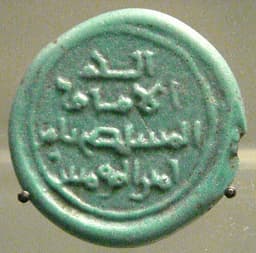
Al-Mustadi
Emperor · Medieval
41.9Total
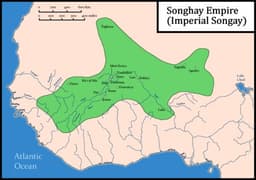
Askia Ismail
Emperor · Medieval
47.1Total
Basic Information
Born
1142
1500
Died
1180
1539
Era
Medieval
Medieval
Nationality
Abbasid Caliphate
Songhai Empire
Occupation
Emperor
Emperor
Civilization
Middle Eastern
Other
Score Comparison
Military (10%)
21.2
46.7
Political (20%)
35.1
39.4
Influence (20%)
50.2
48.6
Legacy (20%)
40.0
40.0
Leadership (15%)
55.3
65.7
Strategy (15%)
36.8
45.0
TOTAL
41.9
47.1
Al-Mustadi — Complete Timeline
1170 AD
Continued Assertion of Caliphal AuthorityPolitical Action◆ Major
Al-Mustadi continued his predecessor's policy of asserting caliphal authority over Baghdad and Iraq. He maintained the caliphal army and resisted Seljuk interference, preserving the gains made by Al-Muqtafi.
Caliphal PowerSeljuk RelationsContinuity
Impact: regionalconstructive
1175 AD
Diplomatic Relations with SaladinPolitical Action◆ Major
Al-Mustadi established diplomatic relations with Saladin, who had become sultan of Egypt. The caliph recognized Saladin's authority and received gifts, strengthening the caliphate's influence in the region.
DiplomacySaladinEgypt
Impact: regionalconstructive
1178 AD
Patronage of Sunni ScholarshipCultural
Al-Mustadi patronized Sunni scholars and built madrasas in Baghdad. This support strengthened Sunni orthodoxy and enhanced the caliphate's religious prestige.
PatronageSunni ScholarshipMadrasas
constructive
Askia Ismail — Complete Timeline
1528 AD
Accession as Askia of SonghaiPolitical Action◆ Major
Askia Ismail became ruler of the Songhai Empire following the deposition of his father, Askia Mohammed I. His reign was marked by efforts to restore stability after the internal conflicts that had arisen during his father's later years.
SuccessionSonghai Empire
Impact: national
1539 AD
Deposition of Askia IsmailPolitical Action◆ Major
Askia Ismail was deposed by his brother, Askia Ishaq I, after a reign of approximately 11 years. This event continued the pattern of dynastic instability within the Songhai Empire during the 16th century.
DepositionDynastic Conflict
Impact: nationaldestructive
This comparison has not been analyzed yet.
One-time AI generation (~1 minute). Scores and timeline are already available below.
Rankings
🥇
Askia IsmailLeader
Mil: 46.7Pol: 39.4Inf: 48.6
47.1
🥈
Al-Mustadi
Mil: 21.2Pol: 35.1Inf: 50.2
41.9
+5.2 behind
How This Comparison Works
Algorithm
Each figure is scored on 6 dimensions (0—100 scale) based on structured historical data: Military (10%), Political (20%), Influence (20%), Legacy (20%), Leadership (15%), Strategy (15%). The weighted total produces the final ranking.
Data Sources
Scores are computed from structured sub-indicators in the database. Scale factors adjust for era (Ancient ×0.85, Modern ×1.0) and civilization size (Eastern ×1.05, Other ×0.80) to account for differences in population and military scale.
Maximum 3 Figures
Comparisons are limited to 2—3 figures to ensure readability and statistical meaningfulness.
Error Margins
±5 points per dimension — Sub-scores are derived from historical records with inherent uncertainty. Two figures within 5 points on a dimension should be considered roughly equivalent in that area.
Total Score Accuracy
±3 points overall — The weighted combination of 6 dimensions produces a total score with approximately ±3 points of uncertainty. Differences of less than 3 points are not statistically significant— the figures are effectively tied.
Known Limitations
- Historical records are incomplete and uneven across civilizations
- Figures from oral-tradition societies may be underrepresented
- Occupation labels can misclassify multi-role figures
- Scores measure capability and impact, not moral character
- Quantitative scoring is a comparison tool, not absolute truth
Capability Radar
Military (10%) — Battles & Warfare
Battles
10
35
Win Rate
10
40
Expansion
10
20
Political (20%) — Governance & Reform
Reform
30
40
Diplomacy
30
35
Economy
30
30
Influence (20%) — Cultural & Global Reach
Cultural
20
20
Global
10
10
Legacy (20%) — Historical Impact
Historical
20
25
Longevity
20
15
Leadership (15%) — Power & Stability
Tenure
40
45
Stability
30
40
Strategy (15%) — Tactics & Innovation
Strategy
10
35
Tactics
10
30
Reform
10
25
Similar Comparisons
Comments & Discussion
No comments yet. Be the first to share your thoughts!