Loading...
Al-Mustadi vs Napoleon Bonaparte
Napoleon Bonaparte leads by 29.0 pts · 2 figures compared
…
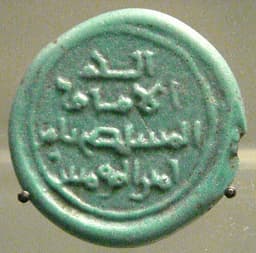
Al-Mustadi
Emperor · Medieval
41.9Total

Napoleon Bonaparte
General · Modern
70.9Total
Basic Information
Born
1142
1769
Died
1180
1821
Era
Medieval
Modern
Nationality
Abbasid Caliphate
France
Occupation
Emperor
General
Civilization
Middle Eastern
Western
Score Comparison
Military (10%)
21.2
94.0
Political (20%)
35.1
72.0
Influence (20%)
50.2
40.0
Legacy (20%)
40.0
80.0
Leadership (15%)
55.3
78.0
Strategy (15%)
36.8
90.0
TOTAL
41.9
70.9
Al-Mustadi — Complete Timeline
1170 AD
Continued Assertion of Caliphal AuthorityPolitical Action◆ Major
Al-Mustadi continued his predecessor's policy of asserting caliphal authority over Baghdad and Iraq. He maintained the caliphal army and resisted Seljuk interference, preserving the gains made by Al-Muqtafi.
Caliphal PowerSeljuk RelationsContinuity
Impact: regionalconstructive
1175 AD
Diplomatic Relations with SaladinPolitical Action◆ Major
Al-Mustadi established diplomatic relations with Saladin, who had become sultan of Egypt. The caliph recognized Saladin's authority and received gifts, strengthening the caliphate's influence in the region.
DiplomacySaladinEgypt
Impact: regionalconstructive
1178 AD
Patronage of Sunni ScholarshipCultural
Al-Mustadi patronized Sunni scholars and built madrasas in Baghdad. This support strengthened Sunni orthodoxy and enhanced the caliphate's religious prestige.
PatronageSunni ScholarshipMadrasas
constructive
Napoleon Bonaparte — Complete Timeline
1799 AD
Coup of 18 BrumaireOther◆ Major
Napoleon Bonaparte, with support from his brother Lucien and key political figures, overthrew the Directory in a bloodless coup. He established the Consulate with himself as First Consul, effectively becoming the ruler of France. This event ended the French Revolution's most unstable period.
French RevolutionCoupRise to Power
Impact: regional
1804 AD
Promulgation of the Napoleonic CodeOther◆ Major
Napoleon enacted the Civil Code of the French, known as the Napoleonic Code, a comprehensive set of laws that replaced the fragmented feudal legal systems. The code established legal equality, protected property rights, and secularized law. It became the basis for legal systems in many European and world countries.
Legal ReformNapoleonic CodeCivil Law
Impact: globalconstructive
1805 AD
Battle of AusterlitzWar◆ Major
Napoleon's Grande Arm
Napoleonic WarsBattleDecisive Victory
Impact: global
1812 AD
Invasion of RussiaWar◆ Major
Napoleon led the Grande Arm
Napoleonic WarsInvasionDisaster
Impact: globaldestructive
1815 AD
Battle of WaterlooWar◆ Major
Napoleon's French army was defeated by the combined forces of the Duke of Wellington's Anglo-Allied army and Gebhard Leberecht von Bl
Napoleonic WarsBattleFinal Defeat
Impact: globaldestructive
Expert Analysis
Origins
Al-Mustadi (born 1142) was the son of Caliph al-Mustanjid and belonged to the Abbasid dynasty, which had ruled the Islamic world since 750. He received a traditional education in Islamic law and governance, steeped in the caliphal court of Baghdad. His formative years were marked by the declining power of the Abbasids under Seljuk influence, and he was groomed to uphold the caliphate's religious authority.
Napoleon Bonaparte (born 1769 on Corsica) was the son of a minor noble, Carlo Bonaparte, and Letizia Ramolino. He studied at French military schools, graduating from the École Militaire in 1785. His early career was shaped by the French Revolution, which opened opportunities for talented officers. He distinguished himself at the Siege of Toulon (1793) and the Italian campaign (1796-1797), rising rapidly through the ranks.
Rise to Power
Al-Mustadi became caliph in 1170 after his father's death. His rise was not through military conquest but by inheritance and political maneuvering within the Abbasid court. He faced challenges from Seljuk sultans who sought to control the caliphate. Al-Mustadi asserted his authority by maintaining the caliphal army and resisting Seljuk influence, notably by supporting the governor of Azerbaijan against the Seljuks. He also established diplomatic relations with Saladin, recognizing his sultanate in Egypt and receiving gifts, which bolstered his religious prestige.
Napoleon rose to power through military brilliance and political acumen. After his Italian campaign, he returned to France a hero. In 1799, he participated in the Coup of 18 Brumaire, overthrowing the Directory and establishing the Consulate, with himself as First Consul. He consolidated power through constitutional reforms and military victories, crowned himself Emperor in 1804, and dominated Europe for a decade.
Leadership & Governance
Al-Mustadi's leadership focused on preserving the caliphate's religious role. He patronized Sunni scholars and built madrasas in Baghdad, strengthening Sunni orthodoxy against Shia and other influences. His governance was largely administrative, with limited military expansion. He maintained a caliphal army but did not launch major conquests. His political score of 43.0 reflects his constrained authority under Seljuk dominance.
Napoleon's leadership was transformative. He centralized the French state, reformed law with the Napoleonic Code (1804), which standardized civil law across Europe. He created the Bank of France, stabilized the currency, and reformed education. His governance was autocratic but efficient, with a merit-based bureaucracy. His military score of 94.0 and strategy score of 93.0 highlight his tactical genius, exemplified at Austerlitz (1805).
Triumph & Tragedy
Al-Mustadi's greatest success was preserving the Abbasid caliphate's religious authority during a period of political decline. He successfully asserted caliphal rights against the Seljuks and maintained diplomatic ties with Saladin, enhancing the caliphate's prestige. His patronage of Sunni scholarship strengthened the intellectual foundations of Sunni Islam. However, his failures include an inability to reverse the caliphate's political decline; after his death, the Abbasids became increasingly figureheads under later Seljuk and Ayyubid control.
Napoleon's triumphs are legendary: he conquered most of Europe, created the Grande Armée, and spread revolutionary ideals. His Napoleonic Code influenced legal systems worldwide. However, his hubris led to the disastrous Invasion of Russia (1812), where the Grande Armée was decimated. He was defeated at Waterloo (1815) and exiled to Saint Helena, where he died in 1821. His political score of 75.0 reflects both his achievements and eventual failure.
Character & Destiny
Al-Mustadi was cautious and pious, focused on religious legitimacy rather than military expansion. His character suited a defensive posture, preserving what remained of Abbasid power. But his lack of aggressive ambition meant he did not restore the caliphate's political might. Historians view him as a capable administrator but not a transformative leader.
Napoleon was ambitious, brilliant, and ruthless. His strategic genius was matched by his ability to inspire loyalty. However, his overconfidence led to overreach. His character shaped his destiny: he rose through talent and ambition, but his inability to compromise or accept limits led to his downfall. Modern assessments give him a leadership score of 80.0 and influence of 82.0.
Legacy
Al-Mustadi's legacy is tied to the Abbasid caliphate's religious role. His support for Sunni scholarship contributed to the development of Islamic law and education. However, his political influence was limited; the caliphate continued to decline after his reign. His total score of 47.6 reflects this modest impact.
Napoleon's legacy is immense. He reshaped Europe's political map, spread nationalism, and influenced modern warfare. The Napoleonic Code remains a foundation of civil law in many countries. His total score of 82.4 underscores his profound and lasting impact.
Conclusion
Napoleon Bonaparte had a far greater impact than Al-Mustadi. While Al-Mustadi preserved a religious institution, Napoleon transformed the political, legal, and military landscape of Europe and beyond. The score gap of 34.8 points reflects this disparity. Napoleon's innovations in governance, law, and warfare endure, whereas Al-Mustadi's influence was confined to a declining caliphate. Therefore, Napoleon is the more consequential figure.
Rankings
🥇
Napoleon BonaparteLeader
Mil: 94.0Pol: 72.0Inf: 40.0
70.9
🥈
Al-Mustadi
Mil: 21.2Pol: 35.1Inf: 50.2
41.9
+29.0 behind
How This Comparison Works
Algorithm
Each figure is scored on 6 dimensions (0—100 scale) based on structured historical data: Military (10%), Political (20%), Influence (20%), Legacy (20%), Leadership (15%), Strategy (15%). The weighted total produces the final ranking.
Data Sources
Scores are computed from structured sub-indicators in the database. Scale factors adjust for era (Ancient ×0.85, Modern ×1.0) and civilization size (Eastern ×1.05, Other ×0.80) to account for differences in population and military scale.
Maximum 3 Figures
Comparisons are limited to 2—3 figures to ensure readability and statistical meaningfulness.
Error Margins
±5 points per dimension — Sub-scores are derived from historical records with inherent uncertainty. Two figures within 5 points on a dimension should be considered roughly equivalent in that area.
Total Score Accuracy
±3 points overall — The weighted combination of 6 dimensions produces a total score with approximately ±3 points of uncertainty. Differences of less than 3 points are not statistically significant— the figures are effectively tied.
Known Limitations
- Historical records are incomplete and uneven across civilizations
- Figures from oral-tradition societies may be underrepresented
- Occupation labels can misclassify multi-role figures
- Scores measure capability and impact, not moral character
- Quantitative scoring is a comparison tool, not absolute truth
Capability Radar
Military (10%) — Battles & Warfare
Battles
10
95
Win Rate
10
90
Expansion
10
95
Political (20%) — Governance & Reform
Reform
30
95
Diplomacy
30
80
Economy
30
85
Influence (20%) — Cultural & Global Reach
Cultural
20
85
Global
10
90
Legacy (20%) — Historical Impact
Historical
20
95
Longevity
20
90
Leadership (15%) — Power & Stability
Tenure
40
85
Stability
30
70
Strategy (15%) — Tactics & Innovation
Strategy
10
95
Tactics
10
98
Reform
10
92
Similar Comparisons
Comments & Discussion
No comments yet. Be the first to share your thoughts!