Loading...
Al-Mustadi vs Julius Caesar
Julius Caesar leads by 40.9 pts · 2 figures compared
…
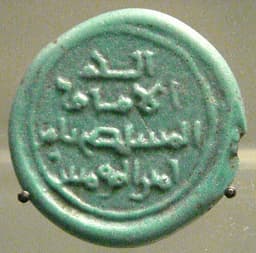
Al-Mustadi
Emperor · Medieval
41.9Total

Julius Caesar
General · Ancient
82.8Total
Basic Information
Born
1142
-100
Died
1180
-44
Era
Medieval
Ancient
Nationality
Abbasid Caliphate
Roman Republic
Occupation
Emperor
General
Civilization
Middle Eastern
Western
Score Comparison
Military (10%)
21.2
88.0
Political (20%)
35.1
78.0
Influence (20%)
50.2
85.0
Legacy (20%)
40.0
82.0
Leadership (15%)
55.3
80.0
Strategy (15%)
36.8
85.0
TOTAL
41.9
82.8
Al-Mustadi — Complete Timeline
1170 AD
Continued Assertion of Caliphal AuthorityPolitical Action◆ Major
Al-Mustadi continued his predecessor's policy of asserting caliphal authority over Baghdad and Iraq. He maintained the caliphal army and resisted Seljuk interference, preserving the gains made by Al-Muqtafi.
Caliphal PowerSeljuk RelationsContinuity
Impact: regionalconstructive
1175 AD
Diplomatic Relations with SaladinPolitical Action◆ Major
Al-Mustadi established diplomatic relations with Saladin, who had become sultan of Egypt. The caliph recognized Saladin's authority and received gifts, strengthening the caliphate's influence in the region.
DiplomacySaladinEgypt
Impact: regionalconstructive
1178 AD
Patronage of Sunni ScholarshipCultural
Al-Mustadi patronized Sunni scholars and built madrasas in Baghdad. This support strengthened Sunni orthodoxy and enhanced the caliphate's religious prestige.
PatronageSunni ScholarshipMadrasas
constructive
Julius Caesar — Complete Timeline
58 BC
Gallic WarsWar◆ Major
Caesar, as proconsul of Gaul, launched a series of campaigns that conquered all of Gaul (modern France, Belgium, and parts of Switzerland). He fought numerous battles, including against the Helvetii, the Belgae, and the Gallic chieftain Vercingetorix. The wars brought immense wealth and a loyal army to Caesar.
Gallic WarsConquestRoman Expansion
Impact: regional
49 BC
Crossing the RubiconPolitical Action◆ Major
Caesar led Legio XIII across the Rubicon River into Italy, defying the Roman Senate's order to disband his army. This act triggered a civil war against Pompey and the Optimates, ultimately leading to Caesar's dictatorship and the end of the Roman Republic.
Roman Civil WarEnd of RepublicPower Struggle
Impact: global
48 BC
Battle of PharsalusWar◆ Major
Caesar's outnumbered army defeated the larger forces of Pompey the Great at Pharsalus in Greece. Caesar's tactical use of a reserve line to counter Pompey's cavalry charge proved decisive. Pompey fled to Egypt, where he was assassinated, leaving Caesar as the undisputed master of the Roman world.
Roman Civil WarBattleDecisive Victory
Impact: regional
44 BC
Appointment as Dictator for LifePolitical Action◆ Major
The Roman Senate appointed Caesar dictator perpetuo (dictator for life), granting him unprecedented personal power. This move concentrated military, legislative, and judicial authority in one person, effectively ending the Roman Republic's traditional system of checks and balances and alarming many senators.
DictatorshipEnd of RepublicPower Consolidation
Impact: regionaldestructive
Assassination on the Ides of MarchPolitical Action◆ Major
A group of Roman senators, led by Marcus Junius Brutus and Gaius Cassius Longinus, stabbed Caesar to death at a meeting of the Senate in the Theatre of Pompey. The assassination was intended to restore the Republic, but instead triggered another civil war that led to the rise of the Roman Empire.
AssassinationRoman PoliticsEnd of Republic
Impact: globaldestructive
Expert Analysis
al-mustadi-vs-julius-caesar
# The Ides of March and the Echo of a Silent Caliph
On a cold morning in March of 44 BCE, Julius Caesar walked into the Senate chamber in Rome, ignoring the warnings of a seer who had told him to "beware the Ides of March." Within minutes, sixty senators had surrounded him, drawing daggers from their togas. He fell, bleeding from twenty-three wounds, at the foot of a statue of his rival Pompey. More than twelve centuries later, in the year 1180, another ruler died in Baghdad—not by assassination, but in his bed, after a decade of quiet rule. Al-Mustadi, the thirty-third caliph of the Abbasid dynasty, left behind no dramatic final words, no conspiracy, no empire stretching across continents. Yet both men ruled civilizations that defined their ages. Why did one become a legend and the other a footnote? The answer lies not in the size of their realms, but in the nature of their ambition.
Origins
Julius Caesar was born into a patrician family that had fallen on hard times. Rome in the first century BCE was a republic tearing itself apart—a city of marble temples and bloody street fights, of senatorial debates and slave revolts. Caesar’s uncle by marriage, Gaius Marius, had been a populist general who reformed the army and challenged the aristocracy. From boyhood, Caesar absorbed the lesson that power came not from birth alone, but from the loyalty of soldiers and the love of the people. He was captured by pirates as a young man, laughed at their ransom demand, and later crucified them. This was a man who understood that life was a contest, and he intended to win.
Al-Mustadi was born in 1142 into a very different world. The Abbasid Caliphate, once the center of a vast empire stretching from Spain to India, had been shattered by centuries of war, rebellion, and the rise of rival caliphates. By his time, the caliphs ruled little more than Baghdad and its surrounding region. Real power in the Islamic world lay with the Seljuk Turks, the Fatimids in Egypt, and the crusader states carved out by European knights. Al-Mustadi inherited a throne that was more symbolic than sovereign. He was not a conqueror waiting to be born; he was a caretaker of a fading institution.
Rise to Power
Caesar’s path to power was a masterclass in calculated risk. He climbed the Roman political ladder—quaestor, aedile, praetor—but his true breakthrough came when he secured command of Gaul in 58 BCE. Over the next eight years, he conquered a territory the size of modern France, wrote commentaries that are still read today, and built an army that loved him more than it loved the Republic. When the Senate ordered him to disband his legions and return to Rome as a private citizen, he made his choice: he crossed the Rubicon River with a single legion, sparking a civil war. “The die is cast,” he said. By 45 BCE, he was dictator of Rome.
Al-Mustadi’s rise was quieter. He became caliph in 1170, following the death of his predecessor, al-Mustanjid. There was no crossing of rivers, no dramatic defiance of authority. Instead, he continued his predecessor’s policy of slowly reasserting caliphal authority over Baghdad and Iraq, a cautious campaign of building alliances and patronizing scholars. In 1175, he established diplomatic relations with Saladin, the rising Kurdish general who had just become sultan of Egypt. The caliph recognized Saladin’s authority, and in return, Saladin acknowledged the caliph’s spiritual primacy. It was a bargain, not a conquest.
Leadership & Governance
As a leader, Caesar was relentless and revolutionary. He doubled the size of the Senate, packed it with his supporters, and reformed the calendar into the system we still use today. He granted citizenship to people in the provinces, started public works projects to employ the poor, and planned campaigns against Parthia and Germania. His military genius was undeniable: at the Battle of Alesia in 52 BCE, he besieged a Gallic stronghold while simultaneously fighting off a massive relief army, winning through sheer tactical audacity. But his rule was also autocratic. He accepted the title “dictator for life,” minted coins with his own image, and began to treat the Senate as a rubber stamp.
Al-Mustadi governed in a minor key. His primary achievement was patronage of Sunni scholarship: he built madrasas in Baghdad and supported orthodox Sunni theologians, strengthening the religious legitimacy of his office. His diplomatic recognition of Saladin was shrewd—it allowed the caliphate to claim credit for Saladin’s later victories against the crusaders, without having to fight a single battle. But his military score of 58.9 and strategy score of 30.0 reflect a ruler who commanded no armies, won no wars, and expanded no borders. He was a guardian, not a general.
Triumph & Tragedy
Caesar’s greatest triumph was his conquest of Gaul, which added a vast, wealthy province to the Roman world and made him the most powerful man in the Republic. His greatest tragedy was his assassination—a brutal end orchestrated by men he had pardoned and promoted, including his close friend Brutus. When Caesar saw Brutus among the assassins, he reportedly said, “You too, my child?” and gave up resisting. His death plunged Rome into another round of civil wars that ultimately destroyed the Republic he had tried to reshape.
Al-Mustadi’s triumph was subtler: he kept the caliphate alive during a dangerous era, maintaining its spiritual authority while Saladin and other warlords fought over the physical territory. His tragedy was that he was the father of al-Nasir, the last powerful Abbasid caliph—but he did not live to see his son’s reign. He died in 1180, leaving a legacy that was overshadowed by what came before and after. There were no daggers, no dramatic last words. Just a quiet death in a palace that had once ruled the world.
Character & Destiny
Caesar was driven by an insatiable hunger for glory. He once said, “It is better to be first in a little village than second in Rome.” His personality—charming, ruthless, brilliant, and reckless—shaped every decision. He pardoned his enemies because he believed they would be grateful; they murdered him instead. He centralized power because he thought only he could save Rome; his actions ensured its destruction. His destiny was to be the bridge between republic and empire, and that bridge was built with his own blood.
Al-Mustadi’s character was defined by caution and piety. He did not seek to reclaim the lost provinces of the caliphate or challenge the Seljuk sultans. He accepted the limits of his power and worked within them. His destiny was to be a steward, not a founder. He preserved what he could, knowing that the age of caliphal conquests was long past. In a world of Saladin’s swords and crusader shields, he chose the scholar’s pen.
Legacy
Caesar’s legacy is immeasurable. His name became a title—Kaiser, Tsar—and his writings shaped Western literature. The Roman Empire that followed him lasted another five centuries in the West and a thousand more in the East. He is remembered as a genius, a tyrant, a martyr, and a warning. Every schoolchild knows his death; every politician studies his rise.
Al-Mustadi is remembered, if at all, as a minor figure in the long twilight of the Abbasid Caliphate. His legacy score of 50.3 reflects a ruler who did not change history, but kept it from changing too fast. He built schools, not empires. He made peace, not war. In the grand narrative of civilization, he is a footnote—but footnotes matter. They are the quiet foundations on which louder stories are built.
Conclusion
Standing at the foot of Caesar’s statue, one feels the weight of ambition and tragedy. Standing in the quiet halls of al-Mustadi’s Baghdad, one feels the weight of time itself. Both men faced the same fundamental question: what does it mean to rule when the world is changing? Caesar answered by trying to remake the world in his image, and was destroyed by the forces he unleashed. Al-Mustadi answered by accepting the world as it was, and preserved what little he could. One became a legend; the other became a name in a chronicle. Perhaps the difference is not in their deeds, but in our need for stories of glory—and our forgetting of stories of endurance.
Rankings
🥇
Julius CaesarLeader
Mil: 88.0Pol: 78.0Inf: 85.0
82.8
🥈
Al-Mustadi
Mil: 21.2Pol: 35.1Inf: 50.2
41.9
+40.9 behind
How This Comparison Works
Algorithm
Each figure is scored on 6 dimensions (0—100 scale) based on structured historical data: Military (10%), Political (20%), Influence (20%), Legacy (20%), Leadership (15%), Strategy (15%). The weighted total produces the final ranking.
Data Sources
Scores are computed from structured sub-indicators in the database. Scale factors adjust for era (Ancient ×0.85, Modern ×1.0) and civilization size (Eastern ×1.05, Other ×0.80) to account for differences in population and military scale.
Maximum 3 Figures
Comparisons are limited to 2—3 figures to ensure readability and statistical meaningfulness.
Error Margins
±5 points per dimension — Sub-scores are derived from historical records with inherent uncertainty. Two figures within 5 points on a dimension should be considered roughly equivalent in that area.
Total Score Accuracy
±3 points overall — The weighted combination of 6 dimensions produces a total score with approximately ±3 points of uncertainty. Differences of less than 3 points are not statistically significant— the figures are effectively tied.
Known Limitations
- Historical records are incomplete and uneven across civilizations
- Figures from oral-tradition societies may be underrepresented
- Occupation labels can misclassify multi-role figures
- Scores measure capability and impact, not moral character
- Quantitative scoring is a comparison tool, not absolute truth
Capability Radar
Military (10%) — Battles & Warfare
Battles
10
95
Win Rate
10
92
Expansion
10
97
Political (20%) — Governance & Reform
Reform
30
90
Diplomacy
30
85
Economy
30
82
Influence (20%) — Cultural & Global Reach
Cultural
20
88
Global
10
94
Legacy (20%) — Historical Impact
Historical
20
95
Longevity
20
96
Leadership (15%) — Power & Stability
Tenure
40
75
Stability
30
60
Strategy (15%) — Tactics & Innovation
Strategy
10
94
Tactics
10
96
Reform
10
88
Similar Comparisons
Comments & Discussion
CRASSUS’ GHOST6/17/2026
Caesar’s death is iconic precisely because it’s a morality play about overreach. Al-Mustadi died quietly because he never dared to break the system. Caesar didn’t just rule—he *changed* Rome. He crossed the Rubicon, defied the Senate, and made himself dictator. The 23 stab wounds are the price of ambition. Al-Mustadi was a placeholder caliph; his reign is forgotten because it was safe. History doesn’t reward stewards.
紫微散人6/17/2026
把一位和平死去的哈里发跟遇刺的凯撒比,根本是拿陶罐碰青铜器。1180年的巴格达早已不是征服者的舞台,阿拔斯王朝核心是宗教权威而非军团。穆斯塔迪尔活着时维持了10年稳定,没搞清算也没建丰碑,这才是伊斯兰文明成熟期的常态——凯撒的戏剧性是帝国青春期特有的躁动。拿暗杀当传奇标准?浅薄。
DATA NERD6/17/2026
I see two rulers with vastly different power metrics. Caesar’s Rome had a GDP perhaps 3-5x larger than Abbasid Iraq, and controlled territory from Britain to Egypt. Al-Mustadi oversaw a shrinking, theocratic rump state. But here’s what bugs me: the “legend vs footnote” framing is a media bias, not a historical truth. If we ranked by administrative efficiency or religious influence, Al-Mustadi’s quiet reign might score higher. Caesar’s story got better PR because Roman historians were better prop
苏莱曼之镜6/17/2026
说凯撒是传奇、穆斯塔迪尔是脚注,这是用罗马英雄史观硬套伊斯兰政治逻辑。穆斯塔迪尔统治时,巴格达虽然政治衰落,但哈里发仍是逊尼派世界的精神核心。他从塞尔柱人手里夺回部分世俗权力,死后还留下了一套让纳赛尔维续的教权体系——这种柔软的传承,比匕首和鲜血更贴近东方治理的智慧。非要论英雄,凯撒是罗马的凶兆,穆斯塔迪尔是阿拔斯的余晖。