Loading...
This comparison has not been analyzed yet.
One-time AI generation (~1 minute). Scores and timeline are already available below.
Al-Muqtafi vs Dermot MacMurrough
Al-Muqtafi leads by 5.2 pts · 2 figures compared
…
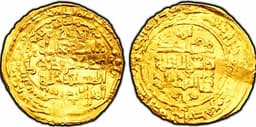
Al-Muqtafi
Emperor · Medieval
50.6Total

Dermot MacMurrough
Emperor · Medieval
45.4Total
Basic Information
Born
1096
1110
Died
1160
1171
Era
Medieval
Medieval
Nationality
Abbasid Caliphate
Ireland
Occupation
Emperor
Emperor
Civilization
Middle Eastern
Western
Score Comparison
Military (10%)
55.0
50.0
Political (20%)
68.0
29.3
Influence (20%)
52.5
53.3
Legacy (20%)
45.8
50.0
Leadership (15%)
40.0
41.5
Strategy (15%)
43.3
39.6
TOTAL
50.6
45.4
Al-Muqtafi — Complete Timeline
1136 AD
Reassertion of Caliphal AuthorityPolitical Action
Upon becoming caliph, Al-Muqtafi began to reassert caliphal authority over Baghdad. He expelled Seljuk officials from the city and appointed his own viziers, marking a reversal of decades of Seljuk domination.
IndependenceSeljuk DeclineBaghdad
Impact: regionalconstructive
1140 AD
Reform of the ArmyReform◆ Major
Al-Muqtafi reformed the caliphal army by recruiting new troops and reducing reliance on Seljuk mercenaries. He established a standing army loyal to the caliph, which enabled his military successes.
Military ReformArmyCaliphal Power
Impact: regionalconstructive
1146 AD
Defense of Baghdad Against SeljuksWar◆ Major
Al-Muqtafi successfully defended Baghdad against a Seljuk siege led by Sultan Mas'ud. The caliph's forces repelled the attack, solidifying his control over the city and demonstrating the caliphate's renewed military capability.
SiegeMilitary VictorySeljuk-Abbasid War
Impact: regionalconstructive
1150 AD
Expansion of Caliphal TerritoryWar◆ Major
Al-Muqtafi expanded caliphal territory by conquering several towns in Iraq, including Wasit and Kufa. These conquests restored the caliphate's territorial base and increased its revenue and prestige.
Territorial ExpansionMilitary CampaignIraq
Impact: regionalconstructive
Dermot MacMurrough — Complete Timeline
1167 AD
Invited Norman mercenaries to IrelandPolitical Action
Dermot MacMurrough, deposed King of Leinster, traveled to Wales and England to recruit Norman mercenaries to help him regain his kingdom. He secured the support of Richard de Clare (Strongbow) and other Cambro-Norman knights, offering them land and marriage alliances.
Norman invasionMercenariesLeinster
Impact: regionaldestructive
1169 AD
Norman landing at Bannow Bay, County WexfordWar
The first Norman forces landed at Bannow Bay in County Wexford, led by Robert Fitz-Stephen. They quickly captured the towns of Wexford and Waterford, establishing a foothold in Ireland that would lead to centuries of English rule.
Norman invasionLandingWexford
Impact: regionaldestructive
1170 AD
Marriage of his daughter Aoife to Richard de Clare (Strongbow)Political Action◆ Major
To secure Norman support, Dermot arranged the marriage of his daughter Aoife to Richard de Clare, Earl of Pembroke (Strongbow). This marriage gave Strongbow a claim to the Kingdom of Leinster, deepening Norman involvement in Irish affairs.
Marriage allianceStrongbowLeinster
Impact: regional
This comparison has not been analyzed yet.
One-time AI generation (~1 minute). Scores and timeline are already available below.
Rankings
🥇
Al-MuqtafiLeader
Mil: 55.0Pol: 68.0Inf: 52.5
50.6
🥈
Dermot MacMurrough
Mil: 50.0Pol: 29.3Inf: 53.3
45.4
+5.2 behind
How This Comparison Works
Algorithm
Each figure is scored on 6 dimensions (0—100 scale) based on structured historical data: Military (10%), Political (20%), Influence (20%), Legacy (20%), Leadership (15%), Strategy (15%). The weighted total produces the final ranking.
Data Sources
Scores are computed from structured sub-indicators in the database. Scale factors adjust for era (Ancient ×0.85, Modern ×1.0) and civilization size (Eastern ×1.05, Other ×0.80) to account for differences in population and military scale.
Maximum 3 Figures
Comparisons are limited to 2—3 figures to ensure readability and statistical meaningfulness.
Error Margins
±5 points per dimension — Sub-scores are derived from historical records with inherent uncertainty. Two figures within 5 points on a dimension should be considered roughly equivalent in that area.
Total Score Accuracy
±3 points overall — The weighted combination of 6 dimensions produces a total score with approximately ±3 points of uncertainty. Differences of less than 3 points are not statistically significant— the figures are effectively tied.
Known Limitations
- Historical records are incomplete and uneven across civilizations
- Figures from oral-tradition societies may be underrepresented
- Occupation labels can misclassify multi-role figures
- Scores measure capability and impact, not moral character
- Quantitative scoring is a comparison tool, not absolute truth
Capability Radar
Military (10%) — Battles & Warfare
Battles
30
20
Win Rate
35
15
Expansion
25
25
Political (20%) — Governance & Reform
Reform
55
10
Diplomacy
50
45
Economy
45
15
Influence (20%) — Cultural & Global Reach
Cultural
30
20
Global
25
40
Legacy (20%) — Historical Impact
Historical
40
55
Longevity
35
50
Leadership (15%) — Power & Stability
Tenure
60
40
Stability
55
10
Strategy (15%) — Tactics & Innovation
Strategy
35
10
Tactics
30
10
Reform
40
5
Similar Comparisons
Comments & Discussion
No comments yet. Be the first to share your thoughts!