Loading...
Al-Mahdi vs Emperor Kammu
Emperor Kammu leads by 10.4 pts · 2 figures compared
…
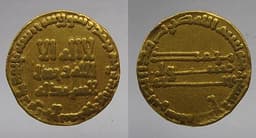
Al-Mahdi
Emperor · Medieval
54.5Total
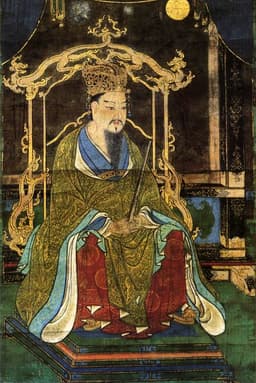
Emperor Kammu
Emperor · Medieval
64.9Total
Basic Information
Born
744
737
Died
785
806
Era
Medieval
Medieval
Nationality
Abbasid Caliphate
Japan
Occupation
Emperor
Emperor
Civilization
Middle Eastern
Eastern
Score Comparison
Military (10%)
52.5
21.2
Political (20%)
68.0
72.0
Influence (20%)
59.0
82.0
Legacy (20%)
50.0
68.0
Leadership (15%)
40.0
72.0
Strategy (15%)
57.5
36.8
TOTAL
54.5
64.9
Al-Mahdi — Complete Timeline
762 AD
Construction of Baghdad's Round CityCultural◆ Major
Al-Mahdi oversaw the completion of the Round City of Baghdad, the new Abbasid capital founded by his father al-Mansur. This city became a center of trade, learning, and culture, symbolizing Abbasid power.
Urban DevelopmentCapital City
Impact: globalconstructive
775 AD
Campaign against the ByzantinesWar◆ Major
Al-Mahdi led military campaigns against the Byzantine Empire, including a major expedition in 775 that reached as far as the outskirts of Constantinople. These campaigns were part of the ongoing Arab-Byzantine wars and resulted in territorial gains for the Abbasids.
Arab-Byzantine WarsMilitary Campaign
Impact: regional
779 AD
Suppression of the Kharijite RevoltWar
Al-Mahdi dispatched forces to suppress a Kharijite rebellion in the Jazira region. The revolt was crushed, and its leaders were executed, reinforcing Abbasid control over the region.
Kharijite RevoltInternal Conflict
Impact: regionaldestructive
780 AD
Patronage of the Translation MovementCultural◆ Major
Al-Mahdi supported the translation of Greek, Persian, and Indian scientific and philosophical texts into Arabic. This patronage contributed to the Abbasid Golden Age and the preservation of classical knowledge.
Translation MovementGolden Age
Impact: globalprogressive
Emperor Kammu — Complete Timeline
789 AD
Campaign against the EmishiWar◆ Major
Kammu launched a major military campaign to subdue the Emishi people in northern Honshu. The campaign was initially unsuccessful, with a defeat at the Battle of Koromo River, but later efforts under Sakanoue no Tamuramaro achieved victory.
Military CampaignEmishiExpansion
Impact: national
794 AD
Moved the capital to Heian-kyoPolitical Action
Emperor Kammu moved the imperial capital from Nara to Heian-kyo (modern Kyoto). This relocation was intended to escape the influence of powerful Buddhist monasteries in Nara and marked the beginning of the Heian period.
Capital MoveHeian PeriodJapan
Impact: nationalconstructive
800 AD
Patronage of Buddhist templesCultural
Kammu commissioned the construction of several Buddhist temples in Heian-kyo, including To-ji and Sai-ji. These temples were intended to protect the new capital and promote Buddhism as a state religion.
BuddhismArchitectureReligion
Impact: nationalconstructive
Expert Analysis
Origins
Al-Mahdi, born in 744 or 745 CE as Muhammad ibn Abdallah al-Mansur, was the third Abbasid caliph. His father, al-Mansur, founded Baghdad and established the caliphate's power. Al-Mahdi was raised in the court, receiving education in Islamic sciences and governance. His mother, Arwa bint Mansur al-Himyari, was a Yemeni noblewoman.
Emperor Kammu, born in 737 CE as Yamabe, was the 50th emperor of Japan. He was the son of Emperor Konin and a concubine, Takano no Niigasa, of Baekje descent. His early life was shaped by the powerful Buddhist clergy in Nara, which influenced his later decision to move the capital.
Rise to Power
Al-Mahdi became caliph in 775 CE after his father's death. His succession was smooth, as al-Mansur had designated him heir. One of his first acts was to release political prisoners and distribute gifts to secure loyalty.
Emperor Kammu ascended the throne in 781 CE after his father's abdication. He faced opposition from Buddhist monasteries and powerful aristocratic families. To consolidate power, he moved the capital from Nara to Heian-kyo (modern Kyoto) in 794 CE, escaping Buddhist influence and establishing a new political center.
Leadership & Governance
Al-Mahdi's governance focused on centralizing the caliphate and promoting culture. He completed the Round City of Baghdad, which became a hub for trade and learning. He patronized the Translation Movement, sponsoring the translation of Greek, Persian, and Indian texts into Arabic, boosting intellectual life. However, his military leadership scored 52.5, reflecting limited success against the Byzantines.
Emperor Kammu's political score of 72.0 reflects his effective governance. He moved the capital to Heian-kyo, reducing Buddhist influence and strengthening imperial authority. He also launched campaigns against the Emishi (northern tribes), but his military score of 21.2 indicates poor outcomes, including a major defeat in 789 CE. He did not rely on military strength but on administrative reforms.
Triumph & Tragedy
Al-Mahdi's triumph was the cultural flourishing of Baghdad. The Translation Movement laid groundwork for the Islamic Golden Age. His tragedy was the failure to decisively defeat the Byzantines; his 775 campaign reached near Constantinople but failed to capture it. He also faced Kharijite revolts, which he suppressed brutally.
Emperor Kammu's triumph was the successful relocation of the capital, which lasted over a millennium. He also commissioned Buddhist temples like To-ji and Sai-ji to protect the city. His tragedy was the disastrous Emishi campaign; his general Otomo no Yakamochi was defeated, leading to loss of life and resources.
Character & Destiny
Al-Mahdi was known for generosity and piety, but also for harshness toward rebels. His support for translation shows intellectual curiosity. However, his military decisions were cautious, avoiding large-scale wars. His rule ended in 785 CE, possibly poisoned by a concubine.
Emperor Kammu was determined and pragmatic, as shown by the capital move. He was willing to break with tradition to achieve goals. His low military score reflects poor strategic decisions, but his political acumen secured his legacy. He died in 806 CE after a 25-year reign.
Legacy
Al-Mahdi's legacy is tied to Baghdad's growth and the Translation Movement, influencing Islamic science and philosophy. His total score of 54.5 is lower than Kammu's 64.9. However, his impact on global knowledge transfer is significant.
Emperor Kammu's legacy is the Heian period, a golden age of Japanese culture. The capital move shaped Japan's history. His influence score of 82.0 reflects this enduring impact.
Conclusion
Emperor Kammu had greater overall impact, with a total score of 64.9 vs Al-Mahdi's 54.5. Kammu's political influence (72.0) and legacy (68.0) surpass Al-Mahdi's 68.0 and 50.0 respectively. While Al-Mahdi's cultural contributions are notable, Kammu's capital move had lasting structural effects on Japan. The data supports Kammu as more effective in leadership and long-term influence.
Rankings
🥇
Emperor KammuLeader
Mil: 21.2Pol: 72.0Inf: 82.0
64.9
🥈
Al-Mahdi
Mil: 52.5Pol: 68.0Inf: 59.0
54.5
+10.4 behind
How This Comparison Works
Algorithm
Each figure is scored on 6 dimensions (0—100 scale) based on structured historical data: Military (10%), Political (20%), Influence (20%), Legacy (20%), Leadership (15%), Strategy (15%). The weighted total produces the final ranking.
Data Sources
Scores are computed from structured sub-indicators in the database. Scale factors adjust for era (Ancient ×0.85, Modern ×1.0) and civilization size (Eastern ×1.05, Other ×0.80) to account for differences in population and military scale.
Maximum 3 Figures
Comparisons are limited to 2—3 figures to ensure readability and statistical meaningfulness.
Error Margins
±5 points per dimension — Sub-scores are derived from historical records with inherent uncertainty. Two figures within 5 points on a dimension should be considered roughly equivalent in that area.
Total Score Accuracy
±3 points overall — The weighted combination of 6 dimensions produces a total score with approximately ±3 points of uncertainty. Differences of less than 3 points are not statistically significant— the figures are effectively tied.
Known Limitations
- Historical records are incomplete and uneven across civilizations
- Figures from oral-tradition societies may be underrepresented
- Occupation labels can misclassify multi-role figures
- Scores measure capability and impact, not moral character
- Quantitative scoring is a comparison tool, not absolute truth
Capability Radar
Military (10%) — Battles & Warfare
Battles
55
10
Win Rate
60
10
Expansion
50
10
Political (20%) — Governance & Reform
Reform
55
75
Diplomacy
60
60
Economy
65
65
Influence (20%) — Cultural & Global Reach
Cultural
50
70
Global
45
60
Legacy (20%) — Historical Impact
Historical
55
75
Longevity
50
75
Leadership (15%) — Power & Stability
Tenure
60
70
Stability
55
60
Strategy (15%) — Tactics & Innovation
Strategy
55
10
Tactics
50
10
Reform
40
10
Similar Comparisons
Comments & Discussion
No comments yet. Be the first to share your thoughts!