Loading...
Al-Mahdi vs Julius Caesar
Julius Caesar leads by 28.3 pts · 2 figures compared
…
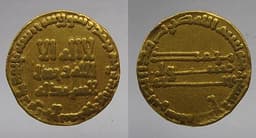
Al-Mahdi
Emperor · Medieval
54.5Total

Julius Caesar
General · Ancient
82.8Total
Basic Information
Born
744
-100
Died
785
-44
Era
Medieval
Ancient
Nationality
Abbasid Caliphate
Roman Republic
Occupation
Emperor
General
Civilization
Middle Eastern
Western
Score Comparison
Military (10%)
52.5
88.0
Political (20%)
68.0
78.0
Influence (20%)
59.0
85.0
Legacy (20%)
50.0
82.0
Leadership (15%)
40.0
80.0
Strategy (15%)
57.5
85.0
TOTAL
54.5
82.8
Al-Mahdi — Complete Timeline
762 AD
Construction of Baghdad's Round CityCultural◆ Major
Al-Mahdi oversaw the completion of the Round City of Baghdad, the new Abbasid capital founded by his father al-Mansur. This city became a center of trade, learning, and culture, symbolizing Abbasid power.
Urban DevelopmentCapital City
Impact: globalconstructive
775 AD
Campaign against the ByzantinesWar◆ Major
Al-Mahdi led military campaigns against the Byzantine Empire, including a major expedition in 775 that reached as far as the outskirts of Constantinople. These campaigns were part of the ongoing Arab-Byzantine wars and resulted in territorial gains for the Abbasids.
Arab-Byzantine WarsMilitary Campaign
Impact: regional
779 AD
Suppression of the Kharijite RevoltWar
Al-Mahdi dispatched forces to suppress a Kharijite rebellion in the Jazira region. The revolt was crushed, and its leaders were executed, reinforcing Abbasid control over the region.
Kharijite RevoltInternal Conflict
Impact: regionaldestructive
780 AD
Patronage of the Translation MovementCultural◆ Major
Al-Mahdi supported the translation of Greek, Persian, and Indian scientific and philosophical texts into Arabic. This patronage contributed to the Abbasid Golden Age and the preservation of classical knowledge.
Translation MovementGolden Age
Impact: globalprogressive
Julius Caesar — Complete Timeline
58 BC
Gallic WarsWar◆ Major
Caesar, as proconsul of Gaul, launched a series of campaigns that conquered all of Gaul (modern France, Belgium, and parts of Switzerland). He fought numerous battles, including against the Helvetii, the Belgae, and the Gallic chieftain Vercingetorix. The wars brought immense wealth and a loyal army to Caesar.
Gallic WarsConquestRoman Expansion
Impact: regional
49 BC
Crossing the RubiconPolitical Action◆ Major
Caesar led Legio XIII across the Rubicon River into Italy, defying the Roman Senate's order to disband his army. This act triggered a civil war against Pompey and the Optimates, ultimately leading to Caesar's dictatorship and the end of the Roman Republic.
Roman Civil WarEnd of RepublicPower Struggle
Impact: global
48 BC
Battle of PharsalusWar◆ Major
Caesar's outnumbered army defeated the larger forces of Pompey the Great at Pharsalus in Greece. Caesar's tactical use of a reserve line to counter Pompey's cavalry charge proved decisive. Pompey fled to Egypt, where he was assassinated, leaving Caesar as the undisputed master of the Roman world.
Roman Civil WarBattleDecisive Victory
Impact: regional
44 BC
Appointment as Dictator for LifePolitical Action◆ Major
The Roman Senate appointed Caesar dictator perpetuo (dictator for life), granting him unprecedented personal power. This move concentrated military, legislative, and judicial authority in one person, effectively ending the Roman Republic's traditional system of checks and balances and alarming many senators.
DictatorshipEnd of RepublicPower Consolidation
Impact: regionaldestructive
Assassination on the Ides of MarchPolitical Action◆ Major
A group of Roman senators, led by Marcus Junius Brutus and Gaius Cassius Longinus, stabbed Caesar to death at a meeting of the Senate in the Theatre of Pompey. The assassination was intended to restore the Republic, but instead triggered another civil war that led to the rise of the Roman Empire.
AssassinationRoman PoliticsEnd of Republic
Impact: globaldestructive
Expert Analysis
Origins
Al-Mahdi (born 744/745 CE) was the third Abbasid caliph, son of al-Mansur, the founder of Baghdad. His early life was steeped in the political and religious turbulence of the early Abbasid era. He was educated in the court and trained in administration, but his path to power was secured by his father's decisions and the support of the powerful Barmakid family. His name, meaning "the guided one," signaled a messianic aura that he cultivated.
Julius Caesar (born 100 BCE) came from the patrician Julian family, but his branch was not wealthy. His early life involved military service in Asia and Cilicia, and he gained fame as a lawyer and orator. He was captured by pirates and famously demanded they increase his ransom, later crucifying them. His formative years were marked by political alliances, notably with Pompey and Crassus, and a deep ambition to restore his family's prestige.
Rise to Power
Al-Mahdi's rise was largely dynastic. He was appointed governor of Khorasan by his father and later named heir apparent. After al-Mansur's death in 775, he became caliph without major opposition. His reign focused on consolidating Abbasid authority, particularly in the eastern provinces, and he faced a serious Kharijite revolt in 776–777, which he suppressed with military force. His key turning point was completing the Round City of Baghdad, which became a symbol of Abbasid power and a hub for administration and culture.
Caesar's rise was through military conquest and political maneuvering. He served as quaestor, aedile, and praetor, and in 59 BCE became consul. He then secured the governorship of Gaul, where he launched the Gallic Wars (58–50 BCE), conquering a vast territory. He crossed the Rubicon in 49 BCE, defying the Senate and triggering a civil war. His victory over Pompey at Pharsalus in 48 BCE made him master of the Roman world. His appointment as dictator for life in 44 BCE marked the peak of his power.
Leadership & Governance
Al-Mahdi's leadership was characterized by a combination of military action and cultural patronage. He personally led campaigns against the Byzantines, notably a major expedition in 775 that reached the outskirts of Constantinople. However, his military score of 15.2 reflects limited strategic innovation; his campaigns were more about frontier raids than systematic conquest. Politically, he scored 55.0, as he maintained stability but relied heavily on the Barmakid viziers for administration. His governance focused on centralizing the caliphate, suppressing rebellions, and promoting trade. He oversaw the completion of Baghdad's Round City, which became a center of learning and commerce.
Caesar's leadership was transformative. He scored 88.0 in military and 82.0 in leadership. He reorganized the Roman army, introduced the concept of a standing army loyal to the commander rather than the state, and used innovative tactics like the double envelopment at Pharsalus. Politically, he instituted reforms including the Julian calendar, land redistribution to veterans, and colonization of provinces. He centralized power, reduced the Senate's authority, and initiated public works. His governance model set a precedent for imperial rule, though it also sparked resentment among traditionalists.
Triumph & Tragedy
Al-Mahdi's greatest success was the cultural flourishing under his patronage. The Translation Movement, which he supported, brought Greek, Persian, and Indian knowledge into Arabic, laying the groundwork for the Islamic Golden Age. The Round City of Baghdad became a symbol of Abbasid power and a center of trade and scholarship. His failure was the inability to decisively defeat the Byzantine Empire; his campaigns achieved no lasting territorial gains. Additionally, his reliance on the Barmakids created a faction that later fell out of favor. His total score of 61.1 reflects a competent but not exceptional ruler.
Caesar's triumphs were monumental: the conquest of Gaul, victory in the civil war, and reforms that reshaped Rome. He scored 83.3 overall. His failure was his assassination on the Ides of March 44 BCE, a direct result of his accumulation of power and disregard for republican norms. His dictatorship triggered a cycle of civil wars that ended the Republic. Despite his achievements, his methods sowed the seeds of his own destruction and the end of the Roman Republic.
Character & Destiny
Al-Mahdi was a pious and cultured ruler, but his character was cautious and reactive. He did not seek to expand the caliphate aggressively but rather to consolidate and cultivate. His destiny was to be a transitional figure between the founding of the Abbasid dynasty and its golden age under Harun al-Rashid. He is remembered as a patron of learning rather than a warrior.
Caesar was ambitious, decisive, and ruthless. His character drove him to seize power and defy convention. His destiny was to be the architect of the Roman Empire, but also a martyr for the cause of autocracy. His assassination immortalized him as a tragic figure and set the stage for the rise of Augustus.
Legacy
Al-Mahdi's legacy is cultural: the Translation Movement and Baghdad's Round City helped spark a golden age of Islamic science and philosophy. His influence score of 74.6 reflects this enduring impact. However, his political and military achievements were modest. He is remembered as a competent caliph but not a transformative one.
Caesar's legacy is foundational. His military campaigns expanded Rome's borders, his political reforms ended the Republic and established the Empire, and his writings (Commentarii) influenced military and political thought for centuries. His legacy score of 82.0 and influence of 85.0 show his lasting impact. He is one of the most studied figures in history.
Conclusion
Julius Caesar had a greater and more lasting impact than Al-Mahdi. Caesar's military score of 88.0 dwarfs Al-Mahdi's 15.2; his political score of 78.0 exceeds Al-Mahdi's 55.0; his overall score of 83.3 is 22.2 points higher. Caesar transformed the Roman Republic into an empire, shaping Western civilization. Al-Mahdi, while important for Islamic culture, was a consolidator rather than a revolutionary. Caesar's actions directly changed the course of history, whereas Al-Mahdi's contributions, while significant, were part of a broader trend. Thus, Caesar is the more consequential figure.
Rankings
🥇
Julius CaesarLeader
Mil: 88.0Pol: 78.0Inf: 85.0
82.8
🥈
Al-Mahdi
Mil: 52.5Pol: 68.0Inf: 59.0
54.5
+28.3 behind
How This Comparison Works
Algorithm
Each figure is scored on 6 dimensions (0—100 scale) based on structured historical data: Military (10%), Political (20%), Influence (20%), Legacy (20%), Leadership (15%), Strategy (15%). The weighted total produces the final ranking.
Data Sources
Scores are computed from structured sub-indicators in the database. Scale factors adjust for era (Ancient ×0.85, Modern ×1.0) and civilization size (Eastern ×1.05, Other ×0.80) to account for differences in population and military scale.
Maximum 3 Figures
Comparisons are limited to 2—3 figures to ensure readability and statistical meaningfulness.
Error Margins
±5 points per dimension — Sub-scores are derived from historical records with inherent uncertainty. Two figures within 5 points on a dimension should be considered roughly equivalent in that area.
Total Score Accuracy
±3 points overall — The weighted combination of 6 dimensions produces a total score with approximately ±3 points of uncertainty. Differences of less than 3 points are not statistically significant— the figures are effectively tied.
Known Limitations
- Historical records are incomplete and uneven across civilizations
- Figures from oral-tradition societies may be underrepresented
- Occupation labels can misclassify multi-role figures
- Scores measure capability and impact, not moral character
- Quantitative scoring is a comparison tool, not absolute truth
Capability Radar
Military (10%) — Battles & Warfare
Battles
55
95
Win Rate
60
92
Expansion
50
97
Political (20%) — Governance & Reform
Reform
55
90
Diplomacy
60
85
Economy
65
82
Influence (20%) — Cultural & Global Reach
Cultural
50
88
Global
45
94
Legacy (20%) — Historical Impact
Historical
55
95
Longevity
50
96
Leadership (15%) — Power & Stability
Tenure
60
75
Stability
55
60
Strategy (15%) — Tactics & Innovation
Strategy
55
94
Tactics
50
96
Reform
40
88
Similar Comparisons
Comments & Discussion
No comments yet. Be the first to share your thoughts!