Loading...
Al-Mahdi vs Selim I
Selim I leads by 16.1 pts · 2 figures compared
…
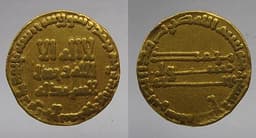
Al-Mahdi
Emperor · Medieval
54.5Total
Selim I
Emperor · Medieval
70.6Total
Basic Information
Born
744
1470
Died
785
1520
Era
Medieval
Medieval
Nationality
Abbasid Caliphate
Ottoman Empire
Occupation
Emperor
Emperor
Civilization
Middle Eastern
Middle Eastern
Score Comparison
Military (10%)
52.5
78.5
Political (20%)
68.0
70.3
Influence (20%)
59.0
65.0
Legacy (20%)
50.0
68.0
Leadership (15%)
40.0
80.0
Strategy (15%)
57.5
70.0
TOTAL
54.5
70.6
Al-Mahdi — Complete Timeline
762 AD
Construction of Baghdad's Round CityCultural◆ Major
Al-Mahdi oversaw the completion of the Round City of Baghdad, the new Abbasid capital founded by his father al-Mansur. This city became a center of trade, learning, and culture, symbolizing Abbasid power.
Urban DevelopmentCapital City
Impact: globalconstructive
775 AD
Campaign against the ByzantinesWar◆ Major
Al-Mahdi led military campaigns against the Byzantine Empire, including a major expedition in 775 that reached as far as the outskirts of Constantinople. These campaigns were part of the ongoing Arab-Byzantine wars and resulted in territorial gains for the Abbasids.
Arab-Byzantine WarsMilitary Campaign
Impact: regional
779 AD
Suppression of the Kharijite RevoltWar
Al-Mahdi dispatched forces to suppress a Kharijite rebellion in the Jazira region. The revolt was crushed, and its leaders were executed, reinforcing Abbasid control over the region.
Kharijite RevoltInternal Conflict
Impact: regionaldestructive
780 AD
Patronage of the Translation MovementCultural◆ Major
Al-Mahdi supported the translation of Greek, Persian, and Indian scientific and philosophical texts into Arabic. This patronage contributed to the Abbasid Golden Age and the preservation of classical knowledge.
Translation MovementGolden Age
Impact: globalprogressive
Selim I — Complete Timeline
1513 AD
Execution of Prince Mustafa and Prince KorkutPolitical Action
To secure his succession, Selim I ordered the execution of his brothers, Prince Mustafa and Prince Korkut, who were potential rivals for the throne. This act followed the Ottoman practice of fratricide to prevent civil war. It eliminated internal opposition and consolidated Selim's rule.
FratricideSuccessionOttoman Politics
Impact: nationaldestructive
1514 AD
Battle of ChaldiranWar
Selim I led the Ottoman army against the Safavid Empire under Shah Ismail I at Chaldiran in eastern Anatolia. The Ottomans, using superior artillery and gunpowder tactics, decisively defeated the Safavids. This victory secured Ottoman control over eastern Anatolia and prevented Safavid expansion westward.
BattleSafavid WarOttoman Victory
Impact: regional
1517 AD
Conquest of Egypt and the HejazWar
Selim I led a campaign against the Mamluk Sultanate, defeating them at the Battle of Marj Dabiq and the Battle of Ridaniya. He conquered Cairo and the Hejaz, including the holy cities of Mecca and Medina. This brought the Islamic caliphate under Ottoman control and expanded Ottoman territory into North Africa and Arabia.
ConquestMamluk SultanateCaliphate
Impact: global
Assumption of the CaliphatePolitical Action◆ Major
After conquering Cairo, Selim I received the keys to the Kaaba and the relics of the Prophet Muhammad from the last Abbasid caliph, Al-Mutawakkil III. Selim I assumed the title of Caliph, claiming spiritual leadership of the Islamic world. This transfer established the Ottoman sultans as caliphs until 1924.
CaliphateIslamic LeadershipOttoman Empire
Impact: global
Expert Analysis
Origins
Al-Mahdi (born 744 or 745) was the third Abbasid caliph, son of al-Mansur, the founder of Baghdad. His mother was a Berber concubine. He grew up in the Abbasid court, receiving education in Islamic sciences and statecraft. His early life was marked by the consolidation of Abbasid power after the overthrow of the Umayyads.
Selim I (born 1470) was the ninth Ottoman sultan, son of Bayezid II and a concubine named Gülbahar Hatun. He was raised in the Ottoman princely tradition, governing provinces as a young man. He gained military experience in campaigns against the Safavids and Mamluks. His early life was overshadowed by the struggle for succession among Bayezid's sons.
Rise to Power
Al-Mahdi became caliph in 775 after the death of his father al-Mansur. His succession was smooth, as al-Mansur had designated him heir. Al-Mahdi's early reign focused on consolidating internal stability, continuing the construction of Baghdad, and addressing rebellions.
Selim I rose to power through a coup. In 1512, he forced his father Bayezid II to abdicate and then executed his brothers and nephews to secure his throne. This violent path to power was typical of Ottoman succession struggles. Selim's ruthlessness eliminated rivals and allowed him to focus on expansion.
Leadership & Governance
Al-Mahdi's governance was characterized by patronage of learning and culture. He supported the Translation Movement, commissioning translations of Greek, Persian, and Indian works into Arabic. He also completed the Round City of Baghdad, which became a center of trade and learning. His military campaigns were limited, scoring 52.5 in military strategy, compared to Selim's 70.0. Al-Mahdi's leadership score of 40.0 reflects his less authoritarian style.
Selim I was a military leader first. He centralized power, reformed the Janissary corps, and used gunpowder weapons effectively. His military score of 78.5 and leadership score of 80.0 indicate his focus on conquest. He expanded the empire by 70% and established Ottoman dominance in the Middle East. His governance was harsh but efficient, with strict control over the bureaucracy.
Triumph & Tragedy
Al-Mahdi's greatest triumph was the patronage of the Translation Movement, which preserved and advanced knowledge. His campaign against the Byzantines in 775 reached the outskirts of Constantinople, but he did not capture it. His tragedy was the failure to secure a lasting peace; after his death, internal strife resumed.
Selim I's triumphs include the Battle of Chaldiran (1514) against the Safavids, where Ottoman artillery decimated the Persian cavalry, and the conquest of Egypt and the Hejaz (1516-1517), which gave the Ottomans control of the holy cities of Mecca and Medina. He assumed the caliphate, gaining religious legitimacy. His tragedy was the execution of his brothers and nephews, which set a precedent for fratricide in the Ottoman dynasty. He also died suddenly in 1520, possibly from plague, leaving his son Suleiman to inherit a vast empire.
Character & Destiny
Al-Mahdi was known for his piety and learning. He was more interested in building and culture than in war. His character led to a relatively peaceful reign but limited territorial expansion. His destiny was to be remembered as a patron of knowledge rather than a conqueror.
Selim I was ruthless, ambitious, and decisive. He earned the epithet "Yavuz" (the Grim) for his harshness. His character drove him to eliminate rivals and expand the empire at any cost. His destiny was to transform the Ottoman state into a global power, but his methods also sowed seeds of future succession crises.
Legacy
Al-Mahdi's legacy is tied to the Golden Age of Islam. The Translation Movement under his patronage laid the groundwork for advances in science, medicine, and philosophy. Baghdad's Round City became a model for urban planning. However, his military and political influence was limited, with scores of 52.5 and 68.0, respectively.
Selim I's legacy is immense. He doubled the size of the Ottoman Empire and established it as the leading Islamic power. His conquest of the Mamluk Sultanate brought the holy cities under Ottoman control, giving the sultans the caliphate until 1924. His military and political scores (78.5 and 70.3) reflect his impact. His total score of 70.6 exceeds Al-Mahdi's 54.5 by 16.1 points.
Conclusion
Selim I had a greater impact on history. His conquests reshaped the Middle East and established the Ottoman Empire as a dominant force for centuries. Al-Mahdi's contributions to culture were significant, but they did not alter the political map as decisively. The score gap of 16.1 points underscores Selim's superior military and political achievements. While Al-Mahdi fostered learning, Selim I forged an empire that lasted until the 20th century. Thus, Selim I is the more consequential figure.
Rankings
🥇
Selim ILeader
Mil: 78.5Pol: 70.3Inf: 65.0
70.6
🥈
Al-Mahdi
Mil: 52.5Pol: 68.0Inf: 59.0
54.5
+16.1 behind
How This Comparison Works
Algorithm
Each figure is scored on 6 dimensions (0—100 scale) based on structured historical data: Military (10%), Political (20%), Influence (20%), Legacy (20%), Leadership (15%), Strategy (15%). The weighted total produces the final ranking.
Data Sources
Scores are computed from structured sub-indicators in the database. Scale factors adjust for era (Ancient ×0.85, Modern ×1.0) and civilization size (Eastern ×1.05, Other ×0.80) to account for differences in population and military scale.
Maximum 3 Figures
Comparisons are limited to 2—3 figures to ensure readability and statistical meaningfulness.
Error Margins
±5 points per dimension — Sub-scores are derived from historical records with inherent uncertainty. Two figures within 5 points on a dimension should be considered roughly equivalent in that area.
Total Score Accuracy
±3 points overall — The weighted combination of 6 dimensions produces a total score with approximately ±3 points of uncertainty. Differences of less than 3 points are not statistically significant— the figures are effectively tied.
Known Limitations
- Historical records are incomplete and uneven across civilizations
- Figures from oral-tradition societies may be underrepresented
- Occupation labels can misclassify multi-role figures
- Scores measure capability and impact, not moral character
- Quantitative scoring is a comparison tool, not absolute truth
Capability Radar
Military (10%) — Battles & Warfare
Battles
55
85
Win Rate
60
90
Expansion
50
90
Political (20%) — Governance & Reform
Reform
55
75
Diplomacy
60
80
Economy
65
70
Influence (20%) — Cultural & Global Reach
Cultural
50
60
Global
45
75
Legacy (20%) — Historical Impact
Historical
55
80
Longevity
50
70
Leadership (15%) — Power & Stability
Tenure
60
70
Stability
55
65
Strategy (15%) — Tactics & Innovation
Strategy
55
85
Tactics
50
80
Reform
40
70
Similar Comparisons
Comments & Discussion
No comments yet. Be the first to share your thoughts!