Loading...
Emperor Kammu vs Emperor Xuanzong of Tang
Emperor Kammu leads by 4.1 pts · 2 figures compared
…
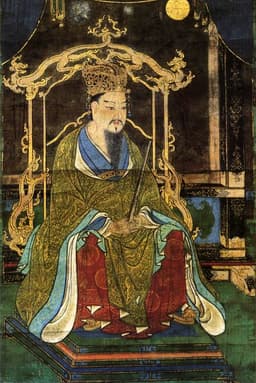
Emperor Kammu
Emperor · Medieval
64.9Total
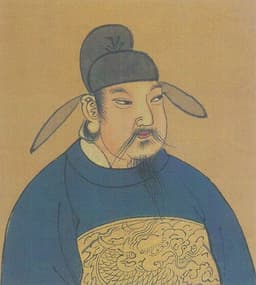
Emperor Xuanzong of Tang
Emperor · Medieval
60.8Total
Basic Information
Born
737
685
Died
806
762
Era
Medieval
Medieval
Nationality
Japan
China
Occupation
Emperor
Emperor
Civilization
Eastern
Eastern
Score Comparison
Military (10%)
21.2
65.0
Political (20%)
72.0
82.0
Influence (20%)
82.0
40.0
Legacy (20%)
68.0
65.0
Leadership (15%)
72.0
68.0
Strategy (15%)
36.8
55.0
TOTAL
64.9
60.8
Emperor Kammu — Complete Timeline
789 AD
Campaign against the EmishiWar◆ Major
Kammu launched a major military campaign to subdue the Emishi people in northern Honshu. The campaign was initially unsuccessful, with a defeat at the Battle of Koromo River, but later efforts under Sakanoue no Tamuramaro achieved victory.
Military CampaignEmishiExpansion
Impact: national
794 AD
Moved the capital to Heian-kyoPolitical Action
Emperor Kammu moved the imperial capital from Nara to Heian-kyo (modern Kyoto). This relocation was intended to escape the influence of powerful Buddhist monasteries in Nara and marked the beginning of the Heian period.
Capital MoveHeian PeriodJapan
Impact: nationalconstructive
800 AD
Patronage of Buddhist templesCultural
Kammu commissioned the construction of several Buddhist temples in Heian-kyo, including To-ji and Sai-ji. These temples were intended to protect the new capital and promote Buddhism as a state religion.
BuddhismArchitectureReligion
Impact: nationalconstructive
Emperor Xuanzong of Tang — Complete Timeline
713 AD
Kaiyuan Golden AgeCultural
Emperor Xuanzong initiated the Kaiyuan era, a period of political stability, economic prosperity, and cultural flourishing. He appointed capable ministers, reformed the bureaucracy, and promoted the arts. This era is considered the peak of the Tang dynasty.
Golden AgeProsperity
Impact: globalconstructive
720 AD
Reform of the Equal-Field SystemReform
Emperor Xuanzong implemented reforms to the Equal-Field System to address land concentration and tax evasion. These reforms temporarily stabilized the agrarian economy and increased state revenue, but they could not reverse the long-term decline of the system.
Land ReformEconomic Policy
Impact: nationalconstructive
755 AD
An Lushan RebellionWar
The general An Lushan launched a rebellion against Emperor Xuanzong, capturing the capital Chang'an. Xuanzong fled to Sichuan and was forced to abdicate. The rebellion lasted eight years, devastating the Tang empire and leading to its decline.
RebellionCivil War
Impact: globaltragic
756 AD
Abdication and Death of Yang GuifeiPolitical Action◆ Major
During the flight from Chang'an, Emperor Xuanzong's troops mutinied and forced him to order the execution of his beloved consort Yang Guifei, whom they blamed for the rebellion. Xuanzong then abdicated in favor of his son, Emperor Suzong.
AbdicationExecution
Impact: nationaltragic
Expert Analysis
Origins
Emperor Kammu (737-806), born Yamabe, was the 50th emperor of Japan. He was the son of Emperor Konin and a descendant of Emperor Tenji. His early life was shaped by the political intrigues of the Nara period, where powerful Buddhist monasteries and aristocratic factions vied for influence. He received a traditional education in Confucian classics and governance.
Emperor Xuanzong of Tang (685-762), born Li Longji, was the seventh emperor of the Tang dynasty. He was the grandson of Empress Wu Zetian and son of Emperor Ruizong. His early years were marked by the tumultuous reign of Wu Zetian, who had usurped the throne. Xuanzong was instrumental in restoring the Li family to power, leading a coup in 710 that ousted Empress Wei.
Rise to Power
Kammu ascended the throne in 781 after his father's abdication. His early reign focused on consolidating power and reducing the influence of Buddhist clergy, who had become dominant in Nara. To achieve this, he decided to move the capital away from Nara. In 784, he initiated the move to Nagaoka-kyo, but after floods and political opposition, he shifted to Heian-kyo (modern Kyoto) in 794.
Xuanzong's rise was more dramatic. After his father's abdication, he became emperor in 712, but real power initially lay with his aunt, Princess Taiping. In 713, he executed her and took full control. He then ushered in the Kaiyuan era (713-741), appointing capable chancellors like Yao Chong and Song Jing, who implemented reforms that stabilized the empire.
Leadership & Governance
Kammu's governance was defined by the capital relocation and centralization. He moved the capital to Heian-kyo, designed with a grid pattern inspired by Chang'an. This move freed the court from Buddhist influence and established a new political center. He also patronized Buddhism but under state control, commissioning temples like To-ji and Sai-ji. His military campaigns against the Emishi in northern Honshu were less successful; in 789, his forces suffered a defeat at the Battle of Koromo River. Kammu's political score of 72.0 reflects his effective centralization, but his military score of 21.2 indicates limited martial success.
Xuanzong's leadership during the Kaiyuan era is considered a pinnacle of Chinese civilization. He reformed the Equal-Field System to address land concentration, improved the civil service examination system, and promoted culture, including poetry and music. The Tang empire reached its greatest extent and prosperity. However, his later reign saw complacency and favoritism toward his consort Yang Guifei and her family, leading to corruption. His political score of 82.0 and leadership of 68.0 highlight his early achievements but later decline.
Triumph & Tragedy
Kammu's greatest triumph was establishing Heian-kyo, which became Japan's capital for over a millennium. This move laid the foundation for the Heian period, a golden age of Japanese culture. His patronage of Buddhism also fostered religious art and architecture. However, his Emishi campaigns were costly and only partially successful, failing to fully subdue the northern tribes. His legacy score of 68.0 reflects the enduring impact of the capital move.
Xuanzong's triumph was the Kaiyuan golden age, a period of stability, prosperity, and cultural brilliance. The Tang empire's influence spread across Asia. His tragedy was the An Lushan Rebellion (755-763), which devastated the empire and led to his abdication. During his flight, his troops forced him to order the execution of Yang Guifei, a deeply personal loss. The rebellion marked the beginning of Tang decline. His influence score of 40.0 is low because the rebellion tarnished his later years.
Character & Destiny
Kammu was pragmatic and determined, focused on reducing clerical power and establishing a stable capital. His character was cautious, as seen in the gradual move from Nagaoka to Heian. He was not a military leader but a political consolidator. His destiny was to set Japan on a path of cultural isolation and development.
Xuanzong was energetic and cultured in his early years, but later became indulgent and neglectful. His character shift from reformer to hedonist contributed to the rebellion. His destiny was to be remembered as both the creator of a golden age and the emperor who lost it. Historical assessments often contrast his early brilliance with his later failures.
Legacy
Kammu's legacy is immense: Heian-kyo became Kyoto, the cultural heart of Japan. The Heian period saw the flourishing of Japanese literature, art, and religion. His move also reduced Buddhist political influence, allowing the imperial court to retain authority. In contrast, Xuanzong's legacy is mixed. The Kaiyuan era set a standard for Chinese dynastic governance, but the An Lushan Rebellion weakened the Tang permanently. The rebellion also led to the rise of regional military governors, undermining central control. Xuanzong's overall total score of 60.8 is slightly lower than Kammu's 64.9.
Conclusion
Emperor Kammu had a greater long-term impact than Emperor Xuanzong. While Xuanzong's golden age was brilliant, it was fleeting and ended in disaster. Kammu's capital move shaped Japanese civilization for over a millennium, making Kyoto a cultural center. His political score (72.0) and influence (82.0) surpass Xuanzong's (82.0 and 40.0 respectively). The total score gap of 4.1 points reflects this: Kammu's legacy is more enduring and less tainted by catastrophic failure. Xuanzong's reign, though glorious, ended in rebellion that undid much of his work. Thus, Kammu stands as the more impactful ruler in terms of lasting historical influence.
Rankings
🥇
Emperor KammuLeader
Mil: 21.2Pol: 72.0Inf: 82.0
64.9
🥈
Emperor Xuanzong of Tang
Mil: 65.0Pol: 82.0Inf: 40.0
60.8
+4.1 behind
How This Comparison Works
Algorithm
Each figure is scored on 6 dimensions (0—100 scale) based on structured historical data: Military (10%), Political (20%), Influence (20%), Legacy (20%), Leadership (15%), Strategy (15%). The weighted total produces the final ranking.
Data Sources
Scores are computed from structured sub-indicators in the database. Scale factors adjust for era (Ancient ×0.85, Modern ×1.0) and civilization size (Eastern ×1.05, Other ×0.80) to account for differences in population and military scale.
Maximum 3 Figures
Comparisons are limited to 2—3 figures to ensure readability and statistical meaningfulness.
Error Margins
±5 points per dimension — Sub-scores are derived from historical records with inherent uncertainty. Two figures within 5 points on a dimension should be considered roughly equivalent in that area.
Total Score Accuracy
±3 points overall — The weighted combination of 6 dimensions produces a total score with approximately ±3 points of uncertainty. Differences of less than 3 points are not statistically significant— the figures are effectively tied.
Known Limitations
- Historical records are incomplete and uneven across civilizations
- Figures from oral-tradition societies may be underrepresented
- Occupation labels can misclassify multi-role figures
- Scores measure capability and impact, not moral character
- Quantitative scoring is a comparison tool, not absolute truth
Capability Radar
Military (10%) — Battles & Warfare
Battles
10
65
Win Rate
10
60
Expansion
10
70
Political (20%) — Governance & Reform
Reform
75
90
Diplomacy
60
80
Economy
65
95
Influence (20%) — Cultural & Global Reach
Cultural
70
90
Global
60
75
Legacy (20%) — Historical Impact
Historical
75
85
Longevity
75
80
Leadership (15%) — Power & Stability
Tenure
70
85
Stability
60
40
Strategy (15%) — Tactics & Innovation
Strategy
10
70
Tactics
10
55
Reform
10
75
Similar Comparisons
Comments & Discussion
No comments yet. Be the first to share your thoughts!