Loading...
Al-Amin vs Tamar of Georgia
Tamar of Georgia leads by 31.6 pts · 2 figures compared
…

Al-Amin
Emperor · Medieval
39.9Total
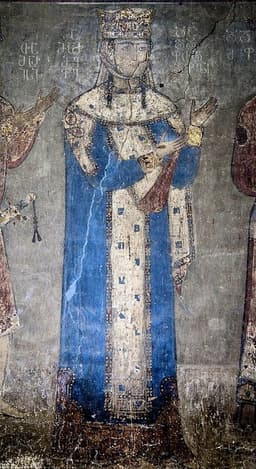
Tamar of Georgia
Emperor · Medieval
71.5Total
Basic Information
Born
787
1160
Died
813
1213
Era
Medieval
Medieval
Nationality
Abbasid Caliphate
Georgia
Occupation
Emperor
Emperor
Civilization
Middle Eastern
Western
Score Comparison
Military (10%)
50.0
78.0
Political (20%)
30.7
72.0
Influence (20%)
47.9
82.0
Legacy (20%)
38.3
55.0
Leadership (15%)
33.6
80.0
Strategy (15%)
36.8
66.3
TOTAL
39.9
71.5
Al-Amin — Complete Timeline
811 AD
Fourth Fitna (Civil War)War
Al-Amin's reign was dominated by the Fourth Fitna, a civil war against his brother al-Mamun. The conflict began when al-Amin tried to remove al-Mamun from succession, leading to a devastating war that weakened the Abbasid Caliphate.
Impact: regionaldestructive
812 AD
Siege of BaghdadWar◆ Major
Al-Mamun's forces, led by Tahir ibn Husayn, besieged Baghdad in 812-813. The siege lasted over a year, causing widespread destruction and famine. Al-Amin was captured and executed in 813, ending his caliphate.
Impact: regionaltragic
813 AD
Execution of Al-AminPolitical Action◆ Major
After the fall of Baghdad, al-Amin was captured by Tahir's forces. He was executed on al-Mamun's orders, marking the end of the civil war and the beginning of al-Mamun's sole rule.
Impact: nationaltragic
Tamar of Georgia — Complete Timeline
1184 AD
Coronation as Queen RegnantPolitical Action
Tamar was crowned as the first female ruler of Georgia after her father George III's death. Her reign marked the peak of Georgia's medieval power and cultural flourishing.
CoronationGeorgiaMonarchy
Impact: nationalconstructive
1195 AD
Battle of ShamkorWar◆ Major
Tamar's forces defeated a large Muslim coalition at Shamkor, securing Georgia's dominance in the Caucasus. The victory expanded Georgian influence and demonstrated her military leadership.
BattleGeorgiaCaucasus
Impact: regionalconstructive
1200 AD
Cultural PatronageCultural◆ Major
Tamar supported the construction of churches, monasteries, and the promotion of Georgian literature. Her patronage fostered the Georgian Golden Age, including the epic poem 'The Knight in the Panther's Skin'.
CulturePatronageGeorgia
Impact: nationalconstructive
Expert Analysis
Tamar of Georgia vs Al-Amin
### The Crown and the Sword: Two Fates in the Shadow of Power
In the year 813, a caliph, once master of the world’s greatest empire, was dragged from a riverbank in Baghdad and executed on the orders of his own brother. Al-Amin died as he had lived—recklessly, in a desperate gamble for a throne he could not hold. Just four centuries later, a queen in the Caucasus mountains, Tamar of Georgia, watched her armies crush a Muslim coalition at the Battle of Shamkor in 1195, securing a golden age that would bear her name for a millennium. One was a cautionary tale of ambition without wisdom; the other, a legend of power wielded with grace. What separates a ruler who is consumed by history from one who shapes it? The answer lies not in their crowns, but in the character beneath them.
### Origins: Two Worlds Apart
Al-Amin was born in 787 into the heart of the Abbasid Caliphate, a son of the legendary Harun al-Rashid. His world was one of silk, scholars, and absolute dominion, where the caliph was both God’s shadow on earth and the arbiter of a civilization stretching from Spain to India. But privilege was his poison. Raised in the gilded cage of the palace, he was groomed for power but never for its burdens. His brother, al-Mamun, was the elder and more capable, yet Harun had divided the empire between them—a brittle peace that was always destined to shatter.
Tamar of Georgia, born in 1160, came from a kingdom perched on the edge of Christendom and Islam. Georgia was a land of fierce mountains and fiercer faith, constantly threatened by Turkic invaders and Persian empires. Her father, George III, had fought to secure his dynasty, and Tamar was his only heir. Yet her upbringing was not one of sheltered luxury. In a world that saw women as pawns, she was trained in statecraft, war, and the art of command. She learned early that power must be earned, not inherited.
### Rise to Power: The Path Chosen
Al-Amin’s ascent was a formality. In 809, upon Harun’s death, he became caliph in Baghdad, while al-Mamun ruled from the eastern province of Khorasan. But the arrangement was a ticking bomb. Al-Amin, prodded by courtiers who feared al-Mamun’s ambition, moved to strip his brother of his inheritance. He demanded that al-Mamun cede his lands and recognize Al-Amin’s own son as heir. It was a provocation born of arrogance, not strategy. By 811, the Fourth Fitna had erupted—a civil war that would consume the empire.
Tamar’s path was far more treacherous. When her father died in 1184, she was crowned Queen Regnant at the age of twenty-four, but her rule was immediately challenged. The Georgian nobility, steeped in patriarchal tradition, saw her as a figurehead to be manipulated. They demanded she marry a man who could rule for her. Tamar, however, had learned patience. She played their game, choosing a husband—Yuri Bogolyubsky, a Russian prince—only to have him deposed when he proved unfit. She then married her trusted general, David Soslan, and began to consolidate power not through force alone, but through the quiet accumulation of loyalty.
### Leadership & Governance: The Art of Command
Al-Amin’s leadership was a study in failure. His military score of 11.4 and political score of 35.7 reflect a man who could neither fight nor negotiate. When the war came, he relied on the loyalty of Baghdad’s populace and the swords of local commanders, but he had no grand strategy. His forces were routed in the field, and by 812, the general Tahir ibn Husayn, leading al-Mamun’s armies, laid siege to the capital. Al-Amin’s response was not to plan a counterattack or to seek a diplomatic settlement, but to hole up in his palace, trusting in walls that could not hold. He was a ruler who mistook stubbornness for courage.
Tamar, by contrast, governed with a political score of 75.2 and a leadership score of 82.5. She understood that power rested on three pillars: military might, diplomatic finesse, and cultural legitimacy. She reformed the Georgian army, appointing capable generals and rewarding loyalty with land. She also patronized the Georgian Orthodox Church, building monasteries and commissioning the great epic poem *The Knight in the Panther’s Skin*, which celebrated chivalry and wisdom. Her court became a center of learning, blending Byzantine, Persian, and local traditions. When her forces faced a coalition of Muslim emirs at Shamkor in 1195, she did not lead the charge herself—but she had ensured that her generals were loyal, her soldiers well-paid, and her cause just. The victory was hers as much as theirs.
### Triumph & Tragedy: The Heights and Depths
For Al-Amin, there was no triumph, only tragedy. The siege of Baghdad in 812-813 was a catastrophe: famine, disease, and the collapse of order turned the city of a million souls into a slaughterhouse. When the walls finally fell, Al-Amin tried to escape by boat, but he was captured on the banks of the Tigris. In 813, Tahir ibn Husayn executed him on al-Mamun’s orders. His head was sent to his brother as proof of victory. It was the end of a reign that had lasted barely four years—a reign that had destroyed the unity of the Abbasid Caliphate and opened the door for centuries of decline.
Tamar’s triumph was the Georgian Golden Age. Under her rule, the kingdom expanded to its greatest extent, controlling the Caucasus from the Black Sea to the Caspian. She defeated the Seljuk Turks, secured trade routes, and fostered a cultural renaissance that would define Georgia’s identity. But her tragedy was personal: she outlived her beloved husband David Soslan, and her later years were marked by the intrigues of her son, George IV, who would inherit her throne but not her wisdom. She died in 1213, having ruled for nearly three decades, but the Mongol invasions that followed a generation later would erase much of what she built.
### Character & Destiny: The Inner Compass
Al-Amin’s character was his destiny. He was impulsive, vain, and utterly convinced of his own right to rule. He surrounded himself with sycophants who told him what he wanted to hear, and he dismissed his brother’s military prowess as a distant threat. His total score of 39.3 is a measure of a man who had every advantage—birth, wealth, and a glorious inheritance—and squandered it all through a failure of vision.
Tamar’s character was forged in adversity. She was patient, strategic, and deeply pragmatic. She knew when to yield—as in her first, disastrous marriage—and when to strike. Her total score of 72.1 reflects a ruler who understood that power is not a right but a responsibility. She is often called “Tamar the Great,” not because she was perfect, but because she was wise enough to learn from her mistakes and humble enough to listen to her advisors.
### Legacy: What Remains
Al-Amin is remembered, if at all, as a footnote—the caliph who lost the civil war and broke the Abbasid dream. His legacy is one of caution: a warning that power without wisdom is a poison. His name appears in history books as a symbol of decline, his reign a brief, bloody interlude before the rise of al-Mamun, who, for all his brilliance, could never fully restore what his brother had shattered.
Tamar’s legacy is woven into the fabric of Georgia. She is a national icon, celebrated in poetry, art, and even on the country’s currency. Her reign is remembered as a golden age, a time when a small Christian kingdom defied the great empires of the East and built a civilization of its own. Her story inspires not because she was a woman in a man’s world—though that is part of it—but because she proved that greatness is not a matter of gender or birth, but of character.
### Conclusion: The Mirror of History
Standing at the edge of history, we see two rulers, both born to power, both facing the same fundamental choice: to use that power for themselves or for their people. Al-Amin chose himself and was consumed. Tamar chose her kingdom and was immortalized. Their stories are not merely lessons in leadership; they are mirrors held up to our own ambitions. In the end, the question is not whether we will rise to power, but what we will do with it when we get there. History, as always, is watching.
Rankings
🥇
Tamar of GeorgiaLeader
Mil: 78.0Pol: 72.0Inf: 82.0
71.5
🥈
Al-Amin
Mil: 50.0Pol: 30.7Inf: 47.9
39.9
+31.6 behind
How This Comparison Works
Algorithm
Each figure is scored on 6 dimensions (0—100 scale) based on structured historical data: Military (10%), Political (20%), Influence (20%), Legacy (20%), Leadership (15%), Strategy (15%). The weighted total produces the final ranking.
Data Sources
Scores are computed from structured sub-indicators in the database. Scale factors adjust for era (Ancient ×0.85, Modern ×1.0) and civilization size (Eastern ×1.05, Other ×0.80) to account for differences in population and military scale.
Maximum 3 Figures
Comparisons are limited to 2—3 figures to ensure readability and statistical meaningfulness.
Error Margins
±5 points per dimension — Sub-scores are derived from historical records with inherent uncertainty. Two figures within 5 points on a dimension should be considered roughly equivalent in that area.
Total Score Accuracy
±3 points overall — The weighted combination of 6 dimensions produces a total score with approximately ±3 points of uncertainty. Differences of less than 3 points are not statistically significant— the figures are effectively tied.
Known Limitations
- Historical records are incomplete and uneven across civilizations
- Figures from oral-tradition societies may be underrepresented
- Occupation labels can misclassify multi-role figures
- Scores measure capability and impact, not moral character
- Quantitative scoring is a comparison tool, not absolute truth
Capability Radar
Military (10%) — Battles & Warfare
Battles
20
75
Win Rate
15
85
Expansion
5
75
Political (20%) — Governance & Reform
Reform
10
80
Diplomacy
10
75
Economy
15
85
Influence (20%) — Cultural & Global Reach
Cultural
15
80
Global
10
60
Legacy (20%) — Historical Impact
Historical
20
75
Longevity
10
70
Leadership (15%) — Power & Stability
Tenure
20
85
Stability
10
70
Strategy (15%) — Tactics & Innovation
Strategy
10
80
Tactics
15
70
Reform
5
65
Similar Comparisons
Comments & Discussion
Spartan Scholar6/16/2026
Let’s be real: comparing Tamar to Al-Amin is like comparing a falcon to a leaky boat. Tamar crushed the Battle of Shamkor with strategic brilliance, forging a golden age through diplomacy and grit. Al-Amin? A pampered Abbasid prince who blew a world-spanning empire on petty pride. His corpse in the Tigris wasn’t a tragedy; it was natural selection. Tamar earned her legend; Al-Amin earned a footnote.
数据铁锤6/16/2026
我不管你们怎么吹“黄金时代”,给我看数字:Tamar的Georgia人口不过三百万,却被吹成“不可战胜”。Al-Amin死前,阿拔斯国库年入千万第纳尔,他能输?这就是幸存者偏差。历史书写者从来是赢家的笔杆子,别拿个案当真理。数据不说谎,所谓“女王威仪”不过是9世纪地区GDP的幌子。
Byzantine Chronicles6/16/2026
Tamar inherited a fractured land and turned cannons into cathedrals—her 1195 victory at Shamkor was the Thermopylae of the Caucasus, using feigned retreats against a Muslim league three times her size. Al-Amin inherited a superpower and turned it into a civil war over a sibling spat. One built; one burned. That’s the difference between a stateswoman and a spoiled heir.
复兴考据狂6/16/2026
别急着给Tamar镀金。她奶奶是亲伊斯兰的,手下贵族里一半是突厥血统。那场Shamkor胜仗,仔细看史料:她根本不在战场,是靠Catholicos忽悠来的波斯佣兵赢的。这叫“神授威仪”?分明是宗教投机加雇佣兵红利。Al-Amin至少敢亲自上阵,死得像个战士。Tamar是躲在圣像后头的操作手,不是真领袖。
Fresco Philosopher6/16/2026
Tamar’s legend is spray-painted over messy truth. She was queen in name only—her real power came from the Orthodox Church and bribing Mongol cavalry with plunder. Al-Amin died for a principle, however flawed: that the caliphate was his birthright, not his brother’s. Tamar wove a myth; Al-Amin wove a tragedy. I’d rather study the man who lost everything for conviction than the woman who won everything by compromise.