Loading...
Akbar the Great vs Ferdinand I of Leon
Akbar the Great leads by 10.6 pts · 2 figures compared
…
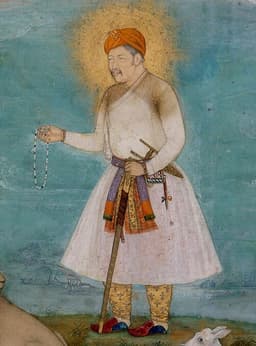
Akbar the Great
Emperor · Modern
69.8Total
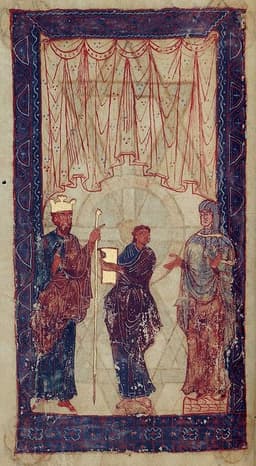
Ferdinand I of Leon
Emperor · Medieval
59.2Total
Basic Information
Born
1542
1015
Died
1605
1065
Era
Modern
Medieval
Nationality
India
Leon
Occupation
Emperor
Emperor
Civilization
Indian
Western
Score Comparison
Military (10%)
80.0
70.0
Political (20%)
82.0
68.0
Influence (20%)
68.0
56.4
Legacy (20%)
55.0
49.2
Leadership (15%)
80.0
66.0
Strategy (15%)
68.0
57.5
TOTAL
69.8
59.2
Akbar the Great — Complete Timeline
1556 AD
Second Battle of PanipatWar
Akbar, aged 13, defeated the Hindu general Hemu at Panipat, securing the Mughal throne. Hemu had captured Delhi and declared himself emperor. Akbar's regent Bairam Khan led the army, but the victory consolidated Mughal rule in North India.
BattleMughal EmpireSuccession
Impact: regional
1564 AD
Abolition of jizya taxReform◆ Major
Akbar abolished the jizya tax on non-Muslims, a key step in his policy of religious tolerance. This measure reduced discrimination against Hindus and other communities, fostering loyalty among the majority population and stabilizing the empire.
Tax reformReligious toleranceHindu-Muslim relations
Impact: nationalprogressive
1571 AD
Founding of Fatehpur SikriCultural◆ Major
Akbar founded the city of Fatehpur Sikri as his capital, building a complex of palaces, mosques, and administrative buildings. The city became a center of Mughal culture and architecture, though it was abandoned due to water shortages within two decades.
ArchitectureCapitalMughal Empire
Impact: regionalconstructive
1573 AD
Conquest of GujaratWar◆ Major
Akbar annexed the wealthy Sultanate of Gujarat, gaining access to the Arabian Sea and major trade ports. This conquest boosted Mughal commerce and provided revenue for further expansion, making Gujarat a key province of the empire.
ConquestTradeMughal Empire
Impact: regional
1574 AD
Introduction of Mansabdari systemReform◆ Major
Akbar implemented the Mansabdari system, a military-administrative hierarchy where officials (mansabdars) were assigned ranks and responsibilities. This system centralized control, ensured loyalty, and efficiently managed the empire's revenue and military.
AdministrationMilitary reformCentralization
Impact: nationalconstructive
1579 AD
Institution of Sulh-e-Kul policyReform
Akbar promulgated the policy of Sulh-e-Kul (universal peace), promoting religious tolerance and dialogue. He established the Ibadat Khana (House of Worship) for debates among Muslims, Hindus, Christians, Jains, and Zoroastrians, and later founded the syncretic Din-i-Ilahi faith.
Religious policySyncretismTolerance
Impact: nationalprogressive
Ferdinand I of Leon — Complete Timeline
1029 AD
Inheritance of the County of CastilePolitical Action◆ Major
Ferdinand I inherited the County of Castile from his father Sancho III of Navarre. He later expanded his territory through conquest and marriage, laying the foundation for the Kingdom of Castile.
Impact: regionalconstructive
1037 AD
Conquest of LeónWar◆ Major
Ferdinand I defeated and killed King Bermudo III of Le
Impact: regional
1056 AD
First Emperor of SpainPolitical Action◆ Major
Ferdinand I was crowned 'Imperator totius Hispaniae' (Emperor of all Spain) in 1056, claiming suzerainty over all Christian and Muslim rulers in Iberia. This title reflected his military dominance and political ambition.
Impact: regional
1065 AD
Division of the kingdomPolitical Action◆ Major
Upon his death, Ferdinand I divided his kingdom among his sons: Sancho II received Castile, Alfonso VI received Le
Impact: regionaldestructive
Expert Analysis
Ferdinand I of Leon vs Akbar the Great
### The Conqueror and the Unifier: Akbar’s Vision vs. Ferdinand’s Legacy
In the summer of 1579, as the Mughal Emperor Akbar sat in his newly founded city of Fatehpur Sikri, he decreed a policy that would echo through centuries: *Sulh-e-Kul*, or universal peace. He ordered that men of all faiths—Hindus, Muslims, Jains, Christians, and Zoroastrians—could debate in his *Ibadat Khana* (House of Worship). Five centuries earlier, on a dusty battlefield in 1037, King Ferdinand I of León had ridden to victory over his rival Bermudo III, then claimed a crown for Christendom alone. One emperor sought to dissolve the boundaries between peoples; the other sought to strengthen them under a single cross. What drove these two rulers, both crowned in their prime, to such different fates?
### Origins
Akbar was born in 1542, in the chaos of exile. His father, Humayun, had lost the Mughal throne to Afghan rebels, and the infant prince spent years wandering the deserts of Persia. By the age of thirteen, he had inherited a fragile kingdom, surrounded by enemies. His world was a mosaic of warring faiths and cultures—Hindu Rajputs, Muslim Afghans, Persian nobles—and survival demanded not just swords, but minds.
Ferdinand I, born in 1015, came from a different soil. He was the second son of Sancho III of Navarre, a Christian king in a peninsula half-conquered by Muslim caliphates. His upbringing was steeped in the *Reconquista*—a centuries-long struggle to push Islam out of Iberia. His inheritance was not a kingdom, but a county: Castile, a frontier land of castles and constant skirmishes. Where Akbar was shaped by the fluidity of empires, Ferdinand was forged in the rigidity of crusade.
### Rise to Power
Akbar’s ascent was a gamble of youth. At thirteen, in 1556, he faced the Hindu general Hemu, who had captured Delhi and declared himself emperor. The Second Battle of Panipat was a near-disaster: Akbar’s regent, Bairam Khan, had to rally the troops when the boy-emperor was nearly captured. Yet Akbar displayed a coolness beyond his years, and the victory secured his throne. It was a turning point that taught him that power was not inherited—it was won and maintained through constant vigilance.
Ferdinand’s rise was more calculated. In 1029, he inherited Castile from his father, but his true prize came in 1037 at the Battle of Tamarón, where he killed King Bermudo III of León. By right of conquest and marriage, Ferdinand united León and Castile. Then, in 1056, he was crowned *Imperator totius Hispaniae*—Emperor of all Spain. But his empire was a patchwork of loyalties, held together by the sword and the cross.
### Leadership & Governance
Akbar’s genius lay in his ability to turn enemies into administrators. After conquering the wealthy Sultanate of Gujarat in 1573, he did not impose Mughal law; he integrated its ports and merchants into his empire. In 1574, he introduced the Mansabdari system, a military-administrative hierarchy that ranked officials by their loyalty and service, not their birth. A Hindu Rajput could rise to the same rank as a Persian noble. By abolishing the jizya tax on non-Muslims in 1564, he removed the very symbol of second-class citizenship. His court became a laboratory of ideas, where he debated theology with Jesuit priests and Jain monks.
Ferdinand ruled by the older logic of Christendom. He expanded his territories through campaigns against the Muslim taifa kingdoms, exacting tribute and pushing his borders south. He governed through bishops and counts, rewarding loyalty with land. His crowning as emperor in 1056 was a declaration of supremacy over all Christian kings in Spain—but it was a supremacy based on blood and battle, not on the consent of the governed. Where Akbar built institutions, Ferdinand built alliances.
### Triumph & Tragedy
Akbar’s greatest moment was not a battle, but a building. In 1571, he founded Fatehpur Sikri, a city of red sandstone that was both a political capital and a spiritual experiment. Here, he gathered scholars, poets, and mystics, and tried to forge a new faith—the *Din-i-Ilahi*—that would unite all religions under one God. It failed to gain followers, but it revealed a ruler who believed that unity could be achieved through dialogue.
Ferdinand’s triumph was the unification of León and Castile, and his coronation as Emperor of Spain in 1056. But his tragedy was the division of his kingdom upon his death in 1065. He split his lands among his three sons—Sancho, Alfonso, and García—who immediately fell into civil war. His empire, built on personal loyalty, crumbled in a generation.
### Character & Destiny
Akbar was a man of restless curiosity. He was illiterate, yet he surrounded himself with books and had them read aloud. He was a warrior who personally led charges, yet he also ordered the translation of Hindu epics into Persian. His decisions were driven by a belief that power was a tool for creating order, not for enforcing dogma. This pragmatism allowed him to rule for nearly fifty years, expanding the Mughal Empire to its greatest extent.
Ferdinand was a man of duty and faith. He saw himself as God’s warrior, tasked with reclaiming Spain for Christianity. His decisions were shaped by the feudal logic of his time: land was power, and loyalty was personal. He could not conceive of an empire that transcended kinship or creed. His division of the kingdom was not a failure of wisdom, but a reflection of a world where family bonds were the only guarantee of loyalty.
### Legacy
Akbar’s legacy is the idea of India as a pluralistic civilization. His policies of religious tolerance influenced later rulers, and his administrative reforms laid the groundwork for the Mughal Empire’s golden age. Today, he is remembered as Akbar the Great—a ruler who believed that peace was stronger than the sword.
Ferdinand’s legacy is more ambiguous. He is remembered as the first Emperor of Spain, a unifier of Christian kingdoms. But his division of the realm exposed the fragility of his achievement. In the end, his sons tore apart what he had built, and it would take another four centuries for Spain to truly unify.
### Conclusion
Standing at the gates of Fatehpur Sikri, one can still feel Akbar’s dream of universal peace—a dream that was too ambitious for its time, yet too powerful to die. In the shadow of Ferdinand’s castles, one sees the limits of a vision built on conquest alone. Both men were products of their eras, but only one understood that an empire, to endure, must be built not just on land, but on the hearts of its people.
Rankings
🥇
Akbar the GreatLeader
Mil: 80.0Pol: 82.0Inf: 68.0
69.8
🥈
Ferdinand I of Leon
Mil: 70.0Pol: 68.0Inf: 56.4
59.2
+10.6 behind
How This Comparison Works
Algorithm
Each figure is scored on 6 dimensions (0—100 scale) based on structured historical data: Military (10%), Political (20%), Influence (20%), Legacy (20%), Leadership (15%), Strategy (15%). The weighted total produces the final ranking.
Data Sources
Scores are computed from structured sub-indicators in the database. Scale factors adjust for era (Ancient ×0.85, Modern ×1.0) and civilization size (Eastern ×1.05, Other ×0.80) to account for differences in population and military scale.
Maximum 3 Figures
Comparisons are limited to 2—3 figures to ensure readability and statistical meaningfulness.
Error Margins
±5 points per dimension — Sub-scores are derived from historical records with inherent uncertainty. Two figures within 5 points on a dimension should be considered roughly equivalent in that area.
Total Score Accuracy
±3 points overall — The weighted combination of 6 dimensions produces a total score with approximately ±3 points of uncertainty. Differences of less than 3 points are not statistically significant— the figures are effectively tied.
Known Limitations
- Historical records are incomplete and uneven across civilizations
- Figures from oral-tradition societies may be underrepresented
- Occupation labels can misclassify multi-role figures
- Scores measure capability and impact, not moral character
- Quantitative scoring is a comparison tool, not absolute truth
Capability Radar
Military (10%) — Battles & Warfare
Battles
85
55
Win Rate
90
60
Expansion
88
60
Political (20%) — Governance & Reform
Reform
95
50
Diplomacy
92
55
Economy
88
45
Influence (20%) — Cultural & Global Reach
Cultural
85
40
Global
70
30
Legacy (20%) — Historical Impact
Historical
80
45
Longevity
75
40
Leadership (15%) — Power & Stability
Tenure
90
65
Stability
85
50
Strategy (15%) — Tactics & Innovation
Strategy
85
55
Tactics
80
50
Reform
75
40
Similar Comparisons
Comments & Discussion
ScepticSoul6/16/2026
Sure, Akbar's diversity propaganda looks great in textbooks, but let's be real—he crushed the Rajput stronghold of Chittor in 1568 and massacred 30,000 non-combatants after promising safe passage. That's not a "unifier," that's a tyrant with good PR. Ferdinand I at least was honest about his goal: Christian supremacy in Iberia. I'd rather take a straightforward conqueror than a hypocrite who wraps slaughter in peace rhetoric.
铁血史官6/16/2026
费迪南一世就是典型的封建军阀,靠着联姻和血腥镇压凑合出一个王国,连自个儿儿子都摆不平,死后王国立马分裂。阿克巴至少建立了一套行之有效的中央行政体系——曼萨卜达尔制——让帝国稳定了将近两百年。比治国,费迪南连给阿克巴提鞋都不配,别拿《熙德之歌》里的骑士精神来糊弄人。
CrusaderKid6/16/2026
Ferdinand I was the real deal—a warrior-king who expanded León from a regional backwater into the dominant Christian power in Iberia by 1065. He didn't just conquer; he codified law with the Fuero de León and centralized tribute from the taifa kingdoms. Akbar's syncretism was innovative, but Ferdinand's legacy forged the template for a unified Spain. Without his iron will, the Reconquista might have stalled for another century.
嘉靖遗少6/16/2026
别拿“宗教宽容”来给阿克巴贴金。他搞那个伊巴达特汗宫的宗教辩论,本质是为了削弱乌里玛和婆罗门的政治影响力,巩固自己的绝对君权。费迪南一世再血腥,至少旗帜鲜明地为基督信仰而战——1072年他在加佩翁击败阿方索六世,靠的是实实在在的剑和十字架,而不是什么“万能和平”的空洞口号。阿克巴玩的那些把戏,搁明朝就是个权术精罢了。