Loading...
Ahuitzotl vs Rajendra Chola I
Rajendra Chola I leads by 19.6 pts · 2 figures compared
…
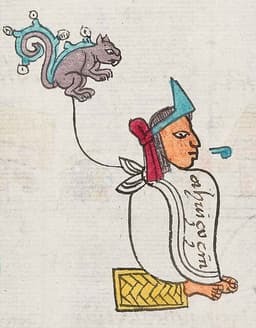
Ahuitzotl
Emperor · Medieval
62.6Total
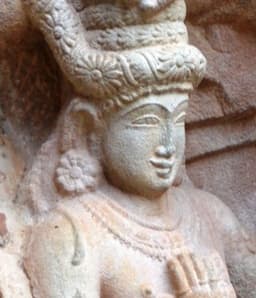
Rajendra Chola I
Emperor · Medieval
82.2Total
Basic Information
Born
1440
971
Died
1502
1044
Era
Medieval
Medieval
Nationality
Aztec Empire
India
Occupation
Emperor
Emperor
Civilization
Other
Indian
Score Comparison
Military (10%)
78.5
84.7
Political (20%)
55.0
82.0
Influence (20%)
61.0
84.0
Legacy (20%)
54.0
84.0
Leadership (15%)
72.0
78.0
Strategy (15%)
70.0
77.6
TOTAL
62.6
82.2
Ahuitzotl — Complete Timeline
1486 AD
Expanded the Aztec Empire to its Greatest ExtentWar
Ahuitzotl launched extensive military campaigns that expanded the Aztec Empire to its maximum territorial extent, conquering regions from the Gulf of Mexico to the Pacific coast, including parts of modern-day Guatemala. He subjugated over 50 city-states.
Aztec ExpansionMilitary ConquestImperial Peak
Impact: regional
1487 AD
Dedicated the Great Temple of TenochtitlanCultural◆ Major
Ahuitzotl presided over the rededication of the Templo Mayor in Tenochtitlan, a massive ceremony involving the sacrifice of thousands of captives. The event reinforced Aztec religious authority and demonstrated the empire's military power.
Human SacrificeReligious CeremonyAztec Religion
Impact: regionaldestructive
1490 AD
Conquest of the Mixtec and Zapotec RegionsWar◆ Major
Ahuitzotl led campaigns into Oaxaca, conquering Mixtec and Zapotec strongholds such as Coixtlahuaca and Tehuantepec. These victories secured control over key trade routes and tribute sources, including gold and cotton.
Military CampaignOaxacaTribute
Impact: regional
Rajendra Chola I — Complete Timeline
1014 AD
Accession to the Chola ThronePolitical Action
Rajendra Chola I succeeded his father Raja Raja Chola I as emperor of the Chola Empire. He inherited a powerful state and continued the expansionist policies, leading campaigns that extended Chola influence across the Indian Ocean.
Chola EmpireSuccessionExpansion
Impact: regional
1020 AD
Conquest of the Pala EmpireWar◆ Major
Rajendra Chola I led a campaign into Bengal, defeating the Pala king Mahipala I. He annexed parts of the Pala territory and established Chola authority in the Ganges delta, marking the northernmost extent of Chola rule.
Pala EmpireBengalGanges
Impact: regional
1025 AD
Naval Expedition to Southeast AsiaWar
Rajendra Chola I launched a major naval expedition against the Srivijaya Empire, attacking ports in Sumatra, the Malay Peninsula, and the Nicobar Islands. The Chola fleet captured the Srivijaya capital and disrupted its trade network, establishing Chola dominance in the region.
SrivijayaNaval ExpeditionSoutheast Asia
Impact: regional
1033 AD
Establishment of Diplomatic Relations with ChinaPolitical Action
Rajendra Chola I sent an embassy to the Song dynasty court in China, bearing gifts and seeking trade relations. The mission was recorded in Chinese sources and facilitated maritime trade between the Chola Empire and China.
ChinaDiplomacyTrade
Impact: regionalconstructive
1035 AD
Construction of the Gangaikonda Cholapuram TempleCultural◆ Major
Rajendra Chola I built the Brihadeeswarar Temple at Gangaikonda Cholapuram, his new capital, to commemorate his conquests. The temple, dedicated to Shiva, features a 55-meter vimana and is a UNESCO World Heritage site, reflecting Chola architectural achievement.
Gangaikonda CholapuramTempleChola Architecture
Impact: regionalconstructive
Expert Analysis
Origins
Ahuitzotl, born around 1486, was the eighth Huey Tlatoani of the Aztec Empire. He was the son of Moctezuma I and succeeded his brother Tizoc. His early life was steeped in the militaristic and religious traditions of the Mexica, with training in warfare and governance. He inherited a growing empire but faced internal dissent and external threats.
Rajendra Chola I, born around 971 CE, was the son of Raja Raja Chola I, the greatest Chola emperor. He was groomed for leadership from a young age, participating in his father's campaigns. The Chola Empire, based in Tamil Nadu, was already a major power with a strong administrative system and a formidable navy. Rajendra's education included military strategy, administration, and patronage of arts.
Rise to Power
Ahuitzotl ascended to the throne in 1486 after the suspicious death of Tizoc, who was possibly poisoned. He quickly consolidated power by executing nobles loyal to Tizoc and launching campaigns to prove his military prowess. His first major campaign was against the Huastec people in 1487, which secured his reputation. He also reformed the tribute system to fund his wars.
Rajendra Chola I became co-regent around 1012 and sole emperor in 1014 upon his father's death. He had already proven himself in battles against the Western Chalukyas and the Pandya kingdom. His rise was smooth due to his father's strong foundation. He immediately continued expansion, targeting the Pala Empire in Bengal around 1023, defeating King Mahipala I and annexing territory.
Leadership & Governance
Ahuitzotl ruled with a focus on military expansion and religious legitimacy. He expanded the empire to its greatest extent, covering most of central and southern Mexico. He imposed heavy tribute on conquered regions, which funded Tenochtitlan's grand projects. However, his governance relied on fear and coercion, leading to rebellions. His military score of 78.5 reflects his aggressive campaigns, but his political score of 55.0 indicates weak institutional control. He centralized power in the tlatoani but did not create lasting administrative structures.
Rajendra Chola I excelled in both military and political governance. He scored 82.0 in politics, reflecting his ability to integrate conquered territories. He established a bureaucratic system with local self-government under Chola oversight. His naval expedition to Srivijaya in 1025-1026 was a strategic masterstroke, securing trade routes and projecting power across the Indian Ocean. He also built the Gangaikonda Cholapuram temple, a symbol of his achievements. His leadership score of 78.0 and strategy score of 77.6 indicate consistent competence.
Triumph & Tragedy
Ahuitzotl's greatest triumph was the conquest of the Mixtec and Zapotec regions, including Coixtlahuaca and Tehuantepec, around 1496-1503. This brought the empire to its maximum size. He also oversaw the rededication of the Templo Mayor in 1487, a massive ceremony with thousands of sacrifices, cementing his religious authority. However, his greatest failure was the destruction of the aqueduct system from Coyoacán in 1499 due to a flood, causing a famine. He also faced a rebellion in the province of Alahuiztlan in 1500, which he brutally suppressed but which weakened his control.
Rajendra Chola I's greatest triumph was the naval expedition against Srivijaya (1025-1026), which established Chola dominance in Southeast Asia. He also conquered the Pala Empire (1023) and the Kalinga region (1024). He built a new capital, Gangaikonda Cholapuram, and a temple that remains a UNESCO World Heritage site. His failure includes overextension; after his death, Chola power declined due to the strain of maintaining distant territories. He also faced a rebellion in the Pandya region in 1019, which he crushed but which highlighted administrative challenges.
Character & Destiny
Ahuitzotl was ambitious and ruthless, driven by a desire to surpass his predecessors. His name means "Water Beast" and he was known for his strategic mind but also his cruelty. The mass sacrifices at the Templo Mayor alienated some vassals. His character led to rapid expansion but also internal instability. He died in 1502 from a head injury during a flood, a fitting end for a ruler who defied nature.
Rajendra Chola I was methodical and visionary. He combined military might with diplomatic acumen, as seen in his embassy to China in 1033. He was a patron of arts and architecture, fostering Tamil culture. His character of careful planning and integration allowed the Chola Empire to reach its zenith. He died around 1044, leaving a stable empire that continued for decades.
Legacy
Ahuitzotl's legacy is mixed. He expanded the Aztec Empire to its greatest extent, but his methods contributed to resentment that the Spanish exploited. The tribute system he refined became a tool of oppression. His temple dedication set a precedent for mass sacrifice. However, his empire collapsed within 20 years of his death. His legacy score of 54.0 reflects this fragility.
Rajendra Chola I's legacy is enduring. He expanded Chola influence to Southeast Asia, creating a maritime empire. The Gangaikonda Cholapuram temple stands as a testament to his rule. His administrative systems influenced later empires. His embassy to China opened trade routes. He is remembered as a great conqueror and builder. His legacy score of 84.0 indicates lasting impact.
Conclusion
Rajendra Chola I had significantly greater impact than Ahuitzotl. With a total score of 82.2 vs. 62.6, Chola's achievements in military (84.7 vs. 78.5), political (82.0 vs. 55.0), influence (84.0 vs. 61.0), and legacy (84.0 vs. 54.0) demonstrate superior leadership. While Ahuitzotl expanded an empire, Rajendra created a lasting maritime network and cultural monuments that endure. The Aztec Empire was ephemeral; Chola influence lasted centuries. Rajendra Chola I is the greater historical figure.
Rankings
🥇
Rajendra Chola ILeader
Mil: 84.7Pol: 82.0Inf: 84.0
82.2
🥈
Ahuitzotl
Mil: 78.5Pol: 55.0Inf: 61.0
62.6
+19.6 behind
How This Comparison Works
Algorithm
Each figure is scored on 6 dimensions (0—100 scale) based on structured historical data: Military (10%), Political (20%), Influence (20%), Legacy (20%), Leadership (15%), Strategy (15%). The weighted total produces the final ranking.
Data Sources
Scores are computed from structured sub-indicators in the database. Scale factors adjust for era (Ancient ×0.85, Modern ×1.0) and civilization size (Eastern ×1.05, Other ×0.80) to account for differences in population and military scale.
Maximum 3 Figures
Comparisons are limited to 2—3 figures to ensure readability and statistical meaningfulness.
Error Margins
±5 points per dimension — Sub-scores are derived from historical records with inherent uncertainty. Two figures within 5 points on a dimension should be considered roughly equivalent in that area.
Total Score Accuracy
±3 points overall — The weighted combination of 6 dimensions produces a total score with approximately ±3 points of uncertainty. Differences of less than 3 points are not statistically significant— the figures are effectively tied.
Known Limitations
- Historical records are incomplete and uneven across civilizations
- Figures from oral-tradition societies may be underrepresented
- Occupation labels can misclassify multi-role figures
- Scores measure capability and impact, not moral character
- Quantitative scoring is a comparison tool, not absolute truth
Capability Radar
Military (10%) — Battles & Warfare
Battles
85
95
Win Rate
90
98
Expansion
90
95
Political (20%) — Governance & Reform
Reform
70
88
Diplomacy
65
85
Economy
80
92
Influence (20%) — Cultural & Global Reach
Cultural
60
85
Global
45
85
Legacy (20%) — Historical Impact
Historical
65
88
Longevity
50
80
Leadership (15%) — Power & Stability
Tenure
75
90
Stability
70
90
Strategy (15%) — Tactics & Innovation
Strategy
85
92
Tactics
80
90
Reform
70
85
Similar Comparisons
Comments & Discussion
No comments yet. Be the first to share your thoughts!